
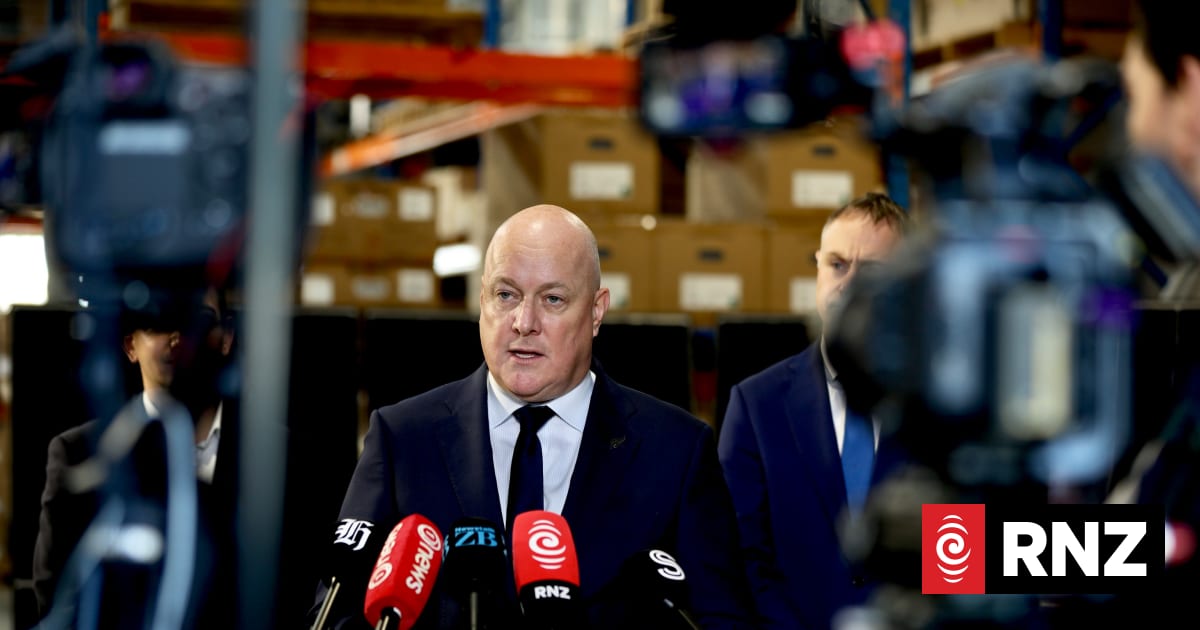
National has promised to help households shift to solar power through low interest loans, if it’s re-elected.
It planned to introduce a Home Energy Fund offering low-interest, long-term loans that are repaid through rates so households can invest in solar, batteries, insulation and heat pumps, without big upfront costs.
The party would also allow people to install solar without the need for council consent.
National’s energy spokesperson Simeon Brown said uptake of residential solar, battery storage and on-farm generation was low – just 3 percent, compared with about 9 percent in the United States and a third in Australia.
The party expected 80,000 households would take up the scheme over 15 years.
“In a more volatile world and with more severe weather events, supporting households to have greater control over their power will help more families store affordable energy when prices spike, and keep the lights on during outages,” Brown said.
The Prime Minister Christopher Luxon stressed the need for more resilience in the country’s power network, which he said could be built in thousands of homes across the country.
“A stronger, more resilient energy system means giving Kiwis access to a more diverse and reliable mix of power when weather events or global shocks put pressure on supply, and of course, more resilience and choice also helps make our power bills much more affordable,” he said.
The party’s local government spokesperson Simon Watts said the fund was “inspired by” the Ratepayer Assistance Scheme that Local Government New Zealand and Rewiring Aotearoa had been calling for.
The biggest barrier to solar and battery use was its upfront cost, he said.
“National’s Home Energy Fund will allow property owners to obtain a low-interest loan, secured against their property, to install solar and batteries without the big upfront cost and instead pay it off through their rates over time as they save on power bills.”
The Energy Efficiency and Conservation Authority’s website said most major banks offered zero or very low interest loans for energy efficient upgrades, like solar.
But Luxon said they were “limited and patchy”.
They tended to only be for about three years, and had a high rejection rate, he said.
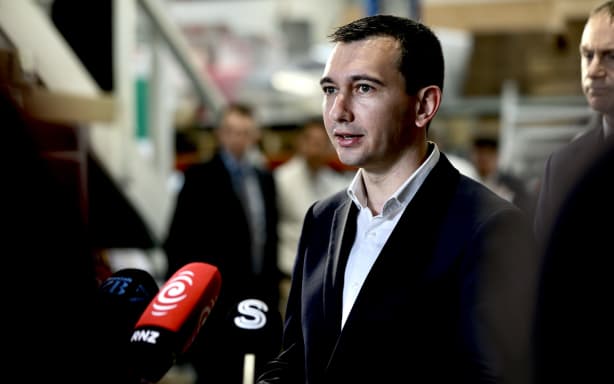
National’s energy spokesperson Simeon Brown says uptake of residential solar, battery storage and on-farm generation is low.
RNZ/Marika Hill
National also pledged to remove some planning rules to make it easier for households to install solar without the need for council consent.
RMA Reform spokesperson Chris Bishop said the current rules were fragmented and confusing.
“In one case, a council demanded a water discharge consent for ground-mounted solar because rain might run off the panels. That’s the kind of nonsense we’ll end.”
How the scheme works
Watts said the government would establish an entity under Local Government New Zealand, which would manage loan applications.
“The entity will do all the credit checks required, and all of those other aspects, individuals will need to have a 20 percent equity position within their home,” he said.
The loan was against the property rather than the individual, and would be paid back via rates, Watts said.
“You also have the opportunity to do some deferral of that as well, depending on your circumstance.”
Luxon suggested repayments could be made over ten or fifteen years, at more favourable terms than banks could offer.
‘Massive enthusiasm’ from councils – Luxon
National said it would invest $7 million for a 20 percent shareholding in the Home Energy Fund, with the balance funded by participating councils and the Local Government Funding Agency.
“There’s massive enthusiasm amongst the councils,” Luxon said.
Simeon Brown discusses National’s new solar policy
Midday Report
Brown told Midday Report he expected the vast majority of councils would be involved, but ratepayers whose councils were not, would miss out.
Local Government New Zealand expected $30 million would be put into the fund across participating councils.
Its chief executive Scott Necklen said the scheme would considerably help people struggling with the high cost of living.
“We all know the pressure households have been under as costs soar,” he said.
Local Government New Zealand said the scheme would considerably help people struggling with the high cost of living.
“We all know the pressure households have been under as costs soar,” said chief executive Scott Necklen.
“Local government has been working on sophisticated tools to help people keep more money in their back pockets and diversify their energy sources.”
Necklen said a panel including Nelson Mayor Dr Nick Smith and independent economist Cameron Bagrie had “thoroughly reviewed” the proposal and endorsed it.
Rewiring Aotearoa had long been pushing for the scheme.
“We think this could be the energy equivalent of Kiwisaver, because it helps individual households and will also increase the nation’s prosperity,” said chief executive Mike Casey.
He believed it should be current government policy rather than a National election promise.
“The business cases for the Ratepayer Assistance Scheme has been in front of the Government since last year and almost all of the parties, over 20 councils and all of our community groups support the scheme.
“While we welcome the announcement from National and are proud to have our name associated with this, there is still plenty of time for this Government to get the ball rolling on the RAS in this term so that loans can start flowing and New Zealanders can start saving.”
Widespread political support for solar schemes
Labour’s energy spokesperson Megan Woods said Rewiring Aotearoa and Local Government New Zealand’s policy – which National had effectively adopted – was great.
“My concern is, why has the National Party sat on this for so long?” she said.
“They’re saying they’re putting it out as election policy, but I know that that business case has been sitting in the Beehive for nine months, and over that nine months people have been struggling to pay their power bills.”
Woods warned the policy only helped homeowners, and did not reach everyone who was struggling with their power bills.
Labour’s energy policy would be released “very soon” and the party had always supported solar, she said.
Other parties have also indicated they would be campaigning on more support for solar.
Labour leader Chris Hipkins said his party had a policy on solar power in the last election and would do the same this year.
The Greens are backing National’s solar power policy, saying the party would be happy to help get it into law before the election.
Greens co-leader Chloe Swarbrick said it was a no brainer for the government to be subsidising the production of renewable energy like rooftop solar.
The policy resembles positions offered by Labour and the Greens at the last election.
Greens’ Teanau Tuiono said: “We welcome the policy, we think having solar is good for the country as well.
“And just to note that we offered our 15 votes to actually get this sort of initiative moving earlier – so that offer is still there, why wait for the election? We could get it on next week.”
He was asked if that was a sign the Greens could work with National.
“I think it’s important to try to be as constructive as you can be with the people around the room, we’ve always attempted to do that. I think there is a synergy in terms of this policy as well but I guess my message to them is we don’t need to wait for the election.”
Opportunity strongly supported a solar loan scheme and New Zealand First deputy Shane Jones said he was “quite interested” in it.
But ACT’s energy spokesperson Simon Court said the party did not support solar subsidies.