
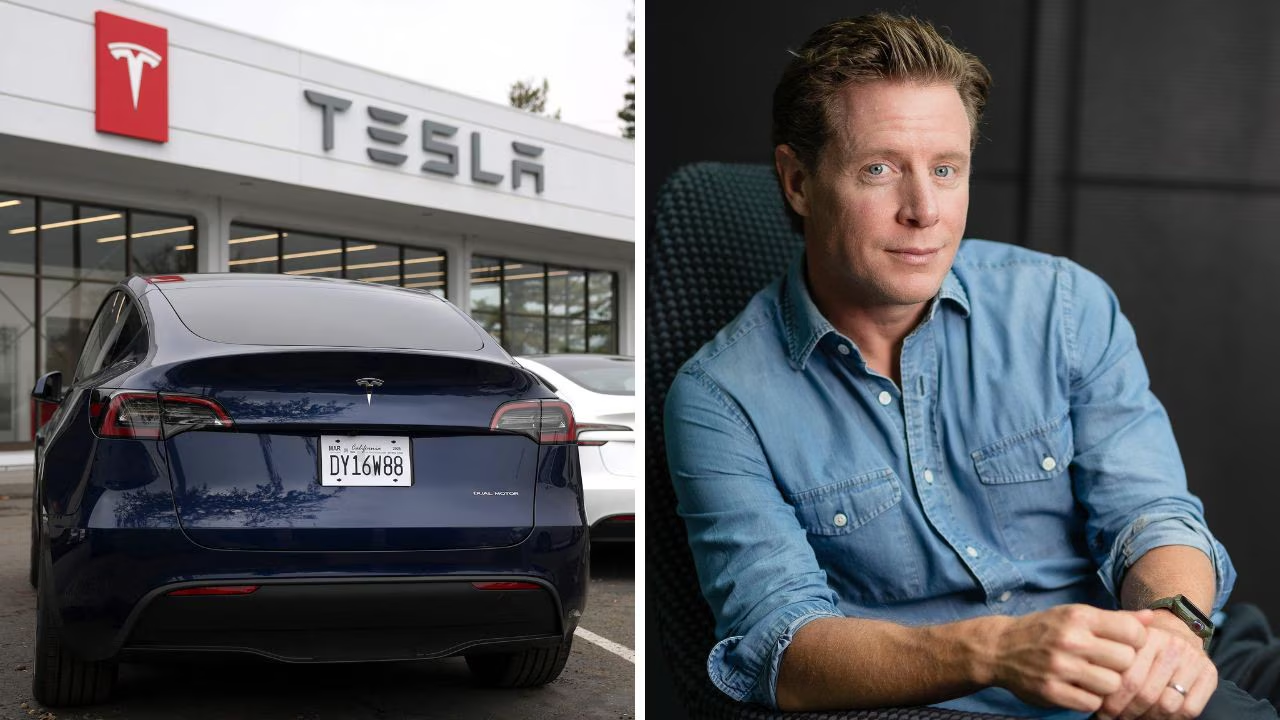
Second-hand EVs are already relatively cheap — but experts are predicting screaming bargains when leases under a government discount expire over the next few years.
Introduced by the Albanese government in 2022, the Electric Car Discount exempts some EVs from Fringe Benefits Tax (FBT) when acquired through a novated lease that typically lasts three to five years.
It allows employees to pay for the car and its running costs directly from their pre-tax salary, saving thousands of dollars in income and vehicle taxes each year.
The discount has proven wildly popular, with about 133,000 EVs acquired under leases with the FBT exemption over the past three years — 40 per cent of all EV purchases in that period, according to Treasury figures.
It’s been so popular that the government will phase it down from next year after tax revenue losses soared far beyond initial forecasts.
But it has already reshaped Australia’s car market and might make EVs cheaper than anyone anticipated.
Barefoot Investor Scott Pape warned this week that drivers who took advantage of the discount would end up with a car “worth half what you paid for it at the end of the lease”.
“All those amazing secret deals are leased, and most will be dumped on the market in three to five years,” the best-selling financial author wrote, predicting “bargains” for second-hand buyers due to the influx of supply.
Rob Leigh from car comparison website thebeep.com.au said a wave of second-hand stock could combine with other factors driving prices down, such as rapid technological advancements, new Chinese models, and customer concerns over range and battery health.
“In that three to five year mark, because there’s been such a big uptake, these cars have to go somewhere,” Mr Leigh told news.com.au.
“So they will end up flooding onto the used car market. Brand new EVs in three to five years’ time will be far more advanced than they are now, so that means better range capabilities — and range is still a major factor when someone goes out to purchase.
“The depreciation then on those cars that people are novated leasing now has the potential to be much higher than we’ve ever seen on a petrol car.”
He said buyers who were happy with an EV that had been driven for three to five years — and that was not as advanced as the newer models — had the potential to “score a really great bargain”.
Jerry Kam, who owns Bayside Brothers Motors in Victoria, said he expected EV prices to drop in the coming years as the nation’s charging infrastructure played catch-up.
“I do think the Australia market at this stage is still not very convenient for you to charge the EV if you want to do longer distance,” Mr Kam told news.com.au.
“I believe the people who traded in or sold their petrol car or diesel car back in March and April, maybe even after a year or two, I think they will sell their EV, because at this stage,
the Australian market still not very suitable for EVs.
“I think a lot of people try to sell their EV and then it’s a simple economic question. When supply is more than demand, then the price will drop.”
Mr Kam said he currently had a low-mileage, 2023 Tesla Model 3 long range for sale for $45,000 — a price that was “still half of what a long range is when it’s brand new”.
“The used EV is harder to sell,” he said.
“So then for a business point of view, if the EV is hard to sell, then I have to price it down. I have to sell it cheaper, sell it cheaper.”
He added that all cars depreciate in value; and for some Aussie drivers, EVs were still a great fit.
EVs more popular than ever
Not everyone agreed with Mr Pape’s view; Brendon Green from car auction giant Pickles said second-hand EV prices had actually surged this year due to higher petrol prices.
“We sold the largest amount of EVs we’ve ever sold in the month of March,” Mr Green told news.com.au.
“We saw EV searches on our website increase 160 per cent from what they were the month prior.
“We saw Telsa Model 3s jump in price by $12,000 (30 per cent). We had 100 per cent clearance rates. So the used EV market has certainly grown significantly through the fuel crisis.”
Mr Green expected leased EVs to enter the market in a staggered fashion and he didn’t foresee a “mountain” of cars coming up for sale all at once.
Soaring fuel prices as a result of the Iran war have driven an unprecedented number of Aussies into the EV market, according to data from VFACTS.
Buyers registered 21,303 EVs in May, a record 19.9 per cent of all new vehicles, and up 111.6 per cent on the same month last year.
For the first time, the Tesla Model Y became Australia’s best-selling car with 5,605 sales — ahead of the Ford Ranger and Toyota HiLux, and the first EV to ever top the chart.