
A stone quarry along South Australia’s Murray River supplied Aboriginal communities for at least 7,000 years, according to a new study from Flinders University and the River Murray and Mallee Aboriginal Corporation. The research gives the first detailed look at the Sugarloaf Hill Quarry and shows the site played a major part in making tools and moving stone across the region.
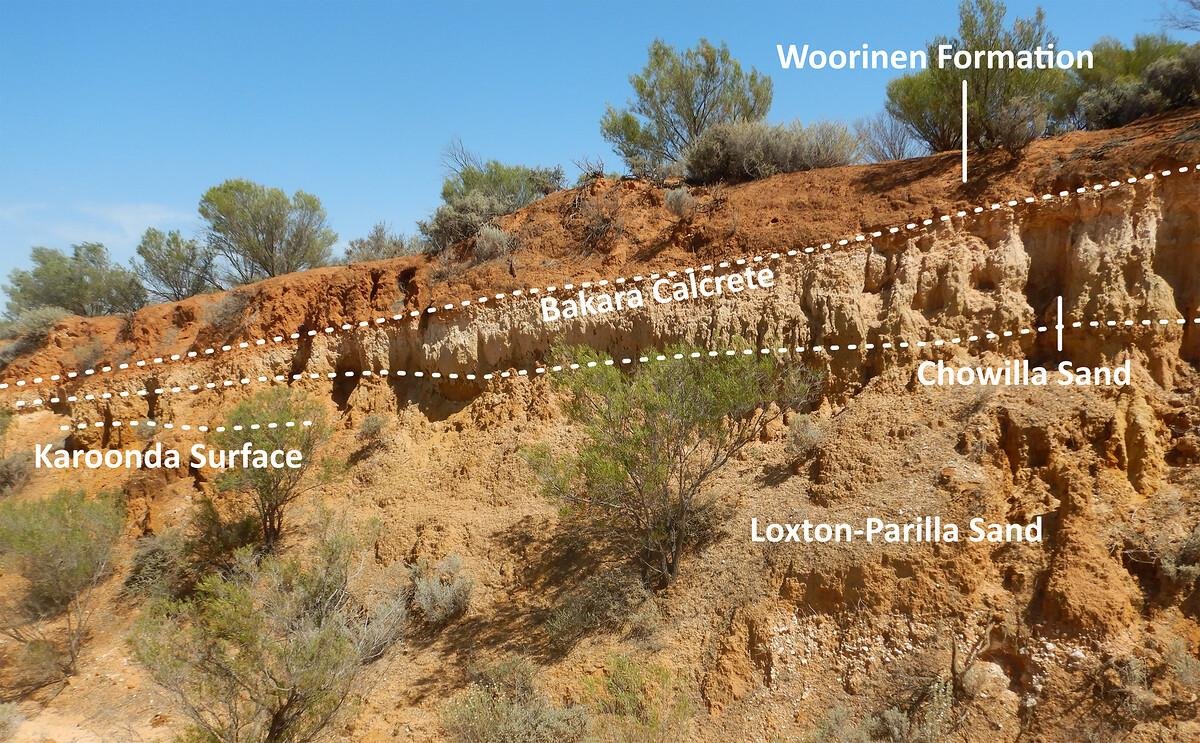 Geological layers exposed in a road cutting near the Sugarloaf Hill Aboriginal quarry. The Woorinen Formation covers the area where Aboriginal people mined silcrete and chert for thousands of years. Credit: Westell et al., Archaeology in Oceania (2026).
Sugarloaf Hill lies near Overland Corner in South Australia’s Riverland. Aboriginal people mined silcrete and chert there for thousands of years. These hard, fine-grained rocks were used to make stone tools and weapons. Archaeologists knew about the quarry for many years, though little work had been done to date the mining or understand how the site fit into wider trade routes.
The team dated archaeological finds and the land around the quarry with several methods. Their results point to about 7,000 years of mining. The new timeline fills a large gap in the archaeological record for the southwestern Murray-Darling Basin. Researchers say similar work at other Riverland quarries will show if this pattern was common across the region.
The study also points to the wider reach of Riverland stone. Silcrete and chert sources occur only in a narrow stretch of the Murray River between Berribee in northwestern Victoria and Overland Corner in South Australia. Stone from this area turned up far beyond those limits, showing people moved these materials through long distance exchange networks.
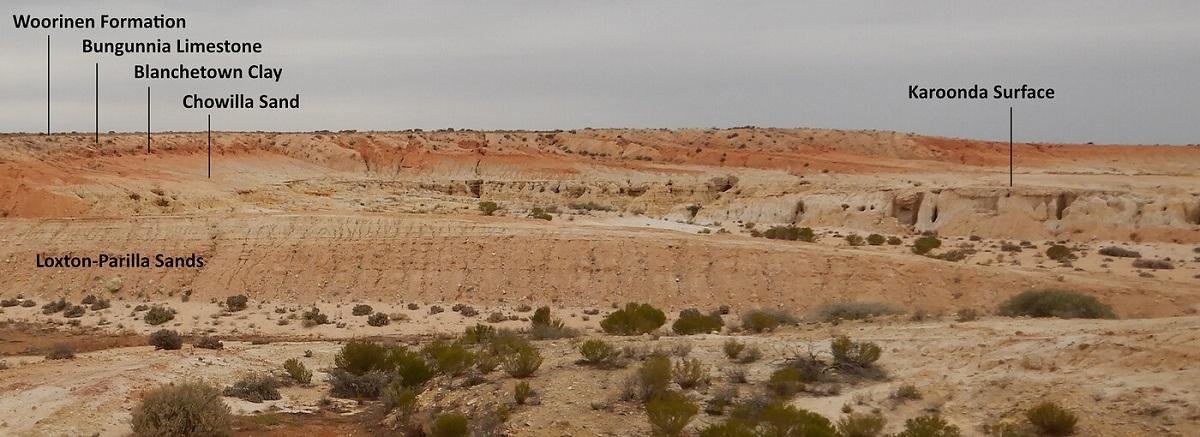 Geological layers exposed in a quarry section near Sugarloaf Hill. The 15-meter-deep exposure reveals rock formations that help researchers understand the landscape surrounding the ancient Aboriginal stone quarry. Credit: Westell et al., Archaeology in Oceania (2026).
Evidence suggests Riverland stone reached the Lower Murray by the middle Holocene. Trade appears to have grown during the same period. Archaeologists also found more cemeteries, large oven mounds used to process food, much of it aquatic plants, and greater use of grinding stones. Together, these changes suggest stronger links between Aboriginal groups living along the river.
Researchers found few large stone working areas beside the quarry. Even so, nearby camps and middens contain many stone artifacts made from local silcrete and chert. The findings show Sugarloaf Hill served as an important source of raw material, even though the Riverland has received less attention than other Aboriginal quarry regions in Australia.
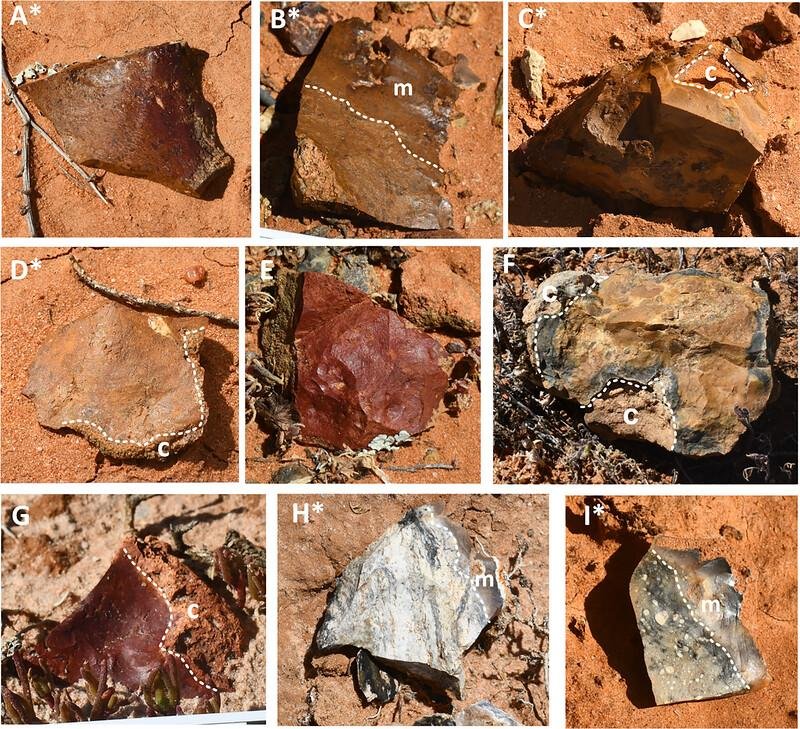 Samples of silcrete, chert, and other stone types from the Sugarloaf Hill Aboriginal quarry. These materials were used by Aboriginal people to make stone tools and were traded across parts of the Murray-Darling Basin. Credit: Westell et al., Archaeology in Oceania (2026).
Lead author Dr. Craig Westell said the project’s main goal was to build a reliable timeline for mining at Sugarloaf Hill. The team plans to compare the site with other Riverland quarries and identify the chemical fingerprints of local stone. Matching those fingerprints with artifacts from other sites would help trace where the material came from and map exchange routes across the Murray-Darling Basin.
The study also points to the cultural importance of these quarries. For Aboriginal communities, stone sources form part of long-standing ties with ancestors, the land, and traditional ownership. The authors hope the work supports community-led care and protection of these heritage places.
Publication: Westell, C., Moffat, I., Fullagar, R., Roberts, A., Kemp, J., Morley, M., … River Murray and Mallee Aboriginal Corporation. (2026). 7000 years of Aboriginal mining at Sugarloaf hill in the Riverland region of South Australia. Archaeology in Oceania, (arco.70028). doi:10.1002/arco.70028