
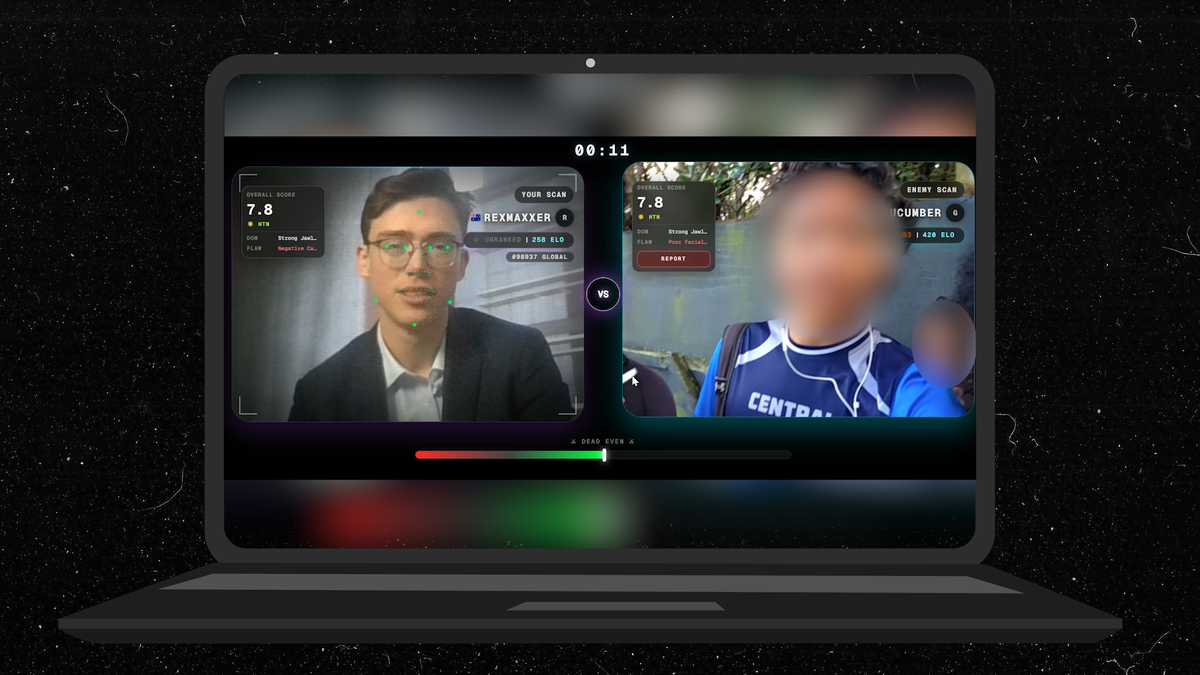
A controversial website is putting Australian children at risk by allowing them to compete with strangers in facial attractiveness contests, despite claiming to be restricted to users older than 18.
Omoggle is an anonymous chatting platform that pairs random users together and uses a scale to score their faces based on physical features and appearance.
The main concern centres on the platform’s use of the PSL scale, or perceived sexual market value, which analyses and scores users’ faces.
Know the news with the 7NEWS app: Download today Arrow
According to the website, the PSL scale uses AI-powered facial analysis based on criteria including “symmetry, averageness, facial harmony and skin quality”.
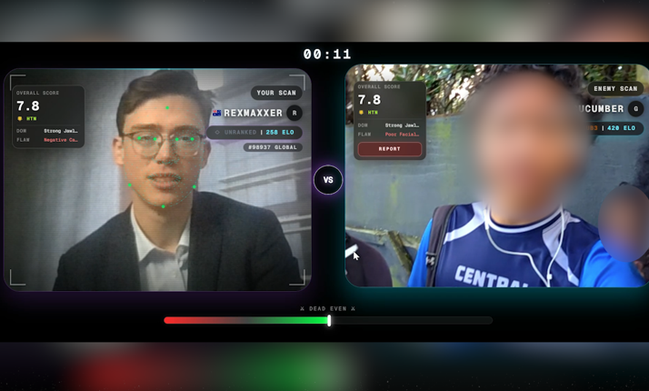 The facial analysis is based on criteria including ‘symmetry, averageness, facial harmony and skin quality’. Credit: 7NEWS
“It’s not harmless fun, it’s dangerous and kids are at extreme risk when they use it,” cyber safety expert Susan McLean said.
“That is just so awful for young people, who are struggling with their self-esteem as it is, to be on a platform like this, just to see where they might come in a ranking scale.”
The site has gained popularity after major streaming personalities including xQc, Jason TheWeen and IShowSpeed shared their experiences with millions of followers.
The website’s name has also attracted a younger audience as it’s a play on the name of controversial roulette-style chatting platform Omegele, which was officially shut down in November 2023.
According to the eSafety commissioner, Omegele was “being used by paedophiles to groom and abuse children”, with the website revealing there were “no measures in place to prevent children communicating with adult users they did not know”.
As of June 10, the website has been blocked in Australia, with the creators of Omoggle citing our social media ban for under 16s as the reason.
But with the rise of Omoggle, McLean says these types of websites are like a “whack-a-mole; whack one down, one pops up”.
The term “mog” or “mogging” comes from internet culture and refers to the “act of looking or acting better than another person”, according to Urban Dictionary.
It was popularised by the “looksmaxxing” movement, which involves predominantly young males preaching physical beauty over everything else.
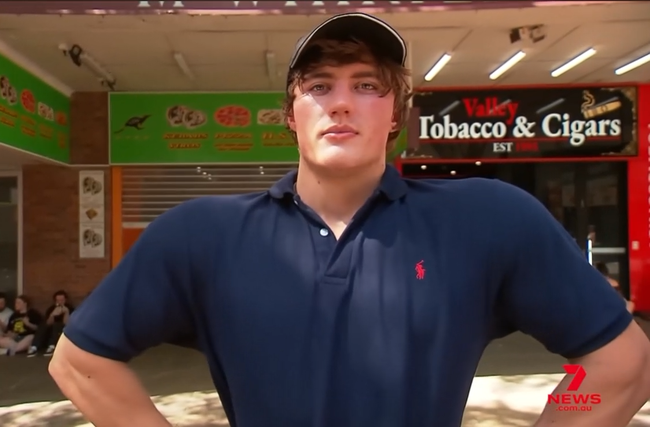 The ‘looksmaxxing’ movement is directed towards predominantly young males, preaching physical beauty over everything else. Credit: 7NEWS
“If you have an online presence, whether you’re a streamer or a YouTuber, you actually, in my mind, have a legal and moral and ethical responsibility to ensure the people you are engaging with are as safe as possible,” McLean said.
“Kids are going to follow what you do. They are going to want to be where you are.
“Most of them couldn’t care less. They are solely about likes and streams and making money monetising their content.”
How dangerous is the website?
We tried the website for ourselves to see how dangerous it could really be for young people.
While the site asks users to confirm whether they’re over or under 18, there is no legitimate verification system in place.
One click, and it automatically takes you inside the over 18 “arena”.
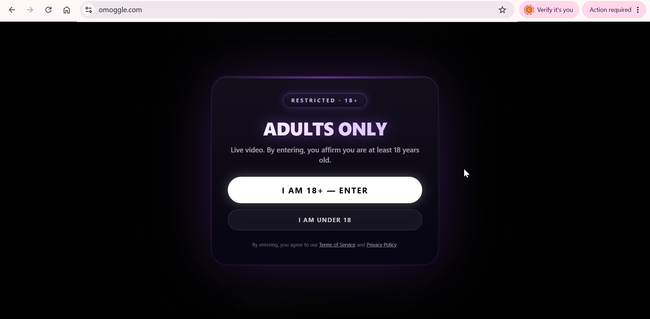 The website revealed there was no legitimate verification system in place. Credit: 7NEWS
Testing the platform for about 20 minutes revealed numerous people clearly younger than 18, some even in school uniforms.
One user, who looked and sounded very young inappropriately asked, “can I eat your p****?”.
The website only allows users to compete with a stranger for less than 20 seconds, easily sifting through multiple players in a short period of time.
McLean says because no one “owns the internet”, platforms can get away with being misused.
“What the platforms will say when they’re called out is, ‘I’ve created a platform for fun. I’ve created it for people to connect with random strangers to have a chat’,” she said.
“Unless the platform itself is breaking the law of the country it’s operating in, then there’s nothing anyone can do.
“If [the website] is simply dangerous and dodgy, well, unfortunately we’re stuck with it.”
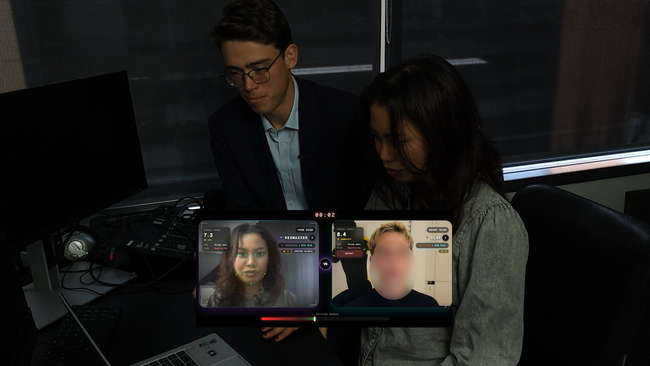 McLean says Aussie kids are still finding ways around restrictions on certain platforms, despite the social media ban. Credit: 7NEWS
An eSafety spokesperson told 7NEWS.com.au that roulette-style apps randomly pairing strangers, particularly those popular with children, “pose significant online safety risks and have been used by child sexual abuse offenders to groom Australian children”.
“ESafety is concerned about the risks posed by randomised video chat platforms like Omoggle and is monitoring the service’s compliance with the Online Safety Act’s codes and standards,” the spokesperson said.
Despite the social media ban rollout in Australia earlier this year, McLean says kids are still finding ways around restrictions on certain platforms.
“We’ve seen with social media platforms that these products that verify age through facial scanning are pretty flawed,” she said.
“If kids want to find a way around something, they will.”
The emergence of Omoggle highlights the ongoing challenge facing parents and regulators, with experts warning that banning individual platforms creates a false sense of security when countless other problematic sites exist.
“We need to educate young people around tech use, risk and danger, and we need to educate parents to make sure they’re actually parenting in the digital space,” McLean said.
“All we can do is raise awareness that these platforms exist and make sure parents are aware.”
AI creators’ grim warning as they beg the world to stop development
3 min read
Families turning back clock on kids’ phones with retro solution
1 min read