
TORONTO — There’s one word almost every player uses when they talk about the feeling that arises from returning to a place they played for so long: “Weird.”
It’s weird, Matt Olson said, arriving at an old ballpark’s visitors entrance on a coach bus for the first time. It’s weird, Bryce Harper said, finding your nameplate in a road clubhouse, gravitating to your former stall in a stadium that should feel familiar. It’s weird, George Springer said, navigating foreign tunnels to find a field you played on hundreds of times.
That’s the weirdness Bo Bichette has in store for him Monday, when he returns to Rogers Centre for the first time as a member of the New York Mets. Bichette, after seven years and 748 games with the Blue Jays, in January signed a three-year, $126 million deal to play elsewhere. He aided Toronto to four playoff appearances and one World Series run, and delivered a pair of All-Star seasons. He helped put a stop to a rebuild and kickstart a new era in Toronto. Now, he comes back as a temporary visitor.
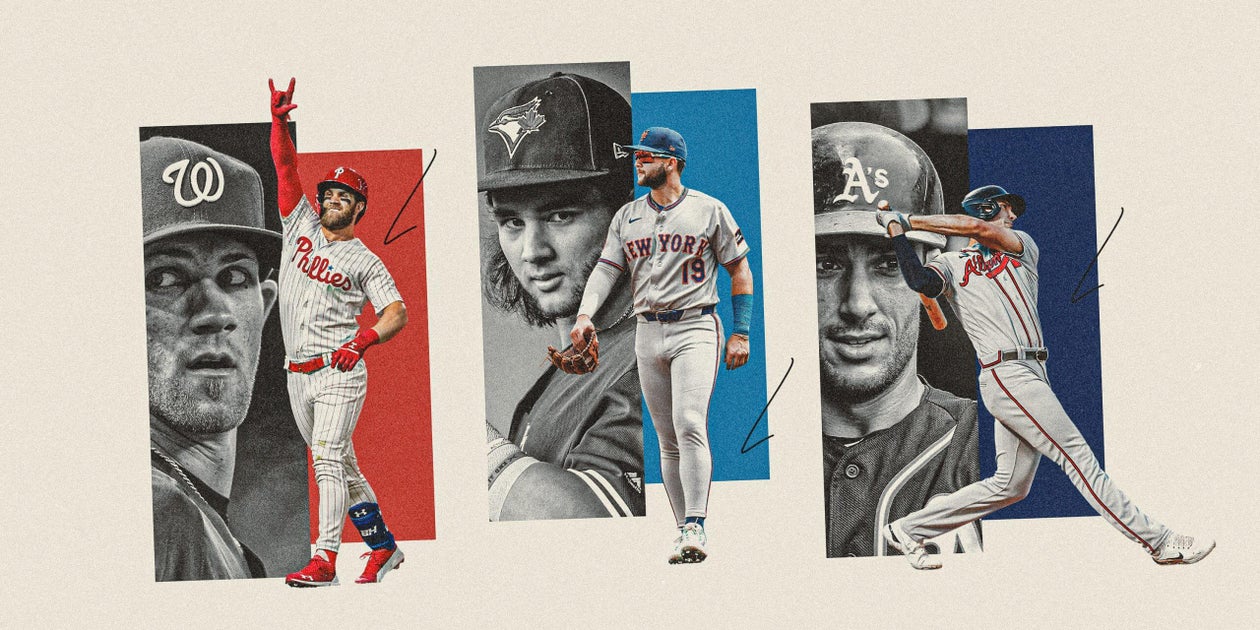
Bichette is far from the first star to anticipate returning to old stomping grounds. So The Athletic asked some of Major League Baseball’s highest-profile players who left their longtime teams: What’s it like going back home?
The significance of that first game back, Dylan Cease said, depends on the temperament of the player. The boisterous fan favourites might thrive in the welcome-back spotlight while quieter types shy away. For some, such as Kevin Gausman and Harper, returns are etched in their memories. For others, they’re a bit foggier.
Cease remembers walking through the streets of Chicago more than his actual first start back, after five years with the White Sox. Revisiting his favourite restaurants, such as RPM Seafood and Pizzeria Portofino, resonates more than his six strikeouts back on the South Side.
Olson hit a three-run homer in his return to Oakland, sparking the Atlanta Braves to a win over the team that traded him away. But, more than anything, Olson recalls just how tired he was that day. A late cross-country flight the night before left the first baseman exhausted as he hugged former teammates, chatted with old coaches and drove a deep fly ball in his old park.
After spending the first six years of his MLB career with the Baltimore Orioles, Gausman will never forget his first start back in Maryland — because he remembers specifically what was missing.
The 14-year veteran had seen video board tributes for returning franchise staples, “Welcome Back to Birdland” playing through the sound system, and standing ovations from Orioles fans. Some of his former teammates, including Dylan Bundy, received that honour. Gausman did not.
“For whatever reason, they never did that for me,” he said. “That’s something that I’ve always had in the back of my head. Like, all right, if they want to add a little extra fuel to this, that’s fine.”
The righty made 150 appearances for the Orioles, climbing from the No. 4 pick in the 2012 draft to a regular in the rotation. He never fully reached his potential in Baltimore, but he still loves Camden Yards and still gets a breakfast burrito at Spoons whenever he’s there, but the matchups against his old team mean more.
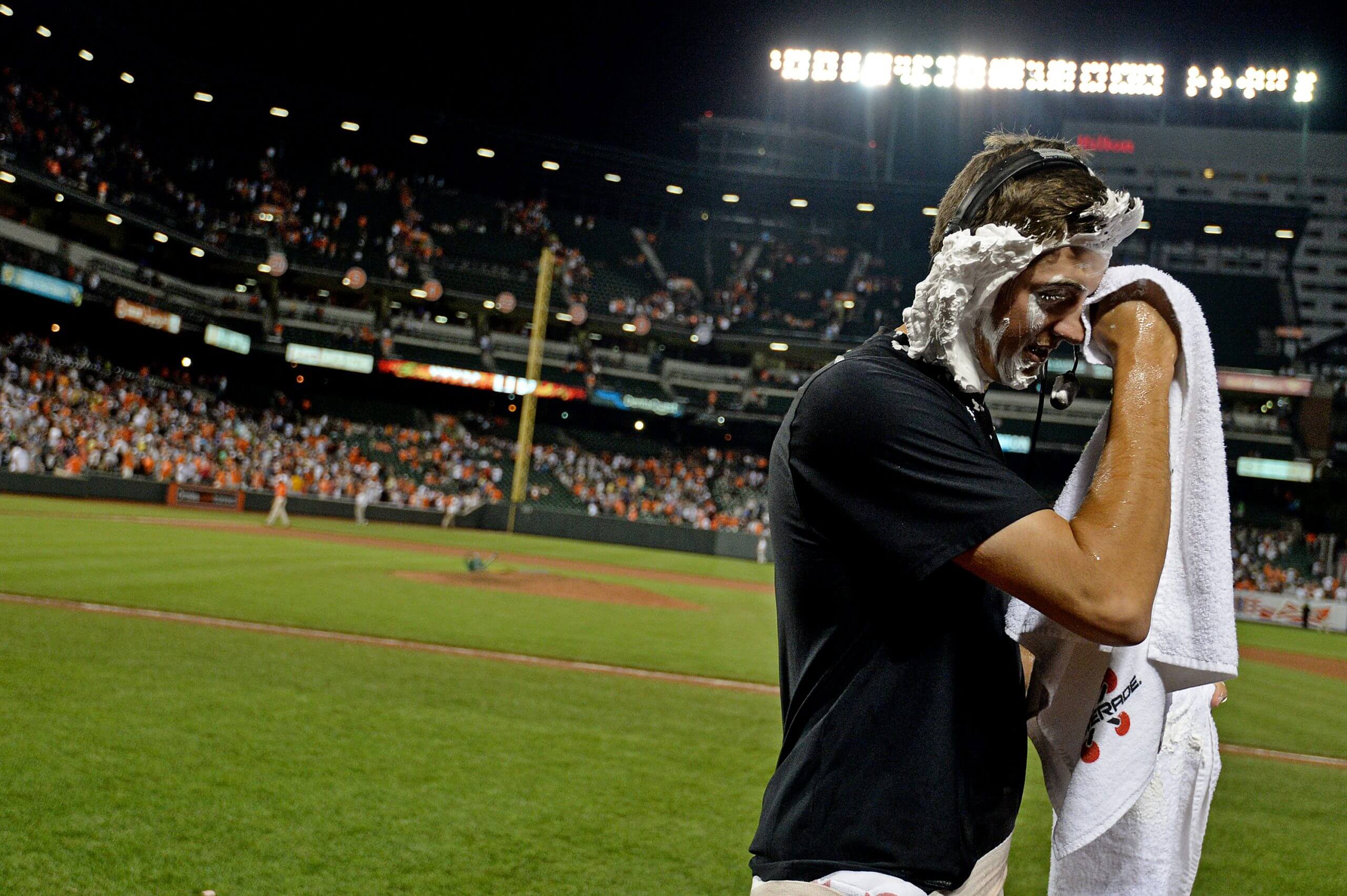
Kevin Gausman, who made his MLB debut against the Blue Jays in 2013, was 39-51 for the Orioles. Here he celebrates his first major-league win. (Patrick Smith / Getty Images)
Gausman’s return to Camden didn’t come until September 2022, his first season with the Jays after playing in the National League for most of the previous four seasons, but he had a shot against the Orioles at Rogers Centre earlier that year. It was a complete disaster, Gausman said, as he had “explosive diarrhea” the night before his start. He sat in the back rooms of Toronto’s clubhouse connected to an IV drip before the game. He sweated bullets on the mound and had to run to the bathroom every five minutes before first pitch. He allowed seven runs in 2 1/3 innings in what would end up as the worst start of his season. Gausman was furious.
That intestinal struggle made the righty’s Baltimore return three months later all the more important. The fire was only fuelled further by the missing welcome back video, leading to 6 2/3 quality innings from Gausman in a 7-3 Jays win. Every outing since, Gausman has been quite aware of what team he’s starting against.
“You always want to pitch well against the team you played for,” Gausman said. “You kind of want to show them what they’re missing.”
Those videoboard moments are brief, but they still hold meaning. They signify a player’s legacy and that their contributions to a franchise are not forgotten. They give fans, if only for a few seconds, an opportunity to cheer. Chris Bassitt, who returned to Toronto in June after three years with the Jays, didn’t like any of it. He didn’t like having to watch himself on the big screen. He said he didn’t like staring across the field at former teammates who were smirking and waving back at him. But even Bassitt, watching the montage of his greatest Jays moments, appreciated the memories.
Springer appreciates his tribute more now, four years after he first returned to Houston with the Jays. The outfielder, who won World Series MVP with the Astros in 2017, didn’t know how to get to the visitors locker room or find his way to the field from there. The view from the opposing batter’s box, Springer said, felt like a completely different ballpark. Former teammates Carlos Correa and Alex Bregman greeted him on the field before the game with hugs and dropped ice down the back of his shirt. Then, minutes before first pitch, a lengthy reel of Springer’s homers, diving catches and postseason celebrations played on the screen in right field.
It was a bizarre feeling, Springer said, saluting a former fanbase as his new team looked on. In the years since, returning to Houston still chokes Springer up, but he couldn’t let it back then.
“I was quietly emotional about it then,” Springer said, “wanting to be respectful to the guys in my new locker room, on my new team. In the moment I watched it and was like ‘All right, let’s go win.’”
When Harper debuted with the Washington Nationals in 2012, he was welcomed as a hero with a standing ovation before his first at-bat. The promised prospect had arrived with the fanfare of a franchise cornerstone many hoped would never leave. Seven years later, the applause was gone. As Harper returned to Washington for the first time after signing with the division-rival Philadelphia Phillies, Nationals fans heckled him each time he stepped in the box. They jeered through his video tribute and booed his two-run homer in the eighth inning. The hero had turned villain.
“The mayor called me Benedict Arnold,” Harper said. “That was kind of crazy.”
Harper, in hindsight, gets it. He’s still booed in Washington and even sometimes in Philadelphia. He didn’t expect it, but he understands that’s just how fanbases work.
The Phillies first baseman has seen teammates Kyle Schwarber, Trea Turner, Jayson Werth and more make similar returns. He stood in the dugout, watching players step onto the field and wave to local fans. Sometimes they’re booed. Usually, they’re welcomed warmly.
Harper suspects Bichette, after seven seasons in Toronto, won’t be treated as a traitor. He’s probably right. A video tribute will play for the shortstop who ushered in a new era of Blue Jays baseball. The crowd will roar for the man who nearly delivered a World Series-winning homer.
And years from now, we’ll see what Bichette remembers about the moment.
“Bo had such a great run,” Harper said. “I think it might be a little different for him.”