
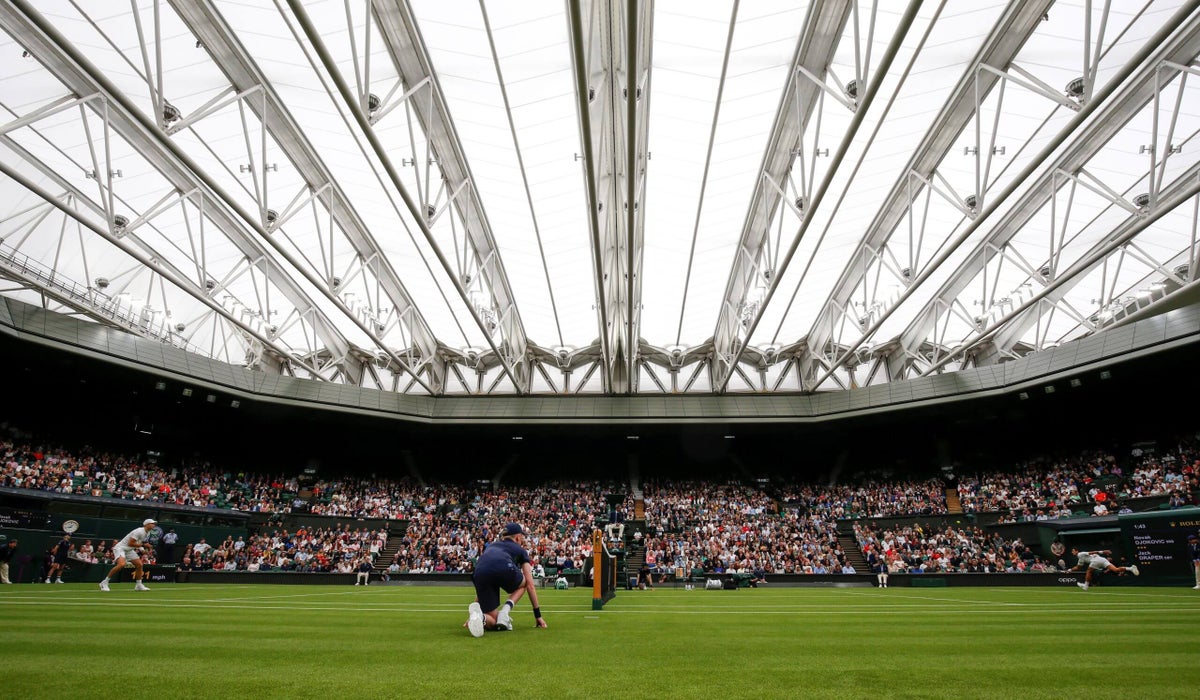
THE ALL ENGLAND CLUB, London — For Jack Draper, the moment he realized his preparation for facing an all-time great of the sport hadn’t been ideal came early in the second set.
It was 2021. Draper, 19 at the time, was playing his first ever Grand Slam match — on Centre Court at Wimbledon — against one of the biggest names in the sport, Novak Djokovic. After winning the first set, it hit Draper that he had already been playing the match in his head for 24 hours and had exhausted himself in the process. He lost in four.
“I was already doing my grips the night before, I was already locked in listening to (the music from) Gladiator,” Draper, who had to withdraw from this year’s tournament due to injury, said in a news conference Sunday.
Draper was reliving the experience to to provide a template for what not to do when in his position. A position that the 20-year-old Maya Joint finds herself in Tuesday, the player tasked with facing Serena Williams in the 23-time Grand Slam champion’s first singles match in nearly four years.
Why Serena Williams chose Wimbledon to return to playing singles
Ava Wallace
It’s a hugely daunting task for any player, one that according to French Open champion Mirra Andreeva, everyone in the locker room was desperate to avoid.
“When I arrived on-site and I was warming up for my practice, they were doing the draw ceremony, I was watching like this (covering her face with her hands) because I don’t think anyone in the draw would have wanted to play against Serena,” Andreeva said in a news conference Saturday.
“I’m going to speak for myself. I wouldn’t want to play against Serena. I would be just very nervous.”
Joint herself said on Friday that she sought counsel from the last player to face Williams in singles, her fellow Aussie Ajla Tomljanović, who kept her composure to beat the American at the U.S. Open four years ago.
As well as urging Joint to believe in herself, Tomljanović reminded her that Williams will be just as nervous herself. There’s a lot on the line for Serena too, who at 44 is coming into the match with no warm-up singles match.
Williams herself said as much in a news conference Sunday. “I expect to be nervous,” she said. “I was also nervous every single match I ever played in my life. I think that showed the passion and the love and the care, that I cared about my job, whether it was the first round or the second round or the finals. I’ve always had some nerves.
“But then I just dust ’em off, then I move on,” she said, adding that she is aware that no one will want to face her.
There are measures, some of which are fairly extreme, that players can take once this kind of match gets under way. Coco Gauff was only 15 when she faced Venus Williams on Centre Court in 2019, in her first Grand Slam match. The Williams sisters had inspired Gauff to pick up a racket, and so it would have been easy for her to be overawed against one of her childhood idols. Her solution?
“I didn’t look at the scoreboard the whole match. I did not want to see Venus’ name,” Gauff said in a news conference on Saturday.
“No matter how much you try to block it out, I feel like once you see the name, it makes everything seem real. Maybe don’t look at the scoreboard.”
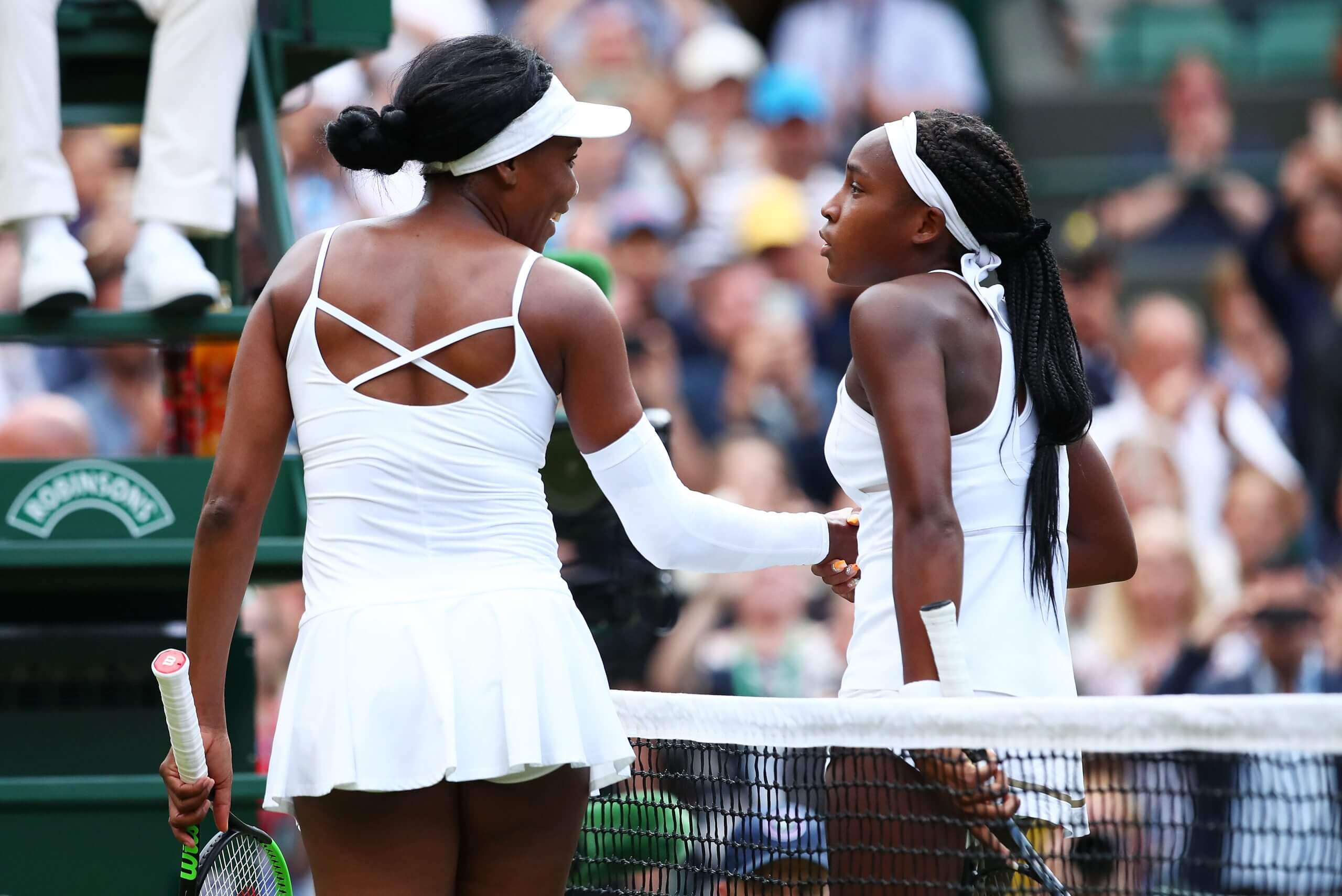
Coco Gauff defeated Venus Williams when they met at Wimbledon in 2019. (Clive Brunskill / Getty Images)
Alex de Minaur, who said his compatriot Joint would not be fazed by Tuesday’s challenge, admitted that “very few people can cope with that situation and that’s just the truth.”
But he said that “sometimes you gotta try and remember to give yourself that respect that you’ve earned.” De Minaur said that during his equivalent match against Rafael Nadal at Wimbledon, when he was 29 in 2018 (a 6-1, 6-2, 6-4 defeat), he didn’t really believe in himself. And that only once you do can you “go out and play the tennis match on its own terms, but it’s not easy.”
Alexander Zverev said similar in a news conference Saturday, and that when he first faced Roger Federer and Nadal, “I couldn’t handle my emotions.”
This became a semi-regular occurrence on the men’s tour for a while, when numerous players seemed overawed at facing Federer or Nadal. Casper Ruud being thrashed by the latter, whom he had always idolized, in the French Open final of 2022 was one of the most high-profile examples. Sebastian Korda held Nadal in similar esteem and admitted in a news conference four years after being hammered by his hero at Roland Garros that facing him there had been “very difficult.”
One strategy to beat a childhood idol is to turn their strengths against them. After winning via retirement against an injured Andy Murray, whom he had so revered growing up, at Queen’s in southwest London a couple of years ago, Jordan Thompson told reporters that: “I thought, ‘Hit the ball in and make him run.’
“I actually learned that from him, when he was playing, and if a guy was hurt or cramping or something, he’d always use a drop shot or just try and take it up the line.
“I guess that’s the benefit of me being a lot younger than him and watching him play.”
No one’s expecting Joint to suddenly start serving like Williams or possess her unshakable self-confidence. But she might be able to borrow some of her opponent’s ruthlessness, and, like Thompson, try to exploit Williams’ rustiness on a singles court.
It might be the assignment everyone was hoping to avoid, but as well as the fear factor for Joint, there is a big opportunity as well.