
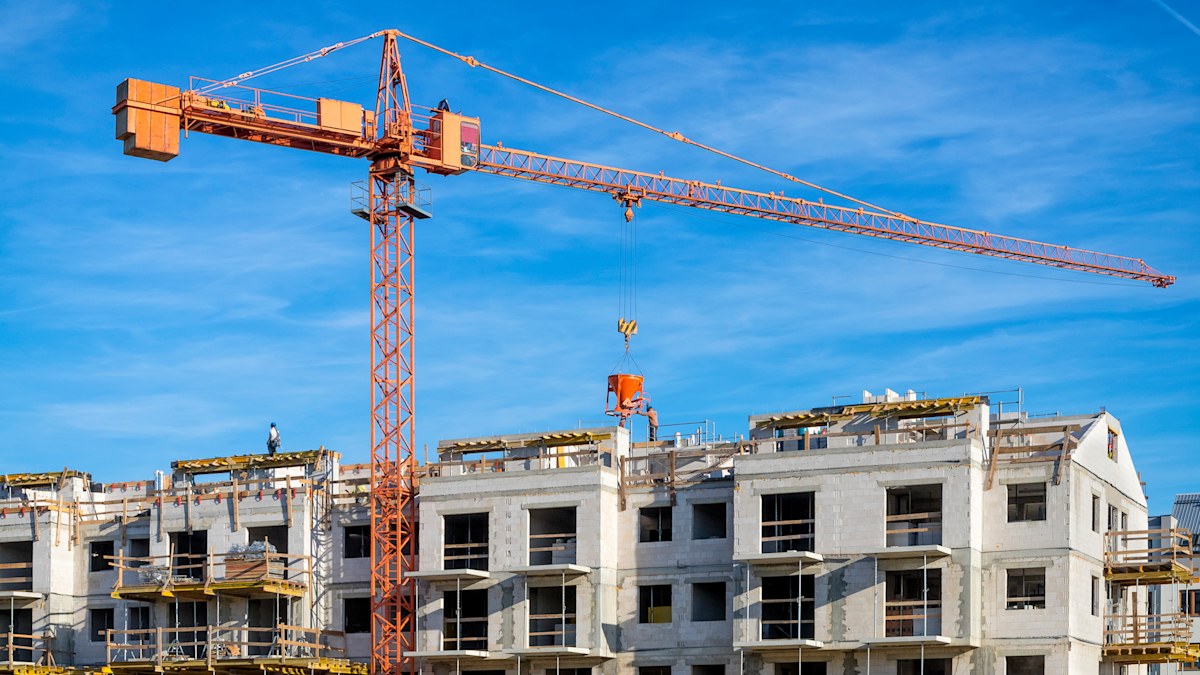
We’re officially two years into Australia’s goal of 1.2 million new homes in five years, and new data continues to suggest the government may have bitten off more than it can chew.
The Australian Bureau of Statistics (ABS) found that building approvals for new homes dipped by 1.1 per cent in May, continuing a slow trajectory toward the ambitious target.
The figures include dwellings, such as apartments and townhouses, which is continuing a significant 10.4 per cent dip.
The recent ABS stats present a glaring problem for the housing push, as an average of 20,000 homes will need to be approved every month until 2029 to comfortably reach the 1.2 million target.
Australia has regularly fallen short of this mark, with May 2021 being the last month that many approvals were granted, three years before the accord was announced.
However, it is still tracking better than last year, with total approvals up 5.3 per cent compared to the same time in 2025.
The five-year task was a $3.5 billion joint pledge established by the federal and state governments.
CreditorWatch Chief Economist Ivan Colhoun told nine.com.au that while it is unlikely they will hit the target, it is laudable that the government aimed for it in the first place.
“It’s going to be harder to achieve that target because, mathematically, they already can’t get there.”
Colhoun noted that large-scale developments, such as apartments, take longer to clear the planning phase, which can warp the data.
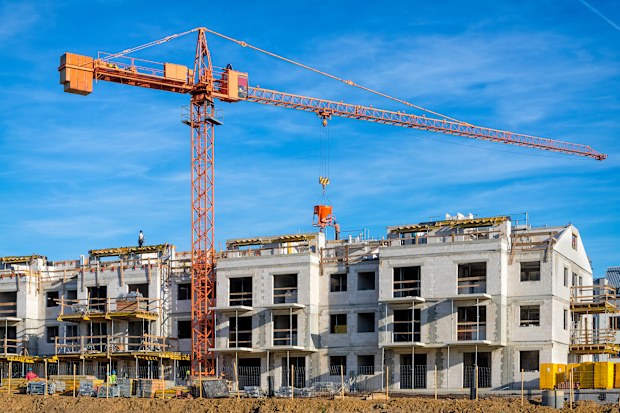
The government faces a tall task of reaching its 1.2 million house goal it laid out in the 2024 Housing Accord. iStock
For instance, a slow start of just 3378 approvals in January 2026 was followed by a record-high 9339 the next month.
“There’s also been some macro factors in that interest rates have gone up three times recently.
“The government has also changed taxation arrangements for housing and capital gains that will weigh against construction, and prices have been falling,” he said.
The decline in housing prices comes as new CoreLogic Home Value Data shows home values fell 0.4 per cent in June, with capital cities dropping 0.6 per cent for the month, and 1.3 per cent for the quarter.
Despite the quarterly dip, property prices are up in every capital city year-on-year, with the sole exception of Melbourne.
The market is now sliding into its ninth slump in 30 years, leaving vendors asking should they hold off selling, while buyers are wondering if it’s the best time to purchase.
A spokesperson for the Minister for Housing, Homelessness and Cities, Clare O’Neil told nine.com.au that Labor’s reforms are aimed at boosting supply and helping first homebuyers and young Australians.
“Treasury’s Budget forecasts show house prices will continue to sustainably grow,” the spokesperson for the Minister said.