
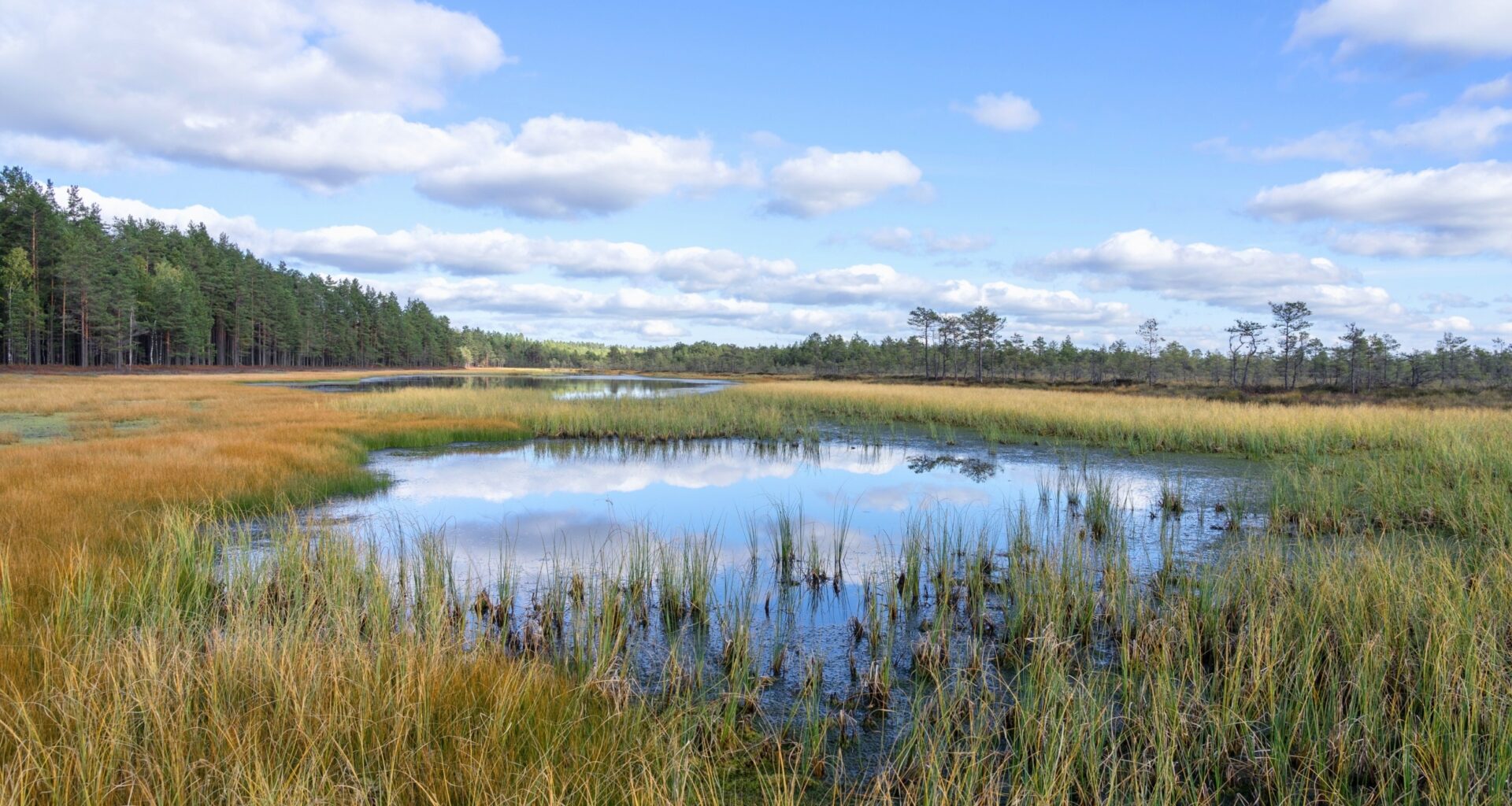
Deep in the peatlands of northern Sweden, billions of microbes are constantly gaining, losing, and swapping pieces of DNA.
These tiny organisms help control how carbon moves through the environment.

As frozen Arctic ground slowly thaws, microbes influence whether huge stores of carbon stay trapped in the soil or escape into the atmosphere as greenhouse gases.
Understanding how these organisms adapt could improve scientists’ ability to study climate change and predict how ecosystems respond to a warming world.
After studying eight years of soil collected from Stordalen Mire, a permafrost peatland near the Arctic Circle, researchers found that microbes are exchanging genes on an enormous scale.
A constant exchange of DNA
Microbes are living organisms so small they cannot be seen without a microscope.
Even though each one carries its own DNA, they can also pick up pieces of genetic material from their surroundings or receive them from other microbes through mobile genetic elements.
These small pieces of DNA move between organisms and carry genes from one cell to another.
Using advanced bioinformatics, the research team identified roughly 2.1 million mobile genetic elements within microbes living in the Swedish peatland.
Sampling new combinations of genes
The team also examined RNA to determine which of these genetic elements were actively moving and analyzed DNA to reveal a record of past movement.
The results suggest gene exchange may affect as much as half of all microbial populations within a community at any given time.
“These aren’t rare events,” said Sarah Bagby, assistant professor of biology in the College of Arts and Sciences at Case Western Reserve, one of the study’s lead authors.
“Microbial communities are sampling new combinations of genes all the time.”
More than survival
Scientists have often studied mobile genetic elements because they spread antibiotic resistance. This research paints a much broader picture.
The team found that many of the transferred genes are connected to the everyday jobs microbes perform simply to stay alive.
“Most studies of mobile genetic elements have focused on the transfer of antibiotic resistance, but that sort of competitive interaction is really just a small slice of what these microbes are doing,” Bagby said.
“About half of the functions we found being affected by mobile genetic elements are tied to basic, everyday cellular processes—the things microbes need to do just to live, not to fight off threats.”
Why the Arctic matters
Permafrost stores massive amounts of carbon that has remained frozen for thousands of years. As temperatures rise, thawing soil makes more of that carbon available to microbes.
Their activity helps determine whether the carbon remains in the ground or is released into the air as greenhouse gases such as methane.
The study found that mobile DNA frequently changes genes involved in carbon cycling, nutrient processing, and other processes that shape how ecosystems function.
That means genetic exchange may influence how quickly microbial communities adjust as environmental conditions shift.
A flexible pool of genes
Unlike larger organisms, microbes have an unusual advantage when conditions change.
“Unlike us, microbes can take up DNA from their environment and start using it,” Bagby said.
“Every microbe has a set of core genes it needs just to be itself, but it also has access to this much larger, flexible pool of genes out in the world.”
“In a population of billions of cells responding to change, many won’t make it—but some will succeed because they managed to pull in that extra piece of DNA at the right time.”
Years of work beneath the surface
The findings come from nearly a decade of international collaboration.
Scientists collected samples from northern Sweden over eight years before combining them with large-scale genetic analyses to follow the movement of DNA through microbial communities.
Beyond revealing how active gene swapping is in nature, the researchers developed a framework that could help scientists measure genetic mobility in ecosystems around the world.
As climate change continues to reshape landscapes, understanding how microbes adapt may become an increasingly important piece of understanding how Earth’s carbon cycle responds.
The full study was published in the journal Nature Microbiology.
—–
Like what you read? Subscribe to our newsletter for engaging articles, exclusive content, and the latest updates.
Check us out on EarthSnap, a free app brought to you by Eric Ralls and Earth.com.
—–