
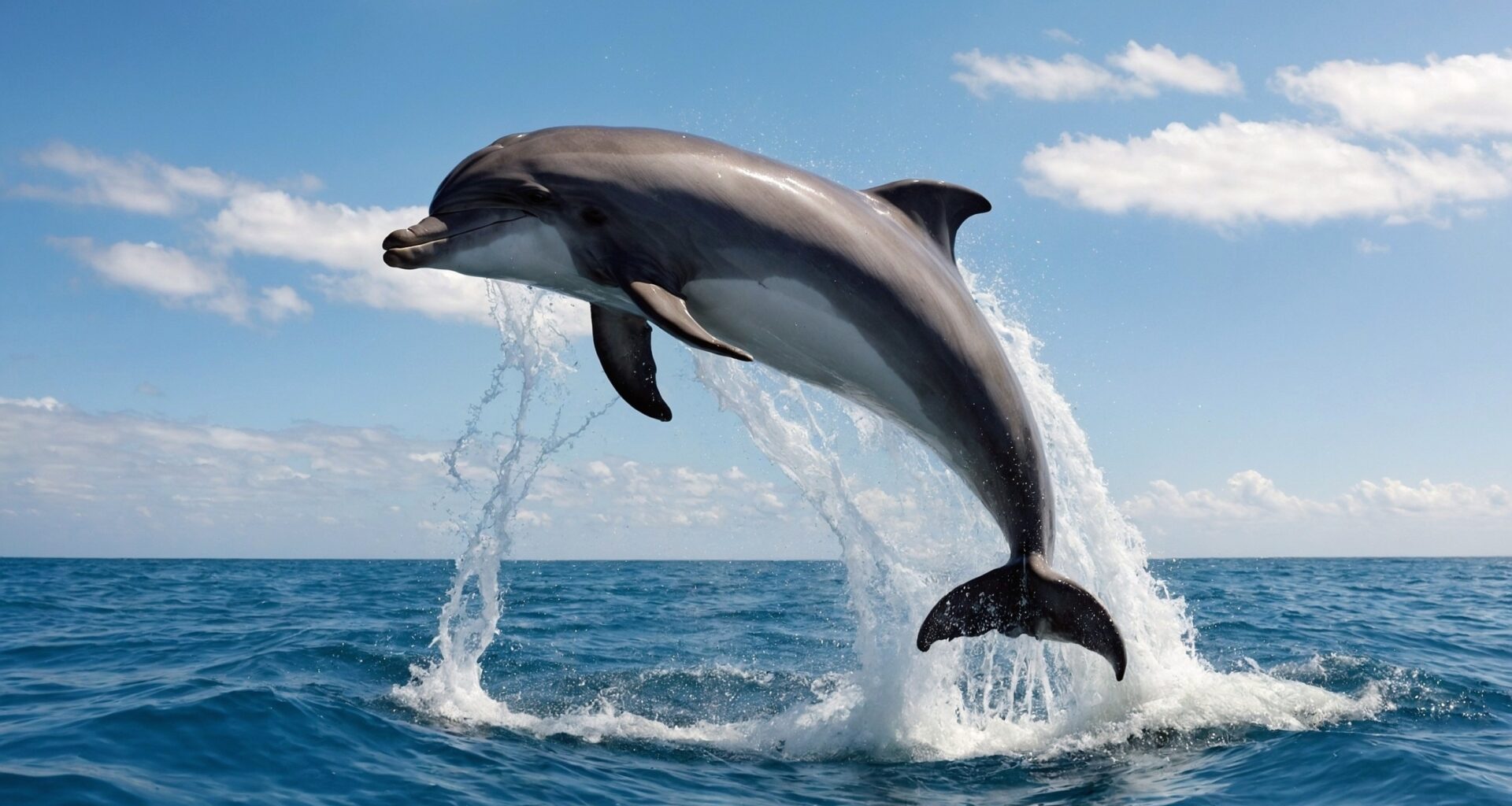
Every year, dolphins and porpoises swim into fishing nets they never sensed in time. The gear is thin nylon, nearly invisible in the water and almost silent to animals that navigate the ocean by sound.
This accidental capture has a name, bycatch – and it’s the single largest killer of dolphins, porpoises, and whales anywhere in the world.

For decades, the main defense has been battery-powered alarms called pingers, which work in some places but cost far more than many small-scale fishers can afford.
That price tag is the real sticking point. In the coastal fisheries where most bycatch happens, a fisher weighing a season’s income cannot spend a small fortune wiring up every net.
The problem with invisible nets
Gillnets hang in the sea like long curtains, some stretching nearly two miles.
A dolphin scanning ahead with echolocation gets almost nothing back from that thin mesh.
The echo is too weak, and by the time the animal senses the net, it is often already tangled. So a group of researchers asked a different question: what if you could make the net easier to hear?
Turning trash into a warning
The idea came from Per Berggren, a professor of marine megafauna conservation at Newcastle University.
He noticed that empty glass and plastic drink bottles wash up along the very coastlines where these fisheries operate.
Rather than treat them as waste, he wanted to bolt them onto the nets and let them warn the dolphins away.
How the bottles speak
A plastic bottle holds a pocket of air, and air is one of the strongest sound reflectors in ocean water.
When a dolphin’s click strikes it, a sharp echo bounces back and a net that used to disappear suddenly stands out.
The glass bottle works by making noise instead. Each one carries a metal bolt on a string inside, so every time a wave rocks the net the bolt swings and clinks, mimicking the steady tap of a commercial pinger.
Lab tests in a sound tank supported the idea. A single plastic bottle made a net somewhere between 100 and 1,000 times easier to detect – a giant leap for an animal listening for faint returns.
Three fisheries, one question
The team took the bottles to three very different fishing grounds.
Off Zanzibar and Peru, fishers set driftnets that float near the surface, while off southern Brazil the nets rest on the seabed.
More than 1,600 net deployments were watched by onboard observers and matched against ordinary nets.
The comparison would show whether cheap bottles could really change the odds for a dolphin.
A promising result in Brazil
Brazil gave the clearest sign of hope. In the seabed nets fitted with plastic bottles, not a single dolphin was caught, while the plain control nets still killed them.
Even better for the fishers, the weight of fish they hauled in actually went up.
One of the dolphins at risk there, the franciscana, is listed as Vulnerable by the International Union for Conservation of Nature (IUCN).
Where the bottles fell short
The surface fisheries were a letdown. Neither glass nor plastic bottles reduced the capture of dolphins, porpoises, or turtles off Peru or Zanzibar.
There was a silver lining, though. In those same waters the plastic bottles lifted the catch of tuna and other target fish – easing a worry many fishers have about tampering with their gear.
The glass pingers brought a twist of their own. Off Peru they shifted the balance of sharks and rays that landed in the nets.
This shows that a device built to help dolphins can ripple through the rest of the catch.
Why depth may matter
The contrast between the seabed and the surface points to one likely culprit.
Deeper water is darker and calmer, so dolphins there lean harder on echolocation and pick up the bottle echoes cleanly.
“The difference we saw in the success of the bottom set nets compared to the nets near the surface, may be that the surface water is a noisier environment reducing the efficacy of the plastic bottle reflectors,” Berggren said.
A simple solution for dolphins
The first Brazil trial was encouraging but not yet conclusive, so the team pressed on. They expanded the work and tracked 318 fishing trips, once again setting bottle-fitted nets against standard ones.
This time the result was striking. Nets carrying plastic bottles cut dolphin bycatch by 88%, and the catch of commercially valuable fish held steady.
“This is a good news story and something that we strive for – a simple solution which benefits both dolphins and the fishers who use the gear,” Berggren said.
“Attaching plastic bottles to fishing nets can reduce dolphin bycatch globally and is something that every fisher can afford.”
“It’s also rewarding to know that we are using some of the plastic waste that spoils our oceans.”
Berggren noted that the bottles were securely attached to the nets and no plastic bottles were lost during the trials.
What comes next
The beauty of the method is that it barely costs anything.
An empty bottle is free, which puts it within reach of fishers who cannot buy an electronic pinger.
Trials are now under way in Cambodia and Congo to see how far the idea can travel.
“We are excited to share this method and spread the word and work with governments and agencies around the world to encourage the adoption of this low-cost mitigation method to reduce marine mammal mortalities in fisheries,” Berggren said.
“This is genuinely recycling that rescues dolphins.”
The study is published in the journal Fisheries Research.
—–
Like what you read? Subscribe to our newsletter for engaging articles, exclusive content, and the latest updates.
Check us out on EarthSnap, a free app brought to you by Eric Ralls and Earth.com.
—–