
As artificial intelligence becomes more integrated into scientific workflows, the U.S. Department of Energy’s (DOE’s) Atmospheric Radiation Measurement (ARM) User Facility continues to improve its computing, storage and software frameworks and develop new tools that enhance the ARM data user experience.
The improvements aim to help researchers access observations and metadata more quickly and easily while reducing the time spent searching for, understanding, downloading, and managing large data sets. This is particularly important because ARM has collected more than 30 years of atmospheric data, totaling over 8 petabytes.
“AI‑ready infrastructure is no longer optional,” says Giri Prakash, ARM’s chief data and computing officer.
Prakash, who manages the ARM Data Center at Oak Ridge National Laboratory (ORNL) in Tennessee, describes the effort as a phased, incremental approach to enhancing data infrastructure to support ARM’s growing computational demands. “These developments are being added to ARM’s already very capable infrastructure to accommodate the demanding requirements of AI applications.”
Building an AI‑Ready Data Center
ARM began preparing its infrastructure for AI about four years ago, starting with hardware.
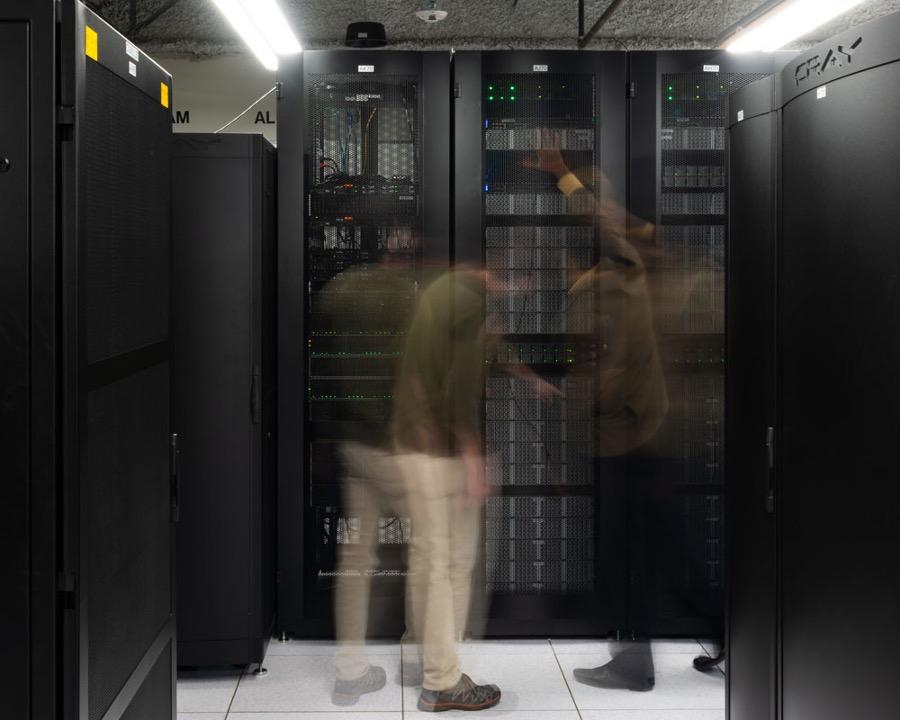
The ARM Data Center installed graphics processing units (GPUs) to the Cumulus high-performance computing cluster . Multiple projects used the GPUs, including data quality analysis, radar processing and data product generation.
As AI use intensifies, a more significant upgrade is now underway. ARM is replacing its file server with an AI-ready storage platform that connects directly to the GPU environment. This will enable AI models to access ARM data and metadata at high speed, rather than waiting for slower file transfers.
According to Prakash, ARM is acquiring 25 to 30 new GPUs, including processing units designed to accelerate AI workloads, to meet its computational needs over the next two to five years.
Along with adding and upgrading computing and storage infrastructure, ARM’s cybersecurity and network engineering teams are enhancing controls to manage access to ARM computing, data and AI resources and tools.
The enhanced infrastructure extends beyond hardware. ARM has been developing a software environment that will enable large language models (LLMs) and agent-based systems to communicate with data holdings, metadata and quality records.
As organizations like ARM build AI-ready infrastructure, they are focusing on AI agents that can reason through multi-step tasks, access external tools, and make limited autonomous decisions. Unlike traditional AI assistants that simply answer questions, agent-based systems can retrieve data, interact with software platforms and coordinate workflows with minimal human intervention.
Prakash describes an LLM as “the brain that understands and explains; an agent is the system that uses that brain to access data and get work done. While the LLM provides general reasoning and language ability, agents connect it to institutional knowledge, tools and actions.”
For more information: Check out ARM’s new Artificial Intelligence web page .
ARM Data Advisor: Putting the User First