
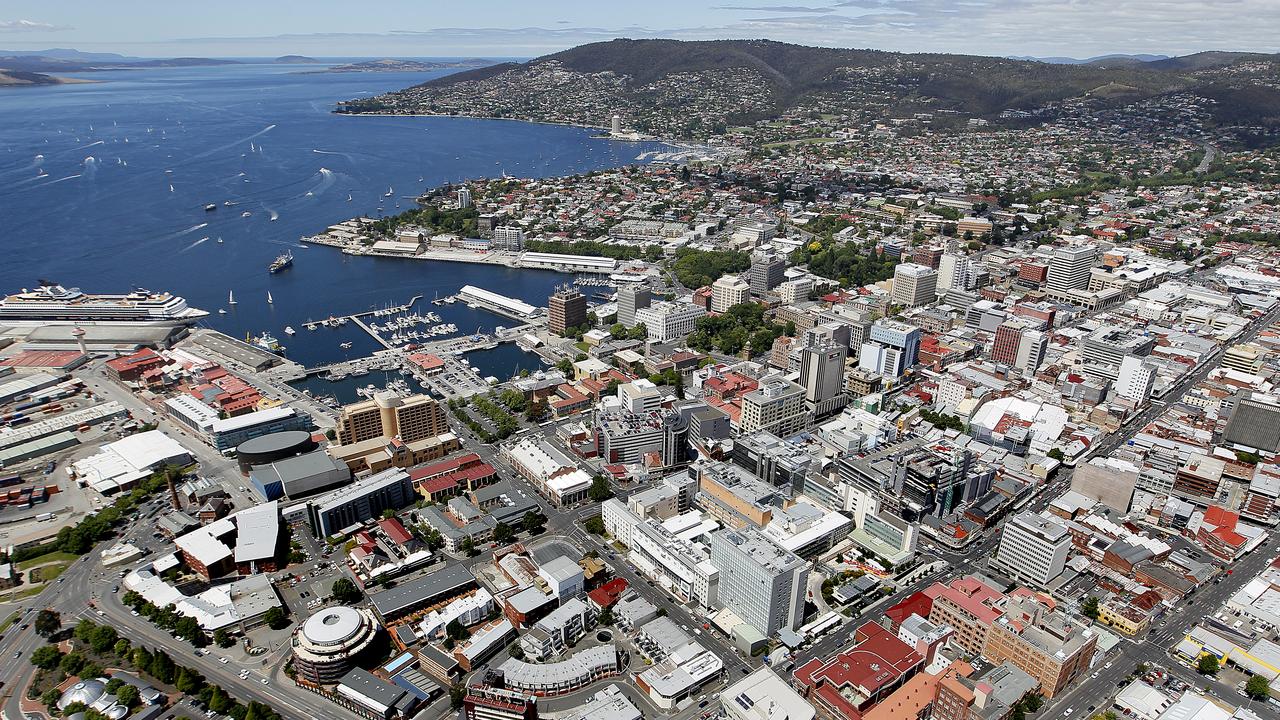
Greater Hobart’s chronic shortage of affordable housing continues to act as a handbrake on growth, even as its economy begins to stabilise after a difficult two years, new KPMG research has revealed.
And while the Enterprising Cities 2026 report points to a pipeline of future construction work at major hospital, airport, and stadium projects, KPMG Tasmanian chairman David Harradine said the capital’s traditional affordability advantage over the mainland was rapidly disappearing.
“Just seven years ago, Hobart’s house prices were 32 per cent cheaper than Melbourne’s, but by the end of last year, that gap had narrowed significantly to just 14 per cent,” Mr Harradine said.
“Hobart has a lot to offer new residents, but if they cannot find somewhere to live that’s affordable, they will simply look elsewhere.
The consultancy giant’s third annual study of Greater Hobart – comprising Hobart, Glenorchy, Kingborough, and Clarence local government areas – also showed the region’s 3.9 dwelling approvals per 1000 residents were well below the national average of 7.0, with the 7000 new jobs forecast for the next five years down on a previous forecast of 10,000.
Terry Rawnsley, a KPMG urban economist who led the report, said the city’s pandemic-era boom, fuelled by an influx of interstate workers chasing lifestyle and affordability, had clearly run its course.
Employment growth has fallen since its 2021 peak, unemployment has climbed to almost 5 per cent by the end of 2025, and population growth has increased by just 0.2 per cent each year since 2023, Mr Rawnsley said.
“Homeowners used to be able to cash out of Melbourne, move to Hobart, and pocket a couple hundred grand, but now you’re struggling to find that happening,” he told the Mercury.
“Local businesses are still placing job ads to find boilermakers, nurses, and accountants.
“And while people might be interested in the job, they are saying ‘I’m looking at Hobart’s housing and the vacancy rate is 0.5 per cent’ or ‘the rents are too high for me’.
“For a long time, Hobart has relied on the northern growth corridor for new housing, and that’s still an important part of the story, but there’s also sort of a need for more medium-density housing scattered around the city.”
The KPMG report – which drew on national labour force data, building approvals, population and business information – also contained positives for the Greater Hobart economy, with the number of businesses turning over more than $10 million rising from 238 to 244, and a modest 0.8 per cent uptick in employment growth in 2025.
Mr Rawnsley said despite the Tasmanian capital’s mixed report card, he was confident its economy could thrive if current housing challenges were properly addressed.
“It is probably still going to be a bit of a grind over the next couple of years, but I think fundamentally there’s still enough strengths about Hobart to keep ticking along if we get homes for people to live in,” he said.
“Hobart already has the capability to support large businesses and lifestyle benefits that can attract skilled workers.
“Affordable housing is the missing piece that is needed to reinvigorate the economy.”
Greater Hobart 2025 economic snapshot
Workforce participation rate 63.7 per cent
131,000 workers (employment growth of 0.8 per cent)
255,500 total population (growth of 0.2 per cent)
Dwelling approvals: 990