
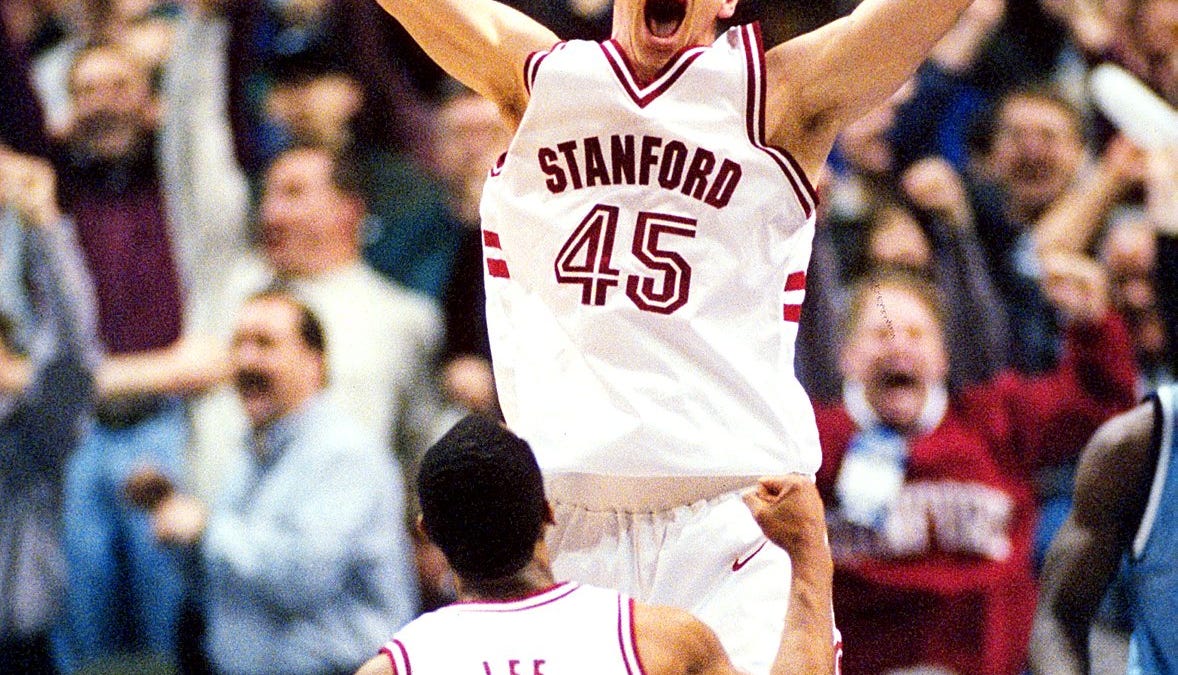
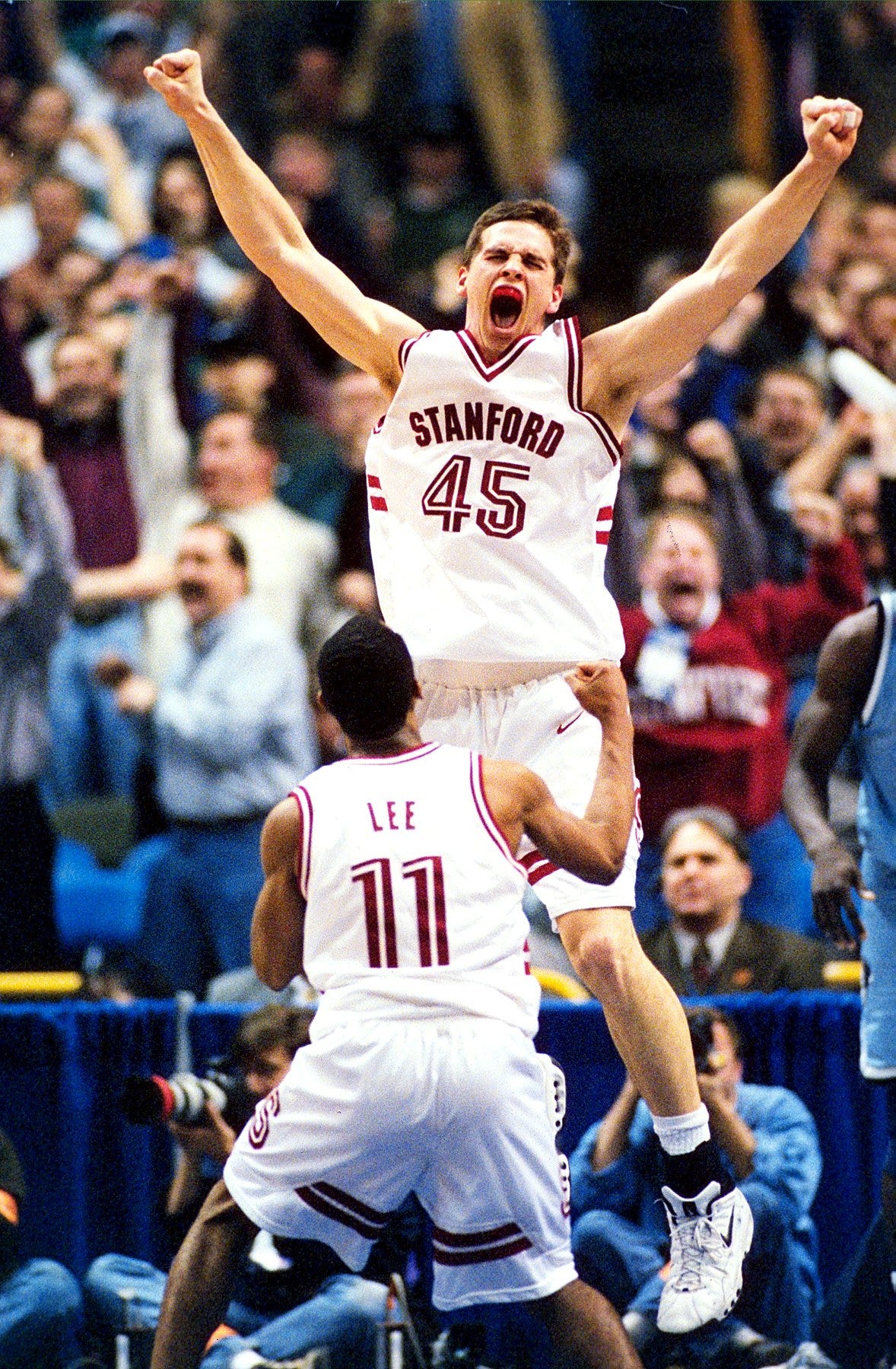
 Photo: San Jose Mercury News
One of the many great lines from the excellent ESPN documentary “Requiem for the Big East” came from the late, legendary Providence Journal sports columnist Bill Reynolds.
While discussing Providence men’s basketball’s rise in the 1970s, which was quickly followed by a fall back to mediocrity, he described the Friars not as a basketball program, but a comet, something that passed spectacularly through the sky and drew a lot of attention before disappearing from sight.
As Reynolds noted, northeastern basketball of that era was filled with stories like Providence’s, of programs that burst onto the national scene only to just as suddenly vanish from it.
They’re the kinds of rags-to-riches-and-back-to-rags tales that have always fascinated me. How does a perennial loser or also-ran become a juggernaut overnight? And once that sweet taste of success was savored, why wasn’t it able to be sustained?
Since we’re at a dead period in the college sports calendar, I wanted to piggyback off what I did last July and do a themed month. Last year, it was centered around realignment. This year, I want to turn my attention to those comments, those programs we all remember for their tantalizingly brief time in the spotlight.
Today, we’ll get the series rolling with Stanford men’s basketball. When I was coming of age as a college basketball fan in the late 1990s and early 2000s, I only knew of the Cardinal as a force, a program that regularly competed for conferences titles, always made the NCAA Tournament – usually as a high seed – and played in front of one of the more raucous crowds in the sport. In many ways, they were kind of like a west coast, infinitely more tolerable answer to Duke.
Little did I know that Stanford wasn’t anything close to that for the previous 50 years. And by the time I had gone off to college myself, it was back to obscurity.
How did it happen?
Stanford’s rise to perennial NCAA Tournament team at the turn of the 21st century didn’t entirely come out of nowhere.
It has just been a really, really, really, really long time.
In its final three seasons under coach John Bunn, from 1935-38, the Cardinal (who went by the Indians at the time) went a combined 68-12, highlighted by a 25-2 mark in 1936-37 that earned them the national championship from the Helms Foundation. Five years later, in the fourth-ever NCAA Tournament, Stanford won it all, capping off a 28-4 season under coach Everett Dean.
It wouldn’t just be the final time it would win a national title. For nearly 50 years, it was the last time it would even be in the NCAA Tournament.
The Cardinal generated nothing resembling positive momentum from its 1942 championship. It posted a losing record in each of its next three seasons, going 31-45. It was a glimpse of what would define them for much of the next half-century. Stanford finished with a sub-.500 record in 26 of the 42 seasons after its 1942 title. During that stretch, it didn’t win a single conference championship outright and couldn’t even manage an invitation to the NIT. It didn’t make the NCAA Tournament again until 1989, marking a 47-year absence.
After decades of underwhelming results and increasing apathy, the university took what amounted to a big swing in 1982 by hiring Tom Davis away from Boston College after he had led the Eagles to back-to-back NCAA Tournament appearances. The Cardinal improved, but only so much, finishing with a winning record only once in Davis’ four seasons. A man who won 72.5% of his games at Lafayette and 68% of his games at Boston College went just 58-59 at Stanford.
Following a 14-16 finish in the 1985-86 season, Davis left for Iowa (where he also fared much better than he did in Palo Alto, winning 65.8% of his games). While it marked a return to the Wisconsin native’s midwestern roots, Davis’ move came after mounting frustration with Stanford’s strict admissions policies, particularly when it came to Chris Munk, a highly touted forward from nearby San Francisco who reportedly scored in the 800s on his SAT and who the university wouldn’t allow in.
“I was concerned that I was being accustomed to losing at Stanford,” Davis said shortly after leaving Stanford in 1986, according to the Peninsula Times Tribune. “Losing takes a piece out of you.”
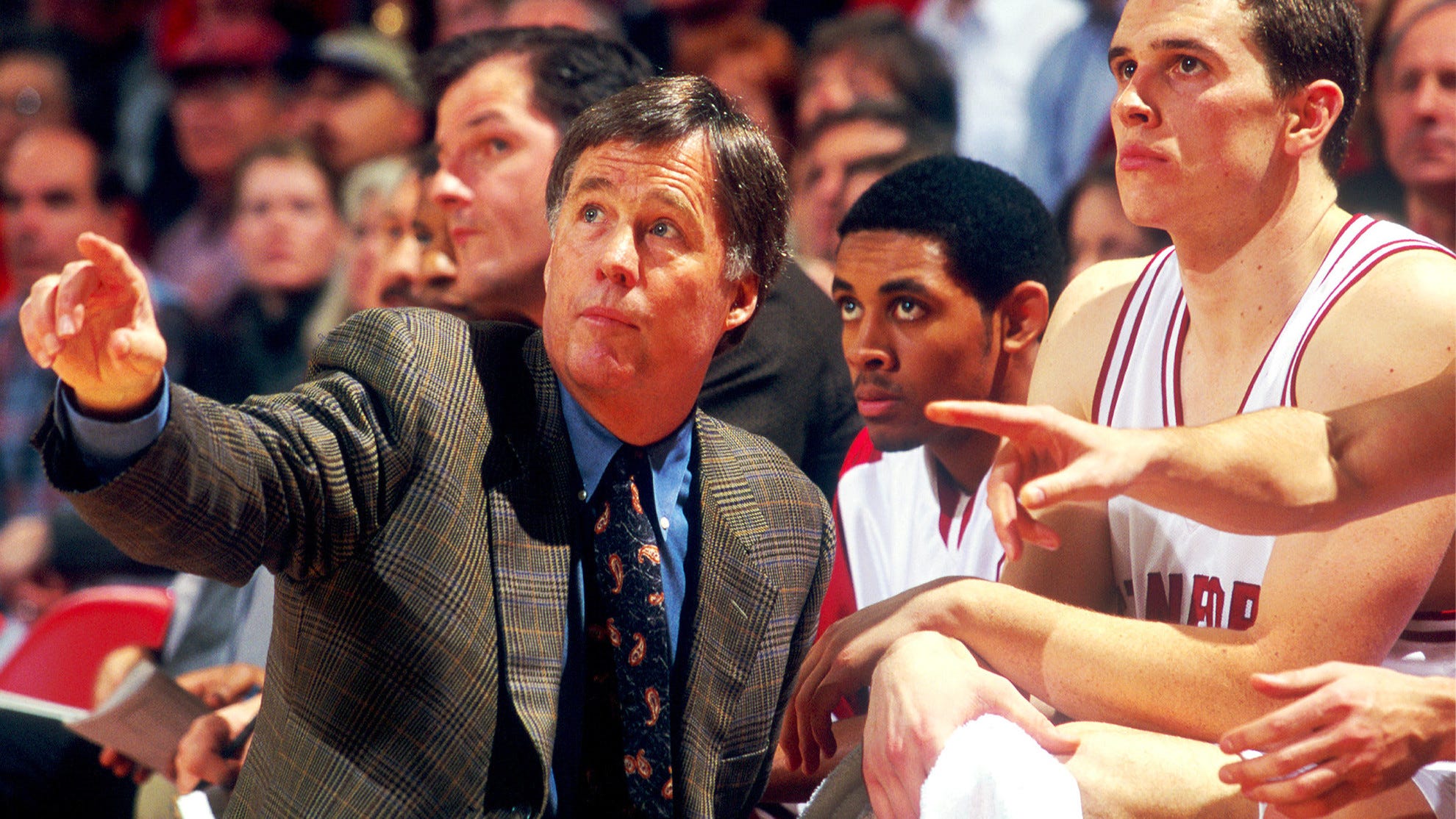 Photo: Stanford Athletics
Four years after hiring a big name in Davis, Stanford opted for someone relatively anonymous as his replacement, bringing in 39-year-old Mike Montgomery after a strong eight-year run at Montana.
“I don’t think they thought they were going to win,” Montgomery said to the San Francisco Chronicle in 2025. “So it was, ‘Let’s hire someone that’s going to be a good guy and honest and do it the right way. And we’ll just go on from here.’”
If Stanford thought it was punting on its basketball ambitions by bringing in Montgomery, it failed.
In just his second season, the Cardinal went 21-12, its most wins since the national championship season in 1942. The following season, they broke their nearly 50-year-long NCAA Tournament drought. In 1990, they beat UCLA for their first-ever win at Pauley Pavilion, 25 years after the venue opened. After falling short of the tournament in four of the next five seasons after its 1989 berth, Stanford went 20-9 in 1994-95 and made it back to the NCAA Tournament, where it won a game for the first time since 1942. It marked the first of 11 consecutive seasons with a berth to the Big Dance.
How’d Montgomery turn a perennial loser at a school with unavoidable obstacles into a model of consistency both in the Pac-10 and nationally?
For one, he was a shrewd evaluator and identifier of talent. While Stanford’s success eventually allowed it to swim in different recruiting waters – helping it to bring in McDonald’s All-Americans like Josh Childress, Casey Jacobsen, and Jason and Jarron Collins – its rise was initially made possible by Montgomery and his staff identifying under-recruited prospects who complied with the university’s stringent academic requirements.
Montgomery had shown an ability to build a winner around previously unheralded players, with four players from his tenure at Montana eventually going on to become NBA Draft picks. At Stanford, perhaps no player illustrated Montgomery’s keen eye more than Brevin Knight, a New Jersey point guard whose only Division I offer was from Manhattan before the Cardinal jumped into his recruitment. A program that went 7-23 the season before Knight’s arrival made the NCAA Tournament in each of his final three seasons, including a Sweet 16 run during his senior season in 1997. The three-time first-team All-Pac-10 honoree ended up becoming the most consequential player of Montgomery’s tenure (interestingly enough, his younger brother, Brandin, went on to play a similar role at Pitt in the early 2000s).
Crucially, many of those gems like Knight stayed with the program until their eligibility was exhausted. Todd Lichti, who Montgomery inherited from Davis and who went on to be the first All-American of Montgomery’s Stanford tenure, suited up for the Cardinal for four seasons. The same was true for future top-10 NBA Draft pick Adam Keefe. Ditto for Knight, Jarron Collins and Mark Madsen.
“Coach Montgomery was a great fit for Stanford because his approach to the game was a very cerebral approach and he also treated his players as adults,” former Stanford forward Andy Poppink said to Yahoo Sports in 2014. “He gave the players the respect that they would take care of business in the classroom and socially. For a typical Stanford student-athlete, I think that was an approach many of us appreciated.”
Helping Montgomery in player evaluation, recruitment and development were excellent staffs. Many of his Stanford assistants either were or went on to become Division I head coaches, a group that included the likes of Eric Reveno, Blaine Taylor, Trent Johnson, Tony Fuller, Doug Oliver and Jeff Jackson.
The same academic and admissions hoops that significantly limited Stanford’s pool of prospects and drove off Davis were something Montgomery effectively worked with, if not outright embraced, selling a Stanford degree as a part of his recruiting pitch.
As a 2004 profile of Montgomery in Stanford Magazine noted:
Montgomery has been faced with the same admissions challenges that brought his predecessor to his knees. Instead of railing against a system he couldn’t change, Montgomery embraced the school’s mission so tightly that Leland says his relationship with the admissions office is the best of all his coaches. But the pool of players who are both excellent students and elite basketball players remains small. Montgomery has two student interns who do little but call schools to get the transcripts of top high school players so his staff can determine whether to even bother pursuing a kid. Then they have to get test scores, and unlike every school save for a few Ivies, Stanford must have a completed application, with essays, before it will offer admission.
“It’s tough getting kids to do the application, but the really motivated ones who know they want this level of school of course will do it, and that’s great,” says Montgomery. “When we find a kid who wants this level, we are generally in great shape. It’s just finding more than one. Once we get a group of players, this is the best job in the country, because the kids are just terrific to work with.”
On the court, the Cardinal found success playing a physical, defensively sound style that counteracted some of the deficiencies they had against more talented and athletic opponents, particularly Arizona.
“I used to always laugh because coaches would say to me, ‘Gosh, you guys are so dang physical,’” Montgomery said to the Chronicle in 2025. “And I’d say, ‘Yeah, but you’re so dang quick and I don’t complain about that.’ It’s just what we did best. We weren’t afraid to get down and dirty and be a little bit physical. We had really good players, but not necessarily All-Americans. But the whole was greater than the sum of its parts. It wasn’t one individual. It was us playing together. And just the satisfaction of knowing what they accomplished makes me feel good that I had a small part in that.”
In all, it added up to what Madsen described in 2004 as “the greatest success story in Division I basketball.”
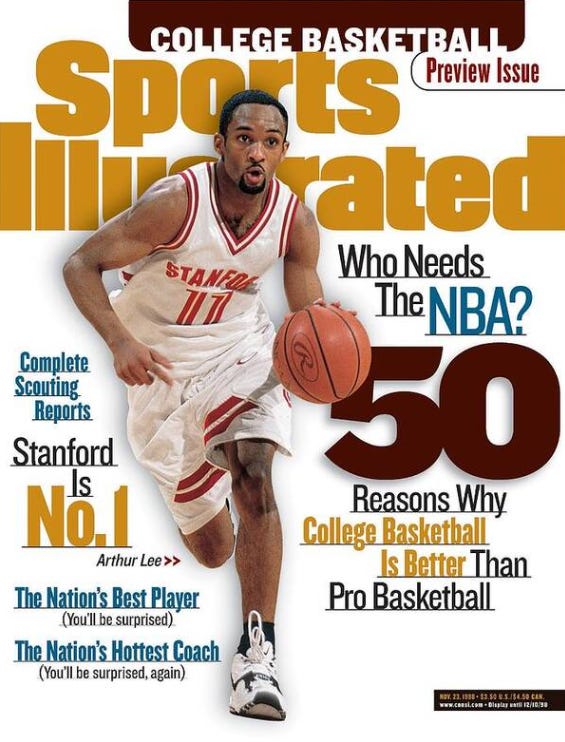 Photo: Sports Illustrated
In the late 1990s and early 2000s, Stanford was more than just a consistent NCAA Tournament participant. It was a bona fide national powerhouse.
Every year from 1997 through 2004, the Cardinal finished second or better in the Pac-10 and won at least one game in the NCAA Tournament. In each of those eight seasons, they were ranked in the final Associated Press poll, including five top-10 finishes. In six of those seasons, they earned a top-four seed in the NCAA Tournament. Three times, they were a No. 1 seed.
That parade of March Madness trips was highlighted by a Final Four appearance in 1998, marking their deepest run under Montgomery and their first trip to the national semifinals since, you guessed it, 1942. As a No. 3 seed, Stanford knocked off No. 2 seed Purdue in the Sweet 16 before overcoming a six-point deficit in the final 55 seconds to beat No. 8 seed Rhode Island in a 79-77 thriller. Once in the Final Four, though, it was on the receiving end of a comeback, coughing up a 10-point second-half lead in an 86-85 overtime loss to eventual national champion Kentucky.
The good times didn’t end there. The Cardinal earned their first-ever No. 1 national ranking on Dec. 20, 1999 and were atop the polls at some point during the 2000-01 and 2003-04 seasons. In 2003-04, they won their first 26 games before falling to Washington in their regular-season finale.
They racked up those wins while boasting one of the best home-court advantages in Maples Pavilion, an intimate, 7,300-seat venue with a bouncy court that was designed to prevent injuries but instead shook opponents (literally and metaphorically). Over Montgomery’s final 10 seasons, from 1994-2004, Stanford went 124-17 in home games.
In 18 seasons under Montgomery, the Cardinal won four Pac-10 regular-season championships, produced eight first-round NBA Draft picks and made 12 NCAA Tournaments.
A Stanford team that rode into the 2004 NCAA Tournament with a 29-1 record, and Pac-10 regular-season and tournament titles, was stunned by a 12-loss, No. 8 seed Alabama team in the second round, 70-67.
For all the success Montgomery brought Stanford, the loss reignited an underlying criticism of his tenure – that for as good as his teams were in the regular season, they had a maddening tendency to lose earlier than expected in March. Of the six times that the Cardinal were a No. 3 seed or better, they failed to get past the second round of the NCAA Tournament four times.
Unbeknownst to anyone at the time, including the head coach himself, the Alabama loss would be Montgomery’s final game at Stanford. In May 2004, two months after his team’s season ended, Montgomery was named the new head coach of the Golden State Warriors.
The years that followed haven’t been kind. The Cardinal made the NCAA Tournament in three of the next four seasons under Trent Johnson, Montgomery’s successor, but since a run to the Sweet 16 in 2008 fueled by another set of twins, Brook and Robin Lopez, they’ve made it back to the Big Dance only once – in 2014, when they made a surprise Sweet 16 appearance as a No. 10 seed.
In the 18 years since the 2008 Sweet 16, they’ve never truly bottomed out. They’ve finished with a losing record just six times over that span, with a 14-19 mark in 2022-23 standing as their worst showing. If anything, they’ve been aggressively mediocre.
Stanford hasn’t been without talent. Since 2010, it has had eight players selected in the NBA Draft, an average of one every other year. Three of those were first-round selections. Over Montgomery’s 18 seasons, he had 11 NBA Draft picks, a figure that’s only marginally higher than what the Cardinal have recently produced, despite significantly worse results over the past 16 years.
When Montgomery left, a handful of names were thrown around as replacements, one of which in particular stands out now: Gonzaga’s Mark Few, who at the time had just wrapped up his fifth season as the Bulldogs’ head coach. While it’s enticing to think what Stanford could have been under Few, the fact he’s still leading the Zags 22 years later shows that he probably was never a realistic option for the Cardinal.
Four days after Montgomery’s departure, Johnson, a former Montgomery assistant who had just led Nevada to the Sweet 16, was hired. Though Stanford was still regularly making the tournament under its new coach, it had started to fall off. Only once in Johnson’s four seasons did the Cardinal win more than 18 games and in two of their three tournament trips, they were bounced in the first round – and in both instances, they were drubbed, losing by 23 to Mississippi State in a 8-versus-9 game in 2005 and 20 to Louisville in a 6-versus-11 matchup in 2007.
After the 2008 season, and with the Lopez twins off to the NBA, Johnson left Stanford after four seasons for LSU – where he also stayed for four seasons before bouncing for TCU. Johnson’s exit stung in more ways than one. He left for the Tigers on April 10, 2008, only six days after Montgomery, having been fired after two seasons with the Warriors, was announced as the new head coach at archrival Cal. To make matters worse, Montgomery had been working at Stanford as an assistant to the athletic director on a part-time basis since 2007, leading some to criticize the university’s administration for not having an inkling that Johnson might leave and missing an opportunity to bring back the program’s patriarch. Though he didn’t reach the same heights in Berkeley, Montgomery made the NCAA Tournament four times in six seasons with the Golden Bears. Cal has earned a bid to the tournament only once in the 12 seasons since Montgomery’s retirement in 2014, going a combined 165-223 during that stretch.
Things only got worse after Johnson. Johnny Dawkins fit the mold of someone who might succeed at Stanford – a former NBA player who had spent the previous 10 years learning under Mike Krzyzewski at Duke, another selective private school – but his teams made just one NCAA Tournament in eight seasons (though, to his credit, the Cardinal won the NIT in 2012 and 2015). Jerod Haase, who was brought aboard after Dawkins was fired in 2016, fared even worse, going 126-127 in eight seasons, with no NCAA Tournaments. By his second-to-last season, in 2022-23, Stanford was averaging just 3,518 fans per game, less than half of Maples’ capacity.
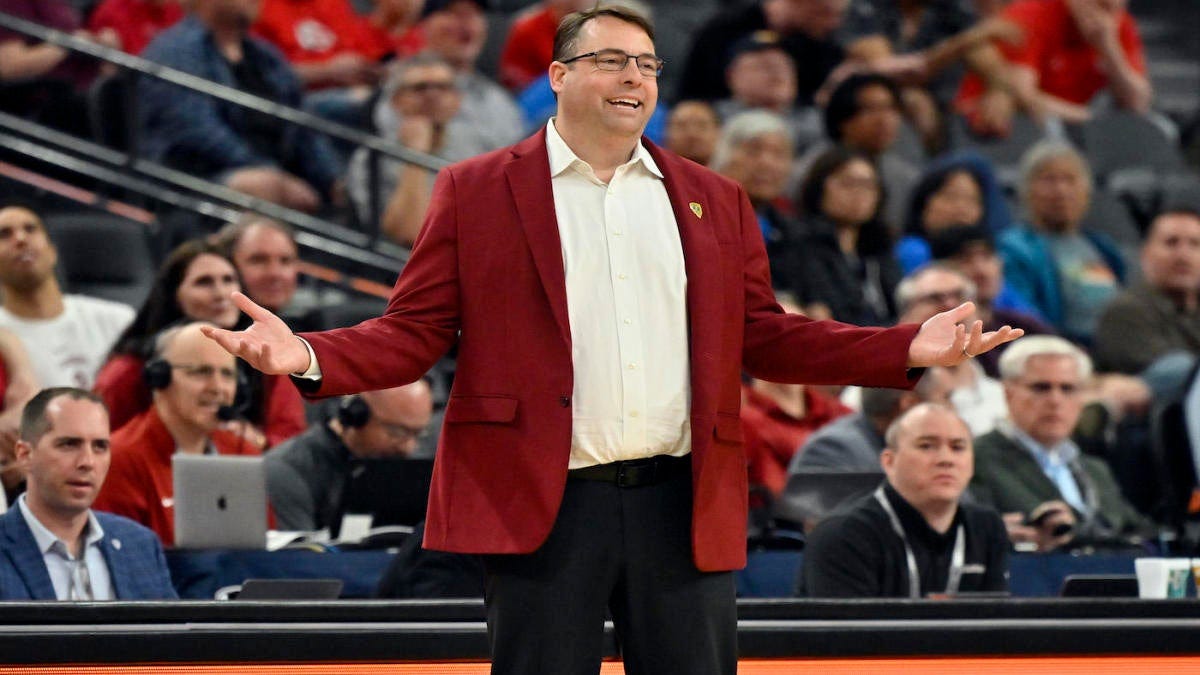 Photo: Getty Images
Based on their track records at both Stanford and elsewhere, none of Montgomery’s three immediate successors proved to be the type of exemplary coaches that a school with the Cardinal’s inherent challenges needed to thrive. Johnson won 51.6% of his games at Nevada, 51.1% at LSU and 38.8% at TCU. After being sacked at Stanford, Dawkins was quickly hired at UCF, where he has won 58.9% of his games, with two NCAA Tournament berths in 10 years. Haase won 60.2% of his games at UAB with one NCAA Tournament appearance in four seasons before being hired by the Cardinal.
It’s perhaps just as simple that Montgomery is one of the best, if not most underappreciated, coaches in modern college basketball history, a transformative figure who accomplished things at Stanford that few others are equipped to replicate.
The Cardinal’s problems went beyond coaching, though, with a share of blame going to the university and its administration.
“It’s like anything else in college sports: It gets back to leadership,” longtime college sports reporter Jon Wilner said to the San Francisco Standard in 2025. “Stanford had bad leadership from its president, its provost, and its athletic director for a long time. That led to all these negative downstream developments that have got them in this terrible situation. It’s going to be hard to get out of.”
Among the myriad issues that contributed to Stanford basketball’s decline, at least in the final handful of years of the post-Montgomery era, was what was widely viewed as the reluctance to embrace the world of name, image and likeness.
That hesitancy has affected more than just men’s basketball.
The football program, which had been winning Pac-12 championships and competing in major bowl games under Jim Harbaugh and David Shaw, has seen its fortunes plummet in the years since NIL and the transfer portal became fixtures of the college sports landscape. The Cardinal haven’t made a bowl game in the past six seasons, the longest drought of any power-conference school. Since 2019, they’ve gone just 24-54. The women’s basketball program – which has won three national titles, including in 2021 – has fallen off since legendary coach Tara VanDerveer retired in 2024, going just 37-29 in two seasons under Kate Paye. In each of those seasons, they’ve missed the NCAA Tournament after making it in each of the previous 36 seasons in which the event was held.
The realities of NIL have added to that misery. National softball player of the year NiJaree Canady left the Cardinal in 2024 for a $1 million offer from Texas Tech. Stanford’s reported offer was just $350,000. Kiki Iriafen, the No. 4 pick out of USC in the 2025 WNBA Draft, and Lauren Betts, who led UCLA to a national championship last season before also going No. 4 in the WNBA Draft, both began their careers at Stanford before transferring.
There’s the idea that Stanford, tucked in the obscene wealth of Silicon Valley, could become an NIL powerhouse with the right boosters on board, but for now, it remains just that – an idea.
“Somebody wrote somewhere that Stanford would be the sleeping giant of NIL if Stanford got its act together, and that’s what we’re doing,” a source from Stanford’s collective said to the Standard last year. “There’s no shortage of people who can write huge checks if the administration wants to do it and wants to mobilize that support.”
There are other variables complicating a potential return to basketball glory.
As colleges across the country increasingly funnel their attention and resources into the two major revenue sports of football and men’s basketball, Stanford, much to its credit, remains one of the few institutions that still cares quite a bit about Olympic sports. The university fields 36 teams, an extraordinarily high mark even for a power-conference school. It has won the NACDA Directors’ Cup, which is given annually to the top overall athletic department in college athletics, a record 26 times and has never finished lower than third in the standings.
Then there’s the matter of conference affiliation. When the Pac-12 dissolved in 2024, Stanford was left scrambling and entered into an awkward marriage with the ACC, whose eponymous Atlantic Coast is 3,000 miles away from the Cardinal’s Palo Alto campus. Not only does that strip Stanford of most of its meaningful regional rivals and cause a serious travel strain for its non-football programs that regularly have to log cross-country flights for games, but as part of its agreement to join the league, it won’t receive a full share of the ACC’s media rights deal until 2036.
On the basketball side, there’s reason for optimism.
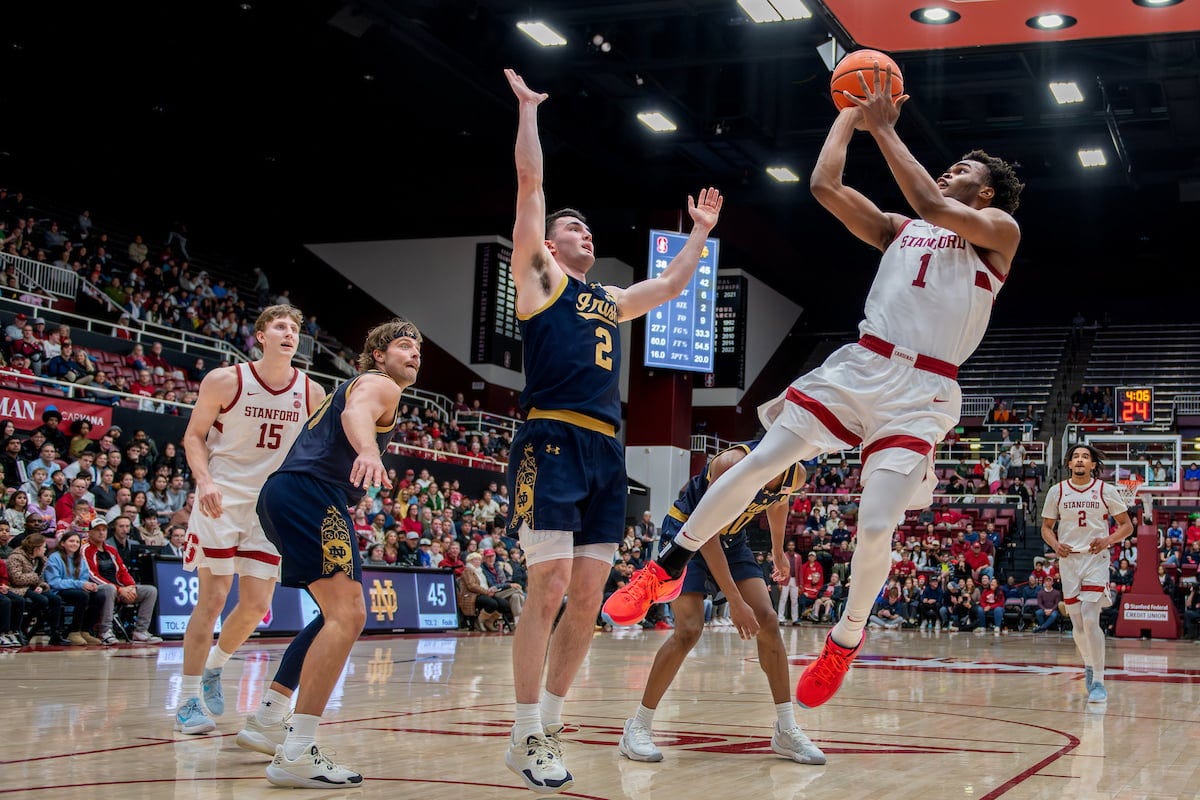 Photo: Photo: SUPRIYA LIMAYE/ISI Photos
After firing Haase in 2024, Stanford brought in Kyle Smith, an analytically minded coach who had made his bones doing more with less at places where winning was hardly a given. He led Columbia to its only two 20-win seasons since 1970. He won at least 20 games in three consecutive seasons at San Francisco, the first time the Dons had done so since the early 1980s. At Washington State, he led the Cougars to their first NCAA Tournament in 16 years.
In two seasons so far at Stanford, Smith has gone 41-27 and made the postseason twice. Though they’ve missed out on the NCAA Tournament in each of those seasons, he’s shown the same kind of eye for under-the-radar talent that allowed Montgomery to thrive in a previous generation. Last season, he signed guard Ebuka Okorie, the No. 119 player in his class who blossomed into the nation’s No. 7 scorer, a first-team All-ACC selection and the No. 17 overall pick in the 2026 NBA Draft.
While Smith can’t realistically expect to uncover a player like that every recruiting cycle, it shows what he’s capable of doing. For a program more than 20 years removed from its short-lived apex, it’s the kind of thing that makes dreams of better days not seem quite as far-fetched.