
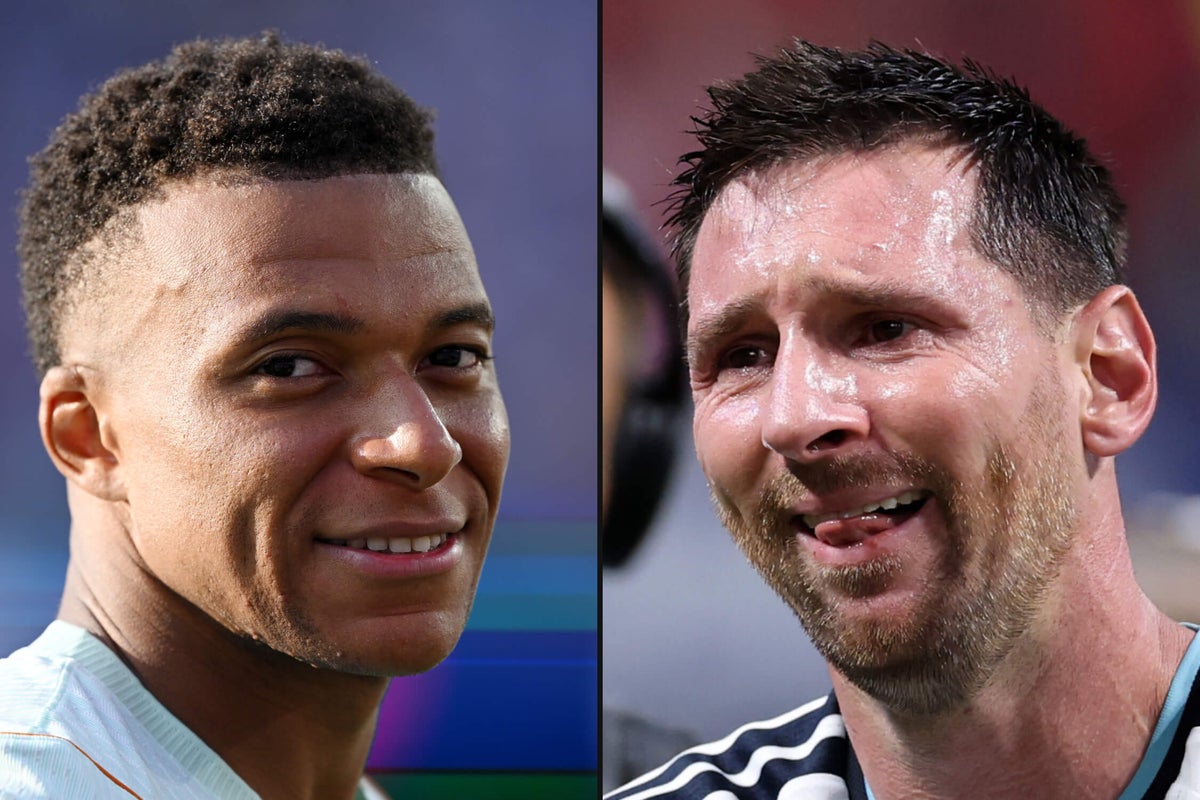
When the World Cup holds up a mirror to Kylian Mbappe, it’s as if he sees Lionel Messi.
Upon reflection, both their tournaments can appear identical. It’s uncanny. When Messi scores, Mbappe follows. It’s like Christopher Nolan’s film The Prestige. They are football’s Robert Angier and Alfred Borden. Rival magicians attempting to one-up each other. Messi matching Mbappe and vice versa. Eight goals each as the audience gasps in astonishment. When one misses, the other does too, as if they are bound together.
In Atlanta on Tuesday, Messi stepped up to take a penalty against Egypt. Then, two days later in Foxboro, Mbappe was also awarded one against Morocco. Everyone expected goals, even though Messi failed to convert from the spot against Austria in the group stage. But the goalkeepers, Mostafa Shobeir and Yassine Bounou, not only made saves from both of them. They made Messi and Mbappe, fleetingly, look mortal.
Get free access to the most comprehensive World Cup coverage in The Athletic app
Alas, it didn’t last long.
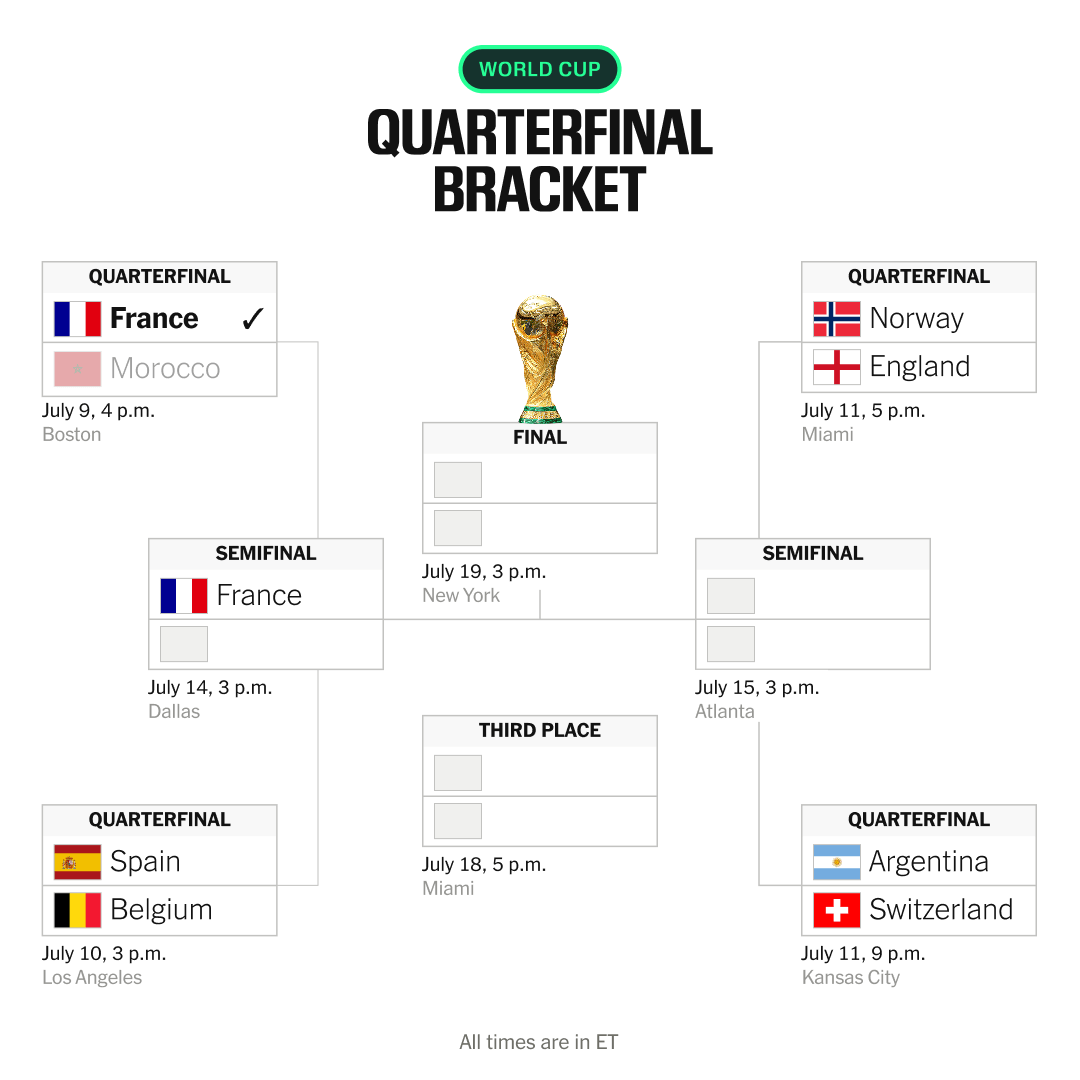
Messi ensured his name appeared on the halo screen at the Mercedes-Benz Stadium. Mbappe’s flashed up at the Gillette Stadium’s version and Argentina and France continued to track each other on opposite sides of the bracket. For now, the former Paris Saint-Germain team-mates remain on a collision course to meet in the final, as happened at the previous World Cup four years ago, when Mbappe scored a hat-trick yet, somehow, Messi prevailed.
“Leo always scores. He always has, he always will,” Mbappe said. “If I focused on watching what Leo scores, I would have to work even harder. So no, I don’t pay attention to what (Messi) does at all. I’m only thinking about helping my team.”
If Mbappe did pay closer attention, he’d notice that maybe they aren’t so similar after all.
Messi’s World Cup has largely been about high performance in chaos. Mbappe has, on the other hand, been able to operate in near-complete serenity. Everything, particularly since the knockout phase began, has looked hard for Argentina. For France, it has been the opposite. The World Cup has, by contrast, come much easier to them.
Even if we go back to that remarkable Tuesday in June when both got their tournaments underway, Messi was portrayed as seeing what Mbappe and Erling Haaland did against Senegal and Iraq, and, to use a poker term, raising it by scoring a memorable hat-trick against Algeria. And yet he could have been sent off for a foul on Aissa Mandi when he’s only netted once. Algeria even filed a formal complaint to FIFA. Messi got lucky. At the end of the game, he appeared to cry too.
“I’ve had some tough days,” Messi said. “It wasn’t related to football. And those feelings were because of that.” It later emerged his father, Jorge, is “going through a health situation” and is “currently under medical supervision”.
Against Cape Verde in the round of 32, Messi brought the ball down in the box and, quite exquisitely, gave Argentina the lead. It looked like the game would be plain-sailing from there. Messi was back in Miami, his second home since a 2023 move to local MLS club Inter. It was anything but.
Cape Verde kept coming back. They took the game to extra time and the world champions looked genuinely shaken when Sidny Lopes Cabral equalised again in the 103rd minute with arguably the goal of the tournament. In the end, a Diney Borges own goal was all that separated the two teams.
In the next round, Egypt then pushed Argentina to the brink, too.
Unlike the Cape Verde game, Messi and his team-mates found themselves behind. His penalty would have levelled the score at 1-1. When he missed, it only heightened the anxiety. His shooting was off. Until it wasn’t. Two-nil down with 10 minutes to go, Messi crossed for Cristian Romero to head one back, smashed an equaliser in off the crossbar himself and then collapsed to the ground as Enzo Fernandez won it in the 93rd minute. Again, he burst into tears.
France, on the other hand, have glided through to the quarter-finals like swans. They have not been taken to extra time. They have not conceded in three knockout games.
Mbappe, granted, has not had it all easy. Paraguay tried to kick lumps out of him in the last 16. He has been subject to racial abuse from a Paraguayan senator. On the pitch, however, he has cut a peaceful figure.
Maybe it’s the talent around him and knowing France have other players, such as Ousmane Dembele, the Ballon d’Or holder, who can step up, as he likes to do, seemingly, every time he plays in Foxboro. Maybe it’s the connection he has with Michael Olise. France, unlike Argentina, are a chance creation machine. They had 22 shots against Morocco yesterday. There is always another opportunity.
So when Mbappe missed his penalty, he did not appear fazed by it. “There were no doubts in the players’ heads or Kylian’s head,” Deschamps said afterwards.
He found a way. He always does, curling a shot around Issa Diop and Bounou into the Morocco goal. It was the 20th of his career in the World Cup finals, a remarkable record given he has played in half as many editions of this tournament as Messi.
There was a heart-in-mouth moment towards the end when Mbappe sank to the ground and signalled for a substitution. It was a precautionary measure, a minor ankle issue, as evidenced by how much he celebrated at full time. Mbappe danced. He jumped up and down, a flashbulb smile on his face. He did not seem anguished.
Messi and Mbappe’s experiences of this World Cup are the same but different. Similar and divergent. And yet the desired outcome is shared. Both want a second World Cup.
The way they are going about will hopefully continue to absorb us for at least another week.