
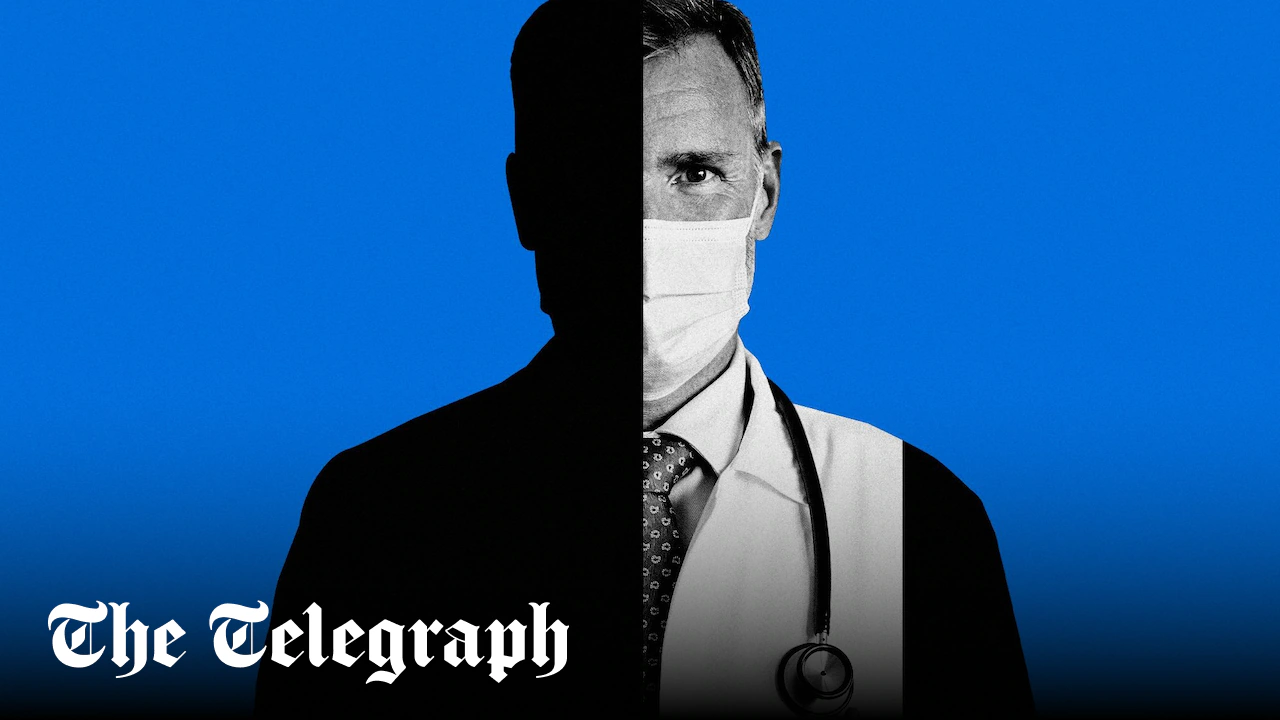
He believes the appeal of fewer NHS sessions for younger doctors is not simply working less, it is escaping the growing administrative burden that comes with being a GP partner or salaried doctor.
Locum and private work can offer longer consultations and far less paperwork.
But Brunet argues the change cannot be understood without looking at how much general practice itself has changed. When he started, consultations were often just five minutes.
“If you look at the notes GPs wrote 35 years ago, they would just write ‘whooping cough’ and that would be the entire record. The doctor was largely deciding what was wrong and telling the patient what to do.”
There were fewer regulations, less paperwork and fewer treatments to manage.
“You could see 40 or 50 patients a day, but it was a very different world,” he says.
Today, consultations are longer because patients are older, conditions are more complex and medicine has expanded into areas that barely existed in everyday general practice when Brunet began.
“We were never talking to people about ADHD or autism. There’s just so much more that is complicated now.”
The Royal College of Psychiatrists estimates that around 25pc of GP appointments involve mental health conditions.
The result is a contradiction at the heart of modern general practice: consultations have doubled in length, but the demands packed into each one have multiplied.
“Most consultations have gone to 15 minutes now. Realistically, 20 to 30 minutes per patient would be amazing, but then you can’t get through everyone who needs to be seen that day.”
And the work does not end when patients leave.
“My day will often be an eight-to-eight day. I’ll clear the urgent admin, but I’ll still have letters to write and things to finish.”
Even on days off, Brunet often logs back in from home to spend another four hours clearing the backlog.
Would-be GPs left jobless
The pressures GPs face explain why many are reducing their hours.
But they do not explain another puzzle at the heart of general practice: while patients struggle to see a doctor, some qualified GPs are struggling to find work.
Becks Fisher, of the Nuffield Trust, says part of the explanation lies in the rapid expansion of non-GP roles through the Additional Roles Reimbursement Scheme (ARRS), introduced in 2019 to bring more staff into general practice.
“In the past five years, government have funded a massive expansion of non-GP staff in general practice: roles like physios, paramedics and pharmacists.
“They weren’t really meant to replace GPs, but they are part of the problem of GP unemployment,” she says.
Until 2024, practices could use ARRS funding for these roles but not for salaried GPs. At the same time, the number of newly qualified doctors was rising.
“We’d finally succeeded in getting healthier training pipelines for GPs, so more were qualifying each year with over 4,000 newly qualified GPs in 2024 compared with more like 2,700 per year in 2015.”
Fisher says this created a mismatch: more GPs entering the workforce, but limited funding for practices to employ them.
“You had this perfect storm of lots of GPs looking for jobs, and GP partners essentially saying, ‘Why should we pay from our own money to employ GPs, when we can employ other staff at no cost to ourselves?’”
Changes allowing ARRS funding to be used for GPs have helped, she says, but the imbalance remains.
“Whereas a few years ago there were far more GP jobs than there were GPs to fill them, we still have unemployed and underemployed GPs now.”
The expansion of other roles in surgeries has also changed general practice.
While staff such as physios or pharmacists can take on some simpler appointments, GPs are increasingly left managing the most complex cases.
Stuart Hoddinott, from the Institute for Government, says: “It does take appointments off GPs’ plates, but those are often the lower complexity appointments, and it leaves GPs with the more complex ones.”
The result is that doctors may see fewer routine cases but face a heavier clinical burden.
“Maybe before, 20pc of those would have been renewing a prescription or just chatting to Mrs Jones about doing some exercises after a hip replacement, and now all of them are quite complex cases and you’re having to make quite difficult decisions.”
Digital drive
Rising demand and pressure on GP capacity have inevitably led to a shift away from in-person appointments.
However, this shift has also fuelled patient frustration, ranging from elderly people struggling with online systems to fears that important decisions are being reduced to digital tick boxes and remote assessments.
Patients are increasingly triaged before seeing a doctor, with reception teams, online forms and other professionals often acting as the first point of contact.
Around two thirds of GP appointments are now face-to-face, with the remaining third taking place over the phone or online. That is compared to four in five appointments being face to face before the pandemic.