
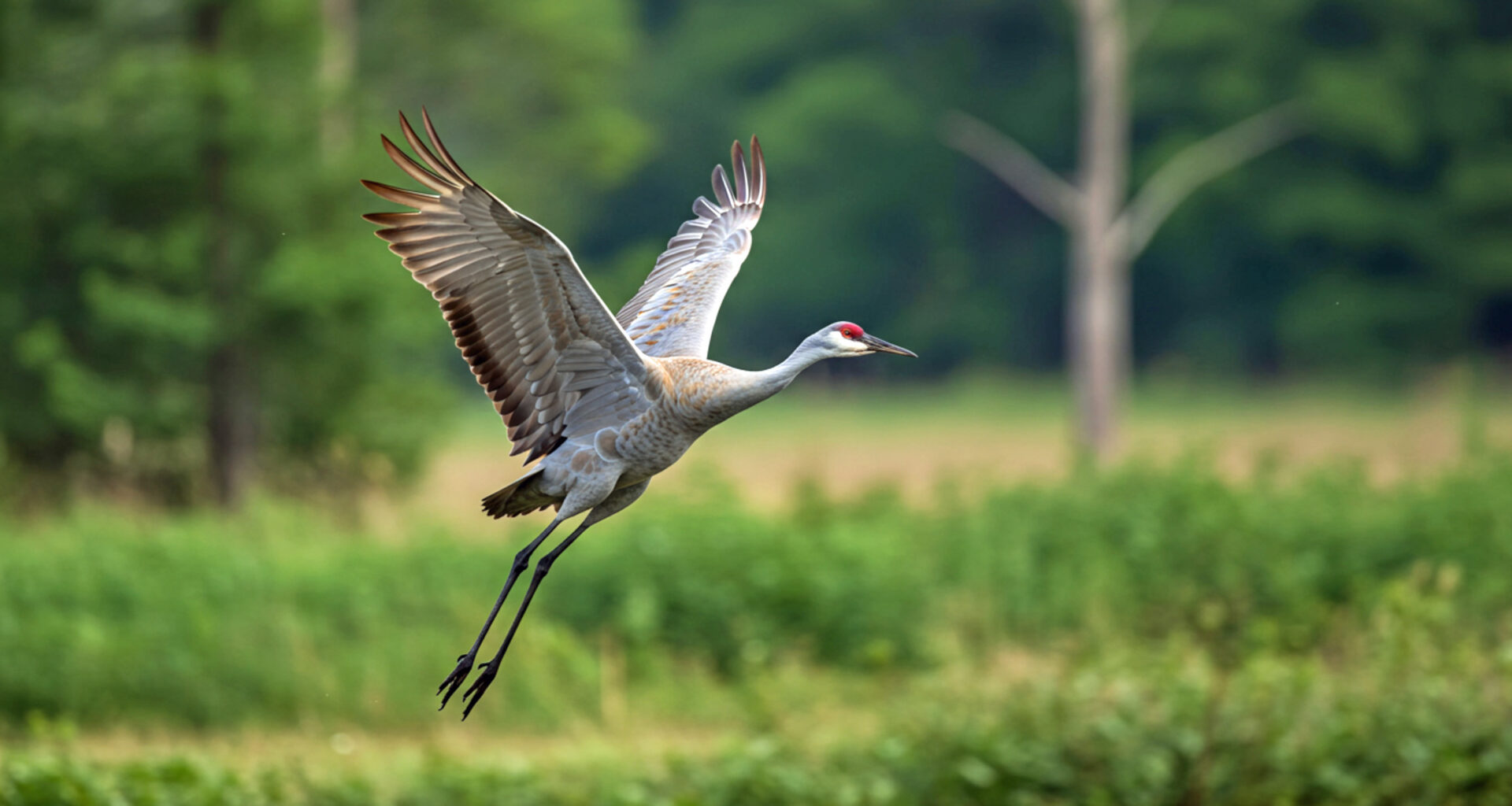
A new study has found that birds can turn lactate – a molecule long dismissed as metabolic waste – into a fuel that repairs their blood. Birds’ red blood cells use it to restore their oxygen-carrying power about three times faster than a mammal’s cells can manage.
The result reveals a payoff for something that birds kept and mammals discarded. Mammal red blood cells shed their internal machinery as they mature, while birds keep theirs, and that difference lets them repair damaged blood far more quickly.
Why birds kept mitochondria

As mammal red blood cells (RBCs) mature, they push out their nucleus and their mitochondria – the tiny structures that power most cells.
This leaves more room inside for hemoglobin, the protein that carries oxygen. Biologists have long read this as the efficient design.
Birds did the opposite. Their red blood cells stay packed with nuclei and working mitochondria throughout life, and no one could fully explain why a bird would carry that apparent baggage.
Yi Yang, a doctoral researcher at the University of Auckland in New Zealand and the study’s lead author, set out to weigh that trade-off. “This finding makes sense as a protective mechanism in birds,” she explained in an email to Earth.com.
From waste to fuel
Lactate carried its own bad reputation. Generations of athletes and physiologists blamed it for the burn in tired muscles and treated it as the dead end of hard exercise.
That view started to crack decades ago. Work reaching back to the 1970s showed that the body burns lactate as a fuel and passes it between organs.
A wide-ranging review now treats it as a signaling molecule that tissues depend on.
Why blood needs repair
The blood carries oxygen using hemoglobin, and hemoglobin is fragile. Oxygen and iron inside the cell keep nudging it into a broken form, called methemoglobin.
This damaged form holds oxygen poorly and cuts the blood’s carrying capacity when it piles up. Consequently, every red blood cell has to keep reversing that damage.
The problem sharpens under oxidative stress – the chemical wear that comes with burning oxygen hard – which is exactly the state a flying bird pushes its body into.
That pressure raises the stakes on keeping methemoglobin in check. “In humans we live with 3-4 percent methemoglobin. This is manageable for mammals,” said Yang.
Birds, that work their bodies far harder in flight, cannot afford to let even that small fraction climb.
How lactate repairs blood
Yang’s team found that lactate feeds this repair. An enzyme splits lactate into two products. The smaller one does the actual repair, turning methemoglobin back into working hemoglobin. The other product is pyruvate.
The catch is that pyruvate has to go somewhere. If it accumulates, the whole reaction stalls. It is here that the mitochondria earn their keep – they burn the pyruvate away so the repair can keep running.
Watching this required a direct setup. The team sealed red blood cells from chickens and rats inside a controlled chamber, and tracked how much oxygen the cells burned as different fuels went in.
Then, the researchers, then hit the blood cells with chemicals that force hemoglobin into its broken form. That setup let them compare the two species directly.
A separate paper had already traced how this chemical wear pushes methemoglobin up in bird blood and why keeping hemoglobin intact is a relentless demand.
The mitochondrial payoff
When the two species faced the same assault, the chickens pulled ahead. Their blood cells changed methemoglobin back into hemoglobin about three times faster than the rats’ cells did.
Part of the gap traces to the enzyme itself. Chicken cells carry the version usually found in heart muscle, which is better at pulling lactate apart, while the rats rely on a form tuned for skeletal muscle.
The bigger surprise sat with the mitochondria. Carrying them should be a burden, since they make red blood cells larger, which can slow oxygen delivery.
“At first glance, retaining mitochondria might seem risky for bird RBCs because mitochondria result in larger cells, which can impact oxygen delivery,” said Yang.
Yet the mitochondria appear to be what let birds clear the pyruvate that would otherwise stall the repair, turning a suspected liability into an advantage.
Beyond bird blood
Hints that mitochondria-bearing blood cells might use lactate reach back to scattered work in the 1970s, but the pathway stayed unmapped. No one had traced it.
This study is the first to show how bird red blood cells lean on their mitochondria to defend their oxygen supply.
That opens a broader question about the rest of the animal kingdom. Other cold-blooded vertebrates that never discarded those organelles may run the same trick, and Yang’s team is now looking for it in other species.
The reach could extend to human medicine, even though our own red blood cells lack mitochondria. Speaking with Earth.com, Yang said, “While most mammals do not have mitochondria within RBCs, other cells do.”
Immune cells and platelets keep theirs, and a clearer picture of how lactate fuels repair could inform how doctors think about restoring stressed tissue.
A new look at lactate
For now, the clearest lesson is about lactate itself. A molecule that has long been written off as waste is really a fuel that birds use to rebuild their own blood.
In this light, the cells once judged less efficient than mammalian blood cells, look remarkably well equipped.
—–
Like what you read? Subscribe to our newsletter for engaging articles, exclusive content, and the latest updates.
Check us out on EarthSnap, a free app brought to you by Eric Ralls and Earth.com.
—–