
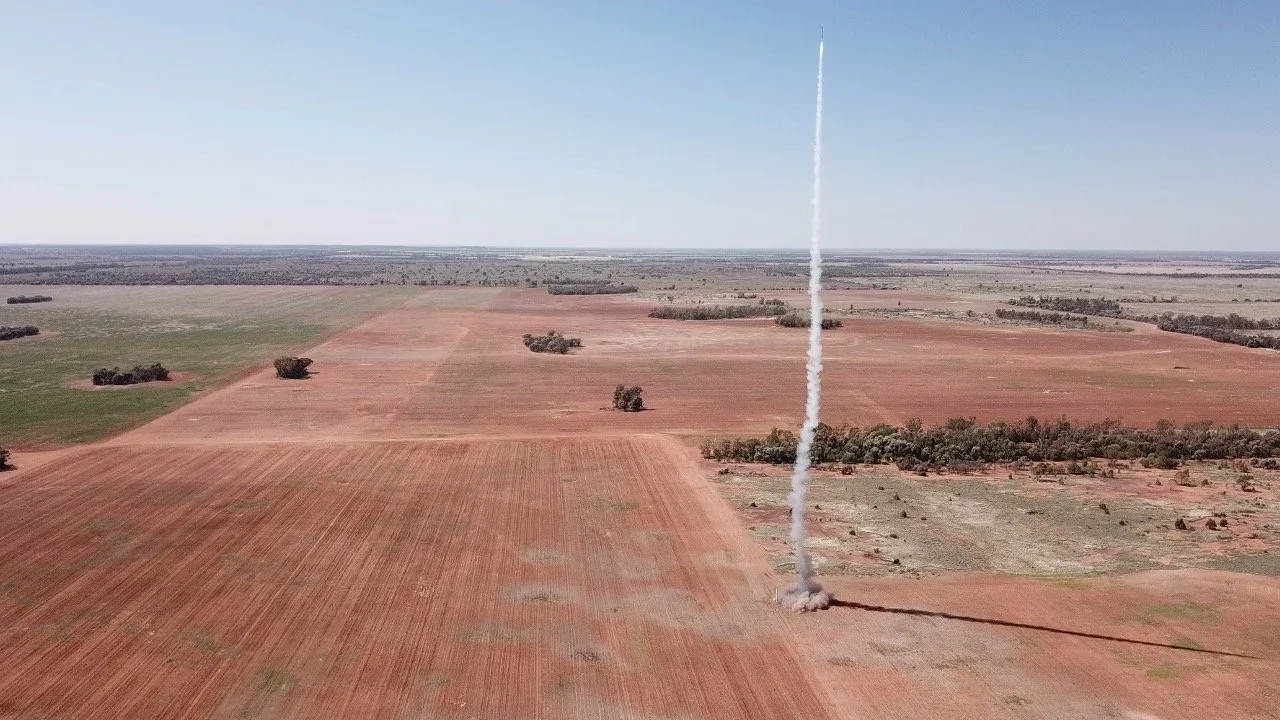
Spinifex Space was established Monday to provide end-to-end suborbital launch campaigns, private range access, and test and evaluation (T&E) infrastructure from facilities in southwestern Queensland, Australia.
Spinifex says its team spun out of Black Sky Industries, an Australian developer and supplier of solid rocket propellant and solid rocket motors The Spinifex site names no executives and does not describe the ownership structure. Neither company responded to questions about who holds the range licenses.
The offering: Spinifex itself does not build rockets. Instead, its products are the land and the licenses required for flight. Spinifex operates out of two primary facilities:
Black Sands Test Range provides multiple T&E facilities for energetics, kinetic effector, and hypersonic vehicle test programs. Outback Space Port at the MAXQ facility supports suborbital vertical launch and horizontal launch test campaigns, spanning more than 3M acres of southwestern Queensland.
Spinifex’s T&E list covers static fire, hypersonic vehicles, kinetic effectors, energetics handling, and destructive testing. The closest domestic alternative is Woomera, the government-owned range where Australia tests its missiles.
Building, not buying: Australia is shifting its defense buildout from purchasing to producing.
In April, the Australian government announced it would invest an initial AU$126.9M ($tkM) to establish solid rocket motor production in the country. Northrop Grumman Australia was selected as the preferred industry partner, leveraging recently completed upgrades to facilities at the government-owned Mulwala munitions factory in New South Wales.
The country is investing heavily in domestic missile production:
In December, the Department of Defence commenced operations with Lockheed Martin Australia in a new Missile Assembly Facility in Port Wakefield, South Australia. Kongsberg Defence Australia and the Department of Defence established the company’s first missile factory outside Norway in Newcastle, to begin production of the Naval Strike Missile and Joint Strike Missile in 2027.
Spinifex may be betting that in a country building missiles, the scarcity will not be in the rockets, but the space to test them.
Related Stories
The Bureau of Ocean Energy Management (BOEM) published an RFI on Wednesday seeking information, to consider building or repurposing infrastructure on the Outer Continental Shelf, for space launch and reentry.
Blue Origin’s days as a Bezos-funded billion-dollar pet project are coming to an end.

The Japanese company announced Tuesday that it had secured 500 kg of payload capacity on Starship to launch no earlier than 2030.
The funding round is the latest in a string of news from RDRE engine companies, suggesting the more efficient rocket tech is having a moment in the industry.
More Stories
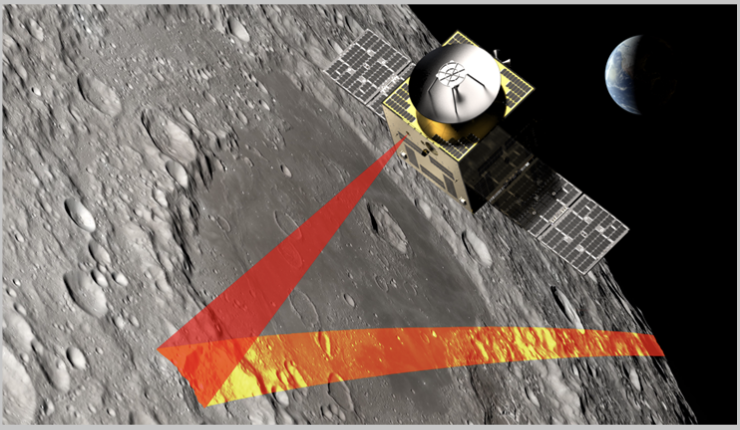 A rendering of Moonraker. Image: Lunar Outpost
Lunar Outpost Europe—the Luxembourg-based subsidiary of the US lunar terrain vehicle manufacturer—announced yesterday that it was selected to contribute to ESA’s Moonraker mission launching in 2030.
The mission is being led by NUVIEW GmbH, and will feature a lunar orbiting satellite that uses LiDAR to map the lunar surface in 3D, with the goal of gathering more information about potential landing sites at the lunar South Pole.
Stay cool: As part of the consortium, Lunar Outpost Europe will develop thermal management solutions to help Moonraker withstand the wide temperature swings in lunar orbit.
Load More