
Beyond its expected audience of fashion enthusiasts, Haute Couture Week captured the attention of a much wider public this year. And it is easy to see why. At a time when the luxury fashion industry continues to face slowing sales and economic uncertainty, couture is still growing, sustained by clients whose desire for exclusivity and one-of-a-kind pieces shows no sign of waning.
This season reminded us that haute couture remains a vast repository of new ideas and a space for escaping everyday life. Chanel and Robert Wun returned to fairy tales and childhood, Schiaparelli, Iris van Herpen and Jean Paul Gaultier explored silicone, plasma and 3D-printed constructions, while Indian designers claimed an even more prominent place on the Parisian scene. A look that appeared on the Schiaparelli runway in the morning and was worn by Zendaya that very evening also showed how quickly the boundary between the runway and the red carpet is disappearing today.
From a blazer covered in real flowers to glowing gowns and silhouettes resembling stone sculptures, we have selected ten creations the internet cannot stop talking about.
Related: 7 standout shoes from Haute Couture Week
Schiaparelli – a blazer covered in more than 11,000 real flowers
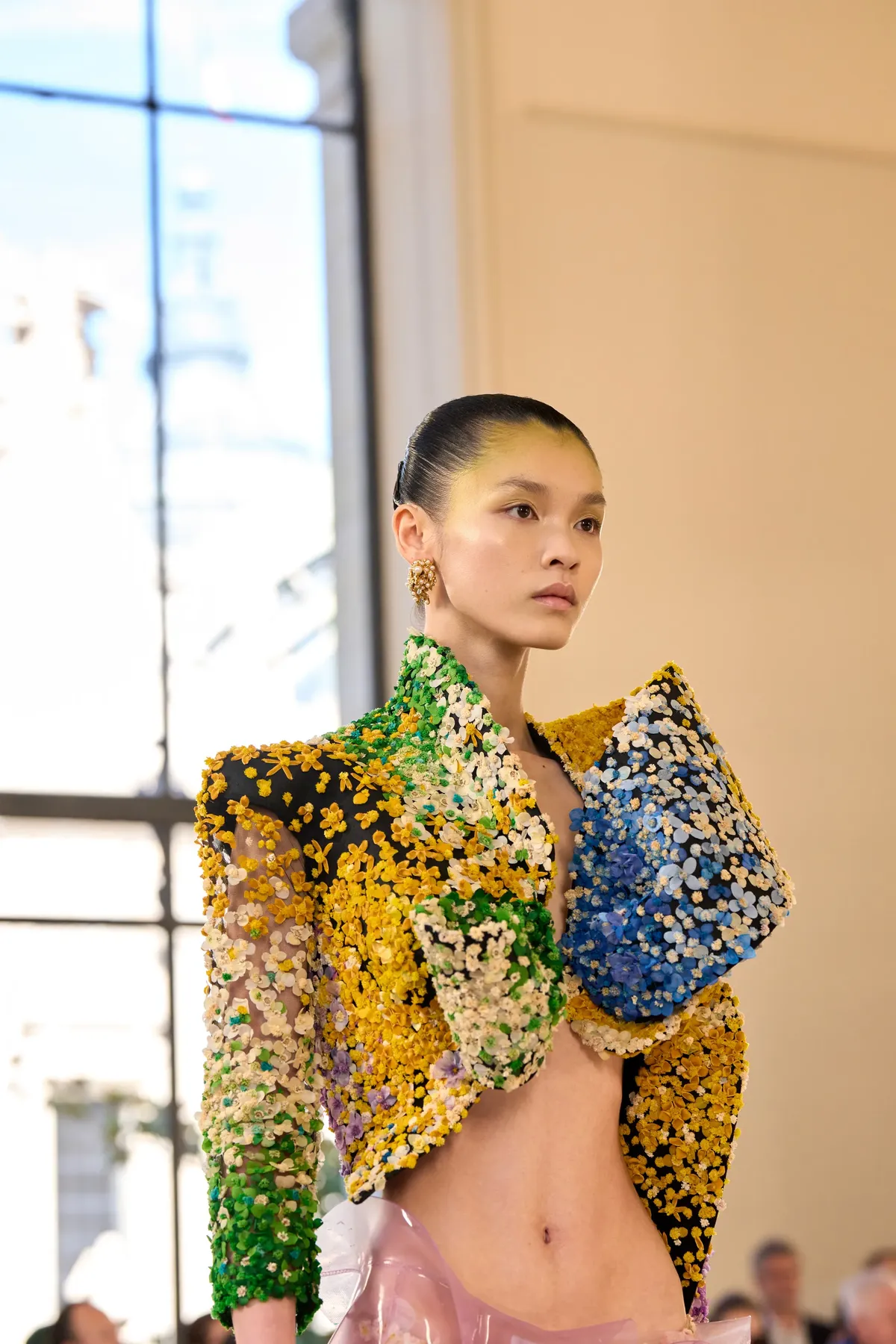
Photo: Schiaparelli Fall 2026 Couture, Courtesy of Schiaparelli
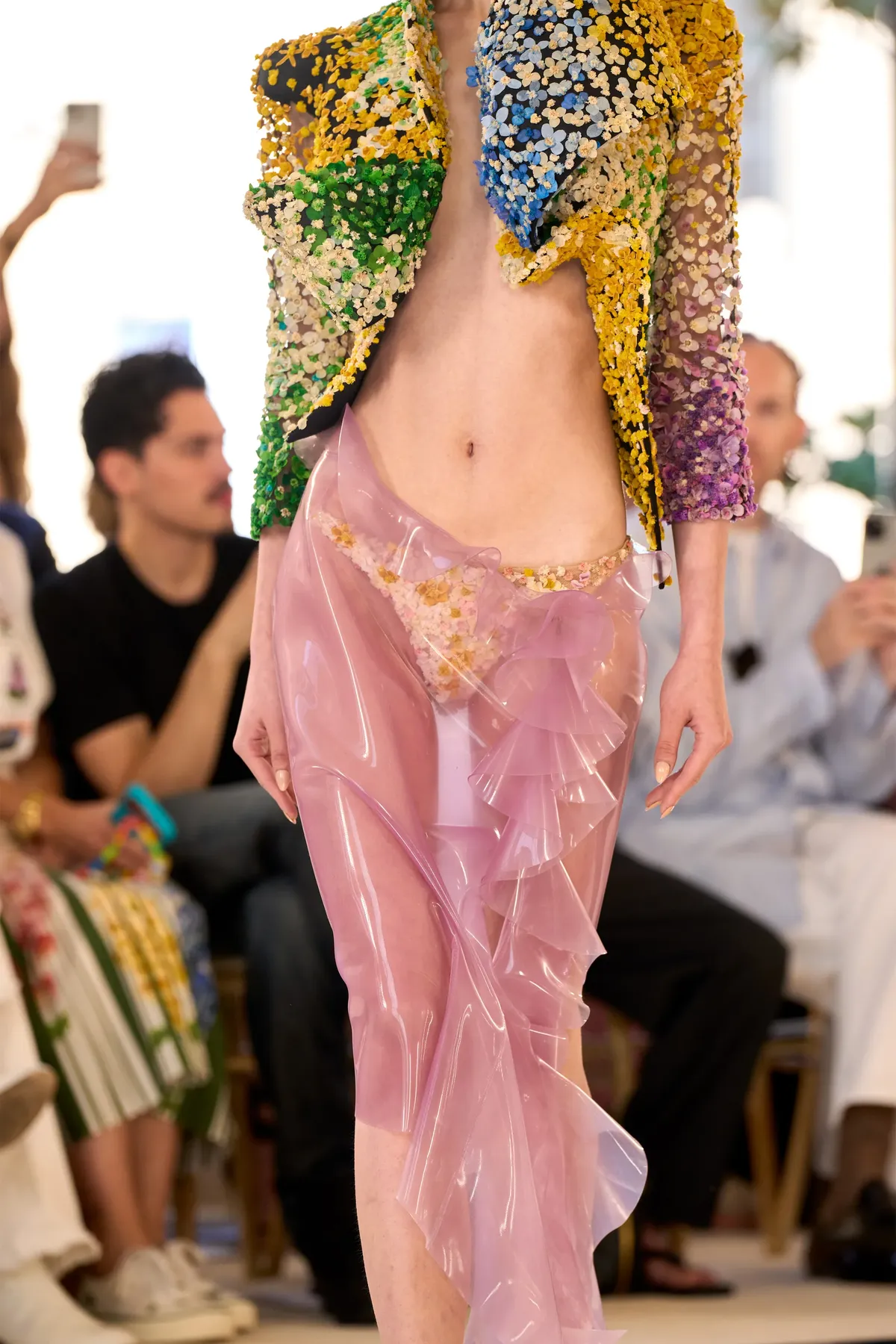
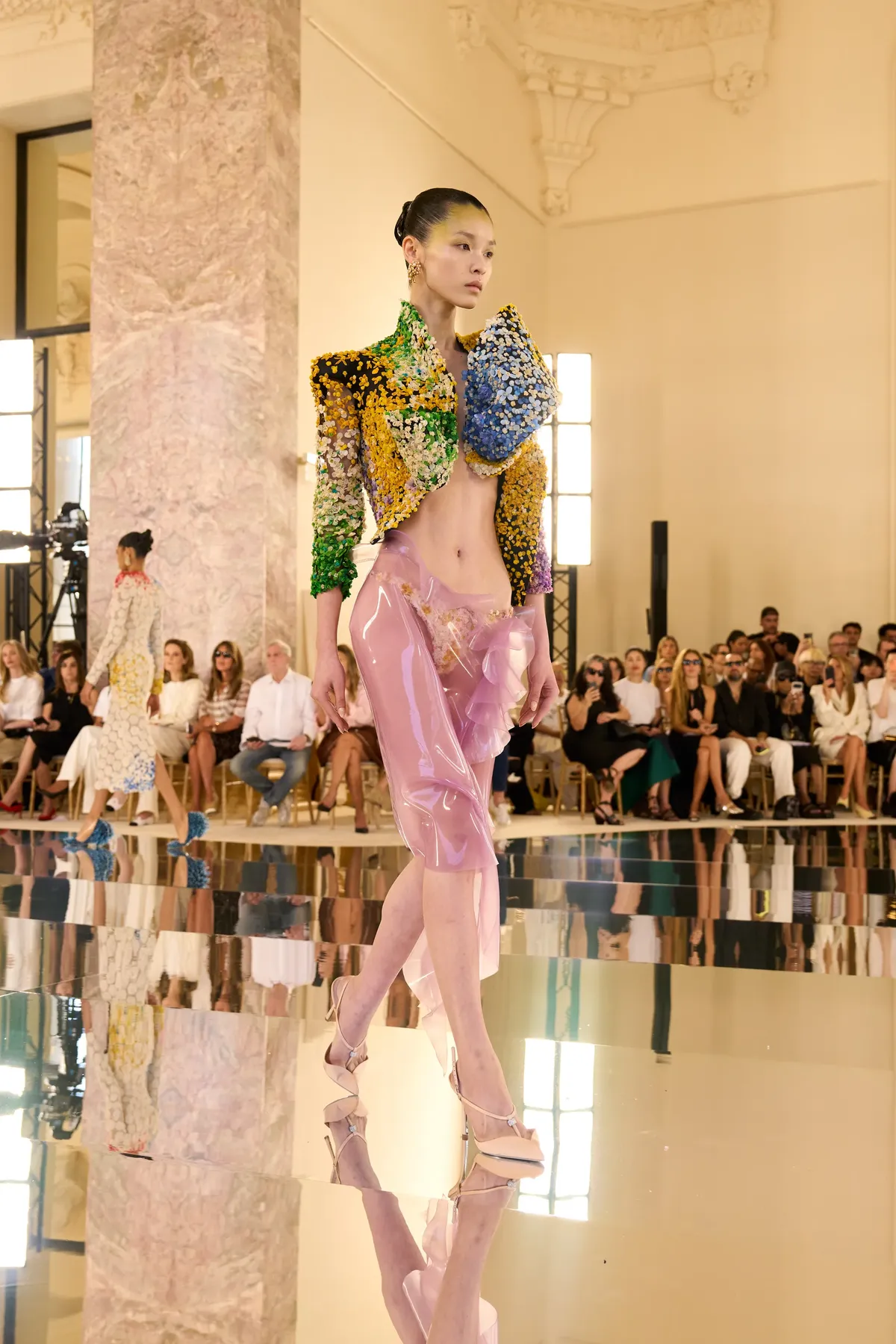
Daniel Roseberry transformed the signature Schiaparelli blazer into an opulent floral sculpture covered in real flowers. It took more than 11,288 blooms and an astonishing 2,779 hours of work to create, while its exaggerated shoulders and large sculptural details further amplified its otherworldly volume. The blazer was presented with a sheer skirt made from pale pink silicone, combining traditional couture embroidery with one of the most unusual materials seen on the runway this season.
Related: Schiaparelli’s Fall couture collection is defined by corsets
Iris van Herpen – “Helix Nebula”
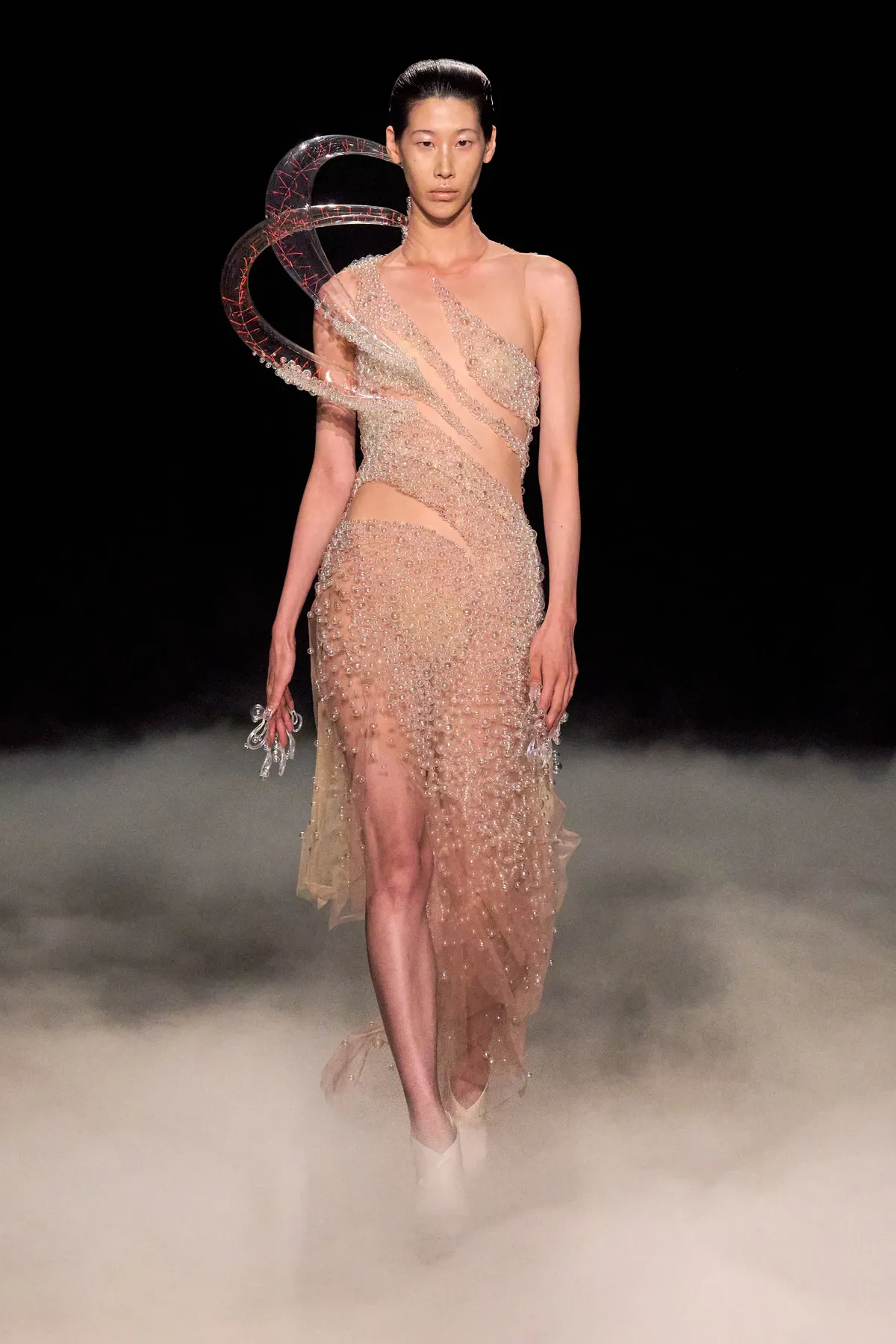
Photo: Iris Van Herpen Fall 2026 Couture, Gorunway.com
Iris van Herpen once again demonstrated that the boundary between high fashion and experimentation has almost completely disappeared. The final creation, titled Helix Nebula, featured two glass tubes filled with glowing strands of plasma positioned around the shoulders, while the gown itself was covered in 30,000 hand-blown iridescent spheres. The plasma reacted to the electromagnetic field of the human body, causing the light to shift whenever the designer approached it. It was the first haute couture creation to incorporate plasma.
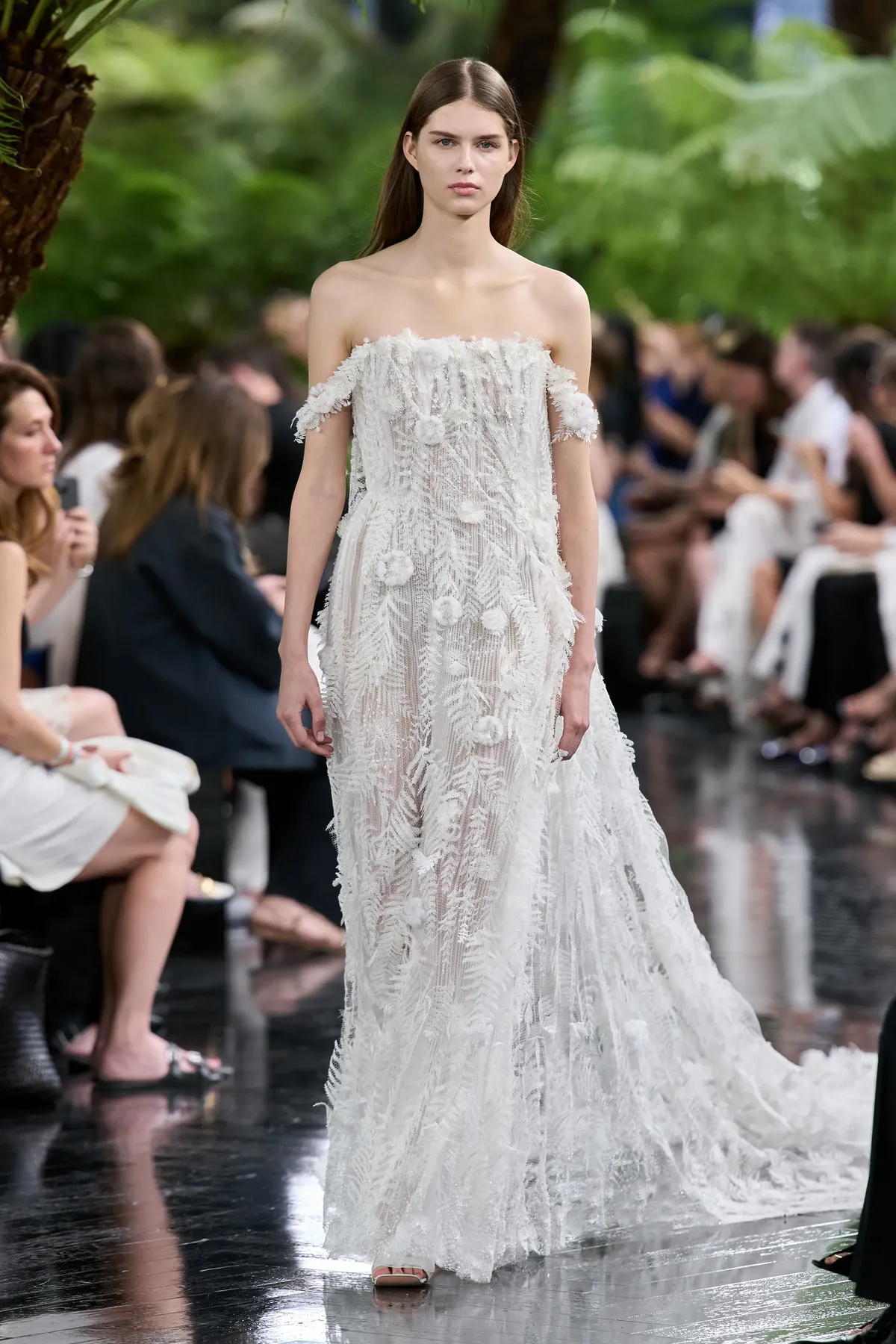
Dior – a wedding dress covered in ferns
Christian Dior Fall 2026 Couture, Gorunway.com
Jonathan Anderson closed the Dior show with a wedding dress that looked as though it had emerged from the greenhouse built around the runway. The white off-the-shoulder gown featured a long train, hand-pleated chiffon and raised appliqués of ferns and cactus flowers. The botanical motifs gradually spread across its surface as though nature had begun to reclaim it, and after the enormous attention generated by Anderson’s wedding dress for Taylor Swift, this final look was one of the show’s most eagerly anticipated moments.
Related: Jonathan Anderson’s Dior fall couture vision is defined by statement accessories
Chanel – the revenge dress of the decade
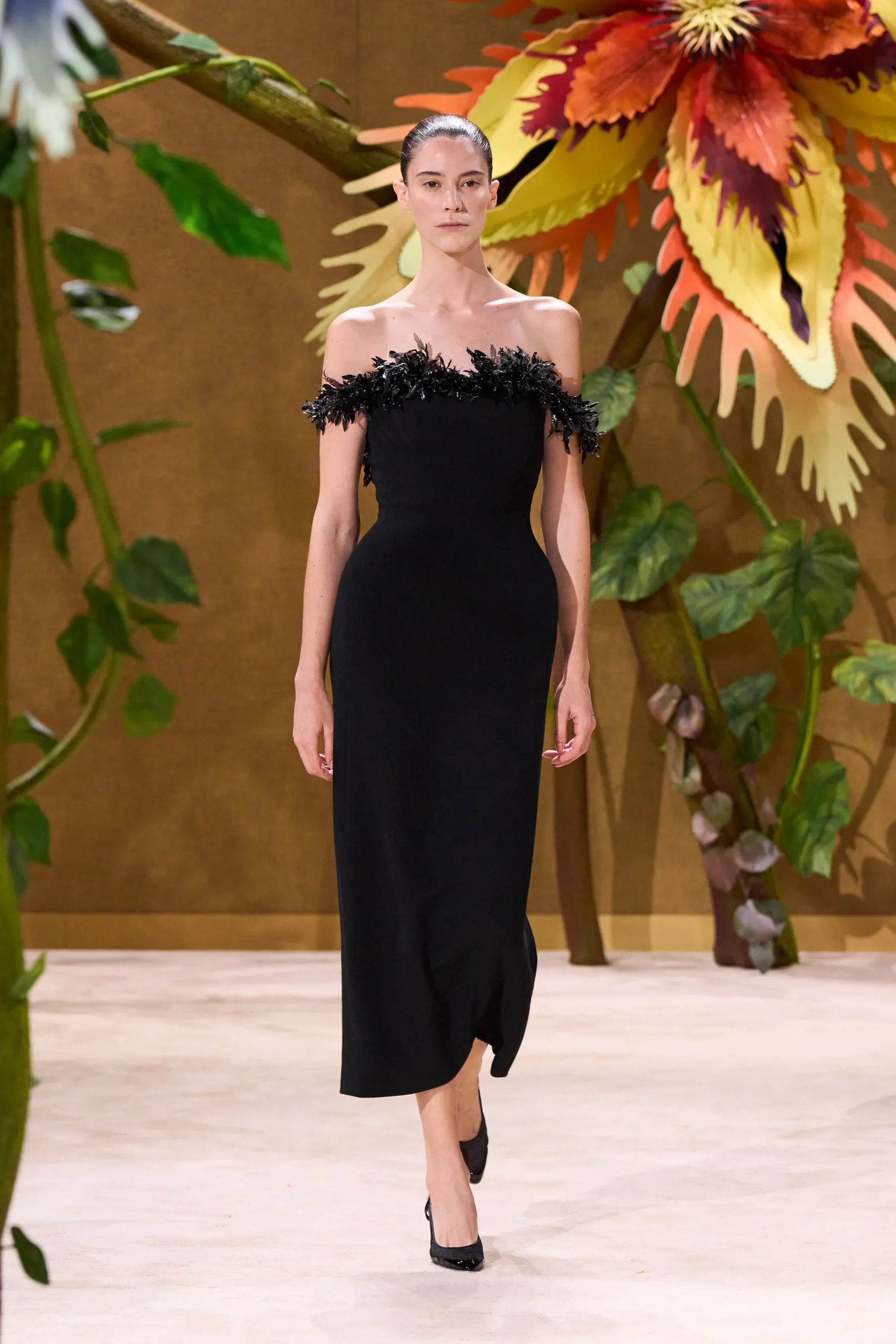
Photo: Chanel Fall 2026 Couture, Gorunway.com
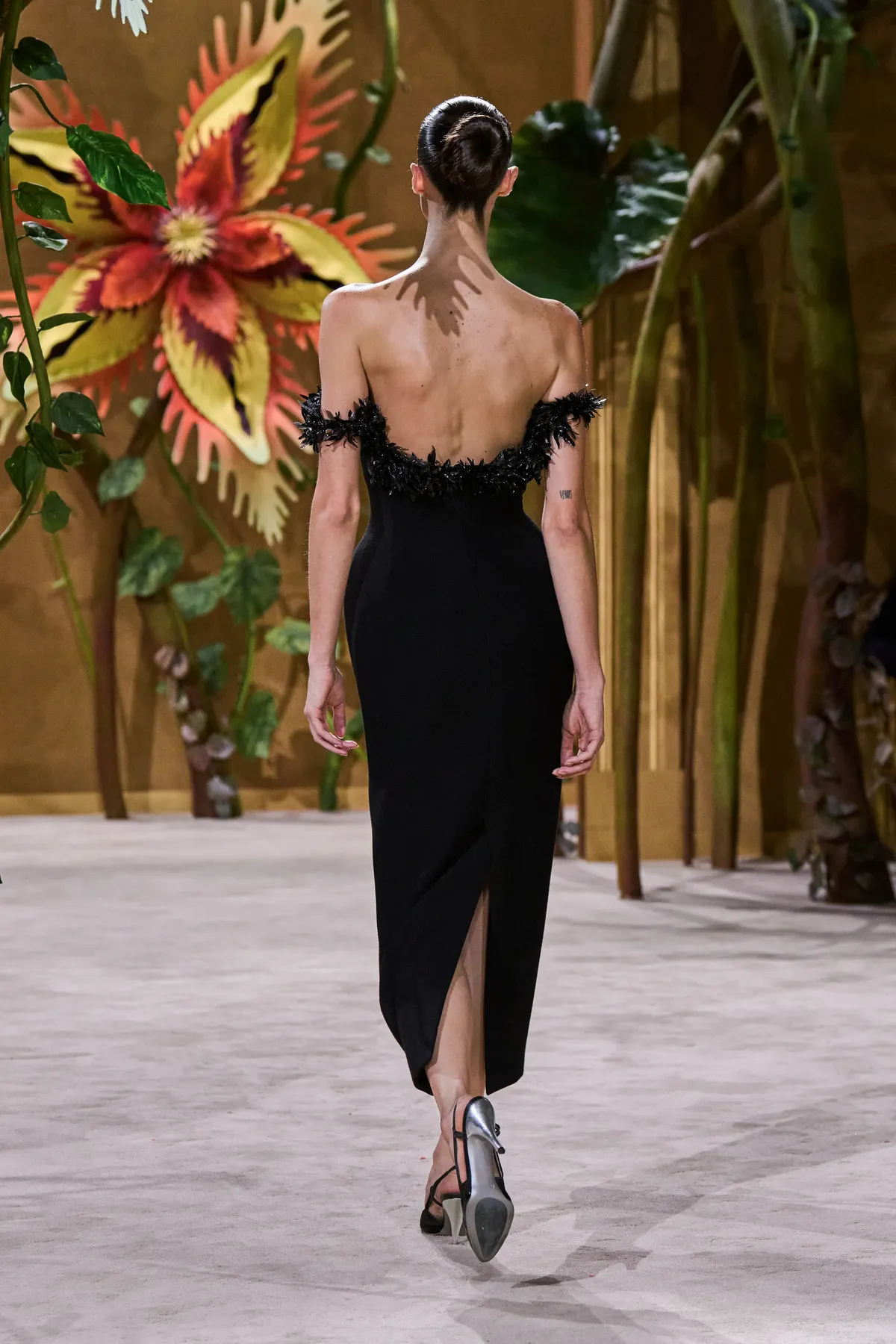
Matthieu Blazy rejected the expected dramatic finale and sent a simple black off-the-shoulder dress down the runway. The designer described it as Chanel’s version of the so-called revenge dress, linking it to Gabrielle Chanel’s freedom and her rejection of traditional expectations surrounding women’s lives. Following a collection filled with fairy-tale embroidery, floral appliqués and miniature symbols from children’s stories, its restraint made it even more striking. The dress felt like a contemporary response to the idea that every fairy tale must end in marriage.
Related: Floral dresses from the new Chanel couture collection stole all the attention on the runway
Balenciaga – Gigi Hadid in a cloud of black feathers
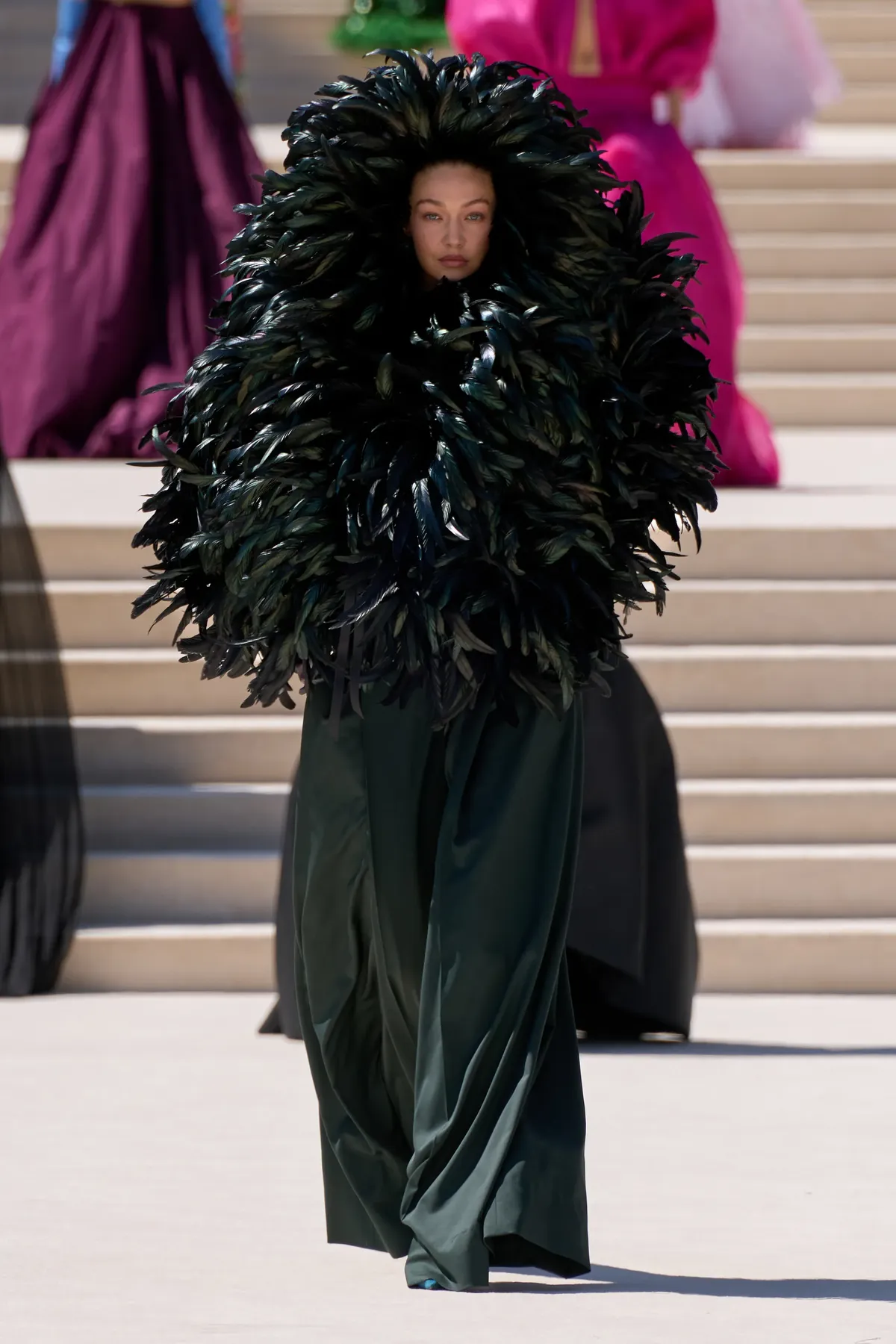
Photo: Balenciaga Fall 2026 Couture, Gorunway.com
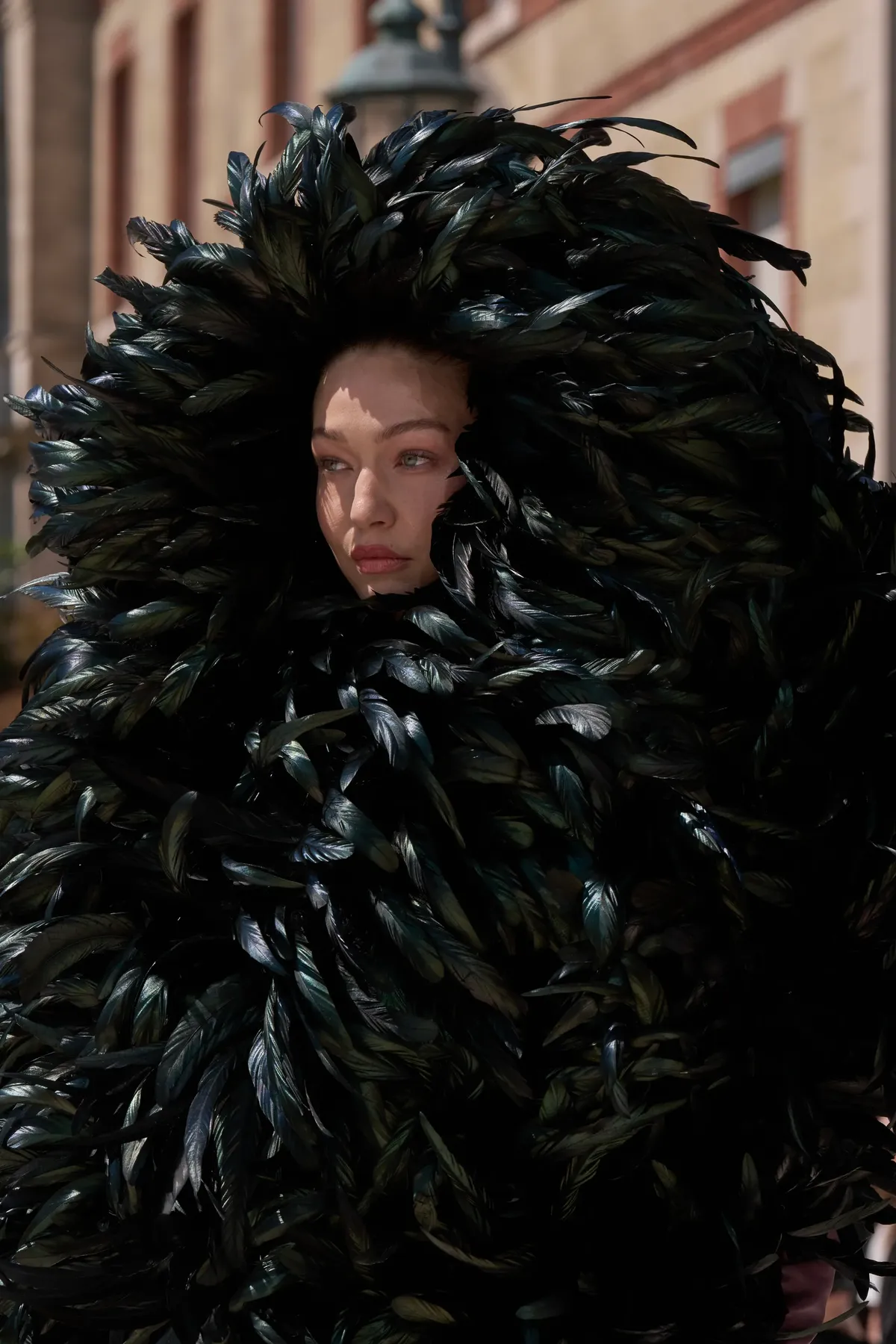
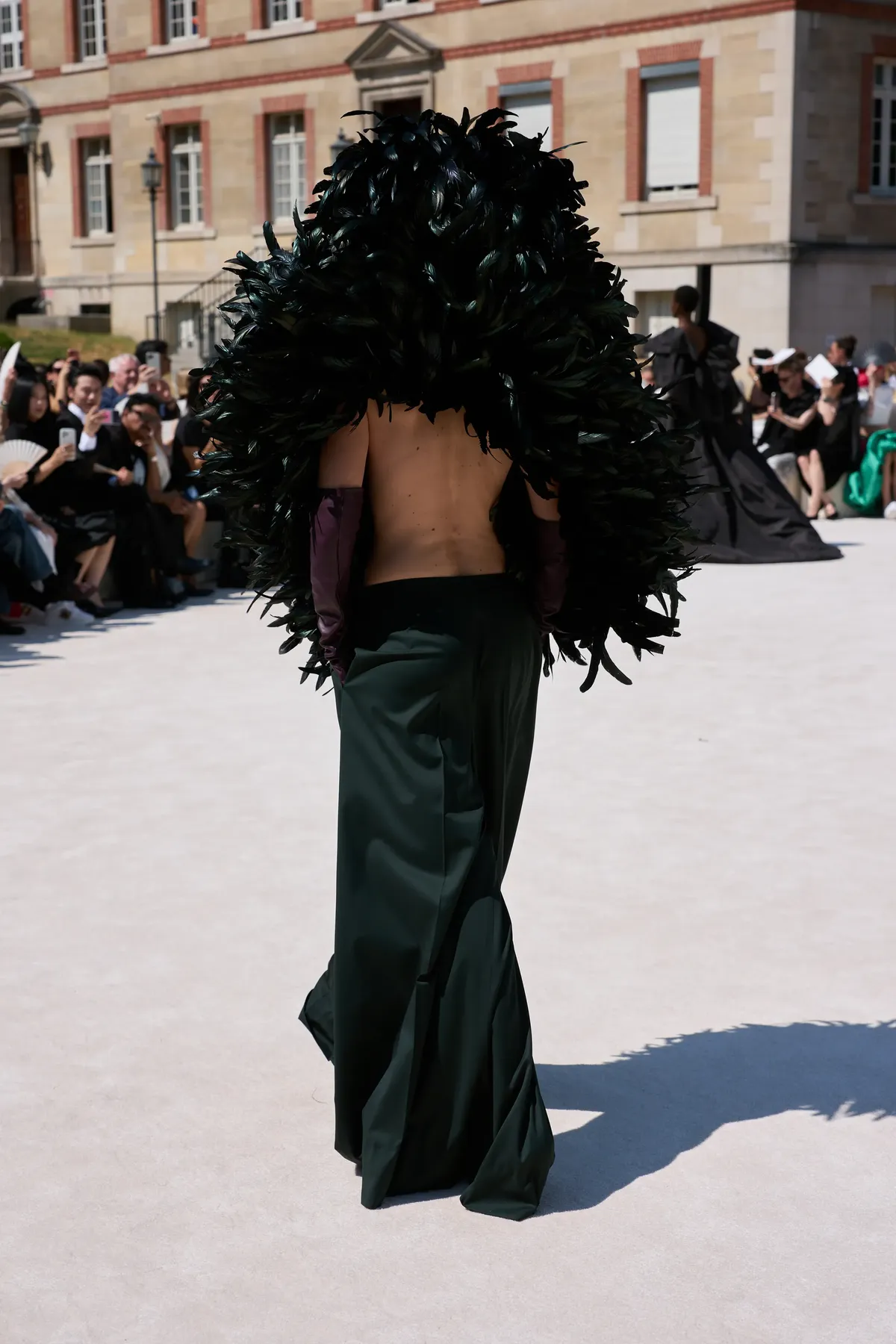
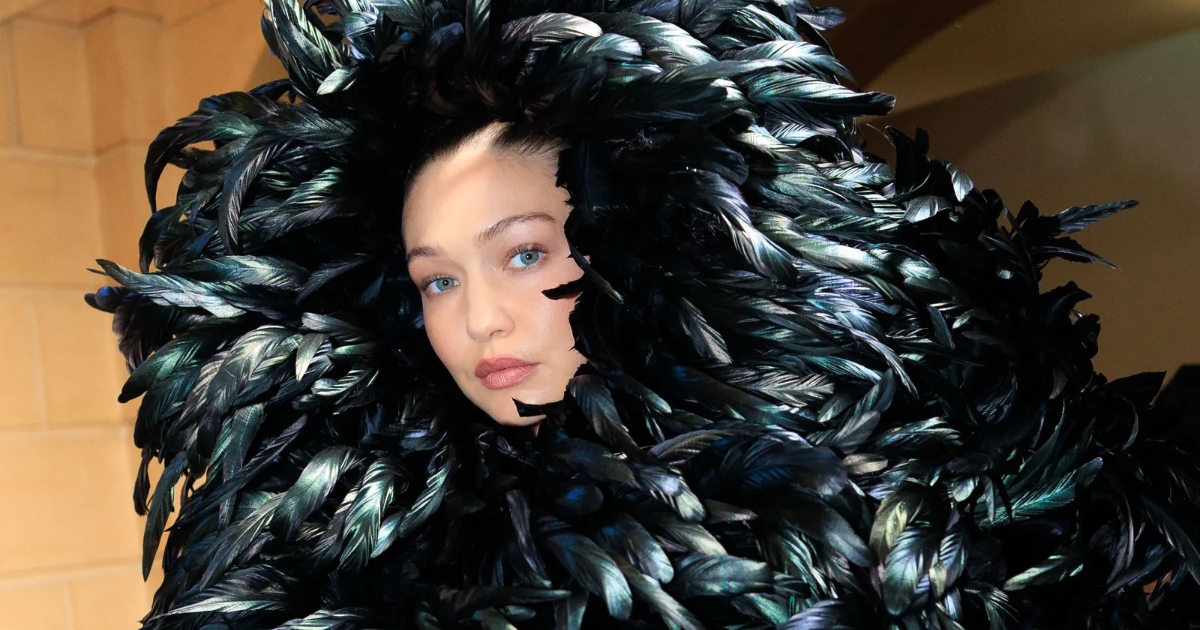
For his couture debut at Balenciaga, Pierpaolo Piccioli combined Cristóbal Balenciaga’s archival shapes with his own penchant for monumental colour and volume. Gigi Hadid attracted the most attention, concealed beneath iridescent black rooster feathers and a sculptural headpiece created in collaboration with Philip Treacy. It also marked Hadid’s return to the couture runway after four years.
Related: Balenciaga’s iconic Le City bag gets the couture treatment
Jean Paul Gaultier – a distorted “glitch” corset
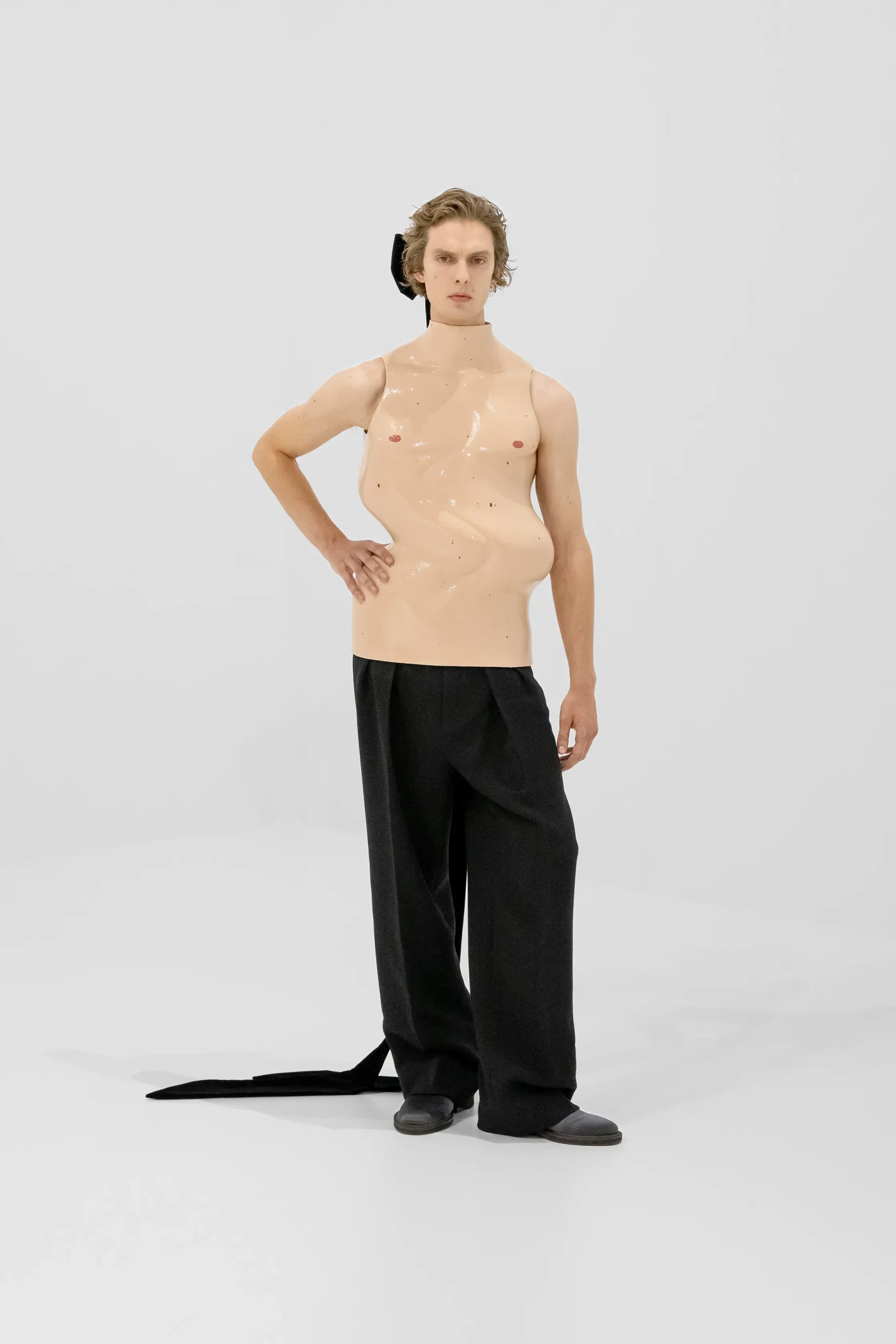
Photo: Jean Paul Gaultier Fall 2026 Couture, Courtesy of Jean Paul Gaultier
For his debut at Jean Paul Gaultier, Duran Lantink 3D-scanned model Leon Dame’s torso, then reconstructed it as a body that appeared displaced and melted to one side. An internal corset held the unnatural shape in place, while thermoplastic polyurethane and a layer of latex gave the surface the sheen of digitally generated skin. The creation looked as though the human body had malfunctioned while loading, transforming an on-screen error into a physical couture piece. It was a perfect marriage of Gaultier’s long-standing interest in the body and Lantink’s somewhat cynical attitude towards contemporary ideals of beauty.
Robert Wun: A dress with a cloud of balloons
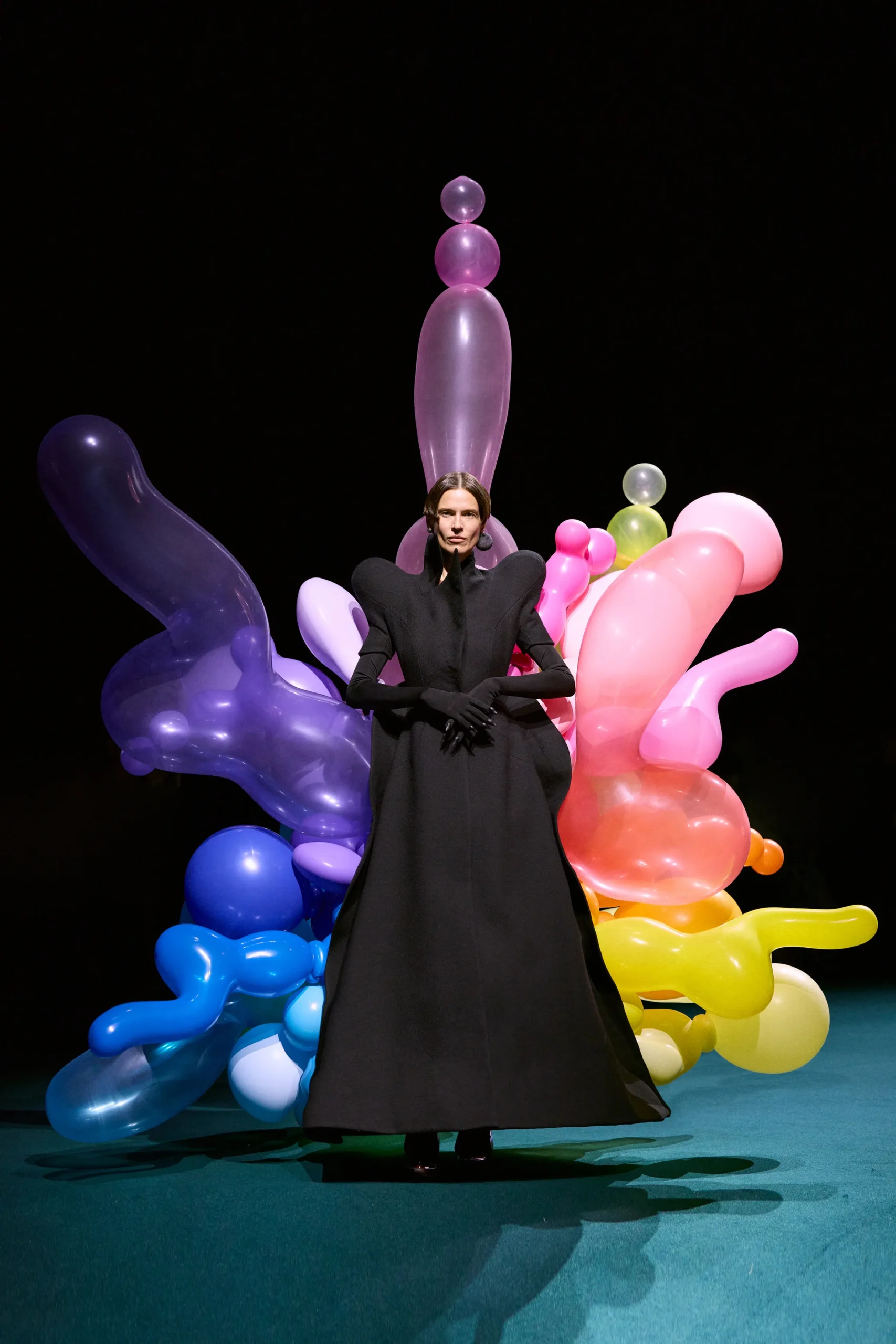
Photo: Robert Wun Fall 2026 Couture, Gorunway.com
Robert Wun concluded his show dedicated to childhood and dark fairy tales with a monumental black gown trailing a chaotic cloud of specially made balloons. The severe and intimidating black silhouette was paired with an object usually associated with birthdays, the circus and children’s play. Wun conceived the balloons as a visual metaphor for the inner child that refuses to be tethered and controlled.
Related: The standout moments from Robert Wun’s Fall 2026 couture collection
Viktor & Rolf – Contrasting pieces of decadence and restraint
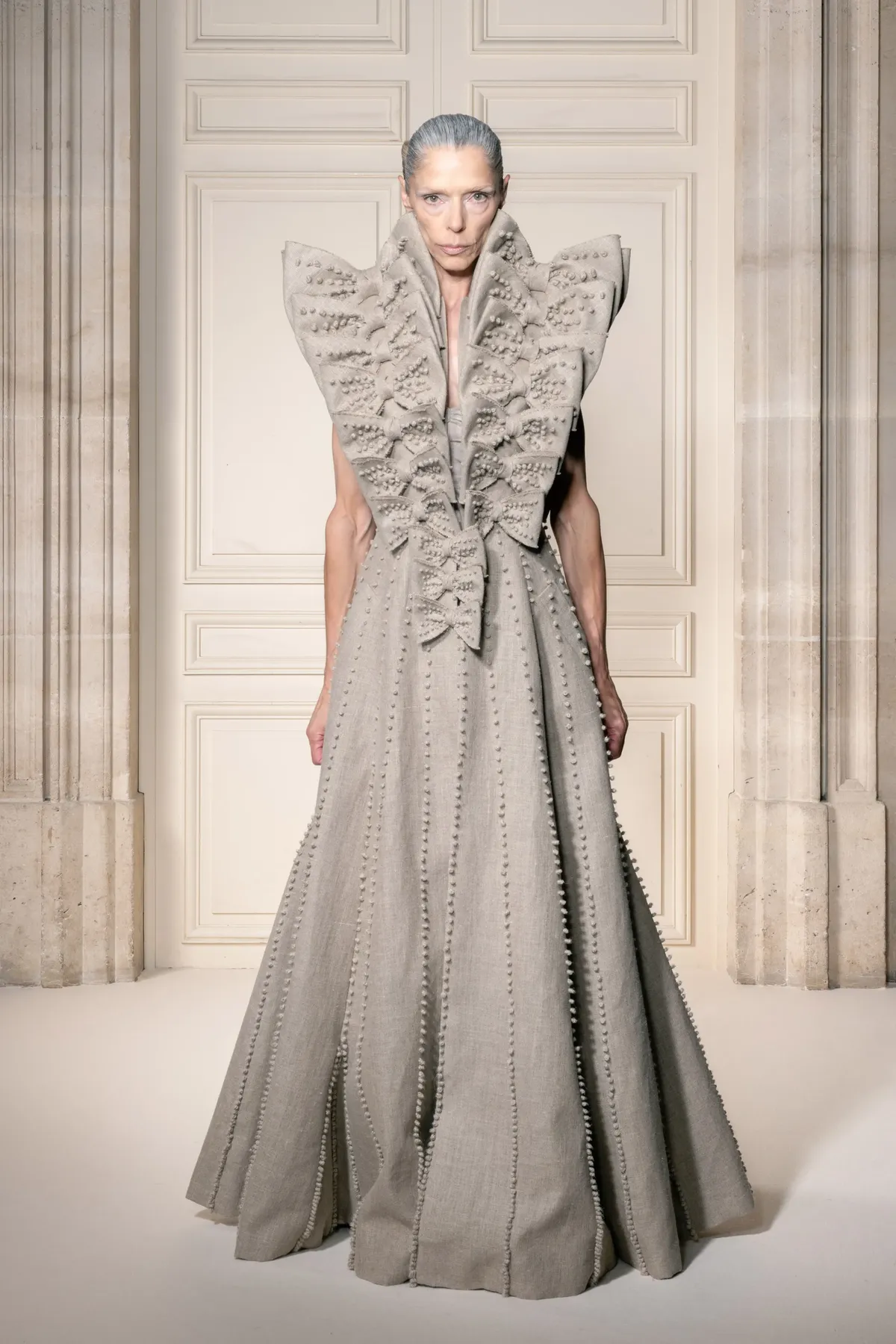
Photo: Viktor & Rolf Fall 2026 Couture, Courtesy of Viktor & Rolf
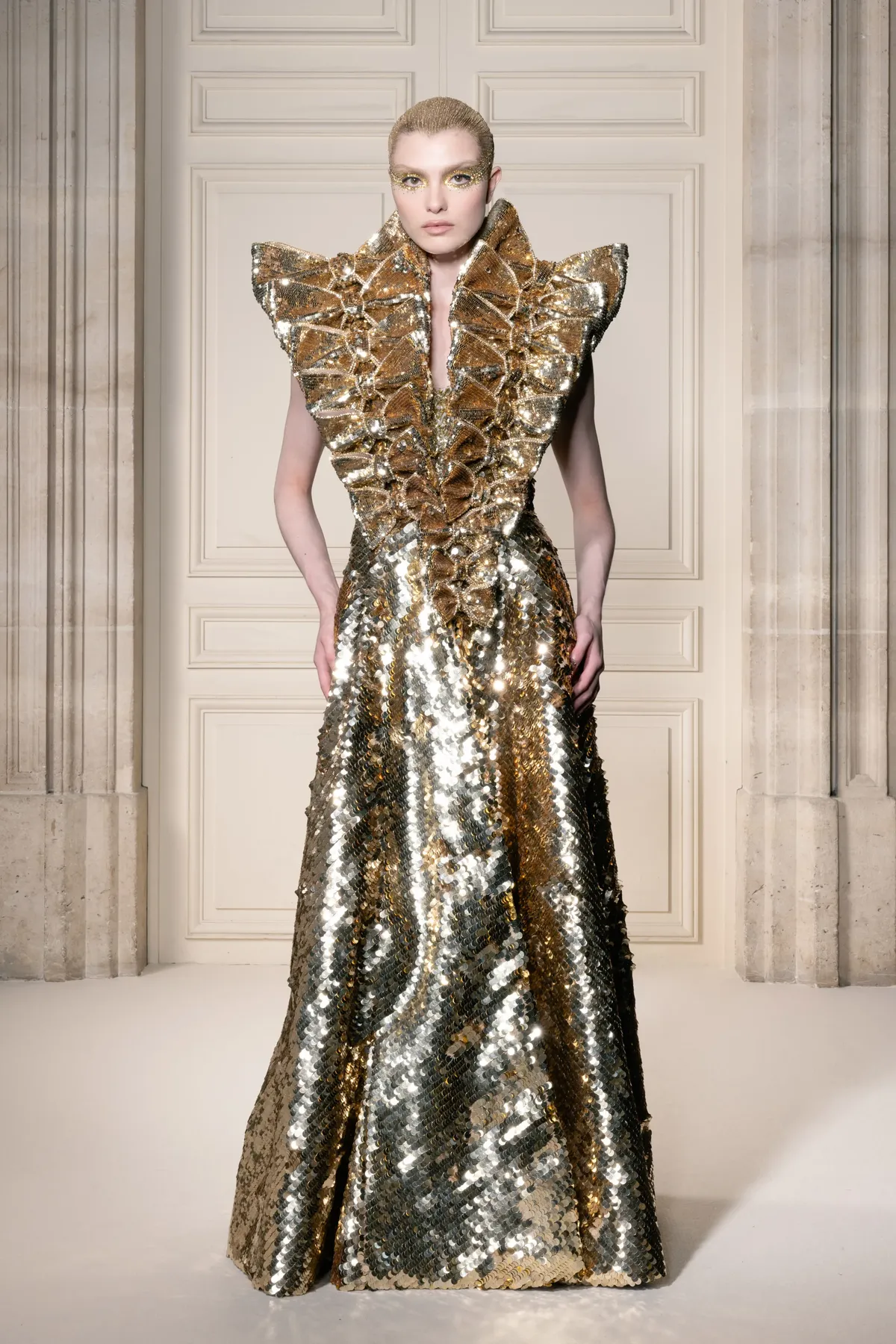
Viktor & Rolf based the entire collection on presenting identical silhouettes in parallel, each made from completely opposing materials. This idea was best illustrated by a pair of tiered ruffle dresses that had been cut apart and reassembled so that when the two models stood side by side, they appeared to be one person. One version was made from modest, coarse materials, while the other featured gold, embroidery and sumptuous textures. The creation encapsulated the central question of the Gilded Age 2.0 collection: does the value of couture lie in visible wealth or in the labour concealed beneath its surface?
Rahul Mishra – Models resembling stone sculptures
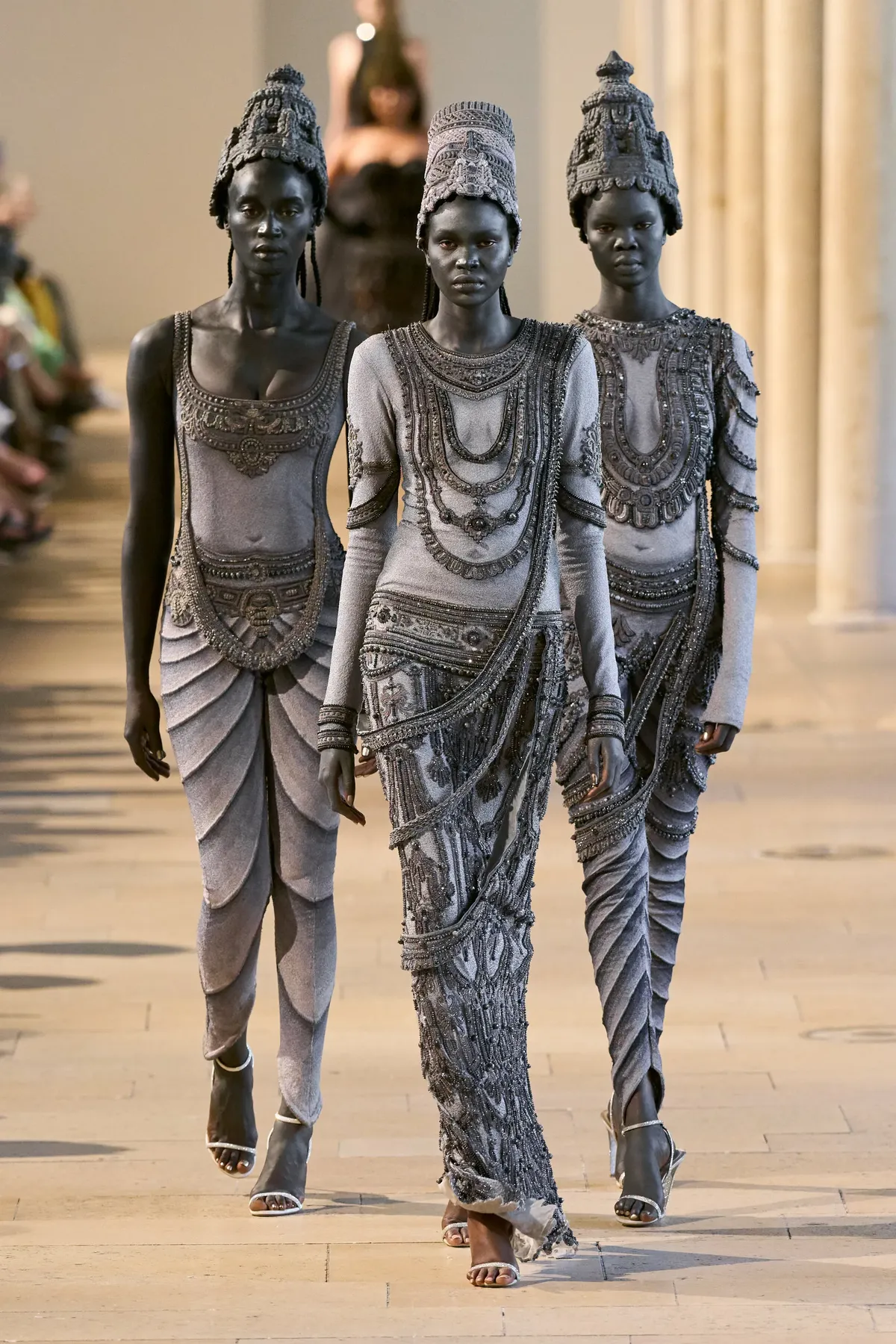
Rahul Mishra Fall 2026 Couture, Gorunway.com
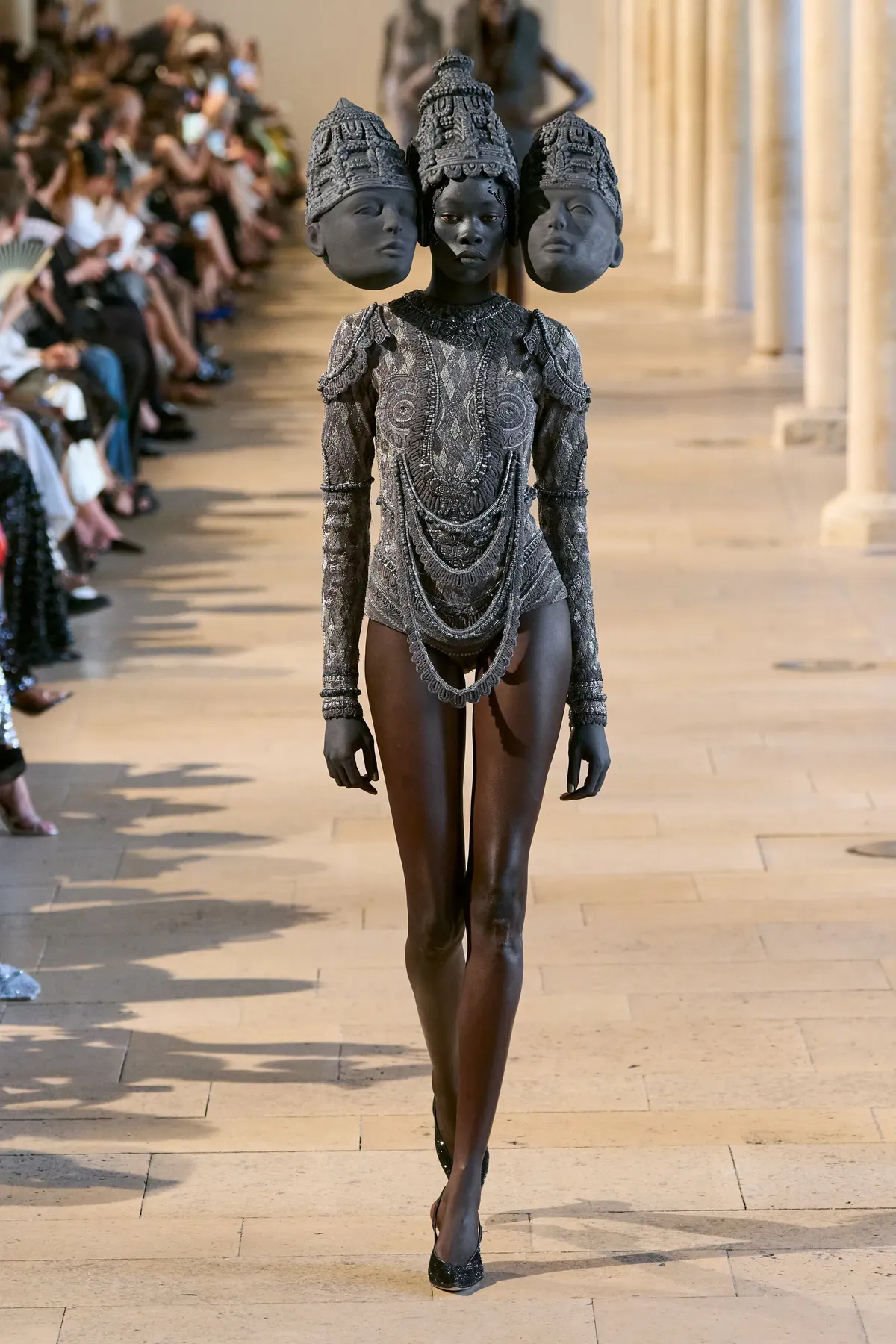
Rahul Mishra translated Indian temples and their ancient stone figures into clothing through tonal grey silk embroidery. The most impressive dresses created the illusion that the models’ bodies were covered in reliefs carved into weathered stone, while the drapery of apsaras, celestial dancers, was recreated in thread with astonishing precision. With corsets embellished with natural stones and monumental triple-tiered headpieces, the models looked like sculptures that had stepped down from temple walls.
Related: The Armani Privé Fall 2026 dresses are surprisingly wearable
Ashi Studio – A dress with a Venetian mirror built into the back
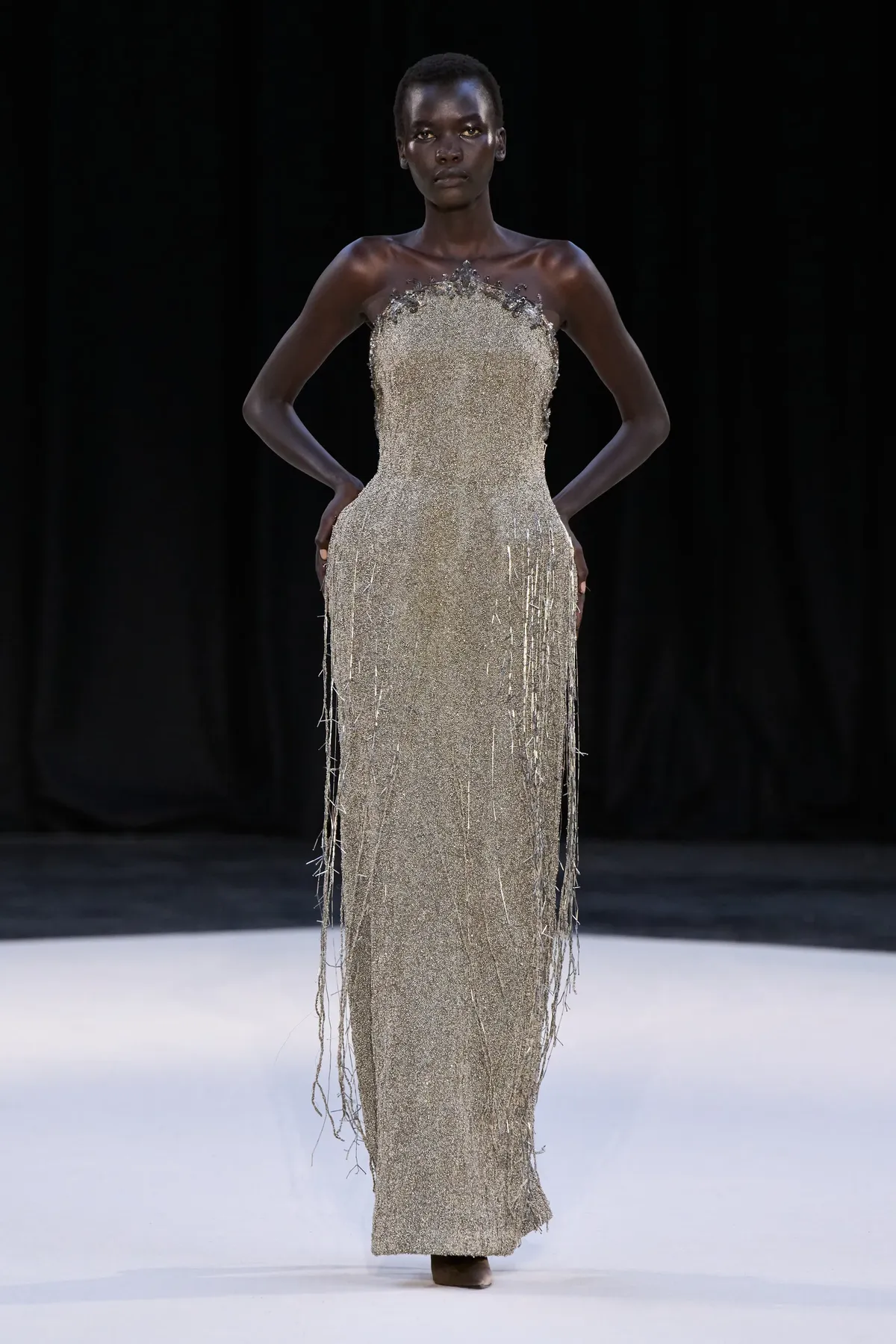
Ashi Studio Fall 2026 Couture, Gorunway.com
Mohammed Ashi literally incorporated the idea of an opulent masquerade into the clothes, placing a real mirror into the back of a sequined bustier with long fringe. As the model moved, members of the audience could see themselves reflected in the dress, becoming part of the spectacle they were watching. The creation drew on Venetian balls, the surrealism of Salvador Dalí and the question of identity concealed behind a mask, a theme that ran throughout the collection.