
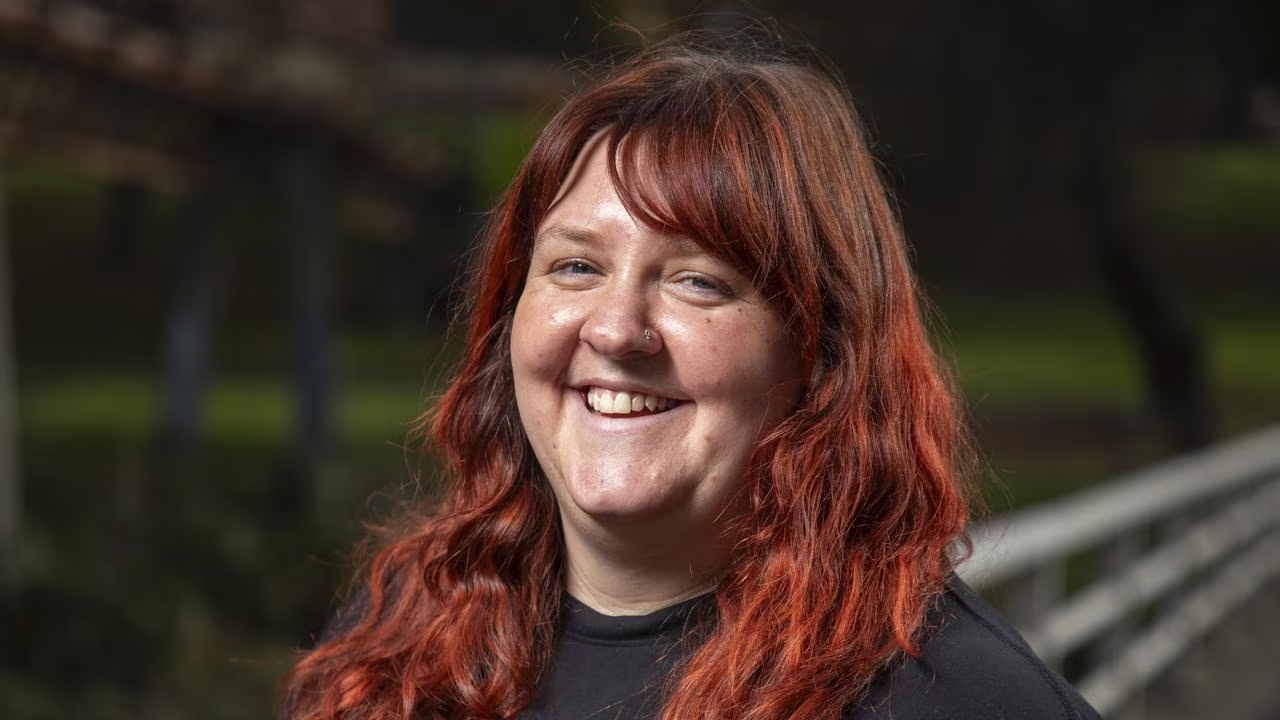
After years spent searching for remedies, Polyendocrine Metabolic Ovarian Syndrome (PMOS) sufferer Chloe Morgan was recently prescribed a drug called GLP-1.
Commonly sold under the brand names Ozempic and Mounjaro, GLP-1s are prescription medications that mimic a natural gut hormone to lower blood sugar, slow digestion and reduce appetite.
While still early in her journey with the medication, she said she finally feels hopeful her condition is being adequately treated.
It’s why she says the medication should be listed on the Pharmaceutical Benefits Scheme (PBS).
“GLP-1s may genuinely be the first treatment that has meaningfully helped thousands of women address their underlying endocrine and metabolic issues, yet so many women with PMOS cannot access them because of cost,” she said.
“For those with PMOS, this isn’t medication for cosmetic purposes.
“It isn’t laziness, or a lack of discipline. It’s a complex medical condition that impacts every part of our lives.
“My food noise has reduced, my energy, fatigue and mental health is improving, my desire to exercise is returning.”
As for whether they were effective in the treatment of PMOS, Tasmanian women’s GP Catherine Moult said while there was emerging evidence showing they can help with some insulin and weight-related symptoms, they were not appropriate for everyone.
“Treatment needs to be individualised as part of a whole-person management plan,” Dr Moult said.
Feds knock-back PBS push
The call to list the medication on the PBS is among the strategies being pursued by people seeking to address the historical shortfalls in the treatment of PMOS.
Federal Assistant Health Minister Rebecca White acknowledged that while many women living with the condition were looking for affordable treatment options, there were currently no plans to list GLP-1 medications for its treatment on the PBS.
“In Australia, any medicine listed on the PBS must go through an independent assessment process to ensure it is safe, effective and represents value for patients,” she said.
“At this stage, GLP-1 medicines are not approved by the Therapeutic Goods Administration for the treatment of PMOS and no application has been received by the Pharmaceutical Benefits Advisory Committee for this specific use.”
She said the government had been particularly focused on women’s health, pointing to a $39.9m investment in the establishment of 33 endometriosis and pelvic pain clinics nationwide.
In Tasmania, there is one open in Glenorchy, delivered by Family Planning Tasmania.
“These clinics provide expert, multidisciplinary care for women close to home and are helping women get the support, answers and treatment they need and deserve for complex conditions that can cause pelvic pain, including PMOS,” Ms White said.
“We will continue to work with experts, clinicians and pharmaceutical companies to support better access to safe, effective and affordable treatments for Australian women.”
Counting the cost of ‘doing nothing’
Ms Morgan warned women were continuing to bear the physical, emotional and financial burden of inaction on women’s health issues.
This was particularly true in Tasmania, where access to women’s health services has historically been more limited.
“What is the cost of doing nothing? What is the cost of untreated insulin resistance, diabetes, cardiovascular disease, stroke, cancer, sleep apnoea, mental health conditions, and lifelong chronic illness because these are the risks I face having PMOS?,” she said.
“How many thousands of dollars are people already spending desperately trying to survive this condition rather than treating it?”
Dr Moult said alongside consideration of these changes, the key issue remained investment in women’s health research.
“There’s so many things in medicine we just don’t know about in terms of women’s health,” she said.
“That investment, and that research is long overdue, and women deserve better.”
‘Life changing’: The words that ended a 20-year mystery
Getting her period aged 12 kicked off a collection of seemingly unexplained symptoms that for years, took over Chloe Morgan’s life.
Her periods were infrequent, but when she did get them they were painful and heavy.
Coupled with this were gastrointestinal issues, mood swings, rapid weight gain and mental health issues.
And despite repeated attempts, her questions to doctors went unanswered.
“By the time I was 29 the symptoms had become overwhelming,” Ms Morgan said.
“I was constantly at doctors’ appointments asking what was wrong with me.
“Could it be fibromyalgia? Was it chronic fatigue? Why couldn’t I lose weight?”
Ms Morgan was in her 30s by the time she received an answer.
After blood tests, ultrasounds and insulin testing – ordered by a young female GP – she received a diagnosis of Polycystic Ovary Syndrome (PCOS).
This was despite the tests showing she did not have ovarian cysts.
Ms Morgan counts herself lucky she was diagnosed when she was.
“For the first time in my life, someone was telling me there was an actual medical reason behind what I had been experiencing,” she said.
“I now realise how lucky I was to have a doctor who understood that this condition is far more than ‘cysts on ovaries’.
“The doctor was educated, passionate about women’s health, and willing to look beyond outdated definitions.”
Disease gains a new name
In May this year, PCOS was renamed Polyendocrine Metabolic Ovarian Syndrome (PMOS) to better reflect the features and symptoms of the condition.
These can include irregular or absent periods, excessive hair growth, hair loss, skin conditions, anxiety, depression, weight issues and reduced fertility.
The change came after 14 years of research and campaigning by women’s health professionals, spearheaded by Helena Teede, director of the Monash Centre for Health Research Implementation.
Tasmanian Rose Valentine, who was diagnosed with PCOS at 21, said the name change was an important step in illustrating the reality of the condition.
“PCOS doesn’t just not describe me, it barely describes itself,” the 28-year-old said.
Ms Valentine has adrenal hyperandrogenism, a medical condition in which the adrenal glands produce high levels of male sex hormones.
This manifested as excessive hair growth.
“When I tell people I have PCOS, it feels both inadequate and inaccurate because the one manifestation that it’s named for is the main one that I don’t have,” Ms Valentine said.
Clearing up confusion to aid earlier diagnosis
It’s the prevalence of stories like these that demonstrate the importance of the name change, according to Tasmanian women’s GP Catherine Moult.
“The previous name has long been recognised as confusing and for many people misleading,” Dr Moult said.
“Not everyone with the condition has polycystic ovaries, and having polycystic ovaries on an ultrasound doesn’t necessarily mean someone has the syndrome.”
Dr Moult is hopeful the new name will support earlier diagnosis and a more comprehensive management approach covering PMOS’ wide-ranging symptoms.
Ms Valentine also hoped the more descriptive name would reduce judgement around the condition – particularly in relation to its impact on weight.
“Because of some of the metabolic issues common in the condition we can face shaming and judgement, which concerns being dismissed as ‘you just need to lose weight, eat better and exercise more,” she said.
Weight management struggles from PMOS are also something Ms Morgan can relate to.
By her early 20s, her periods had nearly stopped, but were replaced by rapid and seemingly unexplained weight gain.
Repeated efforts to manage this with diet and exercise were unsuccessful.
“I went from a size 14 to a 20, and it just kept going,” she said.
“Alongside the weight gain came anxiety, depression, mood swings, a panic disorder, and an unhealthy relationship with food and my body.
“Everything felt like a slippery slope.”
Ms Morgan said during this time her cravings – now understood as “food noise” – became relentless.
“At one point it became so overwhelming I would send myself to bed at 9pm so I could stop my brain.”
The breakthrough finally came with her PCOS diagnosis.
“The doctor said it wasn’t my fault, and that it wasn’t a willpower problem,” she said.
“Those words were life changing.”