
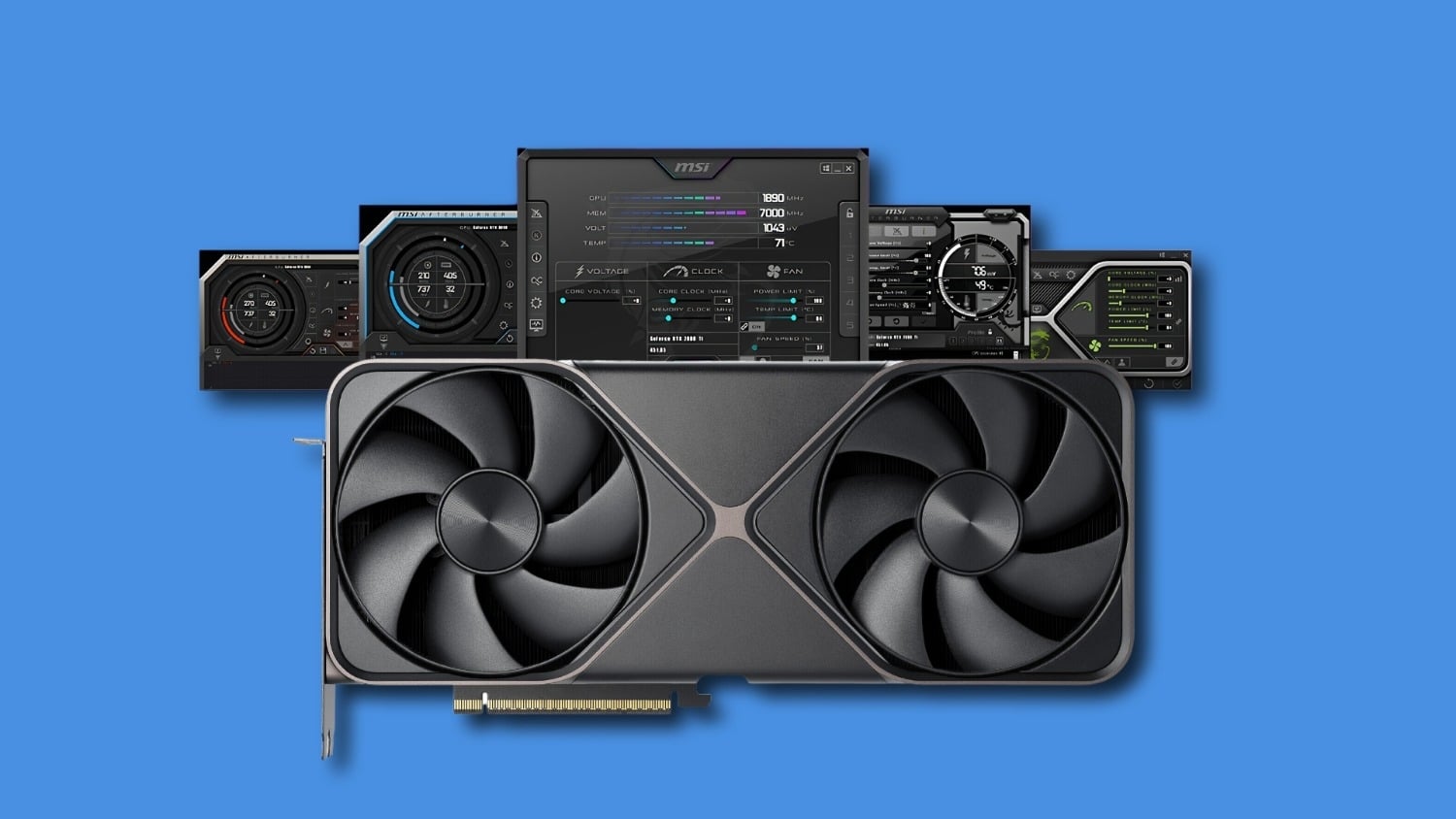
One of the small but confusing aspects of the GeForce RTX 50 Series and RTX Blackwell launch was the deliberate removal of GPU hotspot readings. GPU hotspot readings are notably higher than the main temperatures you see when monitoring hardware, as they reflect maximum temperatures recorded by sensors at specific contact points. For the GeForce RTX 50 Series, these sensors are still there, but NVIDIA removed public access to that data. Until now.
VIEW GALLERY – 2 IMAGES
Thanks to recent third-party discoveries, access to these GPU hotspot readings has been restored for anyone with a GeForce RTX 50 Series graphics card, and popular tools like HWMonitor have brought this feature back for the Blackwell generation. This has led to a flood of PC gamers and enthusiasts benchmarking and stress testing their GPUs to see the difference in temperatures.
When it comes to MSI Afterburner, one of the most popular GPU overclocking, tweaking, and monitoring tools, it seems these newly discovered GPU hotspot readings won’t be coming to the app. And the reason comes down to, well, marketing and MSI’s close relationship with NVIDIA.
In a new post on the Guru3D forums (via VideoCardz), MSI Afterburner developer Unwinder said the following.
“Due to some weird reasons, NVIDIA still keeps VRAM/hotspot temperature monitoring interfaces for private internal NV software only; they are not open even to partners making NVIDIA-based graphics cards. Every single currently existing tool displaying VRAM/hotspot temperature on the NVIDIA side relies on reverse-engineered private NVAPI interfaces (or even direct GPU access in the case of RTX 5000 cards), which doesn’t make the green GPU vendor too happy.”
 Frequently Asked Questions
TweakBot answers common questions about this news using TweakTown’s own coverage from this page and related content from our archive. Tap a question to reveal the answer, or type your own below.
Question #1
Why did MSI Afterburner decide not to add RTX 50 Series GPU hotspot temperature readings?
MSI Afterburner will not add RTX 50 Series hotspot readings because NVIDIA keeps VRAM/hotspot monitoring interfaces private and blocked from public APIs, so the only ways to access them are via reverse engineered or unofficial methods. As MSI is both Afterburner’s publisher and a close NVIDIA partner, the developer said adding an unsanctioned feature that NVIDIA has actively blocked would be inappropriate.
Answered
Question #2
How are hotspot temperature readings currently being accessed for GeForce RTX 50 Series cards?
They are being accessed via unofficial, reverse-engineered methods rather than NVIDIA public APIs. Third-party tools like HWMonitor have restored hotspot reporting by using reverse-engineered private NVAPI interfaces or direct GPU access in some cases, because NVIDIA has blocked public access to those sensors.
Answered
Question #3
Which monitoring tools have already restored hotspot temperature reporting for RTX 50/Blackwell GPUs?
HWMonitor. The primary article says access to GPU hotspot readings has been restored for GeForce RTX 50 Series/Blackwell cards and that popular tools like HWMonitor have brought the feature back for the Blackwell generation.
Answered
Question #4
What does MSI Afterburner developer Unwinder say about NVIDIA’s API access to hotspot and VRAM sensors?
Unwinder says NVIDIA keeps VRAM and hotspot temperature monitoring interfaces private for internal NVIDIA software only and does not expose them even to partners. He adds that every existing tool showing VRAM/hotspot temps relies on reverse engineered private NVAPI interfaces or direct GPU access, which is not something NVIDIA is happy about, and that access is blocked through NVIDIA’s public APIs so the only way to read those sensors is via unofficial methods.
Answered
Have a question not listed here? Ask below and TweakBot will answer it.

TweakBot is analyzing your question…
TweakBot is generating an answer
Was TweakBot helpful?Thanks for the feedback!
Currently, access to this sensor is blocked and unavailable through NVIDIA’s public APIs. And the only way to access that data now is to access the GPU directly via unofficial means. As MSI is the publisher of the Afterburner app and one of NVIDIA’s key partners, adding an unsanctioned feature that NVIDIA has actively blocked is not going to happen, even for something as seemingly simple as GPU hotspot temperature readings.