
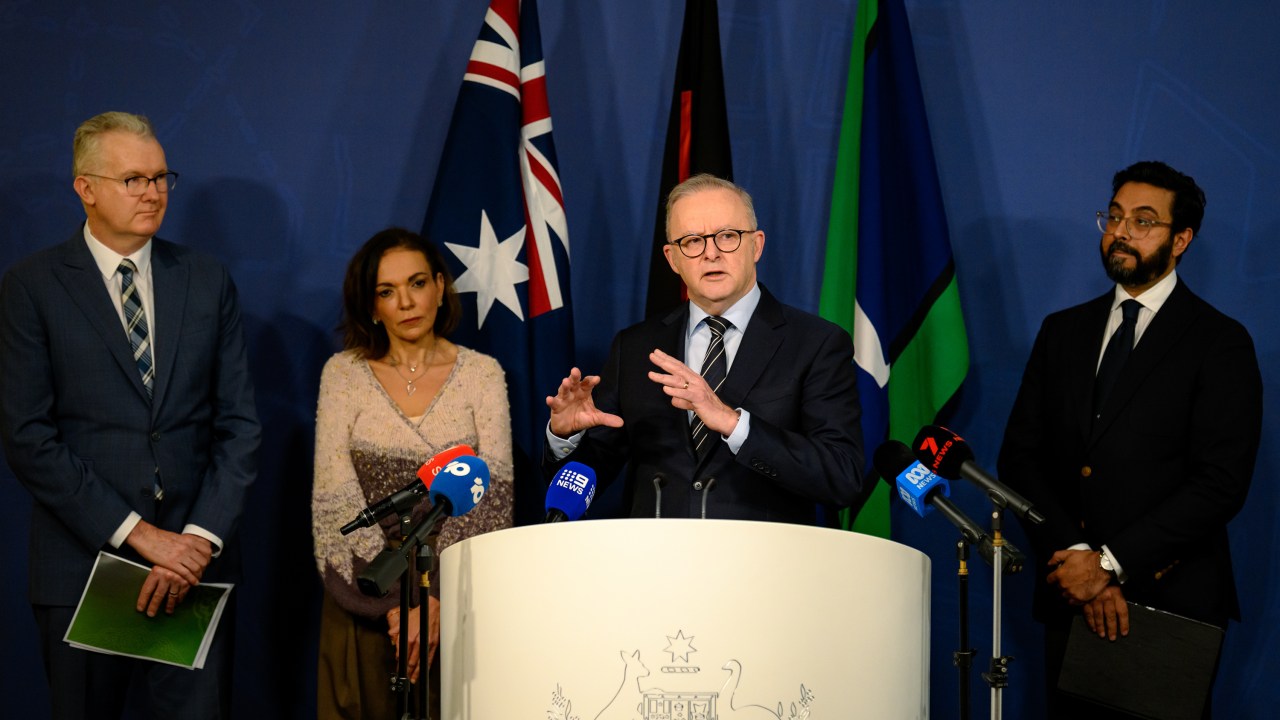
Prime Minister Anthony Albanese has rejected Pauline Hanson’s calls for a return to elements of the White Australia policy, saying modern Australia has been strengthened by migration and diversity.
The Prime Minister made the comments as the government released its response to a national report into Islamophobia, which includes new measures aimed at addressing anti-Muslim abuse and improving protections for Muslim Australians.
Mr Albanese said Islamophobia had increased in Australia and warned against rhetoric that could damage social cohesion.
“Islamophobia has no place in Australia,” Mr Albanese said during Saturday’s press conference.
“We have seen a rise in Islamophobic attacks and abuse directed at Muslim Australians.”
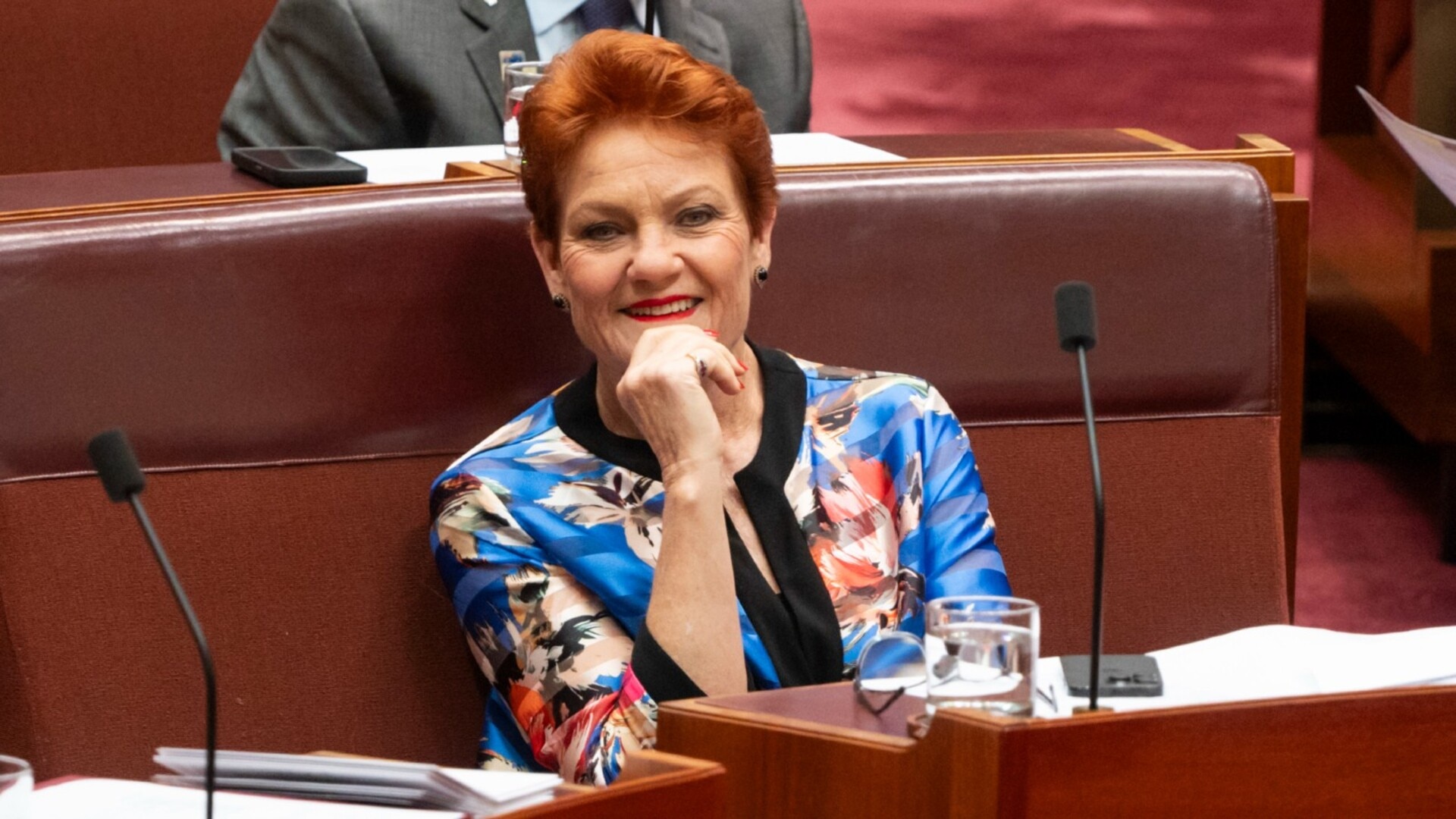
The comments came after Senator Hanson was criticised over remarks in which she claimed Australia had made a mistake by moving away from the White Australia policy.
The One Nation leader made the comments during recent podcast appearances, including an interview with British activist Tommy Robinson.
The Australian reported that Ms Hanson made separate comments regarding Islam being linked to terrorism during a podcast interview with right-wing comedian Isaac Butterfield in April.
She also accused some Muslims of pretending to befriend Australians and “ingratiate themselves into the country”.
“I’m sorry, it’s (Islam) an ideology that is, you know, a lot of it’s based on terrorism,” Senator Hanson said.
Mr Albanese said the shift away from the White Australia policy was a bipartisan move that began before the Whitlam government and represented progress for the nation.
“I have seen Senator Hanson’s comments that say that Australia has got it wrong when we moved away from the White Australia policy in 1973,” he said.
“It is important to recognise that the movement away from White Australia wasn’t just the Labor Government of Gough Whitlam, it was actually a bi-partisan position that began in the 1960s.”
“That was a good thing.”
The Prime Minister said Australia’s identity was built by people from different backgrounds who had chosen to make the country their home.
“Modern Australia is made up of, with the exception of First Nations people, people who’ve come from all over the world to make Australia their home, to have a better life,” he said.
Mr Albanese said Australians should be able to practise their faith safely while also sharing a commitment to the country.
The government’s response follows a 54-recommendation report from Special Envoy to Combat Islamophobia Aftab Malik, which was delivered almost 10 months ago.
The response includes measures focused on tackling Islamophobia in schools and universities, improving support for Muslim women, increasing safety funding for Muslim institutions and strengthening hate crime reporting.
Mr Malik said the government’s response represented an important step but warned more work remained.
The special envoy added that Muslim Australians should not have to wait indefinitely for stronger protections.
“My report remains my independent advice to the government and the benchmark against which progress should be measured,” Mr Malik said.
“Where the government has acted, I will support that progress. Where recommendations remain outstanding, I will continue to advocate for them.”
Mr Malik also addressed Ms Hanson’s comments about Islam, saying words from political leaders could have consequences for communities.
The special envoy was asked about comments attributed to Senator Hanson that “a lot of Islam” was based on terrorism.
“As a Muslim Australian, I will say a verse of the Qur’an that says, the true servants of the most compassionate of those that tread lightly and humbly on the earth, and when the ignorant jostle at them, they respond with peace,” he said.
“So while One Nation continues to wage a war against one million Australian Muslims and two billion Muslims, we would wage peace upon peace.”
Home Affairs Minister Tony Burke warned against political movements that sought to redefine Australian identity through exclusion.
He said he never expected an elected politician would call for a return to “White Australia”.
“I never thought when I entered parliament that in my political lifetime anyone who had been elected to parliament would be calling for White Australia,” he said.
Mr Burke said Australians should be proud of a country built through diversity.
“Part of saying you love Australia is to love Australia for who we are,” he said.
“Not some perverted concept of a country where we would turn on each other, where Australians would basically lose capacity for kindness towards each other.”
The government’s response does not adopt every recommendation from Mr Malik’s report, including calls for further reviews into areas such as counter-terror laws.
Mr Albanese said national security decisions would continue to be based on advice from agencies.
“We operate our terror laws on the basis of appropriate advice from national security agencies.”
“People will have different views they will put forward and they’re entitled to do so and of course everyone’s views is given consideration.
“But primarily we sit in the National Security Committee of the Government, and we take advice from our security agencies.”
The Prime Minister said the goal of the response was to help Australians live together peacefully.
“Prejudice is something that isn’t normal; isn’t intrinsic to human endeavour, it’s something that is taught,” he said.
“And political leaders have a responsibility to promote social cohesion in this country, and that’s what I want to see.”