
A rare reunion of the heroes who changed the course of Indian cricket is set to take place in Singapore next month as the members of India’s 1983 World Cup-winning team come together for the first-ever ’83 Legends Tour of South-East Asia. Organised by the Mariners’ Cricket Club (MCC) Singapore, the three-day event from August 7 to 9 will bring together legends, led by legendary skipper Kapil Dev, iconic batter Sunil Gavaskar and Kapil’s talismanic lieutenant Mohinder Amarnath for a series of public engagements, corporate leadership sessions and a showcase cricket match.
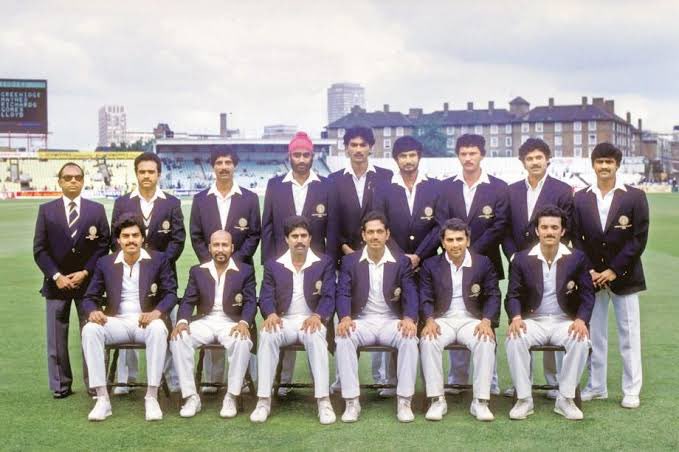 India’s 1983 World Cup winning squad. Photo courtesy: x.com/sachin_rt
For MCC, however, the event is more than just an opportunity to celebrate cricket’s golden generation. It is the culmination of a dream that has been years in the making for a club that started with just a handful of seafarers looking for a game of cricket on weekends and has grown into one of Singapore’s largest sporting and community organisations.
From a cricket club to a community
MCC may have “cricket” in its name, but today it is much more than that. Established by professionals from the maritime industry, the club was created with a simple objective: bringing seafarers living and working in Singapore onto one platform.
“The basic idea behind the club was to bring the mariners in Singapore onto one platform,” said MCC President Avijit Dutta during an exclusive conversation with Connected to India. “We started with cricket because it helped people bond. As more people joined, they wanted more activities, so we introduced football, badminton, golf and table tennis. Every few years we added something new.”
 Avijit Dutta, President, Mariners’ Cricket Club Singapore. Photo courtesy: LinkedIn
That steady expansion transformed the organisation from a small sporting group into a vibrant community platform. Besides organising sporting competitions throughout the year, MCC now conducts charity initiatives, blood donation drives and community outreach programmes involving members and their families.
Among its long-running initiatives are annual visits to Sunlove Home for people with intellectual disabilities, support for children’s welfare organisations and regular blood donation campaigns with the Singapore Red Cross.
“Every year we start something new so that people feel this is a complete organisation. It is no longer just a club. It is a place where people come together through sport, community service and friendship,” Dutta said.
The club currently has around 375 members, down from a pre-pandemic high of more than 450. But Dutta is optimistic about the future.
“We are gearing up again and our aim is to have more than 1,000 members by 2030,” he said.
Built by mariners, open to everyone
Both Dutta and MCC Secretary Rajan Mathur spent years at sea before settling in Singapore.
Mathur is a Master Mariner who sailed as a ship’s captain before moving ashore. Originally from Goa, India, he has been based in Singapore for nearly two decades now.
 MCC Singapore Secretary Rajan Mathur. Photo courtesy: LinkedIn
“This is purely our passion,” Mathur said during the conversation. “Our day jobs are with maritime companies, but the club is entirely driven by volunteers who want to bring the maritime community together.”
Dutta, a marine engineer from West Bengal, followed a similar path. “I came to Singapore in 2006 after sailing on ships. Since then, this club has been a big part of my life,” he said.
Originally, membership was restricted to professional seafarers. As interest in the club grew, the committee amended its constitution to include professionals working in maritime organisations even if they had never sailed.
“There was a huge demand from people working in the maritime industry who wanted to be part of the club,” Mathur explained. “So we introduced associate membership. That has helped the club grow significantly.”
A dream inspired by Sandeep Patil
The biggest chapter in the club’s journey will unfold in August when almost the entire surviving 1983 World Cup-winning squad arrives in Singapore. Ironically, the idea came from one of those very legends.
Over the years, MCC has invited several members of the 1983 team and other prominent Indian cricketers individually to its annual cricket tournament. Former Indian captain Ajit Wadekar, 83 squad members Dilip Vengsarkar, Roger Binny, Syed Kirmani, Mohinder Amarnath and Sandeep Patil have all attended previous editions.
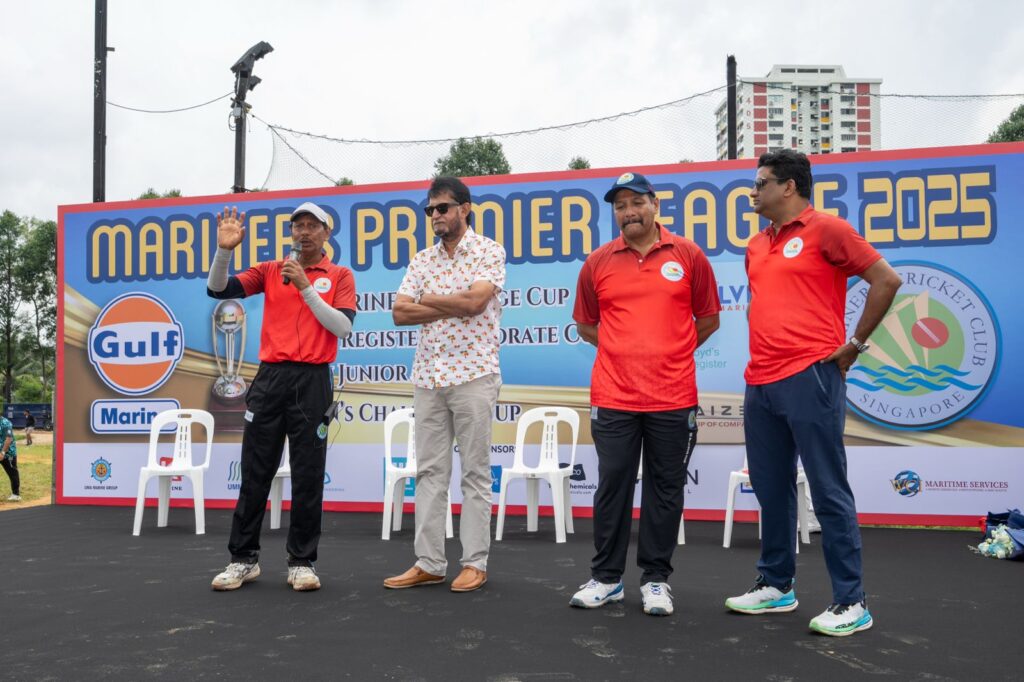 Sandeep Patil (2nd left) attended the Mariners Premier League 2025 as the Chief Guest. Photo courtesy: Collected
Last year, after visiting Singapore for the tournament, Patil planted an idea that would soon become a reality.
“When Sandeep Patil came last year, he saw the scale of the tournament and the enthusiasm around it,” Mathur recalled. “He said, ‘Why don’t you bring the whole 1983 team together to Singapore?’”
For the organisers, it was a suggestion they had often joked about but never seriously believed could happen.
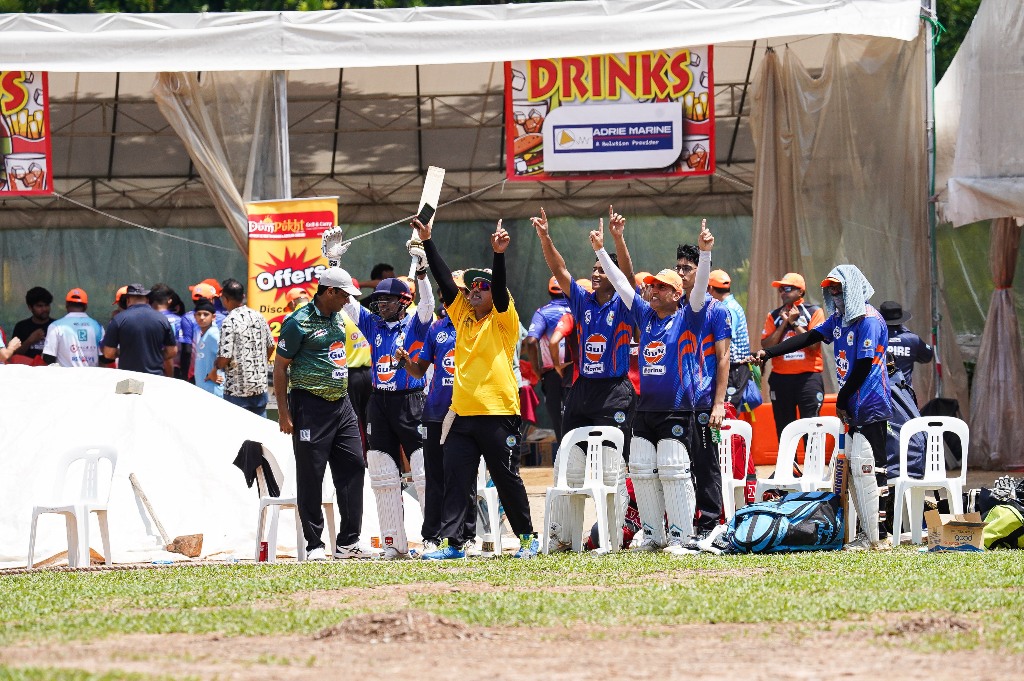 An MPL team signalling a six. Photo courtesy: Collected
“It had always been our dream,” Mathur said. “We used to talk about it casually among ourselves. But when Sandeep himself suggested it, it suddenly felt possible.”
What followed was months of planning, countless phone calls and logistical challenges.
“Getting in touch with every player, arranging schedules, managing finances and organising the event was a huge task. But once we decided to do it, we never looked back,” he said. “Sandeep helped us immensely by connecting us with the players.”
Almost every surviving member of the squad has confirmed participation. The only absentee will be all rounder and former Indian captain Ravi Shastri because of prior commitments in the UK, while legendary team manager PR Man Singh has also been invited but his participation depends on his health.
For MCC, the significance goes beyond nostalgia.
“This team changed the way the world looked at Indian cricket,” Mathur said. “For people of our generation, they were our heroes. To bring them together here in Singapore is a matter of immense pride.” He added that this is believed to be the first time the 1983 World Cup-winning squad has toured Asia together since lifting the trophy at Lord’s.
Memories that never faded
Both Dutta and Mathur still remember where they were when India stunned the mighty West Indies in the 1983 World Cup final, defending a modest score of 183 and still managing to win by a margin of 43 runs.
“I was listening to the match on the radio,” Dutta recalled. “At one stage, we thought India could never win. But when India finally won, it was late at night and suddenly people came out onto the streets celebrating. Before that, we had never experienced anything like it.”
For him, the victory changed cricket forever.
“It changed the definition of cricket in this part of the world. Youngsters started looking at these players as idols. Everyone wanted to become like Kapil Dev or Mohinder Amarnath. That is why bringing them here is so important. We want today’s generation to understand what dedication and belief can achieve,” he said.
Mathur’s strongest memory is one that every Indian cricket fan knows.
“Kapil Dev’s catch and Balwinder Singh Sandhu’s delivery that bowled Gordon Greenidge are etched in my memory forever,” he said. “At that time, we could not believe an Indian bowler had uprooted the off stump of one of the best batsmen in the world. That moment has stayed with me ever since.”
Mariners Premier League: A sporting festival
The visit of the 1983 World Cup winners will coincide with the Mariners Premier League (MPL), an event that has grown substantially since its humble beginnings nearly two decades ago.
What started as a friendly tournament involving six or seven teams has now evolved into one of Singapore’s biggest amateur cricket festivals, with more than 70 teams competing over two weekends.
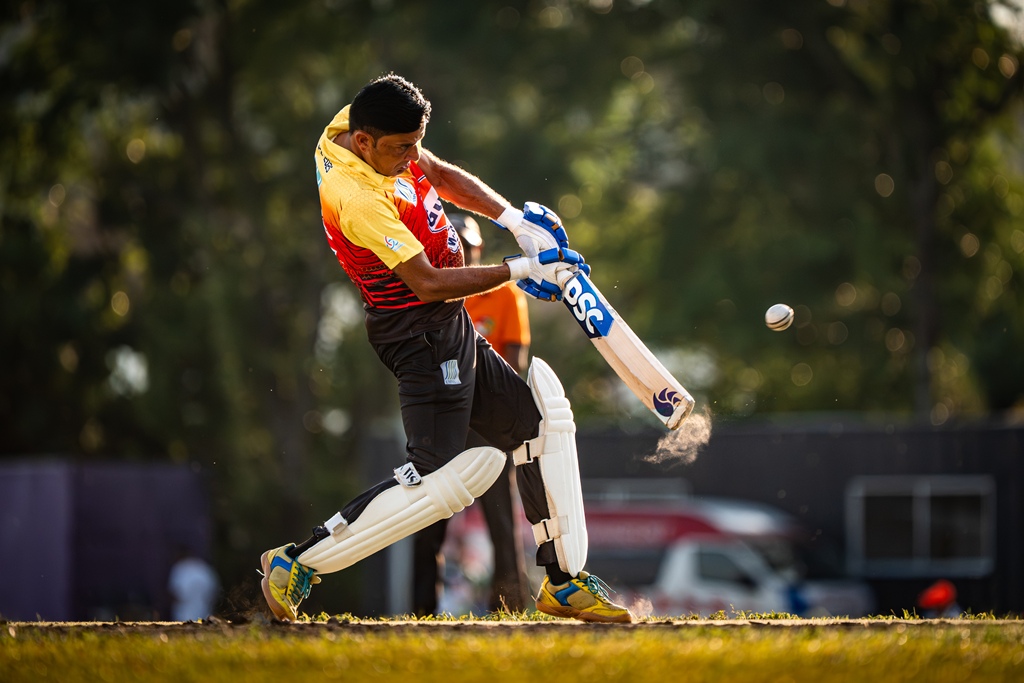 A batsman in action in MPL 2025. Photo courtesy: Collected
“Mariners Premier League is by far one of the biggest sporting events of its kind in Singapore,” Mathur said. “We have nearly 800 participants, and that’s before counting the spectators. It has become much bigger than we ever imagined.”
The tournament now features five categories: the Corporate Cup, Challenge Cup, Women’s Cup, Junior Cup and, for the first time this year, a Seniors League for players above 45 years of age.
The Corporate Cup is reserved for teams made up entirely of employees based in Singapore, while the Challenge Cup allows companies to bring in players from their overseas offices.
“We started the Women’s Cup only last year and the response was fantastic,” Dutta said. “This year we are making it an open category, and we have also introduced a junior badminton competition and an Under-16 girls’ football tournament. Every year we try to add something new.”
Mathur said the scale of the tournament has forced the organisers to expand beyond a single venue.
“This year the matches will be played across two grounds over two weekends. Games begin at 7.30 in the morning and continue until 10 at night under lights. Managing more than 70 teams is a challenge, but it is something we enjoy,” he said.
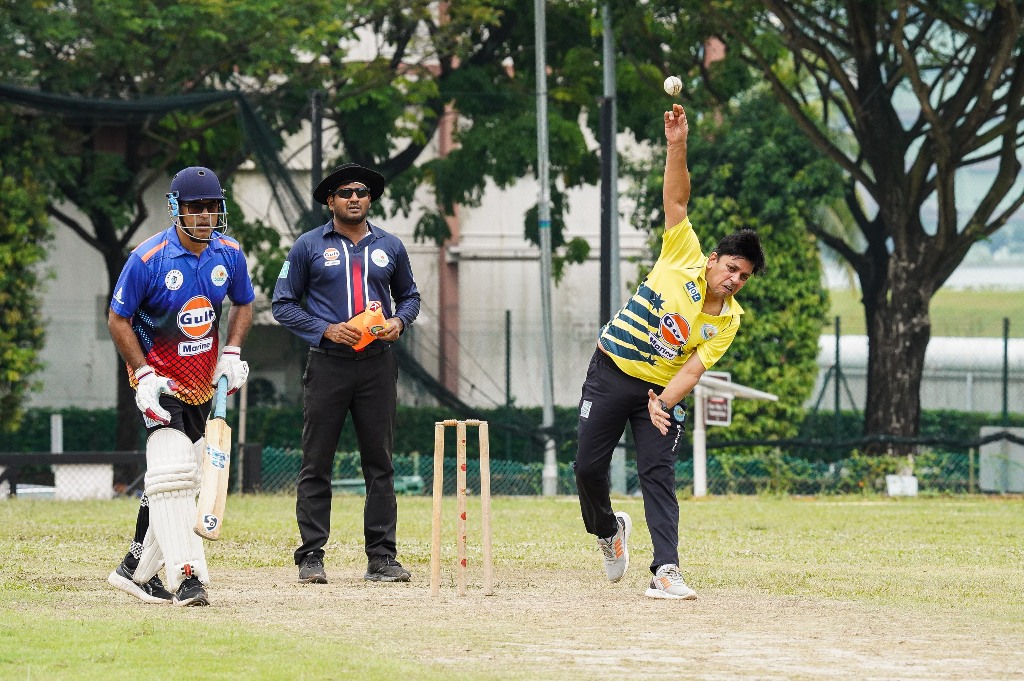 MPL matches can get highly competitive, according to organisers. Photo courtesy: Collected
The format itself is designed to keep the matches fast-paced and exciting. It follows an eight-a-side format with six-over innings, while a few modified rules ensure every player gets involved.
“There is a retirement score of 21 runs so that one batsman doesn’t dominate the game. We also award four runs for every wide to encourage disciplined bowling,” Mathur explained with a smile.
Despite beginning as a fun tournament among friends, the competition has become fiercely contested, the duo added.
“Everyone wants to win now,” Dutta laughed. “Companies take great pride in displaying the trophy at their offices. Some even fly in employees from overseas just to participate.”
He added that the tournament has become so well-known within the maritime industry that cricketing ability sometimes becomes an advantage during recruitment.
“Many companies now know who the good cricketers are. Some people have even found jobs because of the Mariners Premier League.”
Building Singapore’s cricket future
While the arrival of the World Cup legends will dominate the headlines, MCC sees equal importance in creating opportunities for young cricketers. Mathur said several youngsters who started with the club have gone on to represent Singapore at age-group level.
“Every year we have one or two juniors progressing into the national teams,” he said. “Our objective is to give them regular competitive cricket. We have six teams playing in different divisions of the Singapore Cricket Association league, so youngsters get exposure against experienced players.”
The club hopes to achieve similar success in women’s cricket.
“The women’s competition is still new, but we have much bigger plans,” Mathur said. “We are not ready to announce everything yet, but women’s cricket is definitely an area where we want to make a significant contribution.”
When asked about comments made recently by Chennai Super Kings Global Cricket Academy head coach Sriram Krishnamurthy that Singapore has talent but lacks the structure to compete consistently with emerging cricket nations like Afghanistan, both officials chose their words carefully.
Mathur said it would not be appropriate to comment on government policy but pointed out that Singapore’s sporting priorities differ from countries where cricket dominates.
“Singapore supports many different sports. Cricket, football, swimming, athletics – the focus is spread across several disciplines. We can only do our part to promote cricket within our capacity.”
Dutta echoed that view.
“We always support Singapore cricket in whatever way we can,” he said. “We even built a dedicated gymnasium for national players. Singapore has more than 100 teams playing across six divisions in the national league, so there is a lot of cricket happening. But this is a small country where many sports compete for the same facilities.”
Chasing another dream
Having transformed MCC into one of Singapore’s largest sporting communities, the organisers now have another ambition: a permanent home.
Owning a cricket ground remains high on their wish list, even though land is one of Singapore’s scarcest resources.
“We definitely dream of having our own ground one day,” Mathur said. “A few years ago we even submitted a bid when land became available, but it eventually went to football. That is disappointing, but we haven’t given up.”
Beyond nostalgia
The three-day tour is not limited to cricket.
Apart from the Grand Gala Dinner, the legends will participate in corporate leadership sessions where they will share lessons from elite sport with business leaders and professionals.
“We want companies to interact with these players and understand what leadership, teamwork and handling pressure really mean,” Mathur said. “We are also working with the Singapore Cricket Association to create opportunities for local academies and young cricketers to spend time with the legends.”
The organisers expect the gala dinner to attract around 700 guests, while between 4,000 and 5,000 spectators are expected to attend the cricket matches.
One feature, however, is especially close to the organisers’ hearts. The Legends vs Mariners match will be streamed live to more than 2,000 commercial ships around the world, allowing seafarers to watch the action while working at sea.
“I think that’s something only Mariners Cricket Club can do,” Mathur said.
Remembering the forgotten heroes
Asked about the current situation of the maritime industry, pertaining to the US-Iran conflict in the Middle East, both Dutta and Mathur felt that while geopolitical conflicts often dominate headlines, the sacrifices made by seafarers rarely receive the attention they deserve.
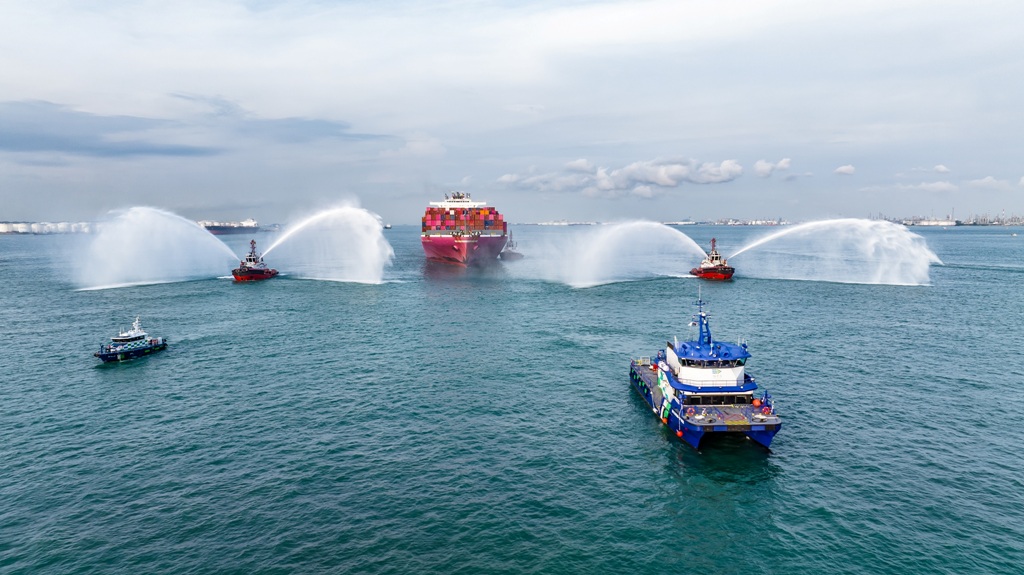 Singapore-flagged containership ONE OLYMPUS. Photo: sgpc.gov.sg
“In every crisis, people forget the seafarers,” Mathur said. “Ships don’t stop sailing. The crews continue working in difficult and dangerous conditions to ensure essential goods reach every country. They carry on without expecting recognition or praise. They simply see it as their duty.”
Dutta drew parallels with the COVID-19 pandemic.
“During COVID, the world kept moving because of the shipping industry,” he said. “Almost every other mode of transport had stopped, but ships continued carrying food, medicines and essential supplies across the world. Very few people realise how much the seafarers contributed during that period.”