
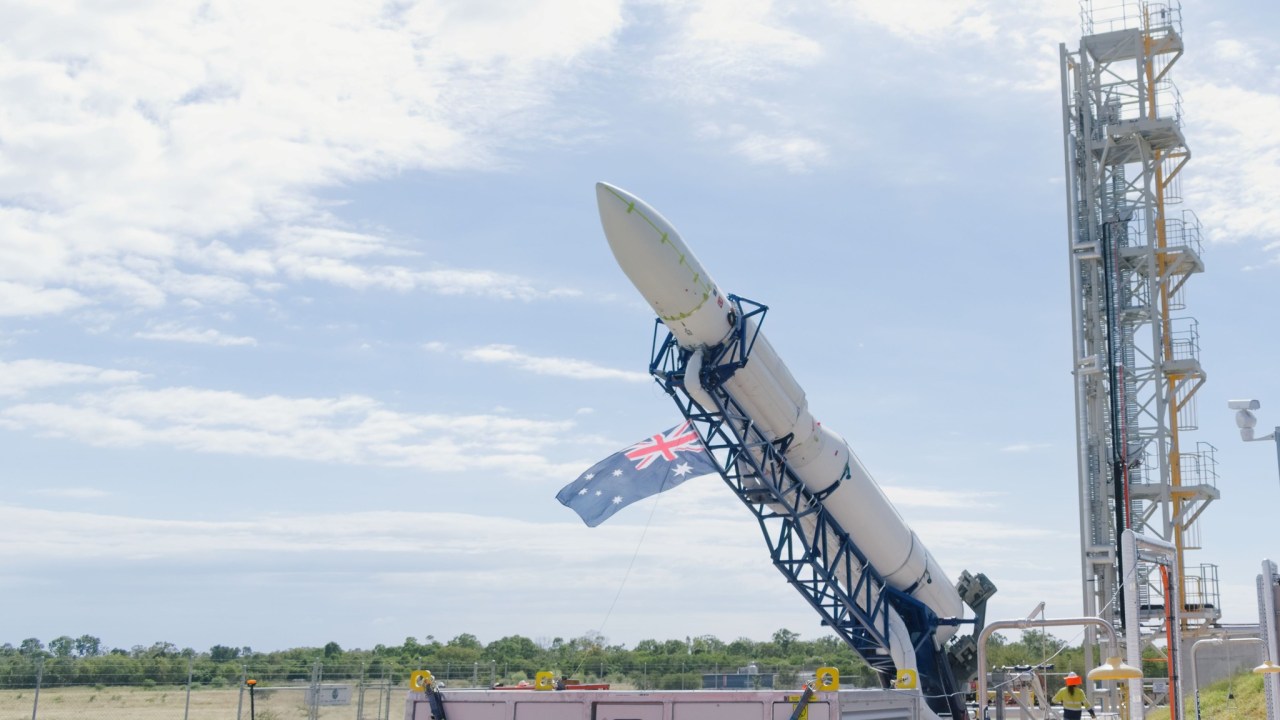
Labor’s tax changes are already weighing on Australian entrepreneurs, as the boss of a space company cites the taxes influenced his decision to publicly list in the United States.
Gilmour Space CEO Adam Gilmour said he would prefer to list on the Nasdaq rather than the ASX in Australia.
“We think there’s a lot more space-focused and space-educated investors in the US,” Mr Gilmour told Sky News Business Weekend.
“We are looking at a US listing and we’re also very concerned about the recent capital gains tax changes in Australia that we think will sap a lot of the retail investor interest into stocks in Australia.
“We think it’s going to be very nervous to be able to list on the ASX and it’s better for us to list on an American stock exchange.”
Labor will scrap the 50 per cent capital gains tax discount and replace it with an inflation-adjusted model with a minimum 30 per cent tax rate.
While there are carve outs for some small companies and startups, business leaders and entrepreneurs have warned this will send companies overseas.
SafetyCulture founder Luke Anear said carve outs should extend to all small businesses and said founders will flee to countries with lower CGT rates.
Steve Baxter, the executive chairman of tech start-up platform TEN13, argued the latest changes will make young founders “less willing” to set up shop in Australia.
“It’ll affect the rate of formation (of start-ups),” Mr Baxter told Sky News Business Now.
“The formation won’t stop … there will be less though.”
Mr Gilmour stressed he had already noticed many entrepreneurs halting operations before there is more clarity about what the CGT changes mean for their operation.
“I’m in the founder universe and I’m talking to other founders that were looking at starting other start-ups and have just put everything on ice and they want to see what the changes are,” he said.
“I think it’s going to be a massive impact on so many things that’s unimaginable.”
He also warned that up-and-coming companies in the space sector would struggle to get a leg up in Australia under the new tax settings, pushing them towards overseas investors.
“If you’re a smaller space company that’s getting going, you’re going to be offered better value investors from overseas than local investors because they don’t have the same tax treatment,” Mr Gilmour said.
“We’re going to see more and more Australian space and defence companies become more foreign owned because of these changes.”
Mr Gilmour’s Queensland-headquartered company, founded in 2012, is in the process of another funding round after investors flocked to Elon Musk’s SpaceX.
He said the company has been “inundated” with interest from potential investors after SpaceX raised US$75 billion for its public launch in June.
Gilmour Space is looking to make a rocket that can fly at seven times the speed of sound and plans on launching its second orbital rocket by the end of 2026.