
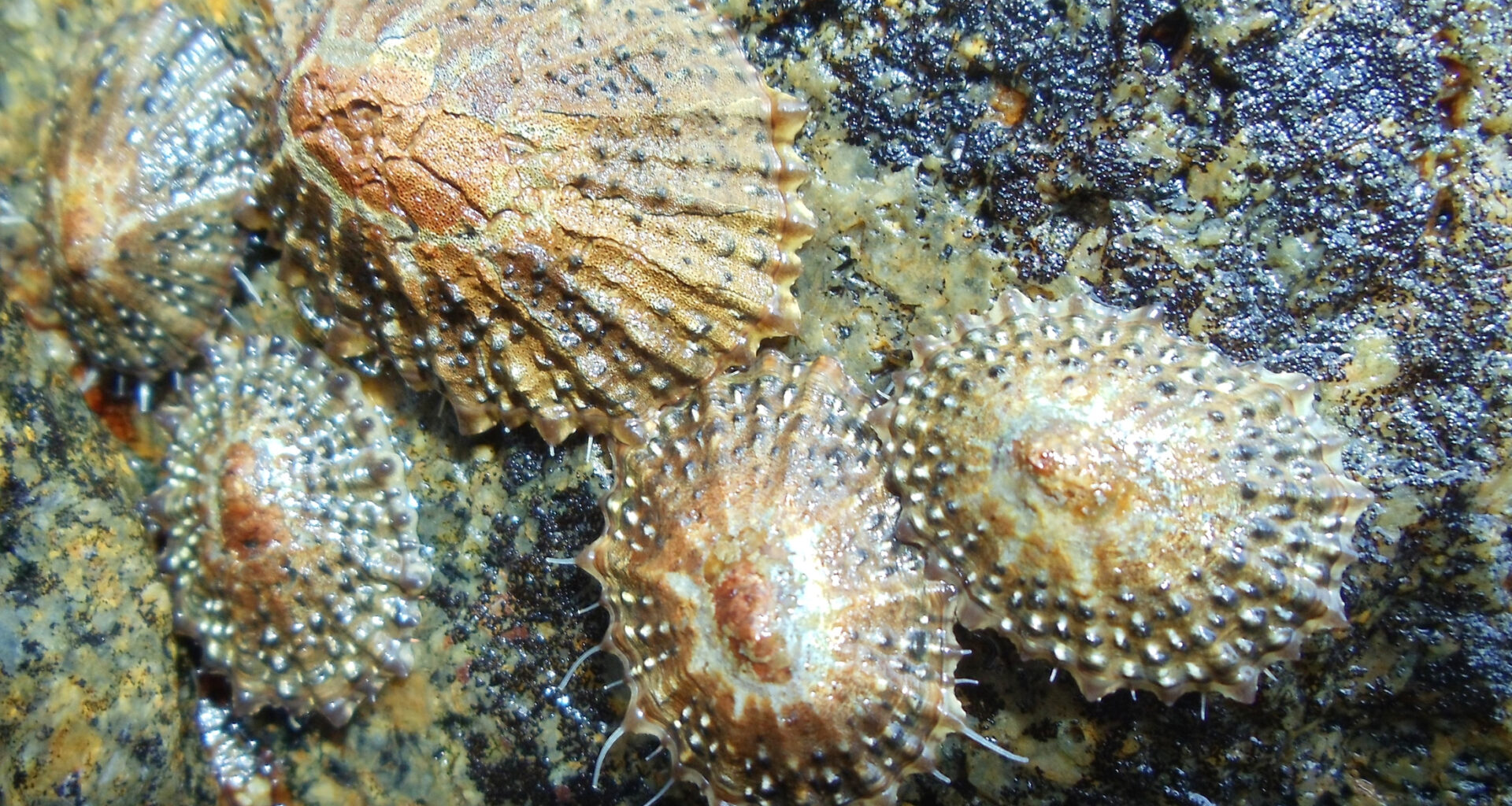
Every deep-sea limpet that a team of Japanese researchers collected from scalding hydrothermal vents in the western Pacific had, as a newly hatched larva, traveled up to the sunlit surface of the ocean and back down again.
The proof was sealed inside the minuscule shell each limpet grew, long before it ever reached the vent where it now lives.

The finding helps explain how vent animals, stranded at scattered and short-lived openings on the seafloor, colonize fresh sites and stay genetically linked across hundreds of miles.
Their young first feed and grow in rich surface water. Then they ride ocean currents toward a new patch of seafloor before dropping back into the dark to settle.
Reading vent limpet shells
A vent limpet begins life as a swimming larva no larger than a grain of sand. It keeps that first shell, even after it settles and hardens into an adult clamped to the rock.
Those retained larval shells turned out to hold a chemical record of where each animal had spent its infancy.
Takuya Yahagi, a marine biologist at the University of Tokyo’s Atmosphere and Ocean Research Institute (UTokyo), and his colleagues read that record by measuring the chemistry of the shell itself.
Water temperature is the key. As a larva grows its shell from calcium carbonate, the mineral locks in a signature that is tied to how warm or cold the surrounding water was.
Reading the record meant isolating the shell’s newborn layer from everything the animal added after settling.
The study’s lead author, Yahagi, told Earth.com, “The larval shell is less than a millimeter across, and the temperature information is preserved only within this extremely thin structure.”
Patterns present in vent limpet shells
Warm water and cold water leave different marks. The surface of the ocean is far warmer than the near-freezing water around a deep-sea vent.
That means the warm signal in the oldest part of a shell could only have formed near the sunlit surface. Those animals came from vents in the western Pacific, gathered by research vessels working thousands of feet down.
A separate approach on the same species has shown that trace metals in these shells differ from vent to vent. This raises the possibility of tracing an animal to its exact birthplace.
Vent communities are among the rare ecosystems that run on chemical energy welling up from the seafloor rather than sunlight. That makes the surface detour easy to overlook.
In an email to Earth.com, Yahagi said, “It reminds us that even ecosystems fueled by Earth’s interior are still linked to the ocean above.”
Rising to the surface
The shells told the same story every time. Every limpet that the team tested carried a warm-water signature from its earliest days.
That finding suggests each one almost certainly spent its larval stage high above the seafloor rather than lingering near the vent.
In the top few hundred feet of ocean, sunlight fuels blooms of phytoplankton. These tiny floating plants form the base of the ocean’s food web, but they are not found around deep-sea vents.
At the sunlit surface, food is everywhere. The drifting limpet larvae feed on that harvest and grow many times larger before they are ready to settle.
Strong surface currents carry the larvae far from where they hatched. When a larva finally sinks back into the dark and lands on a suitable vent, it carries a shell that already records its journey to the surface.
Years of clues
Researchers had suspected this pattern of larval dispersal for years, but only indirectly.
An earlier study raised vent limpet larvae in the lab and found they swam steadily upward and grew best at temperatures matching the sun-warmed surface, not the chilly vent below.
None of that, though, could confirm that any single animal had actually made the trip.
“Directly observing or tracking these microscopic larvae in the open ocean is extremely difficult,” said Yahagi. The shells closed that gap by recording each larva’s own history rather than a general expectation.
Genetic evidence had pointed in the same direction. Populations of one vent limpet sampled across thousands of miles of the western Pacific showed almost no genetic separation in one analysis.
Such a pattern could only occur if larvae mix freely over long distances between isolated vent fields.
Expanding the study
The team examined limpets living around 6,600 feet (1,830 meters) down, but hydrothermal vents lie much deeper. Some reach depths of 16,400 feet (4,800 meters).
Researchers now plan to test whether larvae from those extreme depths also climb all the way to the surface, which would represent an even more astounding journey.
For now, each shell provides a single temperature reading. Yasunori Kano, an associate professor and co-author, wants to read them in finer detail.
This would involve pulling temperatures from different parts of a larval shell to trace not only the climb to the surface but also the return trip down into the deep.
The prospect of deep-sea mining
The findings matter far beyond these limpets. Hydrothermal vents are laced with copper, zinc, and gold. Companies have begun eyeing them for deep-sea mining. This would mean tearing into the very habitats these larvae are born to recolonize.
In an email to Earth.com, Yahagi said, “What concerns me most is the possibility that climate change and deep-sea mining could reduce larval exchange between hydrothermal vent populations.”
He was careful to call that a possibility rather than a proven effect, one that will need testing across many more vent species.
What was once an educated guess now sits on solid evidence. These limpets spend their infancy at the surface before settling in the deep.
That changes how scientists judge the resilience of vent communities. A site lost to mining or an eruption can recover only if larvae drifting far overhead happen to settle there.
The study is published in Science Advances.
—–
Like what you read? Subscribe to our newsletter for engaging articles, exclusive content, and the latest updates.
Check us out on EarthSnap, a free app brought to you by Eric Ralls and Earth.com.
—–