
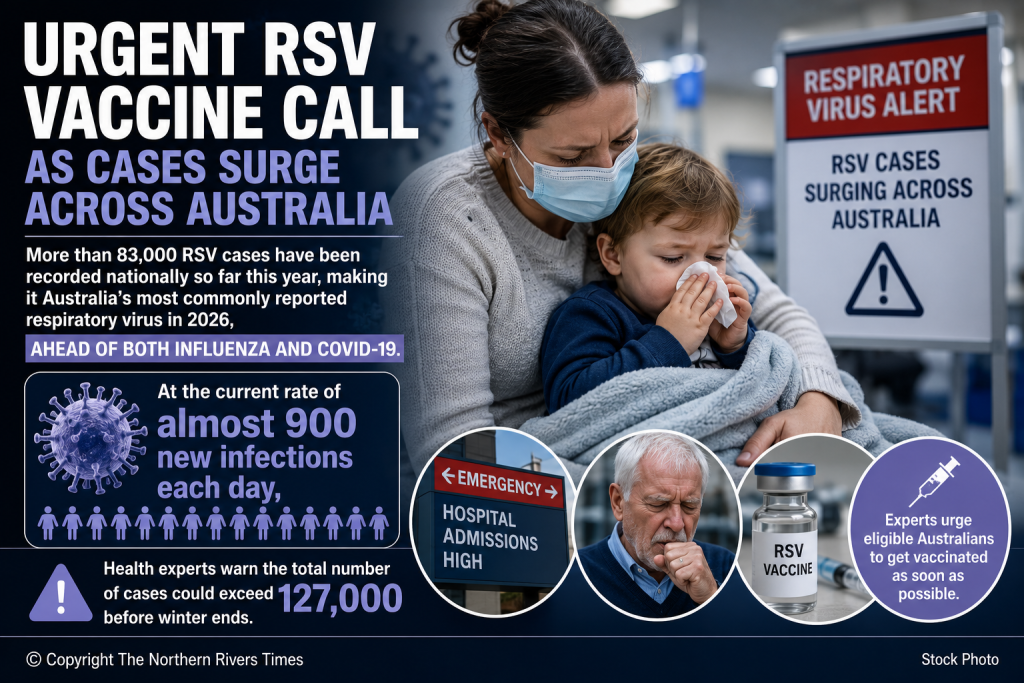
Health authorities are urging eligible Australians to get vaccinated as respiratory syncytial virus cases outpace both influenza and COVID-19 this winter.
Australian health authorities are urging eligible people to be vaccinated against respiratory syncytial virus (RSV) as infections continue to climb across the country, placing growing pressure on hospitals during an already demanding winter respiratory illness season.
More than 83,000 RSV cases have been recorded nationally so far this year, making it Australia’s most commonly reported respiratory virus in 2026, ahead of both influenza and COVID-19. At the current rate of almost 900 new infections each day, health experts warn the total number of cases could exceed 127,000 before winter ends.
RSV is a highly contagious virus that usually causes cold-like symptoms in healthy adults but can lead to severe illness, hospitalisation and even death among infants, older Australians and people with weakened immune systems.
Health organisations, including the Immunisation Foundation of Australia (IFA) and the Australian Medical Association (AMA), are encouraging eligible Australians not to delay vaccination, warning that uptake among older Australians remains well below expectations despite the vaccine now being available free under the National Immunisation Program for people aged 75 years and over.
The vaccine is also available free to pregnant women from 28 weeks’ gestation, helping protect newborn babies during their first months of life when they are most vulnerable to severe RSV infection.
Health experts say the benefits of vaccination are already becoming evident.
A recent Australian study has shown the maternal and infant RSV immunisation program has dramatically reduced serious illness in young babies, with hospital admissions falling by around 50 per cent compared with previous seasons. In New South Wales alone, the program has achieved more than 60 per cent vaccination coverage among pregnant women and produced a significant decline in RSV-related hospitalisations and notifications among infants younger than six months.
NSW Health Executive Director of Health Protection Dr Kerryn Coleman described the results as one of the most significant public health successes seen for newborns in recent years.
She said RSV infection could cause severe respiratory illness, lengthy hospital stays, intensive care admissions and, in some cases, death in young babies, making vaccination during pregnancy an important protective measure.
While the infant vaccination program is delivering encouraging results, health authorities remain concerned about vaccination rates among older Australians.
More than one million Australians aged 75 years and over are estimated to remain unvaccinated despite being eligible for the free vaccine. Health experts warn older adults are at increased risk of developing pneumonia and other serious complications if they contract RSV.
The surge in RSV comes as hospitals continue managing multiple seasonal respiratory viruses simultaneously.
NSW Health has also warned that the annual influenza peak is still approaching, with health officials urging anyone who has not yet received a flu vaccination to do so as soon as possible. Medical experts say receiving both influenza and RSV protection is particularly important for older people and those with underlying medical conditions.
Across the Northern Rivers, local hospitals and medical practices traditionally experience increased demand during winter as respiratory illnesses spread through the community. Health professionals continue encouraging residents to stay home when unwell, maintain good hand hygiene and seek medical advice if symptoms worsen, particularly for young children, older family members or anyone experiencing breathing difficulties.
RSV symptoms typically include a runny or blocked nose, cough, fever and wheezing. In babies and very young children, symptoms can rapidly become more serious, including difficulty breathing, poor feeding, dehydration and blue-coloured lips or skin, all of which require urgent medical attention.
Health authorities stress that while most healthy adults recover from RSV without complications, vaccination remains one of the most effective ways to reduce severe illness among those at greatest risk.
With RSV continuing to circulate widely across Australia and influenza activity expected to increase further over coming weeks, officials are urging eligible Australians to speak with their GP, pharmacist or maternity care provider about vaccination before winter reaches its peak.
