
By Andrew Clarke
Date posted: 24 July 2026
Formula 1 drivers have lifted the lid on the hidden challenge of the sport’s 2026 regulations, describing cars that can feel as though they are being controlled by algorithms rather than the people behind the wheel.
After the Belgian Grand Prix, a number of leading drivers admitted the latest generation of hybrid power units had transformed the way they approached every lap, with software management, battery deployment and energy harvesting now playing a greater role than ever before.
While the spectacle may look largely unchanged from outside the cockpit, the drivers say the techniques required to extract performance have become almost unrecognisable.
Racing Bulls driver Liam Lawson described managing the new systems as “a bit of a nightmare”, revealing drivers were still discovering software quirks more than halfway through the season.
“It’s obviously extremely complicated, and at this point we’re still learning even now how it all works,” Lawson said.
“As you get faster through the weekend, you start using more energy, and you almost have to try and pre-plan how quick you’re going to be in qualifying to know how much throttle you’re going to use, how much energy you’re going to use and where you’re going to need to harvest it.
“It’s just a bit of a nightmare.”
Rather than simply driving flat-out, Lawson explained competitors were constantly balancing outright speed against electrical efficiency.
Even seemingly logical decisions can backfire.
Using Spa-Francorchamps as an example, the New Zealander said lifting earlier before a corner to harvest additional energy actually cost him lap time because the electrical deployment required to regain the lost speed outweighed any benefit.
“Last weekend in Spa, for example, just doing bigger lifts in Turn 10 would, in a normal situation, be good for harvesting energy,” Lawson said.
“But because I dropped the speed so much, I needed so much more energy to get back to the speed I needed to be at that I ended up deploying more.
“Because of the harvest limit that you have, I didn’t actually gain anything from that lifting that I was doing.
“There are many scenarios like that where you have to know exactly when you’re actually harvesting and when you’re not.”
The unusual demands extend beyond knowing where to lift and coast.
Lawson said wheelspin had become particularly costly because it consumed electrical energy without producing useful forward movement, forcing drivers to be smoother and more efficient with their throttle application.
However, the correct technique can change from one corner or circuit to another.
“It’s definitely not consistent,” Lawson said.
“Sometimes you think you’re doing a really good job and then you find out that something you’ve been doing is actually the worst for that specific corner or that specific track.
“It can sometimes feel a bit backwards.”
McLaren’s Oscar Piastri echoed Lawson’s frustrations, revealing drivers had little influence over precisely when electrical power was delivered during a lap.
The Australian said the previous generation of hybrid engines also relied heavily on software, coding and predictive systems, but the greater electrical contribution in 2026 meant any mistake had a far larger effect.
“To answer your question, no, we’ve got no control over where the deployment happens, more or less,” Piastri said.
“You can push the boost button, but that’s more for overtaking than in qualifying, especially.
“When you’ve got those differences there that you have no control over, it can be frustrating.”
Piastri admitted there were moments when he felt like a passenger of an artificial intelligence program that was still being trained.
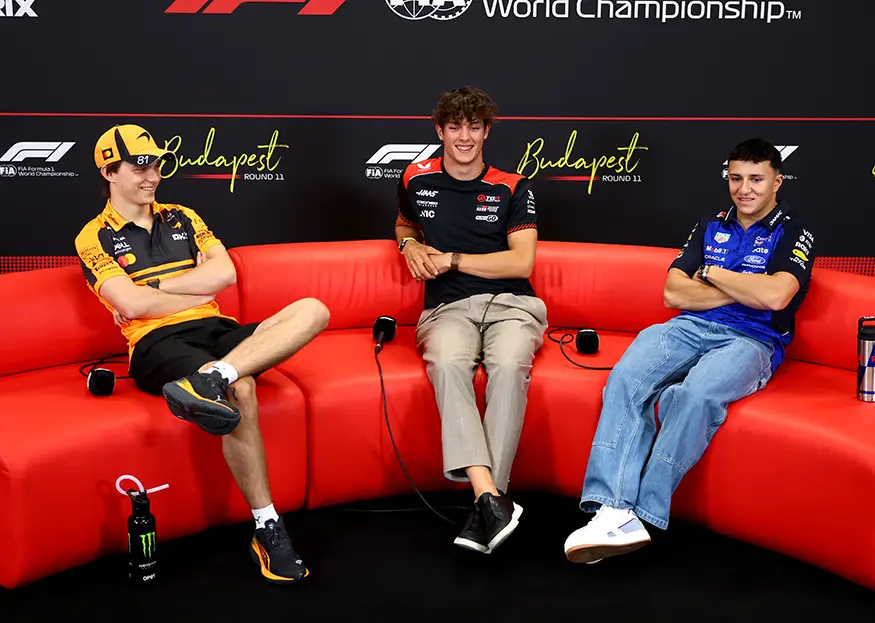
Oscar Piastri, Oliver Bearman and Isack Hadjar discuss the challenges of Formula 1’s 2026 regulations during the Hungarian Grand Prix press conference in Budapest. Image: GettyImages
That sensation was particularly pronounced at Spa, where the cars could lose the equivalent of half their power before reaching the end of a straight.
“The principle of driving a race car that loses effectively half of its power before the end of the straight is hard to get your head around sometimes,” Piastri said.
“Even in Spa, a lot of the middle sector we were doing it just on the combustion engine, with no battery assistance at all.
“It’s a weird feeling in itself, having some corners with a certain amount of power and others with full power.”
Piastri said the differences between software calibrations could account for more lap time than the margins separating several grid positions.
That left drivers potentially losing places because of systems over which they had little or no immediate control.
“At the front of the field, I think there were still only nine hundredths or something separating four positions,” Piastri said.
“There were definitely more than nine hundredths on the table for quite a few drivers from things they could not control.”
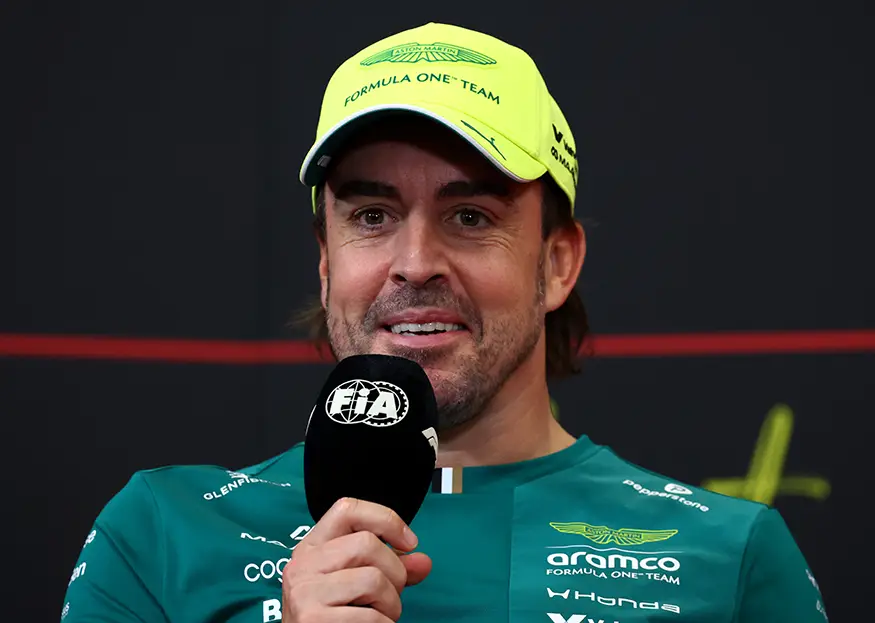
Two-time world champion Fernando Alonso went even further, questioning whether the current generation of Formula 1 cars still delivered the adrenaline that had attracted him to the sport.
The Aston Martin driver said the British and Belgian Grands Prix had not been enjoyable from inside the cockpit and argued the issue extended beyond his team’s lack of competitiveness.
“I think the Silverstone Grand Prix and Spa were not fun to drive,” Alonso said.
“I think it’s not fun to watch, it’s not fun to drive, and we’ve been repeating the same thing every single Grand Prix.
“It’s not to criticise anything. It’s just to improve the sport altogether.
“Behind the cockpit, it’s not the same adrenaline that I used to have driving a Formula 1 car.”
Alonso acknowledged Formula 1 teams had always influenced performance through technology, including traction control, clutch systems and engine mapping.
However, he said the current battery deployment rules needed to be improved to restore a greater degree of control to the drivers.
“I think with these current regulations and the battery deployment, there is something that has to be fixed and improved,” Alonso said.
“I think that’s well understood.
“I’m optimistic for the future that it will get better and that it will be better understood what the rules and what the cars need to be.”
Changes to the balance between combustion and electrical power are already being discussed, although Piastri warned the deployment algorithms would remain a factor for as long as Formula 1 retained the current engines.
Reducing the electrical percentage would lessen the effect, but would not completely return control to the cockpit.
For now, Formula 1’s fastest drivers are still trying to understand cars that can react differently from one corner to the next.
The irony is difficult to miss.
The cars have become more technologically sophisticated than ever, but the people driving them say they have never felt less in control.
Search Auto Action
EMAIL NEWSLETTER
Get the latest updates delivered directly to your inbox
Thank you!
You have successfully joined our subscriber list.

Recent Storiesarray (
0 =>
WP_Term::__set_state(array(
‘term_id’ => 37,
‘name’ => ‘F1’,
‘slug’ => ‘f1’,
‘term_group’ => 0,
‘term_taxonomy_id’ => 37,
‘taxonomy’ => ‘category’,
‘description’ => ‘An Introduction to Formula One (F1)
Formula One, or F1, is the highest class of single-seater auto racing, governed by the Fédération Internationale de l\’Automobile (FIA) and is owned by Liberty Media. The name “Formula One” refers to the set of rules or formula that all cars and drivers must comply with.
The F1 season consists of a series of races, known as Grands Prix, held on purpose-built circuits or public roads around the world. The results of each race are combined to determine two annual championships: one for drivers and one for constructors (teams).
The history of Formula One can be traced back to the pre-war Grand Prix racing, which featured open-wheel cars with supercharged engines. The first World Championship of Drivers was organised by the FIA in 1950, following the end of World War II. The first race was held at Silverstone, England, and was won by Giuseppe Farina, driving an Alfa Romeo. The first constructors\’ championship was introduced in 1958 and was won by Vanwall.
Formula One has seen many changes and innovations over the years, both in terms of technology and regulations. Some of the most notable developments include the introduction of rear-engined cars in the late 1950s, the use of aerodynamic wings in the late 1960s, the adoption of turbocharged engines in the late 1970s, the emergence of electronic driver aids in the late 1980s, the switch to V10 and then V8 engines in the 1990s and 2000s, and the introduction of hybrid power units in 2014.
Formula One has also produced some of the greatest drivers and rivalries in the history of motorsport. Some of the most famous names include Juan Manuel Fangio, Jim Clark, Jackie Stewart, Niki Lauda, Ayrton Senna, Alain Prost, Michael Schumacher, Lewis Hamilton, and Sebastian Vettel. Some of the most intense battles for the championship have been between Fangio and Stirling Moss in the 1950s, Lauda and James Hunt in the 1970s, Senna and Prost in the late 1980s, Schumacher and Mika Hakkinen in the late 1990s, and Hamilton and Vettel in the 2010s.
Formula One is widely regarded as the pinnacle of motorsport, attracting millions of fans and viewers worldwide. The sport is also a huge business, involving billions of dollars in revenue and expenditure. The teams compete for prize money, sponsorship deals, and media rights, while the drivers earn millions of dollars in salaries and endorsements. The sport is also influenced by politics, regulations, and controversies, such as doping scandals, espionage cases, safety issues, and environmental concerns.
The following is a list of all F1 World Drivers Champions by year, from 1950 to 2020:
1950-1959
1950: Giuseppe Farina (Italy) – Alfa Romeo 158, Alfa Romeo
1951: Juan Manuel Fangio (Argentina) – Alfa Romeo 159, Alfa Romeo
1952: Alberto Ascari (Italy) – Ferrari 500, Ferrari
1953: Alberto Ascari (Italy) – Ferrari 500, Ferrari
1954: Juan Manuel Fangio (Argentina) – Maserati 250F, Maserati / Mercedes-Benz W196, Mercedes-Benz
1955: Juan Manuel Fangio (Argentina) – Mercedes-Benz W196, Mercedes-Benz
1956: Juan Manuel Fangio (Argentina) – Ferrari D50, Ferrari
1957: Juan Manuel Fangio (Argentina) – Maserati 250F, Maserati
1958: Mike Hawthorn (United Kingdom) – Ferrari 246, Ferrari
1959: Jack Brabham (Australia) – Cooper T51, Cooper-Climax
1960-1969
1960: Jack Brabham (Australia) – Cooper T53, Cooper-Climax
1961: Phil Hill (United States) – Ferrari 156, Ferrari
1962: Graham Hill (United Kingdom) – BRM P57, BRM
1963: Jim Clark (United Kingdom) – Lotus 25, Lotus-Climax
1964: John Surtees (United Kingdom) – Ferrari 158, Ferrari
1965: Jim Clark (United Kingdom) – Lotus 33, Lotus-Climax
1966: Jack Brabham (Australia) – Brabham BT19, Brabham-Repco
1967: Denny Hulme (New Zealand) – Brabham BT20, Brabham-Repco
1968: Graham Hill (United Kingdom) – Lotus 49, Lotus-Ford
1969: Jackie Stewart (United Kingdom) – Matra MS80, Matra-Ford
1970-1979
1970: Jochen Rindt (Austria) – Lotus 72, Lotus-Ford
1971: Jackie Stewart (United Kingdom) – Tyrrell 003, Tyrrell-Ford
1972: Emerson Fittipaldi (Brazil) – Lotus 72D, Lotus-Ford
1973: Jackie Stewart (United Kingdom) – Tyrrell 006, Tyrrell-Ford
1974: Emerson Fittipaldi (Brazil) – McLaren M23, McLaren-Ford
1975: Niki Lauda (Austria) – Ferrari 312T, Ferrari
1976: James Hunt (United Kingdom) – McLaren M23, McLaren-Ford
1977: Niki Lauda (Austria) – Ferrari 312T2, Ferrari
1978: Mario Andretti (United States) – Lotus 79, Lotus-Ford
1979: Jody Scheckter (South Africa) – Ferrari 312T4, Ferrari
1980-1989
1980: Alan Jones (Australia) – Williams FW07B, Williams-Ford
1981: Nelson Piquet (Brazil) – Brabham BT49C, Brabham-Ford
1982: Keke Rosberg (Finland) – Williams FW08, Williams-Ford
1983: Nelson Piquet (Brazil) – Brabham BT52, Brabham-BMW
1984: Niki Lauda (Austria) – McLaren MP4/2, McLaren-TAG
1985: Alain Prost (France) – McLaren MP4/2B, McLaren-TAG
1986: Alain Prost (France) – McLaren MP4/2C, McLaren-TAG
1987: Nelson Piquet (Brazil) – Williams FW11B, Williams-Honda
1988: Ayrton Senna (Brazil) – McLaren MP4/4, McLaren-Honda
1989: Alain Prost (France) – McLaren MP4/5, McLaren-Honda
1990-1999
1990: Ayrton Senna (Brazil) – McLaren MP4/5B, McLaren-Honda
1991: Ayrton Senna (Brazil) – McLaren MP4/6, McLaren-Honda
1992: Nigel Mansell (United Kingdom) – Williams FW14B, Williams-Renault
1993: Alain Prost (France) – Williams FW15C, Williams-Renault
1994: Michael Schumacher (Germany) – Benetton B194, Benetton-Ford
1995: Michael Schumacher (Germany) – Benetton B195, Benetton-Renault
1996: Damon Hill (United Kingdom) – Williams FW18, Williams-Renault
1997: Jacques Villeneuve (Canada) – Williams FW19, Williams-Renault
1998: Mika Häkkinen (Finland) – McLaren MP4/13, McLaren-Mercedes
1999: Mika Häkkinen (Finland) – McLaren MP4/14, McLaren-Mercedes
2000-2009
2000: Michael Schumacher (Germany) – Ferrari F1-2000, Ferrari
2001: Michael Schumacher (Germany) – Ferrari F2001, Ferrari
2002: Michael Schumacher (Germany) – Ferrari F2002, Ferrari
2003: Michael Schumacher (Germany) – Ferrari F2003-GA, Ferrari
2004: Michael Schumacher (Germany) – Ferrari F2004, Ferrari
2005: Fernando Alonso (Spain) – Renault R25, Renault
2006: Fernando Alonso (Spain) – Renault R26, Renault
2007: Kimi Räikkönen (Finland) – Ferrari F2007, Ferrari
2008: Lewis Hamilton (United Kingdom) – McLaren MP4-23, McLaren-Mercedes
2009: Jenson Button (United Kingdom) – Brawn BGP 001, Brawn-Mercedes
2010-2020
2010: Sebastian Vettel (Germany) – Red Bull RB6, Red Bull-Renault
2011: Sebastian Vettel (Germany) – Red Bull RB7, Red Bull-Renault
2012: Sebastian Vettel (Germany) – Red Bull RB8, Red Bull-Renault
2013: Sebastian Vettel (Germany) – Red Bull RB9, Red Bull-Renault
2014: Lewis Hamilton (United Kingdom) – Mercedes F1 W05 Hybrid, Mercedes
2015: Lewis Hamilton (United Kingdom) – Mercedes F1 W06 Hybrid, Mercedes
2016: Nico Rosberg (Germany) – Mercedes F1 W07 Hybrid, Mercedes
2017: Lewis Hamilton (United Kingdom) – Mercedes F1 W08 EQ Power+, Mercedes
2018: Lewis Hamilton (United Kingdom) – Mercedes F1 W09 EQ Power+, Mercedes
2019: Lewis Hamilton (United Kingdom) – Mercedes F1 W10 EQ Power+, Mercedes
2020: Lewis Hamilton (United Kingdom) – Mercedes F1 W11 EQ Power+, Mercedes
2021-
2021: Max Verstappen (Netherlands) – Red Bull RB16B, Honda
2022: Max Verstappen (Netherlands) – Red Bull RB18, Red Bull Power Trains Honda
2023: Max Verstappen (Netherlands) – Red Bull RB19, Red Bull Power Trains Honda
2024: Max Verstappen (Netherlands) – Red Bull RB20, Red Bull Power Trains Honda’,
‘parent’ => 660,
‘count’ => 3315,
‘filter’ => ‘raw’,
‘cat_ID’ => 37,
‘category_count’ => 3315,
‘category_description’ => ‘An Introduction to Formula One (F1)
Formula One, or F1, is the highest class of single-seater auto racing, governed by the Fédération Internationale de l\’Automobile (FIA) and is owned by Liberty Media. The name “Formula One” refers to the set of rules or formula that all cars and drivers must comply with.
The F1 season consists of a series of races, known as Grands Prix, held on purpose-built circuits or public roads around the world. The results of each race are combined to determine two annual championships: one for drivers and one for constructors (teams).
The history of Formula One can be traced back to the pre-war Grand Prix racing, which featured open-wheel cars with supercharged engines. The first World Championship of Drivers was organised by the FIA in 1950, following the end of World War II. The first race was held at Silverstone, England, and was won by Giuseppe Farina, driving an Alfa Romeo. The first constructors\’ championship was introduced in 1958 and was won by Vanwall.
Formula One has seen many changes and innovations over the years, both in terms of technology and regulations. Some of the most notable developments include the introduction of rear-engined cars in the late 1950s, the use of aerodynamic wings in the late 1960s, the adoption of turbocharged engines in the late 1970s, the emergence of electronic driver aids in the late 1980s, the switch to V10 and then V8 engines in the 1990s and 2000s, and the introduction of hybrid power units in 2014.
Formula One has also produced some of the greatest drivers and rivalries in the history of motorsport. Some of the most famous names include Juan Manuel Fangio, Jim Clark, Jackie Stewart, Niki Lauda, Ayrton Senna, Alain Prost, Michael Schumacher, Lewis Hamilton, and Sebastian Vettel. Some of the most intense battles for the championship have been between Fangio and Stirling Moss in the 1950s, Lauda and James Hunt in the 1970s, Senna and Prost in the late 1980s, Schumacher and Mika Hakkinen in the late 1990s, and Hamilton and Vettel in the 2010s.
Formula One is widely regarded as the pinnacle of motorsport, attracting millions of fans and viewers worldwide. The sport is also a huge business, involving billions of dollars in revenue and expenditure. The teams compete for prize money, sponsorship deals, and media rights, while the drivers earn millions of dollars in salaries and endorsements. The sport is also influenced by politics, regulations, and controversies, such as doping scandals, espionage cases, safety issues, and environmental concerns.
The following is a list of all F1 World Drivers Champions by year, from 1950 to 2020:
1950-1959
1950: Giuseppe Farina (Italy) – Alfa Romeo 158, Alfa Romeo
1951: Juan Manuel Fangio (Argentina) – Alfa Romeo 159, Alfa Romeo
1952: Alberto Ascari (Italy) – Ferrari 500, Ferrari
1953: Alberto Ascari (Italy) – Ferrari 500, Ferrari
1954: Juan Manuel Fangio (Argentina) – Maserati 250F, Maserati / Mercedes-Benz W196, Mercedes-Benz
1955: Juan Manuel Fangio (Argentina) – Mercedes-Benz W196, Mercedes-Benz
1956: Juan Manuel Fangio (Argentina) – Ferrari D50, Ferrari
1957: Juan Manuel Fangio (Argentina) – Maserati 250F, Maserati
1958: Mike Hawthorn (United Kingdom) – Ferrari 246, Ferrari
1959: Jack Brabham (Australia) – Cooper T51, Cooper-Climax
1960-1969
1960: Jack Brabham (Australia) – Cooper T53, Cooper-Climax
1961: Phil Hill (United States) – Ferrari 156, Ferrari
1962: Graham Hill (United Kingdom) – BRM P57, BRM
1963: Jim Clark (United Kingdom) – Lotus 25, Lotus-Climax
1964: John Surtees (United Kingdom) – Ferrari 158, Ferrari
1965: Jim Clark (United Kingdom) – Lotus 33, Lotus-Climax
1966: Jack Brabham (Australia) – Brabham BT19, Brabham-Repco
1967: Denny Hulme (New Zealand) – Brabham BT20, Brabham-Repco
1968: Graham Hill (United Kingdom) – Lotus 49, Lotus-Ford
1969: Jackie Stewart (United Kingdom) – Matra MS80, Matra-Ford
1970-1979
1970: Jochen Rindt (Austria) – Lotus 72, Lotus-Ford
1971: Jackie Stewart (United Kingdom) – Tyrrell 003, Tyrrell-Ford
1972: Emerson Fittipaldi (Brazil) – Lotus 72D, Lotus-Ford
1973: Jackie Stewart (United Kingdom) – Tyrrell 006, Tyrrell-Ford
1974: Emerson Fittipaldi (Brazil) – McLaren M23, McLaren-Ford
1975: Niki Lauda (Austria) – Ferrari 312T, Ferrari
1976: James Hunt (United Kingdom) – McLaren M23, McLaren-Ford
1977: Niki Lauda (Austria) – Ferrari 312T2, Ferrari
1978: Mario Andretti (United States) – Lotus 79, Lotus-Ford
1979: Jody Scheckter (South Africa) – Ferrari 312T4, Ferrari
1980-1989
1980: Alan Jones (Australia) – Williams FW07B, Williams-Ford
1981: Nelson Piquet (Brazil) – Brabham BT49C, Brabham-Ford
1982: Keke Rosberg (Finland) – Williams FW08, Williams-Ford
1983: Nelson Piquet (Brazil) – Brabham BT52, Brabham-BMW
1984: Niki Lauda (Austria) – McLaren MP4/2, McLaren-TAG
1985: Alain Prost (France) – McLaren MP4/2B, McLaren-TAG
1986: Alain Prost (France) – McLaren MP4/2C, McLaren-TAG
1987: Nelson Piquet (Brazil) – Williams FW11B, Williams-Honda
1988: Ayrton Senna (Brazil) – McLaren MP4/4, McLaren-Honda
1989: Alain Prost (France) – McLaren MP4/5, McLaren-Honda
1990-1999
1990: Ayrton Senna (Brazil) – McLaren MP4/5B, McLaren-Honda
1991: Ayrton Senna (Brazil) – McLaren MP4/6, McLaren-Honda
1992: Nigel Mansell (United Kingdom) – Williams FW14B, Williams-Renault
1993: Alain Prost (France) – Williams FW15C, Williams-Renault
1994: Michael Schumacher (Germany) – Benetton B194, Benetton-Ford
1995: Michael Schumacher (Germany) – Benetton B195, Benetton-Renault
1996: Damon Hill (United Kingdom) – Williams FW18, Williams-Renault
1997: Jacques Villeneuve (Canada) – Williams FW19, Williams-Renault
1998: Mika Häkkinen (Finland) – McLaren MP4/13, McLaren-Mercedes
1999: Mika Häkkinen (Finland) – McLaren MP4/14, McLaren-Mercedes
2000-2009
2000: Michael Schumacher (Germany) – Ferrari F1-2000, Ferrari
2001: Michael Schumacher (Germany) – Ferrari F2001, Ferrari
2002: Michael Schumacher (Germany) – Ferrari F2002, Ferrari
2003: Michael Schumacher (Germany) – Ferrari F2003-GA, Ferrari
2004: Michael Schumacher (Germany) – Ferrari F2004, Ferrari
2005: Fernando Alonso (Spain) – Renault R25, Renault
2006: Fernando Alonso (Spain) – Renault R26, Renault
2007: Kimi Räikkönen (Finland) – Ferrari F2007, Ferrari
2008: Lewis Hamilton (United Kingdom) – McLaren MP4-23, McLaren-Mercedes
2009: Jenson Button (United Kingdom) – Brawn BGP 001, Brawn-Mercedes
2010-2020
2010: Sebastian Vettel (Germany) – Red Bull RB6, Red Bull-Renault
2011: Sebastian Vettel (Germany) – Red Bull RB7, Red Bull-Renault
2012: Sebastian Vettel (Germany) – Red Bull RB8, Red Bull-Renault
2013: Sebastian Vettel (Germany) – Red Bull RB9, Red Bull-Renault
2014: Lewis Hamilton (United Kingdom) – Mercedes F1 W05 Hybrid, Mercedes
2015: Lewis Hamilton (United Kingdom) – Mercedes F1 W06 Hybrid, Mercedes
2016: Nico Rosberg (Germany) – Mercedes F1 W07 Hybrid, Mercedes
2017: Lewis Hamilton (United Kingdom) – Mercedes F1 W08 EQ Power+, Mercedes
2018: Lewis Hamilton (United Kingdom) – Mercedes F1 W09 EQ Power+, Mercedes
2019: Lewis Hamilton (United Kingdom) – Mercedes F1 W10 EQ Power+, Mercedes
2020: Lewis Hamilton (United Kingdom) – Mercedes F1 W11 EQ Power+, Mercedes
2021-
2021: Max Verstappen (Netherlands) – Red Bull RB16B, Honda
2022: Max Verstappen (Netherlands) – Red Bull RB18, Red Bull Power Trains Honda
2023: Max Verstappen (Netherlands) – Red Bull RB19, Red Bull Power Trains Honda
2024: Max Verstappen (Netherlands) – Red Bull RB20, Red Bull Power Trains Honda’,
‘cat_name’ => ‘F1’,
‘category_nicename’ => ‘f1’,
‘category_parent’ => 660,
)),
1 =>
WP_Term::__set_state(array(
‘term_id’ => 11,
‘name’ => ‘Latest News’,
‘slug’ => ‘latest-news’,
‘term_group’ => 0,
‘term_taxonomy_id’ => 11,
‘taxonomy’ => ‘category’,
‘description’ => ”,
‘parent’ => 0,
‘count’ => 18533,
‘filter’ => ‘raw’,
‘cat_ID’ => 11,
‘category_count’ => 18533,
‘category_description’ => ”,
‘cat_name’ => ‘Latest News’,
‘category_nicename’ => ‘latest-news’,
‘category_parent’ => 0,
)),
2 =>
WP_Term::__set_state(array(
‘term_id’ => 2029,
‘name’ => ‘ZZZ-Email’,
‘slug’ => ’email’,
‘term_group’ => 0,
‘term_taxonomy_id’ => 2029,
‘taxonomy’ => ‘category’,
‘description’ => ”,
‘parent’ => 2031,
‘count’ => 9093,
‘filter’ => ‘raw’,
‘cat_ID’ => 2029,
‘category_count’ => 9093,
‘category_description’ => ”,
‘cat_name’ => ‘ZZZ-Email’,
‘category_nicename’ => ’email’,
‘category_parent’ => 2031,
)),
3 =>
WP_Term::__set_state(array(
‘term_id’ => 2031,
‘name’ => ‘ZZZ-RSSFeeds’,
‘slug’ => ‘zzz-rssfeeds’,
‘term_group’ => 0,
‘term_taxonomy_id’ => 2031,
‘taxonomy’ => ‘category’,
‘description’ => ”,
‘parent’ => 0,
‘count’ => 8452,
‘filter’ => ‘raw’,
‘cat_ID’ => 2031,
‘category_count’ => 8452,
‘category_description’ => ”,
‘cat_name’ => ‘ZZZ-RSSFeeds’,
‘category_nicename’ => ‘zzz-rssfeeds’,
‘category_parent’ => 0,
)),
)