
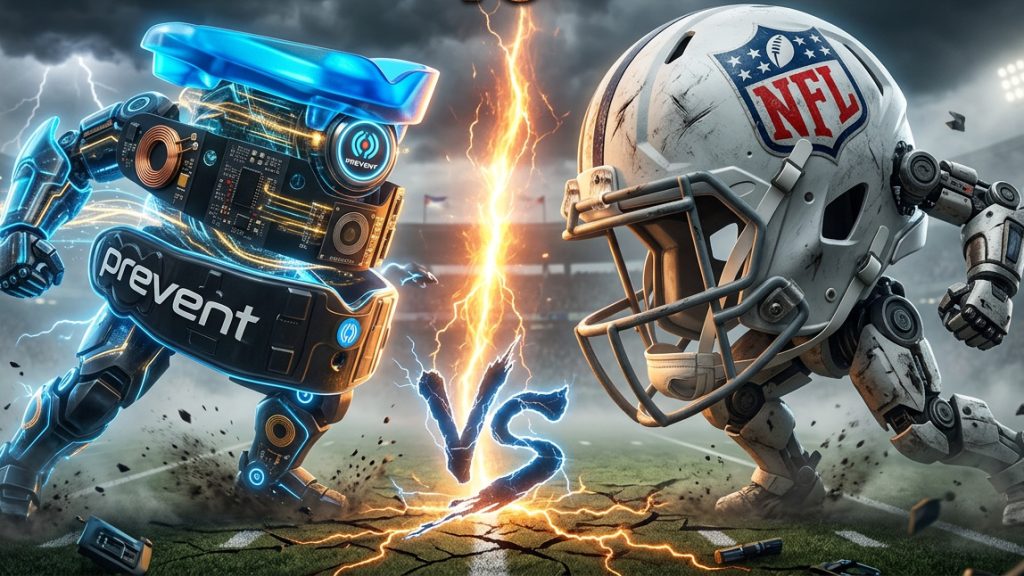
SPOTLIGHT: ‘Smart mouthguards’ is rugby’s new favourite buzzword, in the drive for improved player welfare.
These smart mouthguards, driven by World Rugby and the South African Rugby Union, have been trialled extensively at various levels in the Republic.
Collecting information from the mouthguards provides real-time data on ‘head acceleration’ events.
And unlike the initial strict mandates that forced immediate removals for any alert, policies have been refined to allow on-field doctors to evaluate threshold triggers first, balancing accuracy with match flow.
Currently also being trialled at school level, and managed by sports scientist Ross Tucker and Clint Readhead, SARU’s GM: Medical, they are five-and-a-half years into the project.
The instrumented mouthguard project has put SARU ahead of American Football in the player welfare (Head Injury Assessment) race.
Smart mouthguards are now an essential component of elite rugby player welfare.
World Rugby has fully integrated these instrumented mouthguards into the formal Head Injury Assessment protocol.
In contrast, the NFL utilises booth-certified athletic trainers and independent neurological consultants to mandate immediate medical timeouts and sideline evaluations via video review when a blow to the head is observed.
While the South African trials use mouthguards that measure impact data, American Football (the NFL) mostly uses helmet sensor data.
The measurements from inside the mouth are more accurate, as the helmets tend to ‘move’ more and don’t accurately ‘measure’ head movement (accelerations).
SARU, backed by World Rugby, are running the trials to assist with how they improve player safety by removing the guesswork from head injuries or collisions.
(Article continues below ….) 
World-renowned sports scientist Ross Tucker explained that a chip inside the mouthguard, fitted with accelerometers and gyroscopes to measure head impact G-forces, is what alerts medical staff.
The tiny chips track linear and rotational head acceleration during play and transmit data streams via Bluetooth to independent pitch-side doctors.
Newer models also flash a bright red light directly from the mouthguard upon reaching a high-force threshold (65G for women, 75G for men).
However, the flashing of the LED lights does not mean a concussion has occurred.
“If players wear the mouthguards, they will have ‘head accelerations‘ that are large, and reach the threshold and not be concussed,” Tucker told Jan de Koning.
“It is not an incorrect measurement,” he added.
“They did experience a large head acceleration. It just did not cause a clinical outcome.
“Concussion is a very complicated condition.
“You can have an enormous impact and no concussion, and you can have a small and innocuous one, and you might be knocked out.
“One thing I must emphasise is that the mouthguard is not a concussion diagnostic tool,” he told @rugby365com.
“Concussion is too complex for a simple head acceleration to diagnose it.
“You measure a head acceleration and then test for a concussion.”
Tucker said they are confident that the smart mouthguards measure what they claim to measure.
He added that in the early stages there were calibration issues that triggered false measurements.
“Those have been ironed out now, and we are 99.8 percent confident that we are getting accurate measurements.”
They are now gathering data at the elite level and make decisions based on that data.
World Rugby launched the use of smart mouthguard technology back in October 2023, while Tucker and his team have been at it (without the modern technology) since the COVID era in 2020.
SARU, with World Rugby’s support, has been at the forefront of using new technology to manage head injury as part of its ongoing six-point plan to become the most progressive sport in the world on player welfare.
@JanDKrugby
@rugby365com