
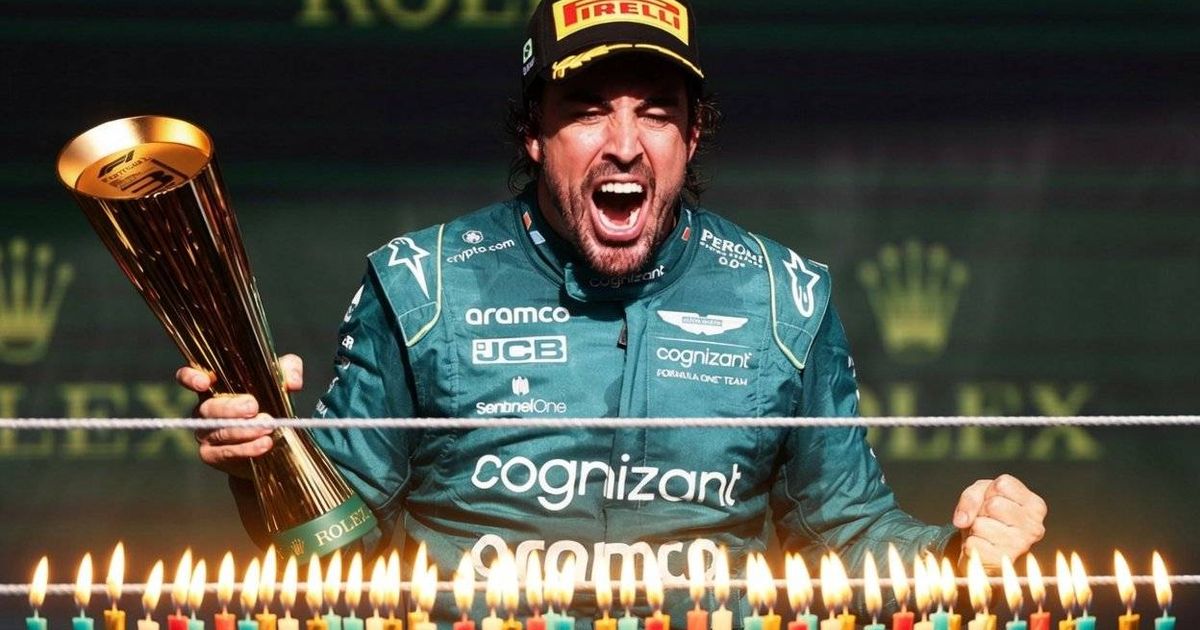
From a dusty car park in Oviedo, Spain, to the glittering stages of Formula 1, one boy’s hunger for speed rewrote history.
Born on 29 July 1981 to a mechanic and a shop worker, Fernando Alonso first gripped the steering wheel of a homemade kart at three years old. By seven, he was already a regional champion. Through sacrifice, raw talent and unbreakable determination, he climbed every rung of the ladder – junior titles, single-seaters and, ultimately, Formula 1.
At 24, he became the youngest Formula 1 World Champion, before successfully defending his crown. He ended the reign of Michael Schumacher; he fought giants at McLaren and Ferrari, endured bitter near-misses, conquered Le Mans twice and returned to Formula 1 stronger than ever.Now 45, still racing, still chasing and still defying time itself, Alonso stands as living proof that true champions never stop. Below is a summary of his year-by-year odyssey: the triumphs, the scars and unforgettable moments of a living legend of Formula 1 and motorsport.The Fernando Alonso Odyssey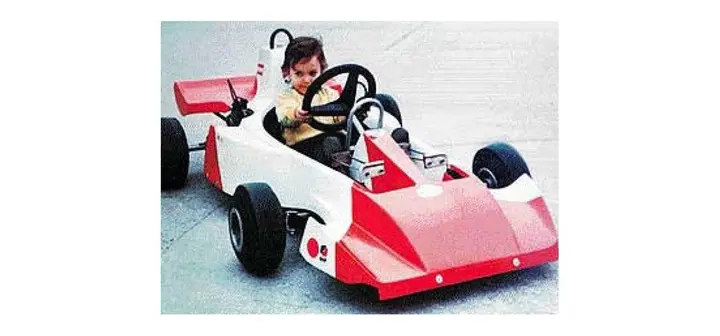
1981: Fernando Alonso Díaz was born on 29 July in Oviedo, Asturias, Spain, into a working-class family. His father, José Luis Alonso, worked as a mechanic and explosives expert in the mining industry and was an amateur kart driver. His mother, Ana María Díaz, worked in a department store. He has an older sister, Lorena, who later became a doctor.
1982–1983: As a toddler in Oviedo, he lived a normal early childhood in a modest household while his father pursued the hobbies that would soon introduce him to motorsport.
1984: At around three years old, he first sat in a small kart built by his father. It had originally been intended for his sister, Lorena, who showed little interest. The pedals were adapted for him, and his early outings were supervised and recreational.
1985: He continued practising occasionally under his father’s guidance while beginning primary school at Santo Ángel de la Guarda in Oviedo.
1986: Karting remained a family hobby. He gained more experience on makeshift tracks while his father built, maintained and transported the kart.
The Karting Years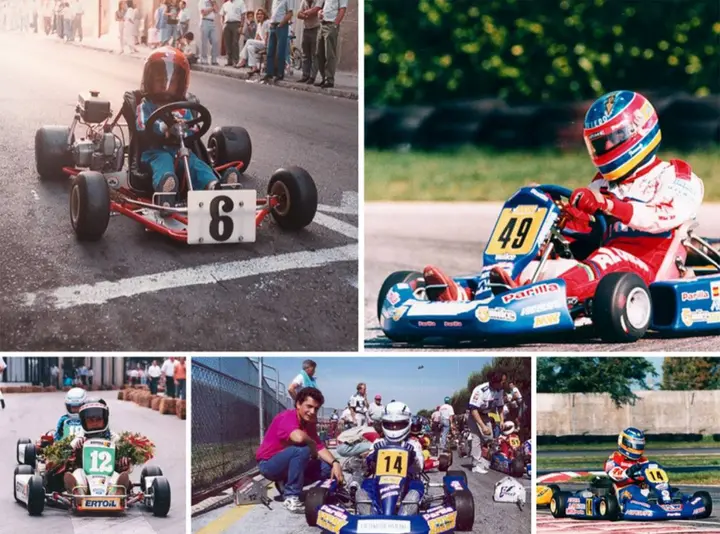
1987: Still very young, he began practising regularly. The local federation later granted him an official racing licence at around five or six years old after modifications were made to improve the kart’s safety and drivability.
1988: At seven, he won his first official race at Pola de Laviana and claimed the Asturias children’s junior championship, winning all eight races in the series.
1989: He retained the Asturias children’s junior title and also won the Galicia championship, establishing himself as a dominant local talent.
1990: He stepped up to the Cadet class and won the Asturias and Basque Country Cadet championships. Kart importer Genís Marcó began mentoring him after being alerted to his talent.
1991: He finished runner-up in the Spanish National Cadet Championship despite missing several rounds, while continuing to achieve strong results at regional level.
1992: He competed more widely across Spanish karting. Marcó’s support with equipment, travel and sponsorship became crucial because the family’s finances were limited. His performances earned him special dispensation to race more powerful machinery.
Karting Titles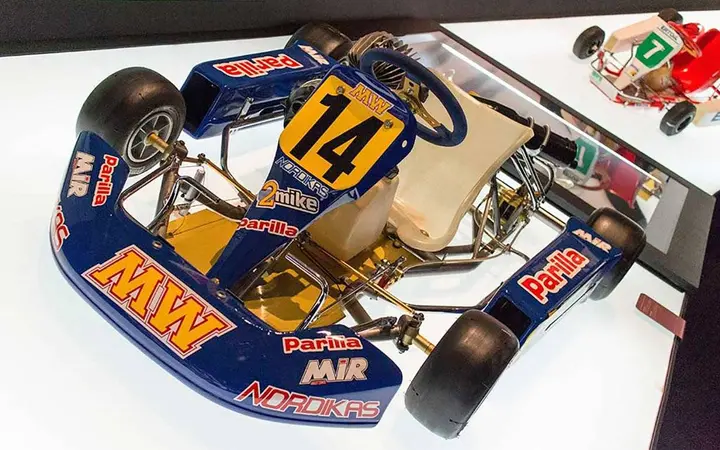
1993: He joined the IAME works team under the influence of Mike Wilson and won the Spanish Junior Championship, beginning a dominant run in national junior karting.
1994: He successfully defended his Spanish Junior Championship title and continued developing under Marcó’s guidance.
1995: He won a third successive Spanish Junior title and finished third in the CIK-FIA Rainbow Trophy for Cadets. He also worked as a mechanic for younger drivers to help cover his racing costs.
1996: At 14, he won a fourth Spanish Junior Championship, the Trofeo Estival, the Marlboro Masters and the prestigious CIK-FIA Five Continents Cup at Genk, regarded as the equivalent of the Junior Karting World Cup.
1997: He stepped up to the Intercontinental A category, winning the Italian and Spanish championships. He also finished runner-up in the European Championship with nine victories and achieved strong results in events including the Masters of Paris-Bercy.
1998: He retained the Spanish Inter-A title, won the Paris-Bercy Trophy and the Italian Industry Trophy/Open Ford, and finished runner-up in the European Formula A Championship.
Formula 3000 with Team Astromega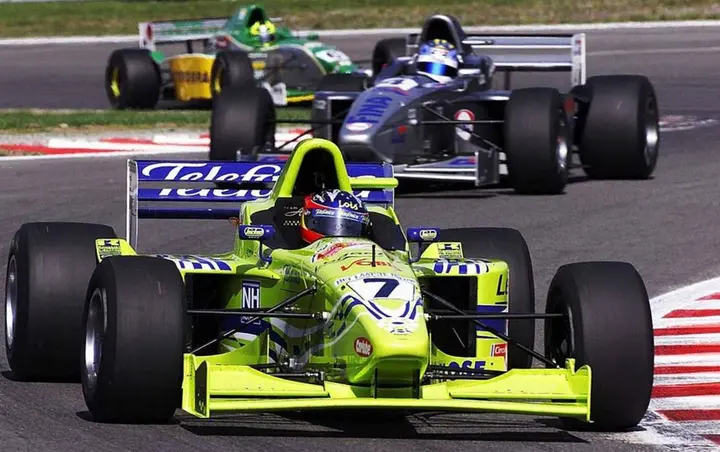
1999: He made his single-seater debut in the Euro Open by Nissan with Campos Motorsport, managed by former Formula 1 driver Adrián Campos. He dominated his first season in car racing, taking six wins and nine pole positions to secure the championship. He also tested a Minardi Formula 1 car.
2000: He competed in International Formula 3000 with Team Astromega, which had links to Minardi. He finished fourth overall after winning at Spa-Francorchamps and taking second place at the Hungaroring. He also served as Minardi’s test and reserve driver.
2001: He made his Formula 1 debut with Minardi at the Australian Grand Prix at the age of 19. Driving uncompetitive machinery, he scored no points and recorded a best finish of tenth in Germany. He ended the season 23rd in the championship but impressed with his qualifying performances relative to the car’s potential.
Minardi Formula 1 debut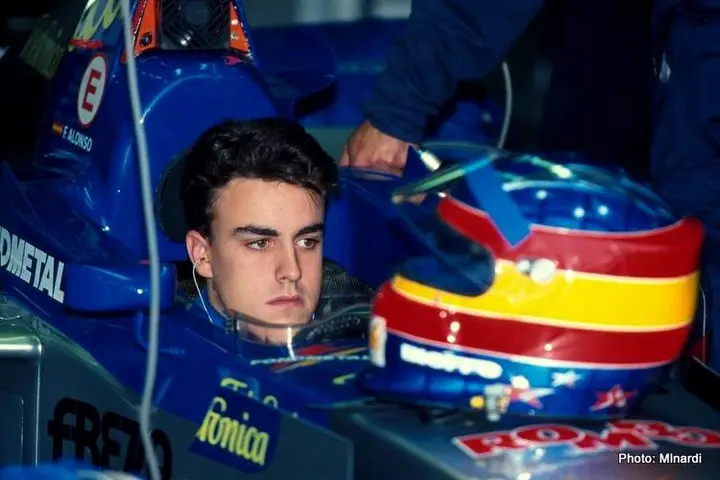
2002: He served as Renault’s test driver under Flavio Briatore’s management, completing thousands of kilometres of development work and familiarising himself with the team.
2003: Promoted to a full-time Renault race seat, he became Formula 1’s youngest pole-sitter at the time in Malaysia and its youngest race winner in Hungary, aged 22. He secured four podiums and finished sixth in the championship with 55 points.
2004: He remained with Renault, scoring four podium finishes and taking pole position in France. He recorded no victories but finished fourth in the Drivers’ Championship with 59 points.
2005: He won the Formula 1 World Drivers’ Championship with Renault after securing seven victories, six pole positions, 15 podiums and 133 points. At 24, he became the youngest Formula 1 World Champion at the time and the first Spaniard to win the title. Renault also claimed the Constructors’ Championship.
Double Formula 1 World Champion!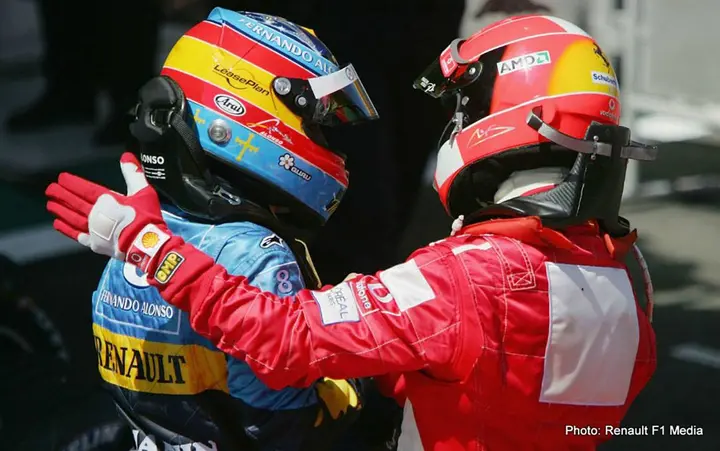
2006: He successfully defended his title against Michael Schumacher and Ferrari, taking another seven victories and demonstrating remarkable consistency. He secured the championship at the season finale in Brazil and became the youngest two-time Formula 1 World Champion at the time.
2007: He moved to McLaren-Mercedes alongside rookie Lewis Hamilton. He won four races and finished third in the championship, level on points with Hamilton and one point behind champion Kimi Räikkönen. The season was marked by an intense internal rivalry and considerable controversy, and he returned to Renault for 2008.
2008: Back at Renault, he won two races, including the controversial Singapore Grand Prix, and finished fifth in the championship.
2009: He endured a difficult final season with Renault, scoring one podium and finishing ninth in the championship as the team struggled for competitiveness.
Joining Ferrari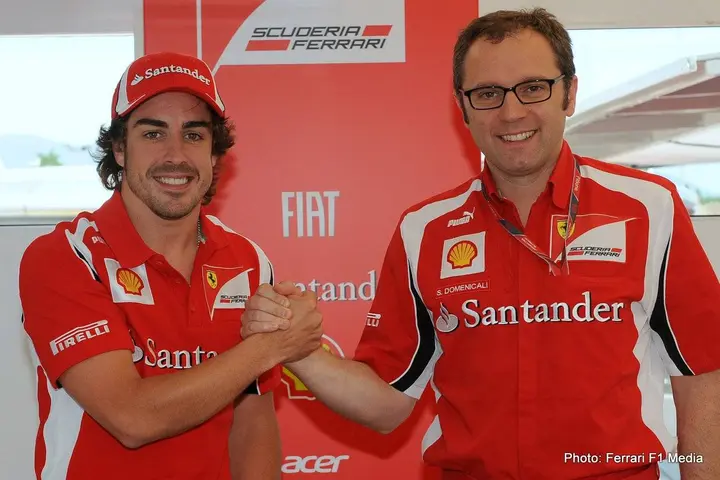
2010: He joined Ferrari as the team’s leading driver. He won five races and finished runner-up to Sebastian Vettel by four points following a dramatic season finale in Abu Dhabi.
2011: He remained with Ferrari, recording one victory and ten podium finishes. He ended the season fourth in the championship as Red Bull dominated.
2012: He produced an exceptional campaign in a Ferrari that was often less competitive than its leading rivals. He secured three wins and 13 podiums, finishing runner-up to Vettel by just three points after a dramatic finale in Brazil.
2013: Still with Ferrari, he claimed two victories and nine podiums on his way to another runner-up finish behind Vettel.
2014: He completed his final season with Ferrari under Formula 1’s new turbo-hybrid regulations. He scored two podiums and finished sixth in the championship before leaving the team at the end of the year.
Return to McLaren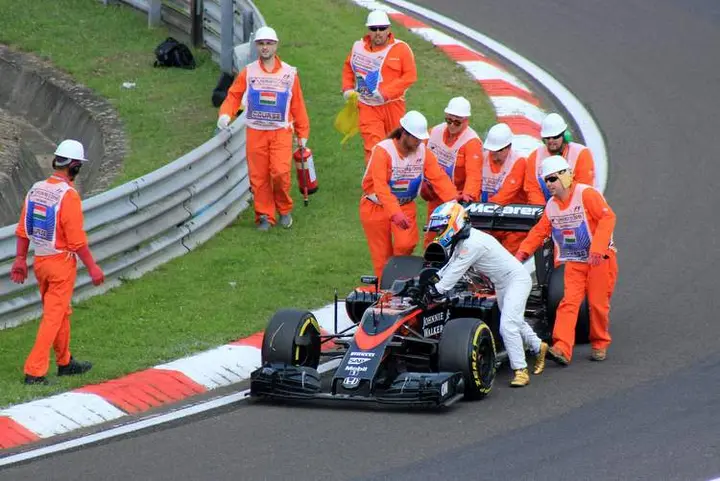
2015: He returned to McLaren for the beginning of its renewed partnership with Honda. The car was uncompetitive and unreliable, leaving him with only 11 points and 17th place in the championship.
2016: He continued with McLaren-Honda and improved to 54 points, finishing tenth in the Drivers’ Championship.
2017: He remained with McLaren-Honda but continued to face limited performance and reliability. He scored 17 points and finished 15th in the championship. He also made his Indianapolis 500 debut, leading parts of the race before retiring with an engine failure.
2018: He contested his final Formula 1 season with McLaren before his first retirement from the championship. With Renault engines, he scored 50 points and finished 11th. At the same time, he raced for Toyota in the FIA World Endurance Championship and won the 24 Hours of Le Mans.
Le Mans 24 Hour Winner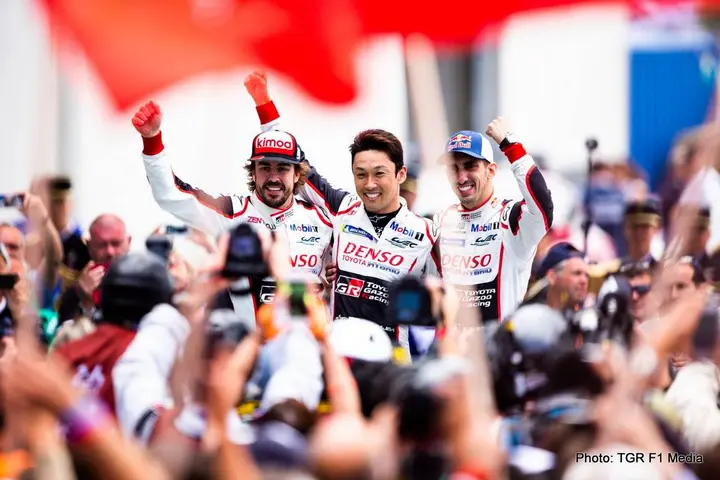
2019: He focused primarily on endurance racing with Toyota. He won the 24 Hours of Le Mans for a second consecutive year, claimed victory in the 24 Hours of Daytona and secured the 2018–19 FIA World Endurance Championship drivers’ title — his fourth world championship across motorsport. He was also inducted into the FIA Hall of Fame for a second time and made another attempt to qualify for the Indianapolis 500.
2020: He competed in the Dakar Rally, completing the event and recording several notable stage results, before returning to the Indianapolis 500. In July, he announced that he would return to Formula 1 with Renault, which was rebranded as Alpine for the 2021 season.
2020: Competed in the Rally Dakar (finished stages, notable results) and the Indianapolis 500. In July he announced his return to Formula 1 with Renault (rebranded Alpine for 2021).
Return to Formula 1 with Alpine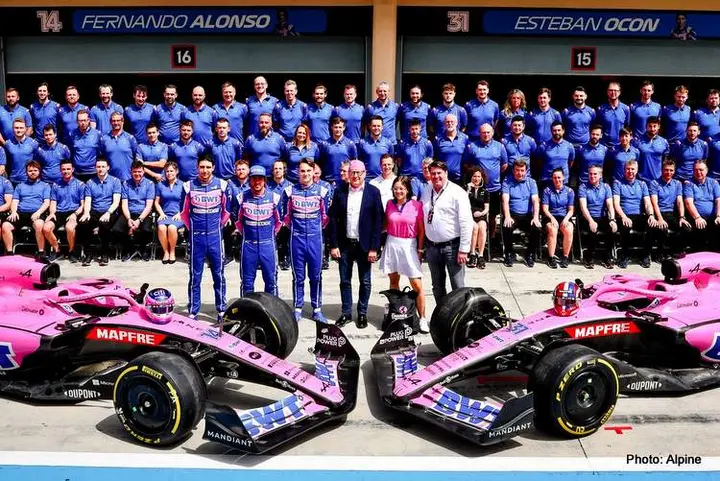
2021: Returned to F1 with Alpine. He scored a podium (third in Qata, his first in seven years) and finished tenth with 81 points.
2022: Second Alpine season; consistent points scoring (81 points, ninth overall). He broke the record for most F1 career starts and announced a move to Aston Martin for 2023.
2023: Joined Aston Martin. Strong early-season form brought eight podiums (including his 100th career podium) and a fourth-place finish in the championship with 206 points, Aston Martin’s best season to that point.
2024: Continued with Aston Martin; the car was less competitive. He scored 70 points and finished ninth, becoming the first driver to reach 400 Grand Prix starts.
Hello Adrian Newey!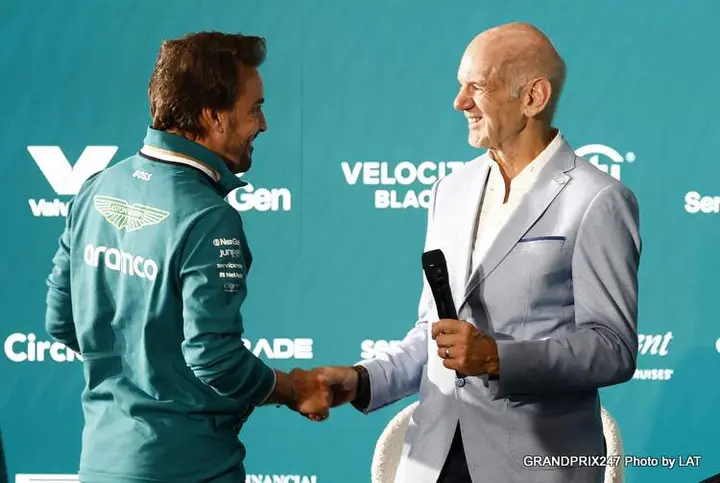
2025: Still at Aston Martin (Mercedes power). A tougher campaign yielded 56 points and tenth place in the drivers’ standings.
2026: Racing for Aston Martin (now with Honda power under the new regulations). As of his 45th birthday (29 July), after the Hungarian Grand Prix, he has contested 11 races, scored 1 point (from a 10th place in Monaco), and sits 19th in the championship.
Regarding Alonso’ future, he appears set to stay in Formula 1 if he believes he will be with a team capable of fighting for podiums. He remains contracted, and committed he says, through at least the end of the season.
The reality is that Alonso continues to compete as one of the oldest and most experienced drivers on the grid. Formula 1 fans often debate how he would perform with a decent car, a Mercedes, a McLaren or a Ferrari for that matter. Most agree he would be winning races.