
It’s the final countdown before the trade deadline, and with the calendar fast approaching the Aug. 3 cutoff, all eyes are on Major League Baseball’s 30 clubs to make a move — any move, really.
In the time since our last Urgency Index, some things have changed, while others have stayed the same. After weathering a franchise-worst 12-game losing streak, the Marlins have found themselves eliminated from our exercise. Meanwhile, the Cubs, who’ve needed a starter and multiple relievers since the first Urgency Index on June 17, continue to top both categories. That much is especially true after Chicago DFA’d veteran Jameson Taillon on Monday.
This week, it’s Tim Britton on bats, Eno Sarris on starters and Johnny Flores Jr. on relievers.
Starting PitchersChicago Cubs
Among the teams that are more likely to go to the playoffs than not, no starting rotation’s projected to be worse than the Cubs’. By runs allowed, they’ve only been 18th, so it’s fair to wonder if a team with this stellar of a defense can shrug off a weakness like this. Still, the batting average on a strikeout is zero and they need to do better than 23rd in starting rotation strikeout rate, especially as they face better offenses in the playoffs. The need is slightly more dire at the top of the rotation (their top three starters are 26th by OOPSY going forward) than the back (22nd by top five), which will make their shopping trip a little more difficult.
Chicago White Sox
Whether you look at their top three starters or their top five starters, the White Sox are 25th by projections. This isn’t some hallucination of future-looking numbers, either: the Pale Hose starters are bottom half in almost any stat you could use to judge a rotation. They have some intriguing young starters that are on the cusp, but are any of them truly ready to make an impact right now? And how willing will the team be to move any future value for present value in a season in which they’ve been surprisingly competitive? No reason to waste banked wins!
Arizona Diamondbacks
It’s an ongoing problem for the Diamondbacks. They’ve scored runs with the best of them over the last three years — second in the big leagues in runs since the start of 2024 — but they’ve had a much harder time on the other side of the ledger. They’ve been a bottom-10 rotation in runs allowed since 2020, even. Will they buy more tepidly, considering the crowded wild-card race? Or will they try to buy a starter who can help them going forward as well? What do they think of their current window? How do they feel about their current pitching coaching? They’ll give us some insight into their thinking over the next week.
Atlanta Braves
The Braves’ need isn’t as bad as the teams ahead of them. They rank pretty much middle of the pack no matter what projection system you’re using, and they have an ace’s ace in Chris Sale with a couple of injury wild-cards in Spencers Strider and Schwellenbach, who could still contribute at the end of the year. But a) that’s maybe not what a top contender wants to see and, b) the top of their rotation is a little better off than the back, and the back of a rotation is easier to fill via trade. That’s been the modus operandi for Alex Anthopoulos, too: get rentals that might just pop in the playoffs and get you all the way there. It’s worked before! They just need to find this year’s Jorge Soler on the bump.
San Diego Padres
Nearly every projection system has the Padres’ rotation at the very bottom of the league, and that’s if you look at the top three or top five starters alike. Their rotation has allowed an ERA in the mid-fives over the last 30 days with the third-worst strikeout-minus-walk rate in the business. The only problem is that those woes have dropped their playoff probabilities down into the teens, so it’s hard to see them buying too aggressively. Maybe they’ll sell in a way that replenishes the rotation and makes them more competitive this year and in the future. Mason Miller, perhaps?
Honorable mention: Houston Astros, Baltimore Orioles, St. Louis Cardinals
BatsTampa Bay Rays
The Rays had scored exactly the league-average number of runs per game entering Tuesday night (4.51) despite being carried almost entirely by the top third of their order. Yandy Díaz, Jonathan Aranda and Junior Caminero are as good a 1-2-3 as any team possesses; it’s everything after that could use a bump. While Jonny DeLuca and Ryan Vilade are having solid years, they shouldn’t be hitting in the middle of the order for a team gunning for a pennant. (Neither should Cedric Mullins, who is not having a strong season.)
Tampa Bay’s defensive flexibility leaves it capable of adding just about anywhere except the infield corners and DH. The Rays could fit in Zach Neto at short, or Ryan Jeffers behind the plate or Taylor Ward in an outfield corner. They could add multiple pieces. The Rays have arrived to the last week of July with the best record in the American League. This is a chance to solidify that into October.
Cleveland Guardians
The Guardians rank 29th in current runs per game and projected runs per game. (Thanks to the Blue Jays, surprisingly, and the Angels, not surprisingly, for sitting 30th in those, respectively.) To its credit, the lineup is theoretically deeper than it was this time last year, thanks to the debuts of Chase DeLauter and Travis Bazzana and the excellent season from Brayan Rocchio.
The main needs reside at first base/DH and in center field. Rhys Hoskins and Kyle Manzardo have each had rough seasons; adding one more option in that mix, especially from the right side, would be useful. Center field has been an offensive black hole for Cleveland, though Steven Kwan’s ability to slide back into center gives the Guards more flexibility to add an outfield corner.
Where will Tarik Skubal end up?
Cody Stavenhagen and more
New York Yankees
The Yankees rank 10th in runs per game, and the projections have them fifth moving forward. But this is a team that doesn’t know when Aaron Judge is coming back and just lost Cody Bellinger. Its outfield on Monday night against a left-handed starter included Max Schuemann, Spencer Jones and Jasson Domínguez from his weaker side.
The Yankees at least need an outfield stopgap, preferably from the right side. They’ve gotten next to nothing offensively from their catchers. It wouldn’t hurt to add another bat to the mix on the left side of the infield, where Ryan McMahon, José Caballero and Anthony Volpe each have an OPS that starts with a six. While New York’s playoff odds are the same as a healthy body temperature, the remainder of the regular season is really meaningful. The difference between catching the Rays and hosting the postseason or having to play in a wild-card series is large.
Seattle Mariners
We’ve been waiting for the Mariners to put it all together offensively all season — and we’re still waiting. It’s been fair to expect Seattle to solve its issues internally: Get Brendan Donovan back, get Cal Raleigh going, and this is one of the best offenses in the American League. Neither has happened yet.
Donovan’s return is imminent, which should help the left side of the infield. It would still leave a void for a righty-hitting outfielder; stop us if you’ve heard that before. We can tell you that the quintet of Victor Robles, Rob Refsnyder, Weston Wilson, Connor Joe and Buddy Kennedy hasn’t gotten the job done, and you’d still overestimate its collective OPS by 100 points. They’re at .525 for the season entering Tuesday. Five, two, five. The good thing is, it shouldn’t be hard to find an upgrade.
Diamondbacks
The Diamondbacks are basically right there with the Rays around the league average in runs per game. Arizona is projected to improve and be a top-10 offense the rest of the way. So why the need here? In part because the D-Backs require their offense to carry them more than, say, Tampa Bay, and because there are some obvious places to improve.
Arizona’s first basemen have a .605 OPS. That’s at first base. Its designated hitters — the people designated to hit and hit alone — are at .638. Its center fielders are at .615, which is at least more understandable.
Plug any of these holes, let alone more than one, and the Diamondbacks’ offense becomes the kind of unit that can carry them into October again.
Honorable mention: Texas Rangers, White Sox, Boston Red Sox
Relief pitchersWashington Nationals
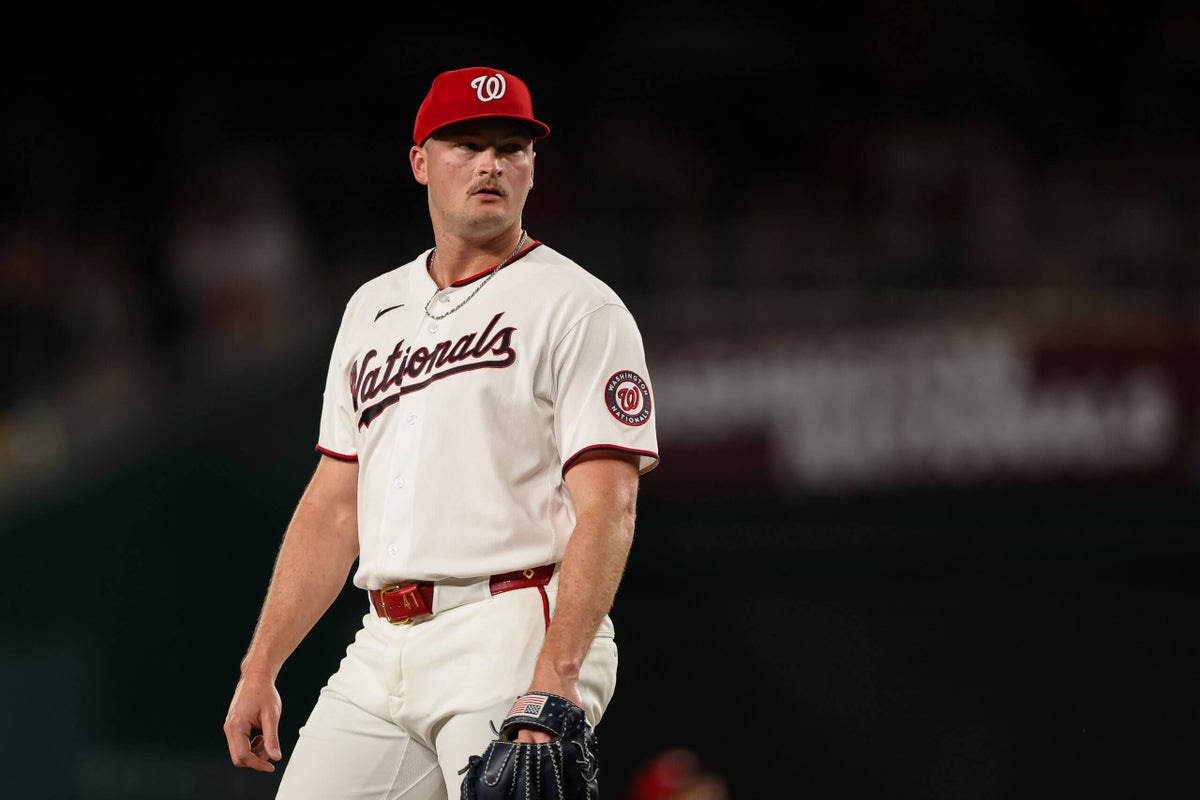
Is there a more obvious club in need of a relief arm than these 2026 Nats? Entering Monday, the Nats’ bullpen had blown a league-leading 27 saves, having surrendered 297 runs, also a league-high, on 506 hits, which is — you guessed it — another league high. That’s all led to a 5.03 ERA, tied for the third-worst in all of baseball. That Washington found itself just one game back of the NL’s third wild-card spot is a testament to the level of offense that the Nats possess. Which is to say, just one competent, even league-average arm could catapult the Nats into a firmer point of contention. Landing Connelly Early in the trade for Curtis Mead should help spell one starter to the ‘pen, provided they also retain Foster Griffin, but a true reliever is a must.
Pittsburgh Pirates
Pittsburgh has tried just about every low-cost method to improve a bullpen that ranks among the bottom of the league. The Pirates signed Chris Devenski, who had appeared in just 91 games over the previous five seasons; they cut bait with Dennis Santana and traded for Ron Marinaccio; as part of a draft trade, they acquired Brandon Eisert. Would they be on this list if any of them worked out? Unfortunately for the Buccos, they haven’t, and now the team finds itself needing to swing a deadline deal for at least two arms. Of note: among NL clubs either in possession of a wild-card spot or within three games of the third spot, the Pirates have the second-best run differential (plus-40) as of Monday.
Philadelphia Phillies
Unlike the majority of the clubs on this list, the Phillies have an All-Star closer in Jhoan Duran. That’s enviable on its own. The reason they’re on the list, though, is because the bridge to get to Duran is full of cracks. The circle of trust that manager Don Mattingly has is very small, and an injury to one of Orion Kerkering or Jonathan Bowlan would be absolutely devastating. Already, Philadelphia has lost Brad Keller for the season, Tanner Banks is nowhere near a return, and Lou Trivino pitched all of three games before landing on the IL. That the Phillies have a middle-of-the-road farm system, plus a litany of other needs, only further complicates things.
Cubs
At this point, it’s no secret that the Cubs need all the pitching help they can get. Starters, of course, take priority, but we all know how much manager Craig Counsell loves his “out-getters.” With Taillon designated for assignment and Javier Assad likely shifting back to the rotation, it opens the door for a major need. Getting back just one or two of Hoby Milner, Daniel Palencia, Hunter Harvey, Shelby Miller, Ben Brown, Phil Maton and Riley Martin, plus the potential injection of Justin Steele to the mix, should provide an immediate boost. However, as the Cubs learned last October, you can never have enough pitching.
Diamondbacks
Credit where credit is due: The Diamondbacks have found some gems to turn what opened the season as a weakness into a middling pack of arms. Keeping Paul Sewald as the closer, though, is untenable. He doesn’t throw particularly hard and is getting hit hard on the other side. Entering this week, his 24 saves ranked fifth in the league, but his 4.58 ERA ranked 132nd in the league among qualified relievers. For reference, only 167 relievers entered Monday eligible for qualification. Of the back half of that group, none are their club’s primary closer.
Honorable mention: Los Angeles Dodgers, Rays, Miami Marlins, Texas Rangers, Astros, Minnesota Twins