
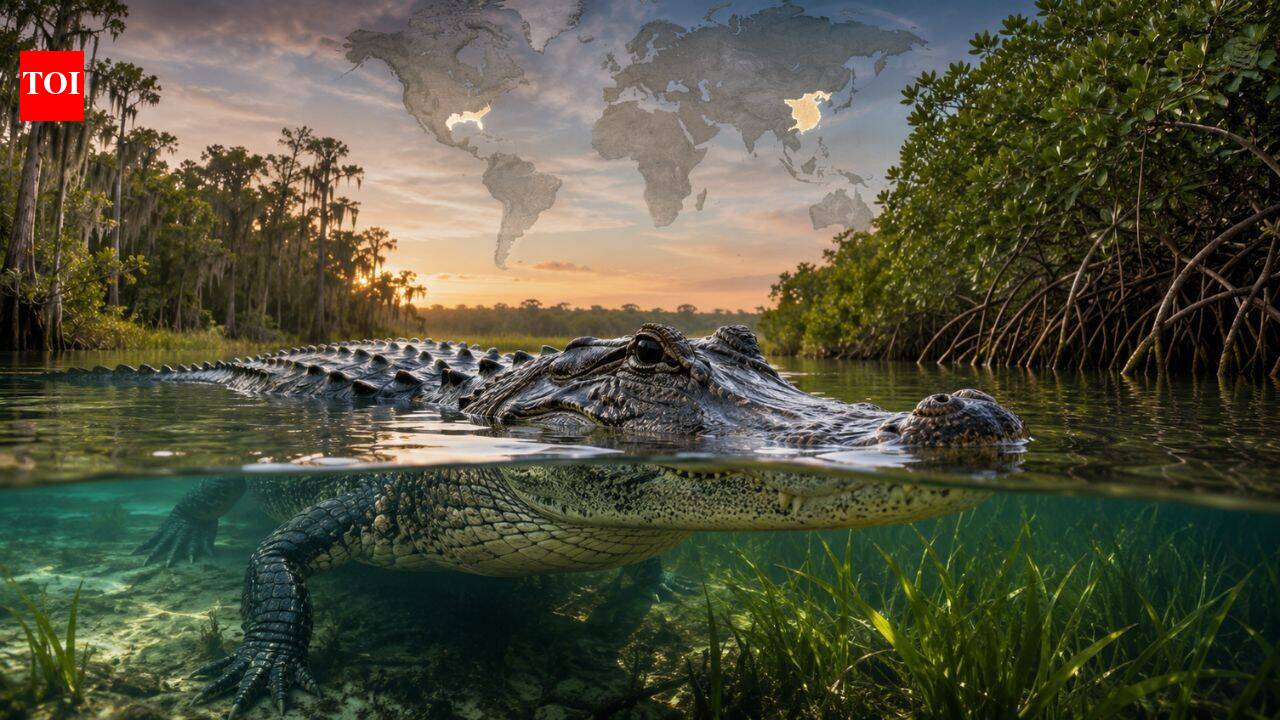
 Of all the crocodilians alive today, true alligators are among the rarest in terms of geographic spread. While crocodiles inhabit dozens of countries across Africa, Asia, Australia and the Americas, alligators cling to just two isolated corners of the planet: the south-eastern United States and a narrow strip of the lower Yangtze River in China. This is no accident of nomenclature; it reflects millions of years of evolutionary divergence, climatic upheaval and, more recently, the pressures of human expansion. Understanding why these two populations exist thousands of miles apart, with no others in between, reveals a story shaped as much by resilience as by vulnerability. From Florida’s wetlands to China’s shrinking marshlands, the alligator’s tale is one of adaptation against considerable odds, and of two very different fates within the same ancient family. Their survival also offers scientists valuable insights into evolution, conservation and environmental change. As living descendants of ancient reptilian lineages, alligators demonstrate how species can endure dramatic shifts in climate and habitat, while highlighting the fragile balance required to ensure their future.
American and Chinese alligators: The last two true alligator species
pc: canva
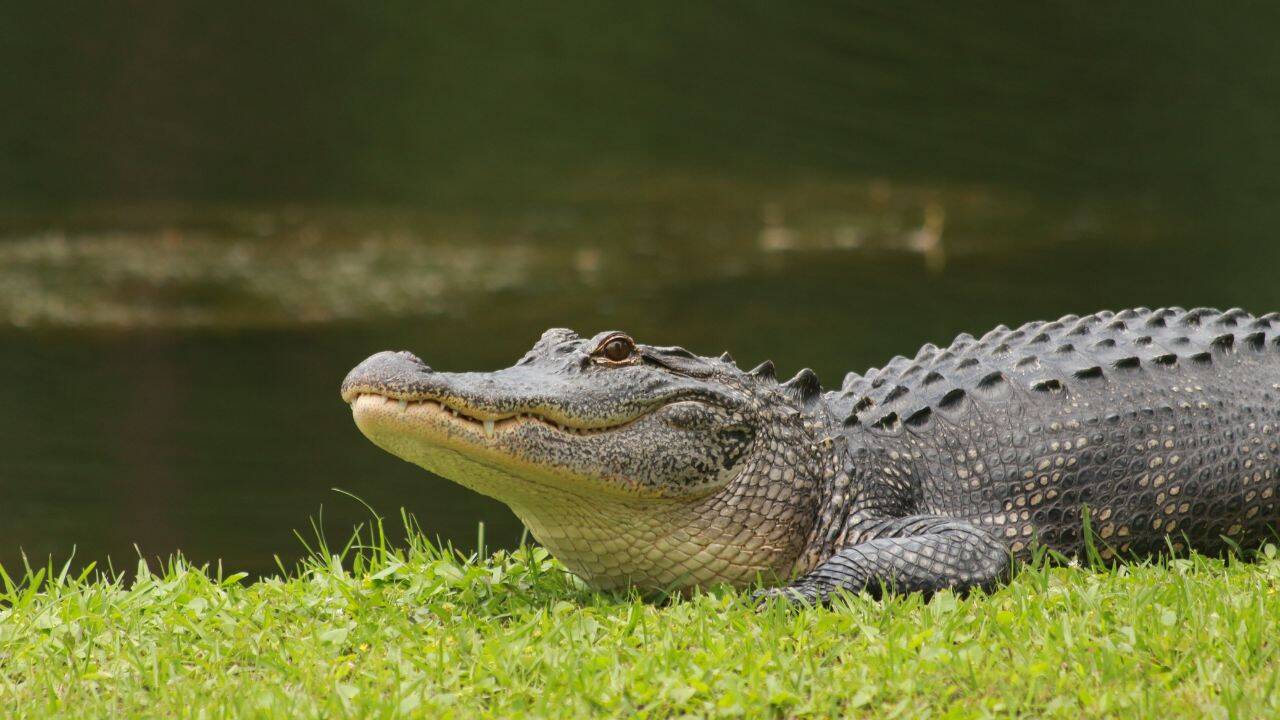
According to the Smithsonian’s National Zoo, the alligator family, Alligatoridae, contains only two living species that carry the “true alligator” designation: the American alligator and the Chinese alligator. The Chinese alligator is notably the sole member of this family found anywhere outside the Americas, making its existence something of a biological outlier. Physically, it is smaller and more delicately built than its American cousin, typically reaching about 1.5 metres in length, with a distinctly upturned snout and bony eyelid plates that are absent in the American species.As per the Public Broadcasting Service Nature, the two-species structure, noting that the genus Alligator includes only two living species: the American alligator and the Chinese alligator. The American alligator, by contrast, is considerably larger and more widespread, occupying freshwater lakes, slow rivers and wetlands throughout the south-eastern United States. This stark size and range disparity between the two species underlines just how differently their evolutionary paths have unfolded, despite sharing a common ancestral lineage.
How habitat loss changed the range of true alligators
The explanation for this unusual two-continent distribution lies largely in habitat specificity. According to the Smithsonian, the Chinese alligator was once far more widespread, inhabiting the extensive lakes and marshlands of the middle-lower Yangtze River region and along the river from Shanghai to Jianling City in the Hubei Province. Today, however, it survives only in fragmented pockets of Anhui and Zhejiang provinces, its range having contracted dramatically as wetlands were drained for agriculture and development.The Chinese alligator is now restricted to a handful of small, fragmented habitats in the lower Yangtze basin, primarily within south-eastern Anhui Province, and is classified as Critically Endangered. Meanwhile, the American alligator has fared considerably better, benefiting from vast protected wetland systems such as the Everglades. This divergence in fortune, rather than any inherent biological difference, largely explains why one species thrives while the other teeters on the edge of extinction.
Where true alligators and crocodiles live together
Confusion between alligators and crocodiles is common, yet the two are ecologically and geographically distinct. The USGS states that South Florida is the only place on Earth where alligators and crocodiles coexist in the wild, since the American crocodile’s range extends into the same region alongside the American alligator. Elsewhere, the two groups remain entirely separate, inhabiting different continents and climates.Distinguishing between them is straightforward once the key features are known. According to the United States Geological Survey, alligators have a more U-shaped snout while crocodiles have a more pointed or V-shaped one, and alligators are typically black in colour, while crocodiles tend to be a lighter greyish brown. These physical distinctions, though subtle to the untrained eye, are the clearest way to separate the two groups when encountered in the wild.
The survival of true alligators in the modern world
Despite their evolutionary success over vast stretches of time, both alligator species now face very different conservation realities. The Chinese alligator remains critically endangered, and according to the Smithsonian, captive breeding populations vastly outnumber those remaining in the wild. According to PBS echoes this concern, noting that recent field surveys suggest the wild population may now number only in the hundreds, despite far larger numbers existing in captivity and reintroduction programmes.The American alligator, by comparison, has become something of a conservation success story, having recovered thanks substantially to legal protections and habitat preservation. Its resilience is partly ecological: American alligators are known to dig “alligator holes” that create dry-season refuges for fish and wading birds, actively shaping and enriching wetland biodiversity. This contrast between the two species, one thriving, one critically endangered, illustrates how the same evolutionary lineage can face vastly different fates depending on habitat protection and human intervention.