
Hundreds of thousands of Australian truck drivers will face tougher penalties from August 1, with some fines doubling to $26,610 under a major overhaul of the nation’s heavy vehicle laws.
The updated penalties, introduced following a review of the Heavy Vehicle National Law (HVNL), increase fines for 50 offences, with the harshest aimed at fatigue-related breaches and falsifying work records.
While experienced truck driver Aaron Farquhar said he supports severe penalties for those who deliberately break the rules, he questioned whether simply increasing fines would lead to safer roads.
“I understand why there are significant penalties for things like deliberately tampering with an Electronic Work Diary or knowingly recording false information,” he told Yahoo News.
“If someone intentionally tries to deceive the system, then the courts should have the ability to impose serious penalties where appropriate.”
Are you a truckie with a road story? Contact newsroomau@yahoonews.com

Hundreds of thousands of Australian truck drivers will face tougher penalties from August 1. Source: Getty Images
What trucking penalties are increasing the most?
Penalties that are increasing include:
False or misleading entries (fatigue): increasing from $13,310 to $26,610
False representation about work records prohibited: increasing from $13,310 to $26,610
False or misleading transport documentation of goods: increasing from $13,310 to $26,610
False or misleading container weight declaration: increasing from $13,310 to $26,610
(Source: Big Rigs)
Truckie says bigger fines won’t fix the problem
However, Farquhar believes many breaches stem from human error rather than deliberate misconduct.
“Most drivers don’t wake up in the morning intending to break the rules,” he said.
“The reality is we’re working long hours in a demanding environment, and like anyone, human beings make mistakes. Increasing the dollar amount of the penalty doesn’t stop human error from occurring.
“We’re one of the most heavily regulated industries in the country.”

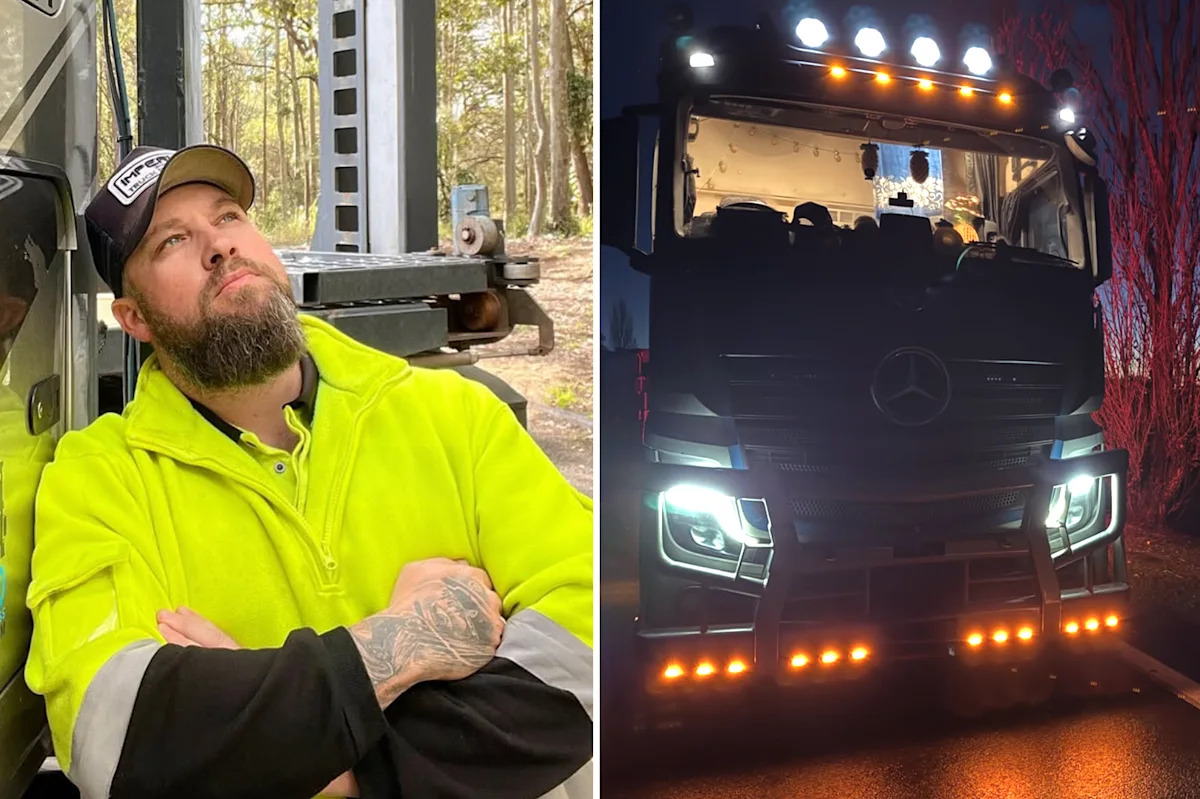
Aaron is calling for better rest areas across Australia. Source: Supplied
Instead, he believes governments should focus on tackling the underlying causes of fatigue and poor decision-making.
“(We need) better education, improved fatigue management, more rest areas, realistic scheduling and better road infrastructure,” Aaron said.
“Those are the kinds of things that I believe will make a real difference, rather than simply increasing penalties after the fact.”
RELATED
Industry questions tougher penalties
NatRoad CEO Warren Clark questioned whether substantially increasing penalties alone would improve road safety.
“Our members support strong fatigue laws because everyone wants safer roads,” Clark told Yahoo News.
“The concern is that the level of these penalty increases doesn’t always reflect the hazard or safety risk they are designed to address, particularly for technical or administrative breaches where there is little or no increased safety risk.”
Clark said while penalties had an important role to play, particularly for those who deliberately ignored the rules, fatigue was a far more complex issue.
“Safer roads are achieved through a combination of appropriate enforcement, proper education, standardised training programs, suitable infrastructure and practical fatigue management – not simply by increasing fines,” he said.
“If governments want better safety outcomes, they need to address the factors that contribute to fatigue before it becomes a compliance issue.”

NatRoad CEO Warren Clark says bigger fines alone won’t make Australia’s roads safer. Source: Supplied
The reality of fatigue on the road
Aaron, who can spend up to 15 hours a day on the road and drive as far as 1,100 kilometres in a shift, said many truck drivers carefully plan their mandatory breaks only to find rest areas full of trucks, caravans or roadwork equipment.
“There have been plenty of times where I’ve felt fatigue coming on and made the decision to stop because that’s exactly what we’re trained to do,” he said.
“But when you get to the rest area, and it’s full, you don’t really have a choice. You have to keep driving until you can find somewhere safe and legal to pull up.”
Clark agreed that more investment in heavy vehicle rest areas was critical.
“If governments expect drivers to comply with fatigue laws, they need to ensure there are enough safe places for drivers to stop when they need to,” he said.

Aaron says a lack of rest areas often forces truck drivers to keep driving. Source: Supplied
What truck drivers are asking for
Aaron said he’s fortunate to work for an employer that puts safety first and has never pressured him to drive while tired, but he knows that’s not the reality for every truckie.
“The overwhelming majority of truck drivers are hardworking professionals who are doing their best to keep Australia moving,” he said.
“We don’t want special treatment.
“We simply want practical solutions that improve safety while recognising the realities of life on the road.”
You can also follow us on Facebook, Instagram, TikTok, X and YouTube.