
“A friend once told me you should invest in the things you like, in the cities where you want to spend time.”
Silicon Valley technology executive Nikesh Arora smiles as he recalls the advice that helped persuade him to buy into a cricket team based at Lord’s, playing in one of the sport’s most divisive tournaments.
The team is London Spirit and the competition is The Hundred, an eight-team tournament in which the men’s and women’s sides from each club play 100-ball matches as double-headers over five weeks.
It was launched in 2021 by the England and Wales Cricket Board (ECB) to help bring one of the world’s oldest sports to a new audience — specifically, families. The Hundred has not been to everyone’s taste, with its critics bemoaning how pre-existing formats have been collateral damage in the effort to promote it. But at London Spirit, at least, there is no denying its pulling power.
Inside the franchise owners’ suite for the game against Manchester Super Giants last month, Arora looks entirely at home. Former Chelsea striker Andriy Shevchenko is among a guest list that also includes basketball great Pau Gasol, ICC chief executive Sanjog Gupta and Amit Bhatia, the businessman leading a consortium in talks to acquire a minority stake in Liverpool.
Satyan Gajwani, the London Spirit co-owner and a co-founder of Major League Cricket in the United States, jokes that the room resembles a World Economic Forum event.
Behind the scenes with the London Spirit
Amelie Claydon
Across the opening week of the first Hundred season under London Spirit’s new owners, The Athletic was given behind-the-scenes access to see how the changes extended beyond the addition of some famous names to the VIP guest lists.
Arora, 58, first moved to London in 2000 and remembers queueing outside Lord’s without a ticket for Test matches while living in the capital. Twenty-six years later, he is wearing London Spirit’s new shirt and cap and moving through the room as its host.
“I spent my formative business years in London,” he says. “My business skills were developed here, and I’m a huge fan of London and England. I thought: ‘How can I marry this with my desire to invest in cricket?’. London became obvious.”
In January 2025, the Tech Titans consortium submitted the winning bid for London Spirit, valuing the franchise at £295million ($398m), the highest figure attached to any Hundred team. It paid £145m for a 49 per cent stake, with the 239-year-old Marylebone Cricket Club — the owners of Lord’s, and the custodians of cricket’s laws — retaining 51 per cent.
The 11-person consortium brings together executives and investors from technology, media and finance, many of Indian heritage and based in the U.S. It includes Microsoft chief executive Satya Nadella, Alphabet (Google’s parent company) chief executive Sundar Pichai, Adobe chair Shantanu Narayen and Silver Lake CEO Egon Durban alongside Arora and Gajwani. The MCC appoints four members of London Spirit’s seven-person board, including its chair, while Tech Titans appoints three.
Across the city, Oval Invincibles rebranded as MI London following investment by Reliance Industries Limited, an Indian multinational that owns the Mumbai Indians of the Indian Premier League, as well as teams in New York, Cape Town and the UAE.
It was a controversial move. Oval Invincibles had been the most successful Hundred franchise, winning three men’s and two women’s titles, and the rebranding risked undermining some of the ties forged with its fanbase. They were not alone: rebrandings also took place at the Northern Superchargers (now Sun Risers Leeds) and the Manchester Originals (now Manchester Super Giants). It is one of the possible reasons floated for attendances having dipped significantly this season.
London Spirit, however, chose to stay with the identity created when The Hundred began.
“When something is working and isn’t broken, you shouldn’t fix it,” Arora says. “People already identify with London Spirit and the team has built five years of history. We didn’t want to call it something like Tech Titans, and we don’t have an IPL team whose name we wanted to impose on it.”
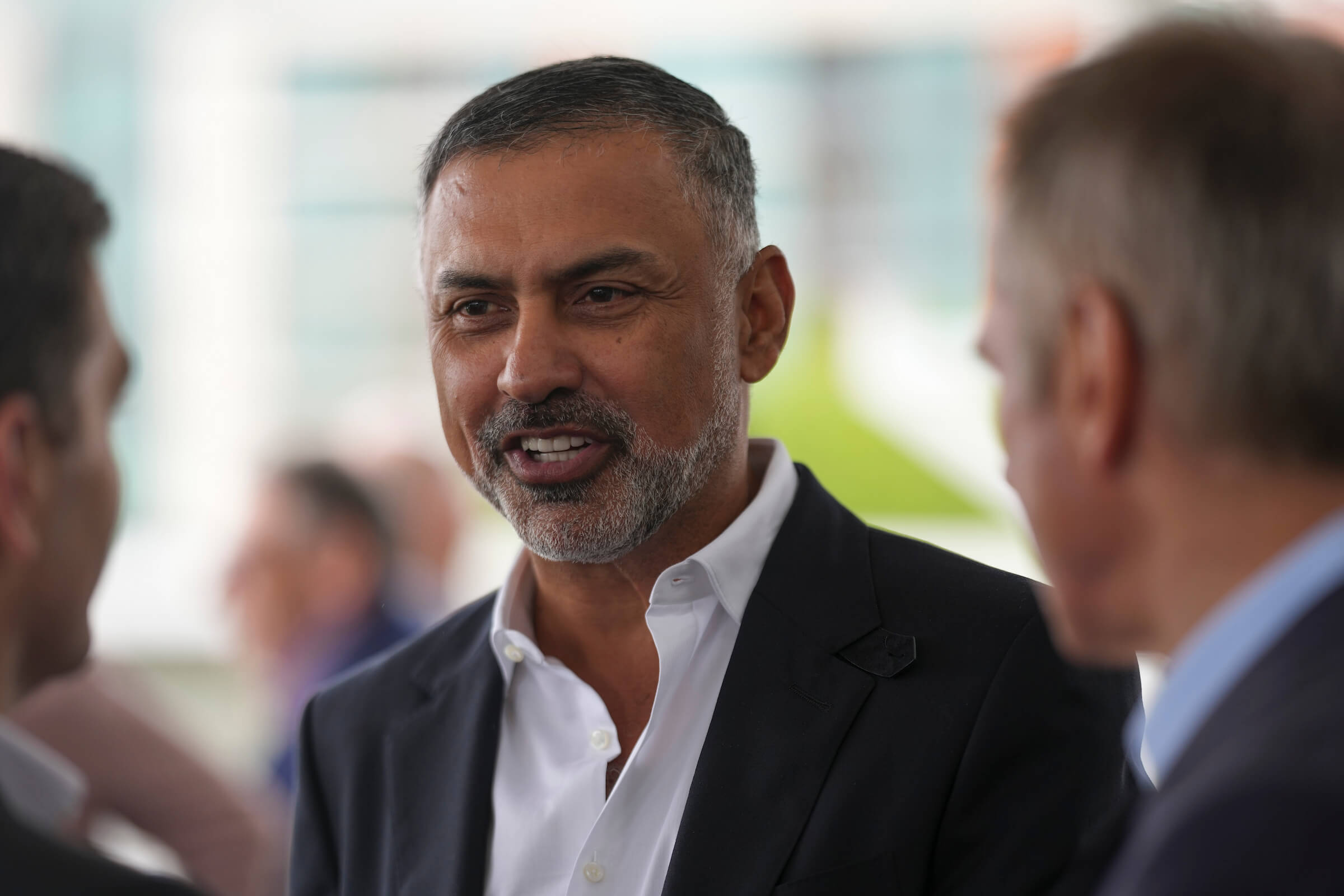
Nikesh Arora (Alex Davidson/London Spirit)
The consortium arrived from the American technology industry with ideas around data, digital content and attracting younger audiences. On the surface it doesn’t seem an obvious fit with a private members’ club founded in 1787, which allowed women to join only as recently as 1998.
“We were initially concerned that those cultures might not match, but it has been the opposite,” Gajwani says.
The first matchday under the partnership provided an early demonstration of its reach. Tinie Tempah performed between the women’s and men’s fixtures, the guests watched from upstairs and around 100 of Arora’s employees occupied the seats he had bought for them.
“The objective is to make sure people come here and enjoy themselves. If we win as well, then we make money,” Arora says.
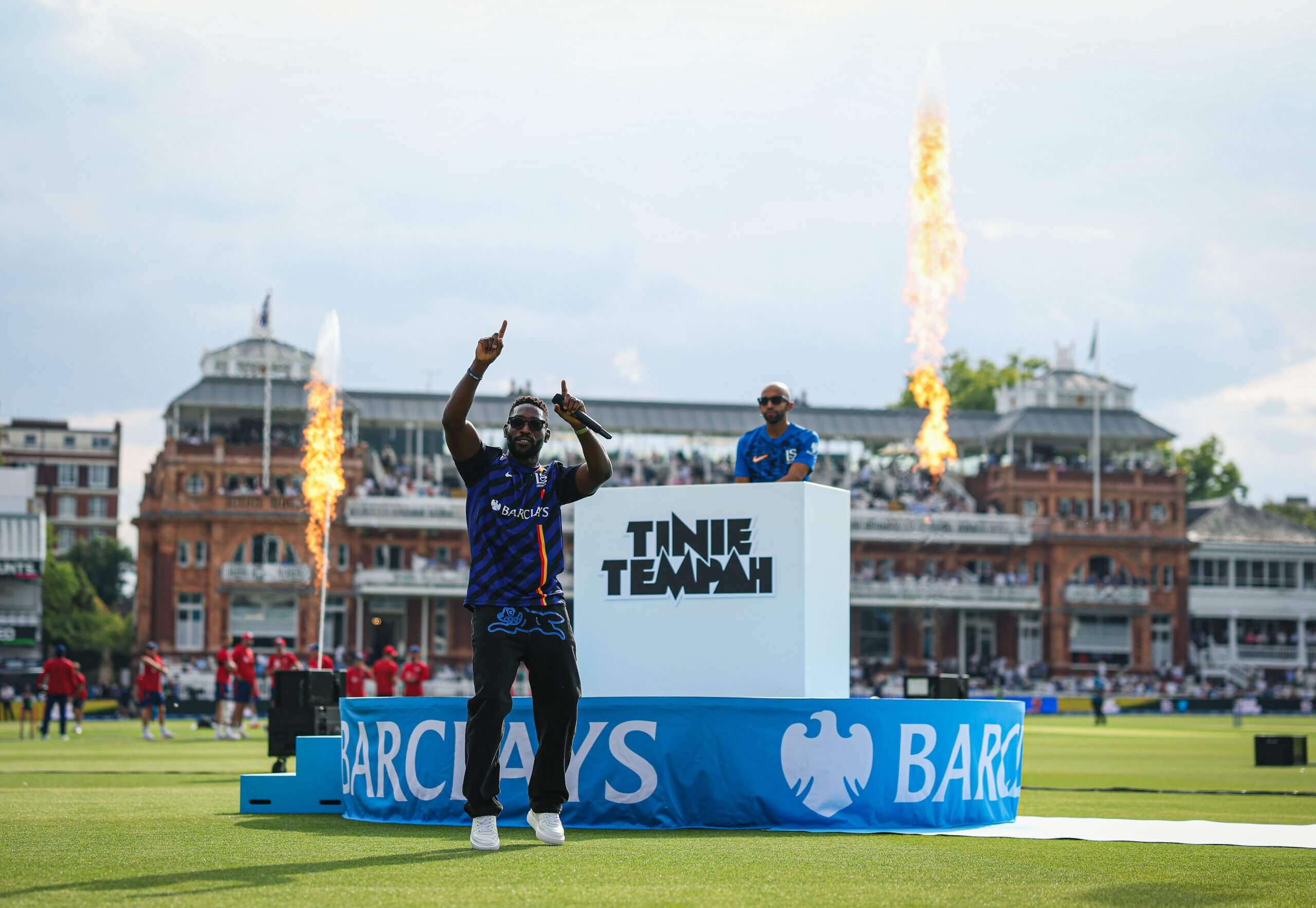
Tinie Tempah performing at London Spirit’s opening fixture at Lord’s (Alex Davidson/London Spirit)
Winning, of course, is harder to guarantee.
The Athletic visits for the matchday against Manchester Super Giants, when London Spirit’s women’s side are skittled for 80 and lose by seven wickets with 41 balls remaining. A few hours later, the men fare slightly better, but are still defeated by seven runs, despite Liam Livingstone making 69 from 40 deliveries.
“Every team has upped the calibre in The Hundred this year,” Gajwani says. “The squads are substantially better than they were last year. Competition is good. Challenge is good.
“The women’s team has actually been quite successful in the past few years. I think it is just a higher-calibre game for everyone, and that is a great thing. We know it is a long haul, and the most important thing is that we learn from this game.”
Six days later, The Athletic returns for the double-header against MI London at the Kia Oval for the first ‘derby’ since the rebranding. Beforehand, a meeting room at the team hotel has been covered in London Spirit branding to create a shared base for the squads. The most obvious evidence of the men’s presence is the collection of golf clubs and bags scattered across the floor.
Creating a sense of shared purpose in cricketers plucked from different county teams and other global franchises for a competition that lasts less than four weeks is not easy. This was obvious on the first day of The Athletic’s access, which was the first time many of the women had gathered as London Spirit players, with county commitments meaning several were still absent.
They were asked to pose together, complete interviews and film promotional material as if they were a settled team before they had properly trained as one. Their first cricket session followed at Lord’s, before a meeting in the pavilion overlooking the ground.
Heather Knight was London Spirit’s original captain and led England on 199 occasions during a 16-year international career that included winning the 2017 World Cup at Lord’s. The 35-year-old retired from international cricket in July as England Women’s record appearance holder, with 320 caps.
She is now London Spirit Women’s first general manager, with a role spanning recruitment, staffing, operations and cricket discussions with head coach Jon Lewis and 25-year-old captain Charlie Dean.
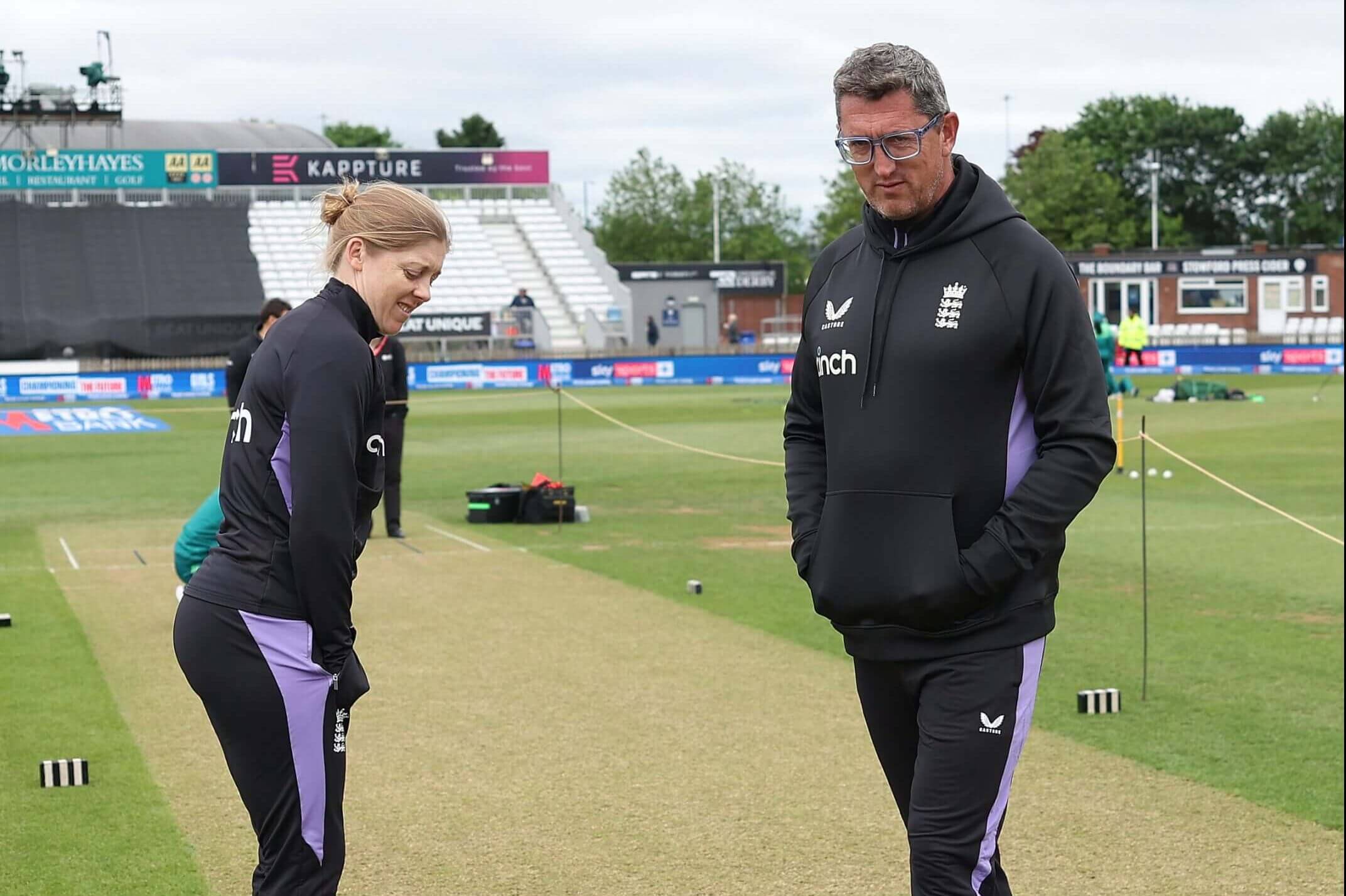
Heather Knight and Jon Lewis also worked together with England (Matthew Lewis/Getty Images)
“There have been moments when I’ve wanted to put the pads on and get out there,” Knight says. “As a player, you are focused on your role, which is (performing on) matchday and trying to do your job on the pitch.
“I knew there was so much that went into it, but you are shielded from all the little jobs everyone else does. It has been quite cool to see how everyone involved contributes to what the players do on that day.”
Knight was involved in appointing Lewis and assembling a staff drawn from England, India, New Zealand and Australia. She contributes to selection and tactics, but also oversees the arrangements that ensure accommodation, training facilities and support services operate properly.
The Tech Titans attend leadership dinners and ask questions about the cricket operation, but Knight says they have resisted attempting to run it.
“They are an impressive group of individuals, chief executives of massive companies in America, but I get the sense that they just love cricket,” she says. “It is a passion project for them. They want us to be successful and win, but they have left the cricket side to us.
“They are interested and want to know what our plans are, but I’ve been really impressed with how they have gone about things.”
Knight made equal treatment of the two squads a condition of her involvement rather than an ambition to be considered later.
“Equality is hugely important to me,” she says. “I would not have taken this role if I did not think the women’s game was going to be given as much resource and importance as the men’s. I have definitely felt that so far.”
London Spirit Women had already shown the franchise’s potential by winning The Hundred in 2024. That success gives the new owners a stronger foundation than with the men’s team — who have yet to even reach a final — but Gajwani believes the wider women’s game remains one of the largest areas of potential growth.
He points to the development of the WNBA in the U.S. and believes The Hundred benefited from launching the men’s and women’s competitions together rather than asking the women to join a product already built around the men.
“What I love about The Hundred is that, from the outset, it was very clear the women’s game was not going to be treated as secondary,” he says. “My 12-year-old daughter is more excited about watching the women’s game than the men’s. She is not even particularly into cricket, but seeing professional women cricketers succeeding has had a big impact.”
One of the players capable of turning that interest into a lasting attachment is Grace Harris. Carrying a coffee as she walks through Regent’s Park towards training at Lord’s, the 32-year-old Australian all-rounder briefly pauses to direct a grandmother pushing her granddaughter in a pram towards a nearby coffee shop, then rejoins the route through the park often used by the team.
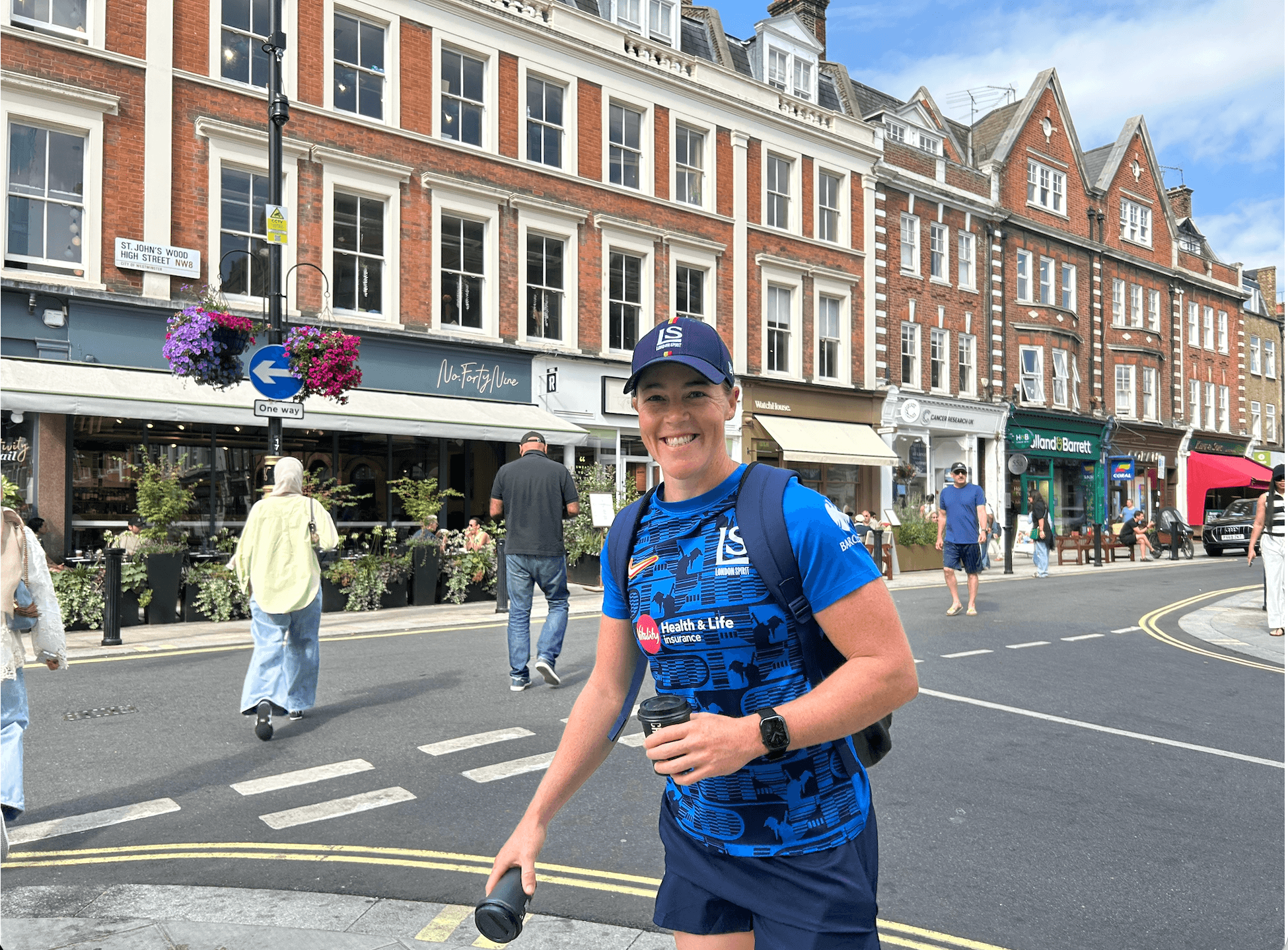
Grace Harris walking to training near Lord’s (Amelie Claydon/The Athletic)
Harris has competed in franchise tournaments around the world and says London Spirit now feels closer to a Women’s Premier League operation in India than The Hundred had in previous seasons.
“We have a kit person who takes our bags to and from the grounds,” Harris says. “Unless you need something, you leave your bag after training and it is waiting for you when you arrive at the ground. It is a small thing, but it makes the team feel very well resourced.”
The team’s operations are overseen across both squads by director of cricket Mo Bobat. The former England men’s performance director spent 12 years at the ECB working in talent identification and the international pathway, and remains director of cricket at IPL franchise Royal Challengers Bengaluru.
“In franchise cricket, you are thrown into a melting pot with lots of different characters and cricketers,” Knight says. “You have to find your way as a team and establish people’s roles very quickly. From my experience of playing in franchise competitions around the world, that feeling of belonging is incredibly important.”
She laughs when she is described as the glue of the group, before conceding that the assessment is probably fair, given her laughter is rarely absent at training.
Harris has helped foster team spirit with little bonding exercises, such as a shopping trip around Battersea Power Station and an outing to see The Odyssey at the cinema in Leeds. It is a welcome break in a relentless schedule of training, playing, recovery and travel.
“It gives you something different to talk about when everyone comes back together. Otherwise, somebody asks what you did that day and the answer is that you played PlayStation for eight hours, had a nap and ate,” she says.
Harris was also placed in charge of writing the song which would be sung after London Spirit’s victories. She gathered players in the team room to discuss ideas for lyrics, while wicketkeeper Seren Smale used ChatGPT to search for tunes that might work as an anthem.
The group chose Hey! Baby, released by DJ Otzi in 2000, and rewrote it around London Spirit. Rather than fixing individual players’ names into the song, she left spaces that can be filled with references to performances and grounds after each win. “I expected our first rendition to go considerably worse than it did because we have a wide range of ages and musical tastes across the players and staff,” Harris laughs. “Some people might not even have been born when the song was released, but everybody got around it.”
Its first outing came in a victory over Trent Rockets last week, which also offered an early indication of the team Lewis is trying to build after a difficult end to his previous two positions.
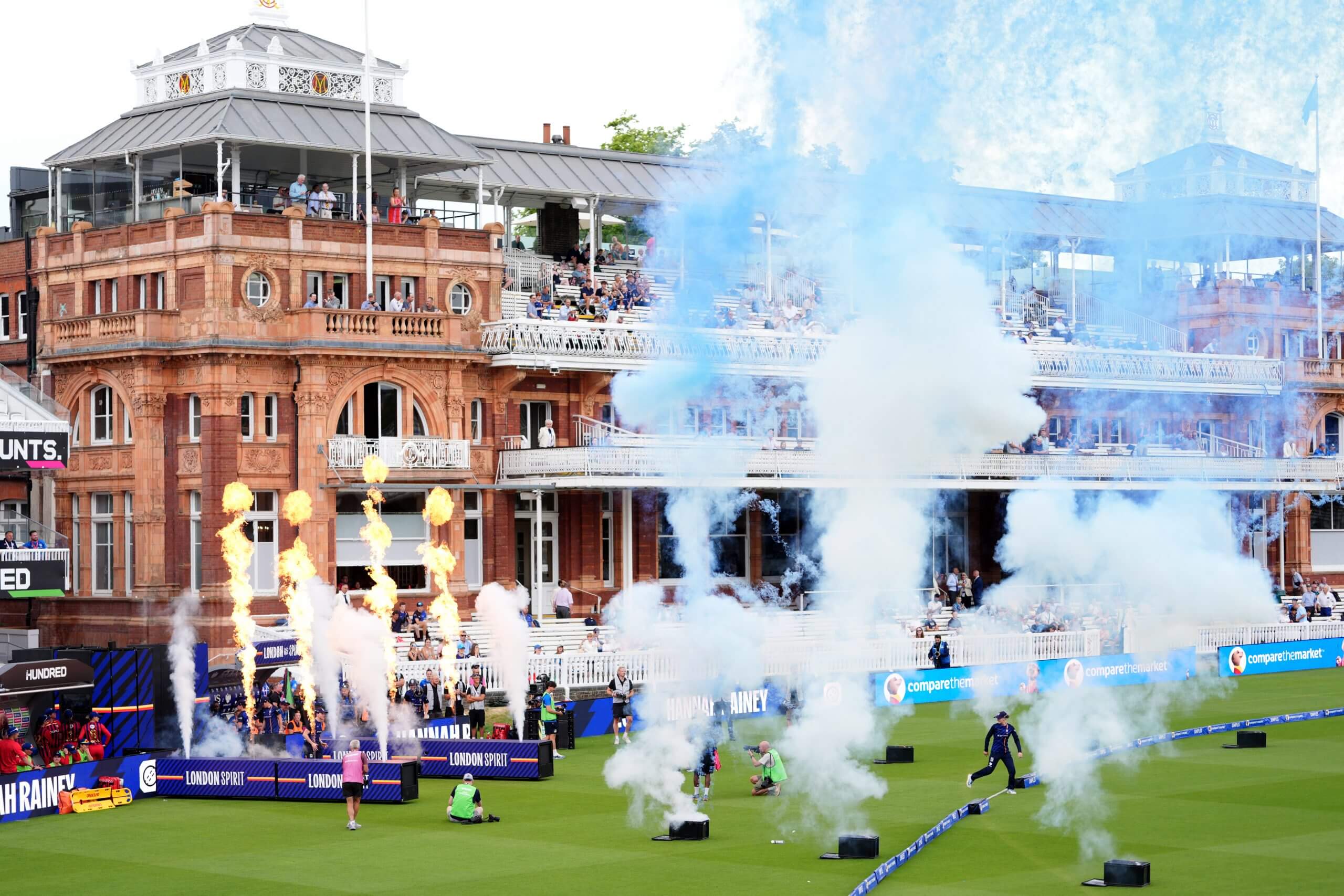
Fireworks are let off in front of the Lord’s pavilion (Adam Davy/PA Images via Getty Images)
Lewis, 51, left his role as England Women’s head coach in March 2025 after the side suffered a crushing Ashes series defeat in Australia and failed to progress beyond the group stage of the previous year’s T20 World Cup.
England had nevertheless won 52 of their 73 matches under him, including eight consecutive one-day international series. His three-season spell with UP Warriorz in the WPL ended three months later.
“I had two jobs and lost both of them at around the same time,” Lewis says. “You spend a lot of time thinking and reflecting on how you went about those jobs, and whether you would do things differently the next time you got an opportunity. Your confidence gets knocked, for sure, as a coach when you lose roles — it was tough.
“I believe in connecting people to a vision and taking them on a journey. The exciting thing about this project was that we were starting from scratch and could put our own stamp on it.”
The owners describe their sporting ambition as “winning with style”. Lewis has reduced the phrase to three characteristics he wants his players to demonstrate: skill, competitiveness and bravery.
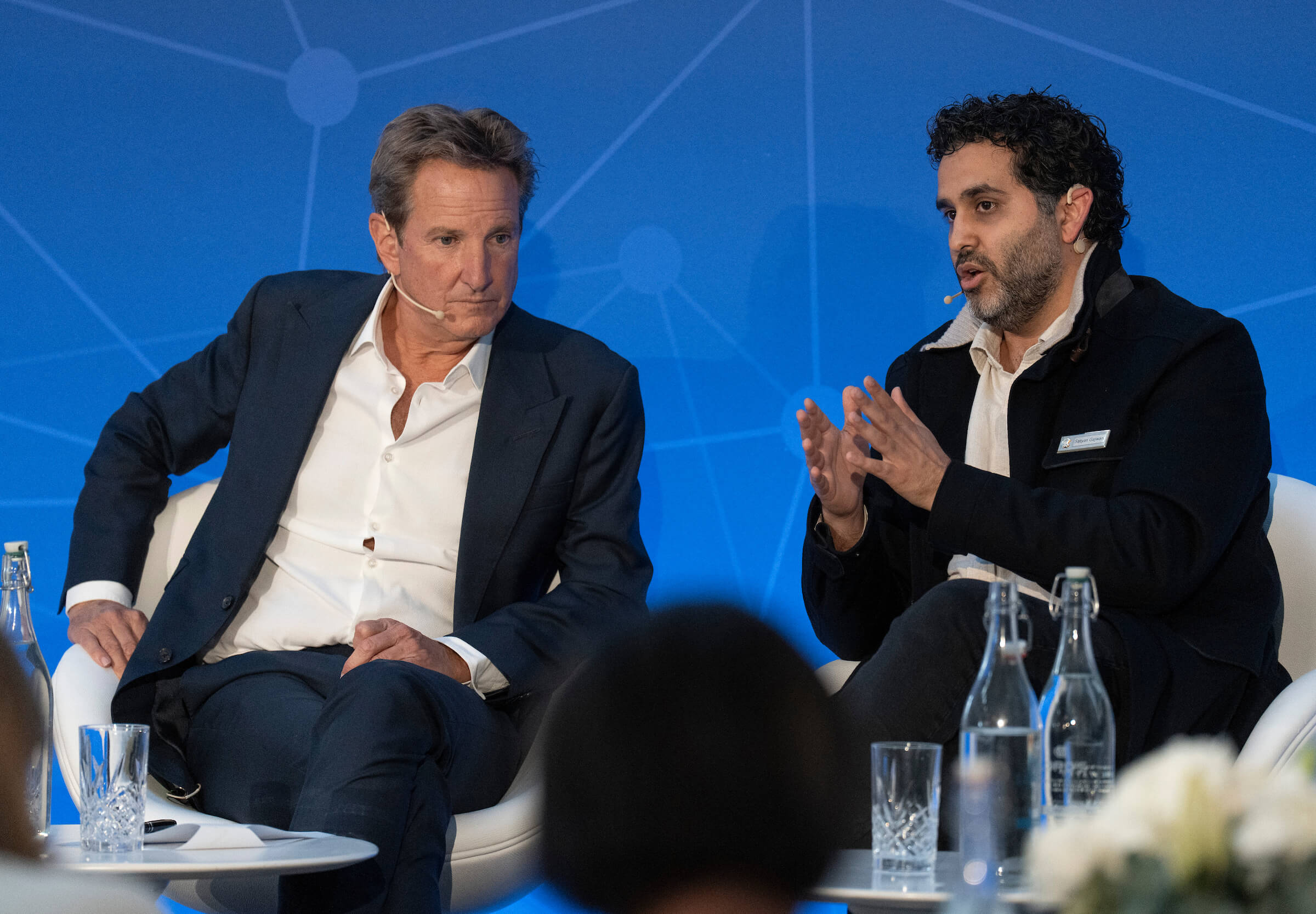
Satyan Gajwani (right) with MCC Chair Mark Nicholas (Alex Davidson/London Spirit)
South African all-rounder Nadine De Klerk was recruited for decisive passages of matches, as she demonstrated by masterminding the closing stages of the run chase at Trent Bridge, after Spirit had started to wobble by losing four wickets for 12 runs.
“That is what you pay the money for,” Lewis says. “Somebody who can deliver in the most important moments.”
The Tech Titans have remained visible without attempting to influence selection or tactics, but Lewis says the demand to win remains clear.
“They do not just talk about style,” he says. “Winning is still in there. I have worked in sport for 30 years. Sport is about winning and working out how to do it.”
The day before London Spirit’s second home fixture on Saturday, Harris smiles when the conversation turns to their opponents.
Southern Brave are coming into the match with a perfect record of four wins from four games. “They’re due a loss,” Harris says.
The optimism was admirable, but reality bit hard. London Spirit’s batting failed again, and Southern Brave were able to cruise to their victory target with seven balls remaining. It left London Spirit with one victory from their first four women’s matches under the new ownership, alongside two losses and a tie. The men are faring even worse, with one win and three losses from their four outings.
It doesn’t dampen the enthusiasm of the crowd, at least. Young supporters still swarm around the exit, waiting for the players to leave the field and sign shirts, caps and programmes.
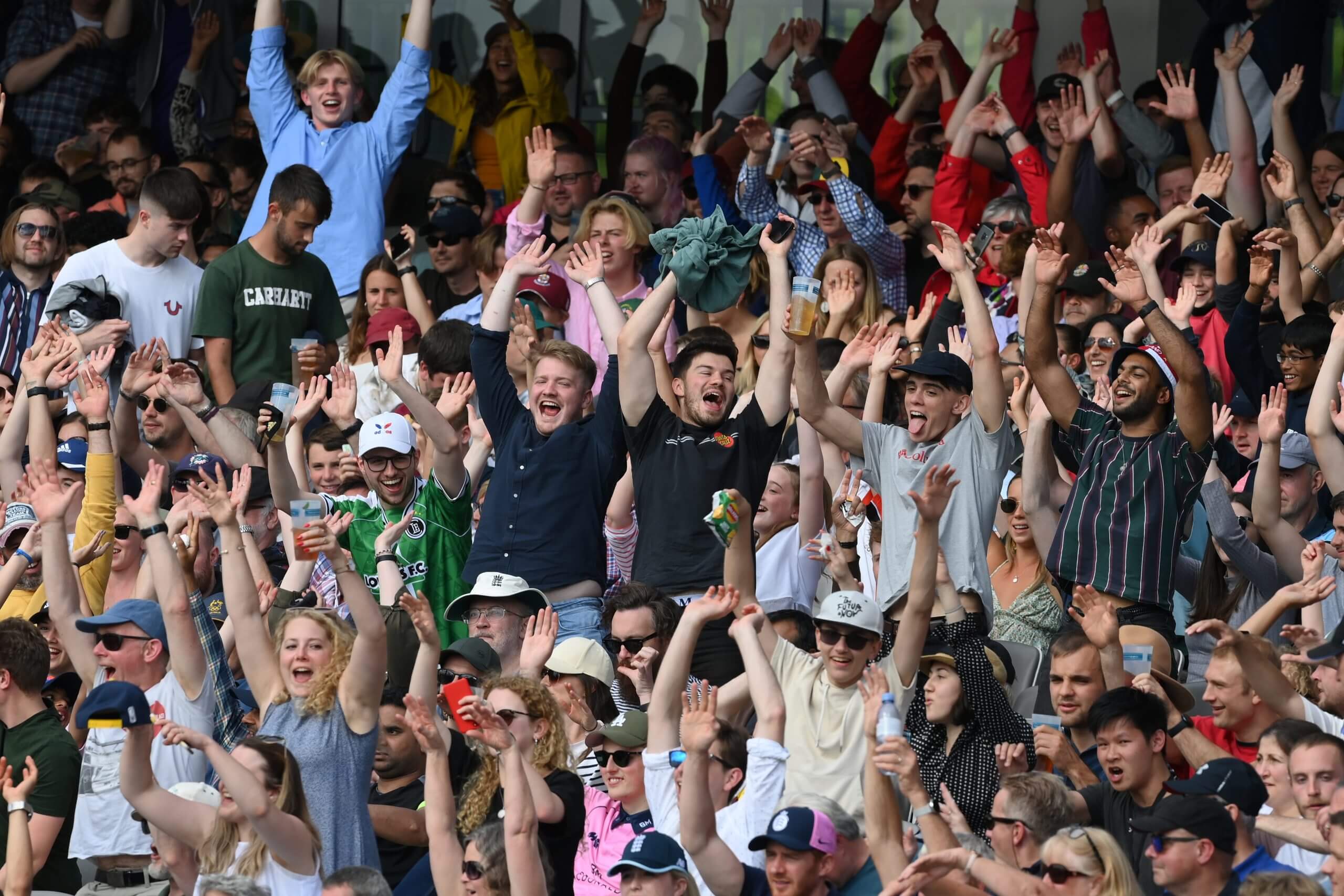
Fans take part in a Mexican wave in the game between London Spirit Women and Southern Brave Women (Mike Hewitt/Getty Images)
It was a quieter expression of the franchise’s potential than the famous guests upstairs – and the live music that had launched the season.
The Tech Titans have provided investment, additional staff and a new structure, but none offers a shortcut to building a successful team from players who had barely met when they first posed together in London Spirit colours.
Gajwani’s words after the opening defeat felt relevant again.
“We know it is a long haul,” he said. “The most important thing is that we learn.”