
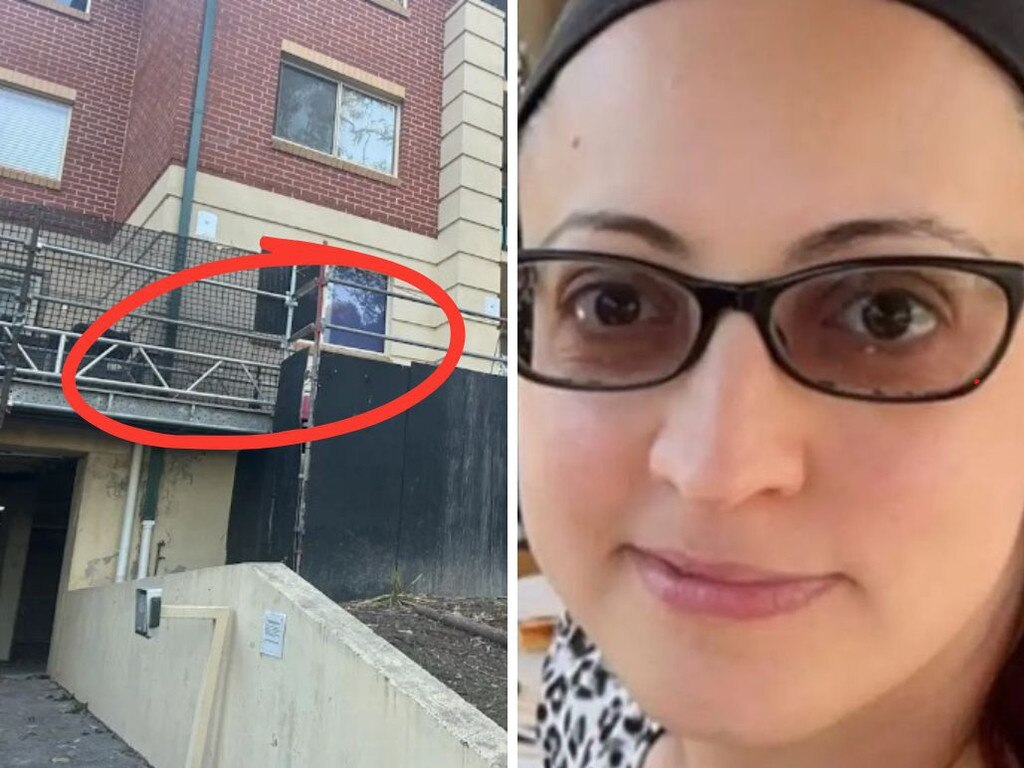
An apartment owner in Sydney’s inner west has been hit with a staggering $64,000 bill to fix defects in her building, after a strata loan left her paying thousands more in interest she says she never wanted.
Stefanie Iannelli was already bracing for a hefty cost when her apartment block was told it needed millions of dollars’ worth of waterproofing repairs.
But the shock got worse when she opened an email from her strata manager and learnt the total repair bill for the 120-unit complex had blown out to $7.5m
Her share alone came to $52,500.
Then came the sting.
MORE NEWS
Neighbours forced to pay $105k for man’s reno
‘Nightmare’: Plumber’s $10k home repair warning
‘Smile and wave’: Family quits ‘unreal’ Aussie dream
Even though Ms Iannelli said she could afford to pay the amount upfront, the owners corporation voted to take out a four-year strata loan to fund the works, meaning she was forced to cop another $12,000 in interest – taking her total bill to $64,000.
“I knew this was going to cost a lot, but I really had no idea,” she told nine.com.au.

Stefanie Iannelli has been hit with a $64,000 bill for the waterproofing.
The repairs were needed to fix water leaks and carry out extensive waterproofing, work that is generally required every 25 years.
Under NSW strata laws, a strata loan can be approved by majority vote at a general meeting. Once it gets the green light, every owner in the complex has to help repay it, whether they want the loan or not.
For Ms Iannelli, who lives alone, the financial hit has been brutal.
“The amount of money I have to put aside every fortnight, every payday, is more than my mortgage,” she said.
“The regular strata cost is $2150 (a 76 per cent increase) at the same time as the four-year strata loan started which is $4028 a quarter, so I’m paying $6179 a quarter.
“I have nothing left.”
MORE NEWS: ‘Waiting for me to die’: Woman’s 10-year home hell
The construction work at Iannelli’s complex has already begun. Source: Stefanie Iannelli
Ms Iannelli, who bought into the complex in 2007, said the ordeal had left her asking why the building had not planned for such a predictable expense.
“Why didn’t we have the funds? If things like the waterproofing do deteriorate after 25 years, why wasn’t it in the budget?” Iannelli asked.
“And here does that leave owners like me?”

The total bill, with interest, comes to $7.5 million. Source: Nine
About 15 per cent of Australians now live in strata properties, according to the latest Strata Insights Report from the University of New South Wales, meaning more households than ever are exposed to the risks of costly shared repairs.
The nightmare behind a dream balcony
In another Sydney case, apartment owner Tim McIntyre revealed his neighbours were each slugged $15,000 after a leak traced back to his giant balcony uncovered major defects.
He said he and his partner bought the unit in 2012 during a quieter patch in the Sydney market and thought they had found a bargain.
“At the open inspection for this apartment, we were the only ones there. Must be a dud, we thought upon entering,” he said.
Inside, the apartment felt small – until they discovered an enormous balcony off the second bedroom and instantly fell in love.
“Rectangle shaped, it was essentially the same size as all the internal rooms put together,” he said.
The balcony was a winning feature for a Sydney apartment owner, but it cost his neighbours a lot of money.
But weeks later, strata alerted them to complaints from a neighbour below, a mother and baby, who had damp spreading through their ceiling and walls.
The cause was eventually traced to their balcony.
A waterproofing and construction assessment found a major failure in the building membrane. Inspectors also found the balcony railing was too low to meet modern safety standards.
The result was a massive repair job involving resealing the roof garden and installing new, higher balustrades.
The price tag hit $105,000.
Source: Australasian Strata Insights | UNSW
To the horror of fellow owners, the cost was split across the building because the balcony was considered part of the external structure and therefore common property.
“One of the owners who had been there for many years blamed the damage on the former owner of our apartment, a reclusive elderly gentleman who had passed away,” Mr McIntyre said.
“Apparently his “massive pot plants” were too heavy and had no doubt caused the damage, despite having being warned by that other owner a number of times.”
In the end, apartment owners parted with thousands of dollars, while construction proved to disruptive for the mum with the baby that they were forced to find a new rental.