
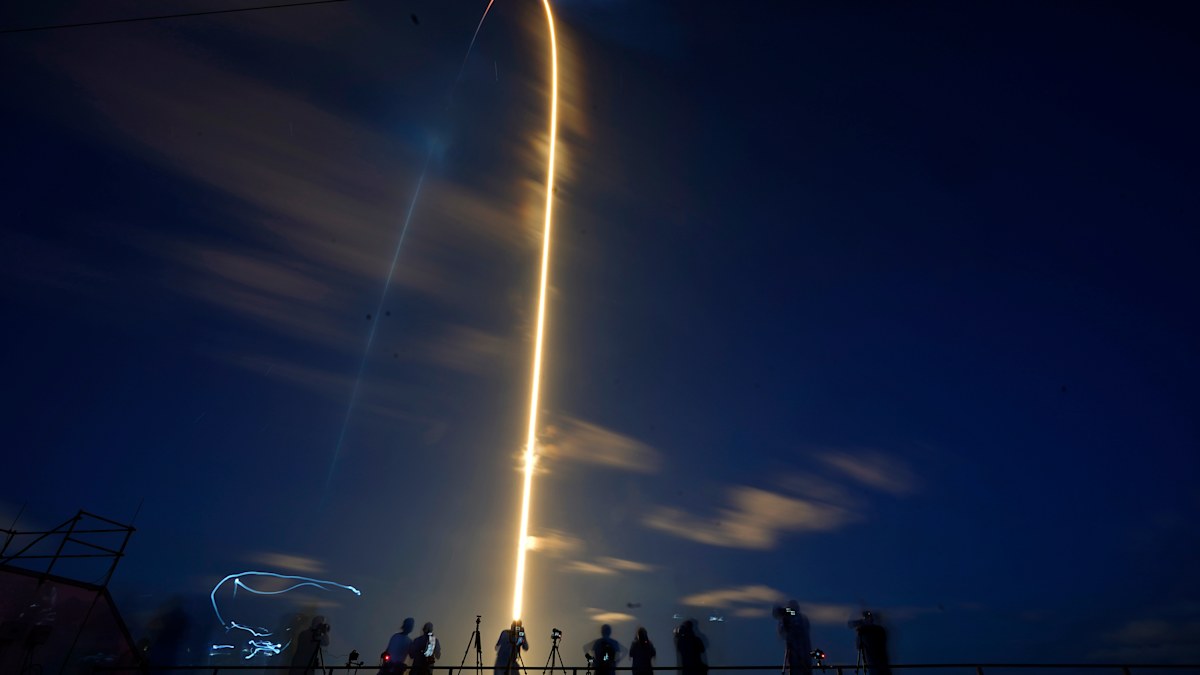
Part of a SpaceX rocket is set to crash into the moon on Wednesday in a rare event that scientists say they are watching closely.
The top section of the Falcon 9 rocket is expected to make contact at around 5.35pm AEST, after drifting through space for more than a year.
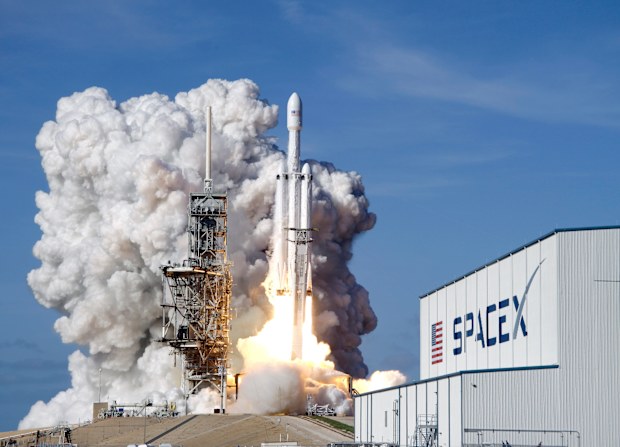
Scientists are on standby to watch the Falcon 9 crash in the hopes of learning more about the moon. AP
NASA confirmed the crash poses zero danger to Earth.
Scientists are on standby to monitor the impact in the hopes of learning how space crashes alter the moon’s surface.
The Falcon 9 originally launched in January 2025 to send two commercial landers toward the moon, with the leftover rocket hull left floating in deep space.
SpaceX director Julianna Scheiman said the company followed standard rules after the launch, but a combination of gravity and solar energy pushed the lingering rocket piece toward the moon.
“For high-energy missions, we need to perform a different manoeuvre to ensure the second stage itself is safe per the appropriate rules and regulations,” she said.
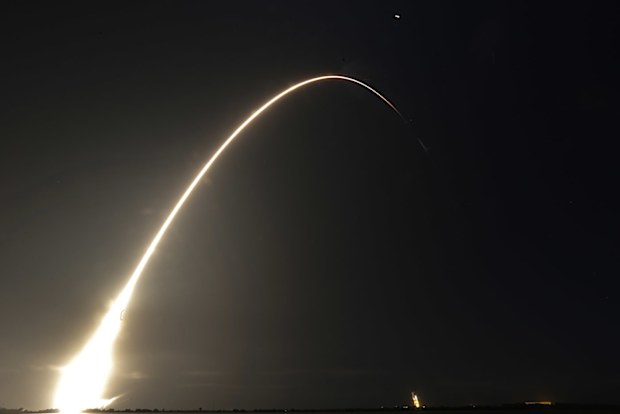
The SpaceX Falcon 9 rocket arcing over the sky after liftoff in 2025. nna\KCampbell
“We did that here for the Ispace and Blue Ghost missions’ second stage, and what has happened is essentially a mixture of solar activity and gravity forces have put it on a path towards the moon.”
Independent astronomers first spotted the collision course using public tracking data, which NASA later confirmed.
Researchers estimate the rocket stage will hit the moon at about 8750 km/h, leaving a crater between 20 and 30 meters wide.
While the impact itself will last only a second, scientists hope telescopes will capture the cloud of debris thrown into space.
The collision will not be visible to the naked eye, and there will be no public livestream. However, NASA teams are expected to photograph the aftermath.
Professor of astronomy and physics at Western University in Canada Dr. Paul Wiegert said tracking the crash will be critical as space agencies prepare for long-term human missions.
“What happens when an object crashes into the moon? We know it makes a crater, and of course it does eject material, but we don’t really understand that process in great detail,” he said.
“And now that we have more spacecraft, and soon to have astronauts on the moon, we really want to understand that process better.”
SpaceX says it is already working alongside NASA and other space agencies to refine disposal methods for future deep-space missions.
“As a scientist, I also am very excited to see the observation,” Scheiman said.
“But it’s one of the things that we’re working in partnership with NASA and the other appropriate agencies: What is the best future disposal path for high-energy missions that are in the sun-Earth-moon system?”
– CNN