
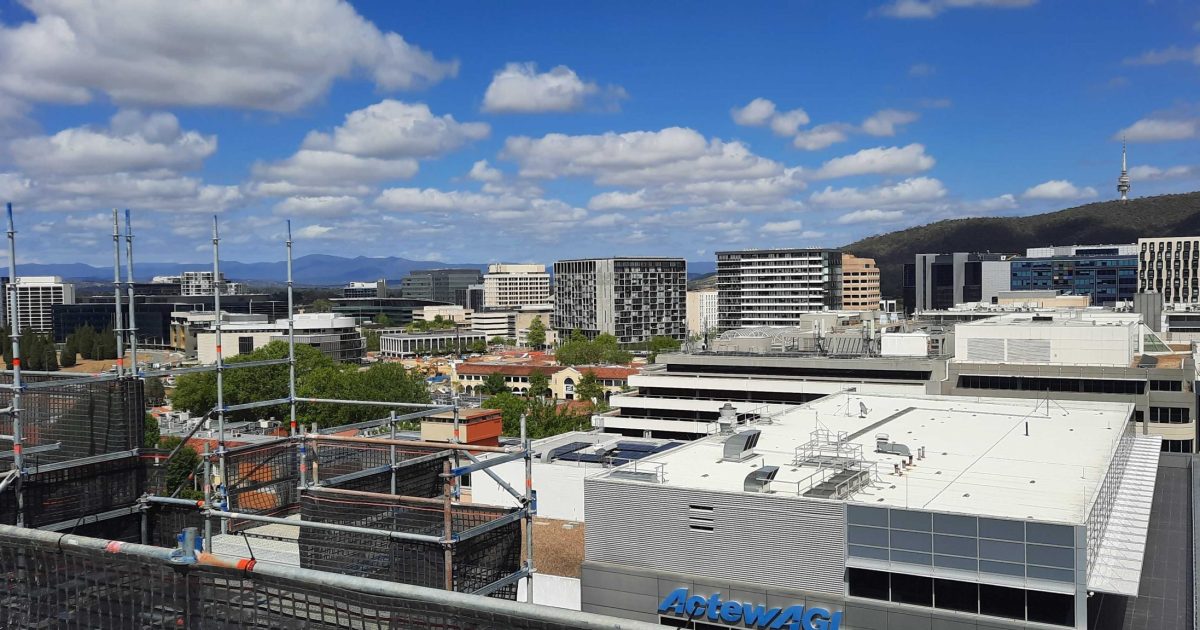
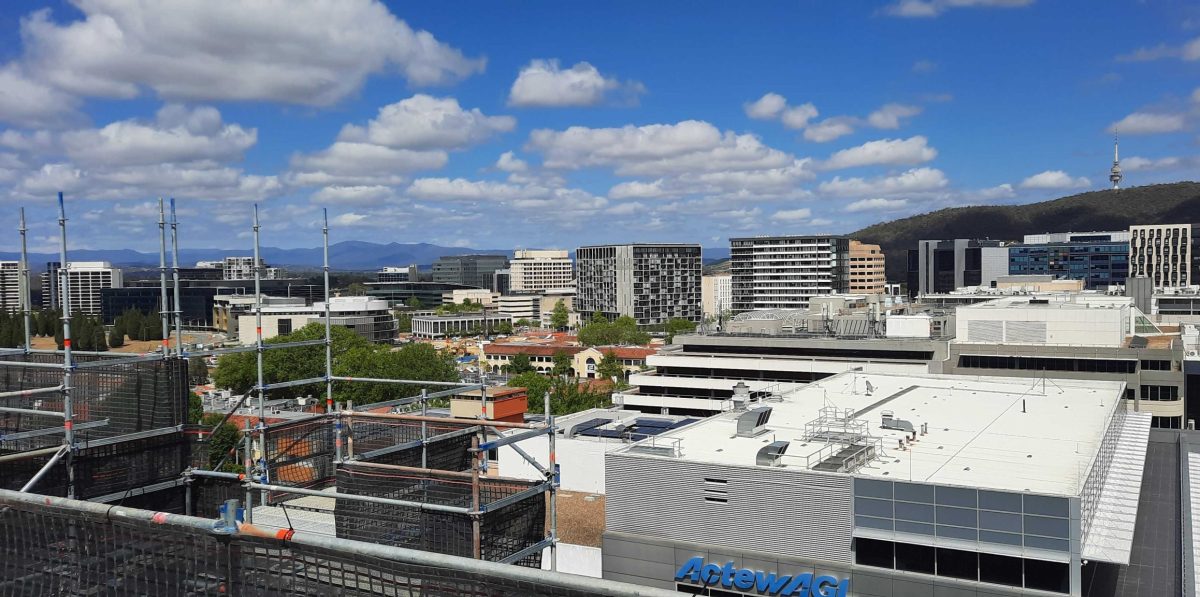
Canberra’s CBD has too many empty offices. Photo: Ian Bushnell.
The office vacancy rate in Canberra’s CBD has more than doubled in the past six months, highlighting big challenges for what should be the national capital’s commercial anchor.
The latest Property Council of Australia Office Market Report shows vacancy in Civic increased from 12.0 per cent to 26.4 per cent, driven by 116,934 sqm failing to attract interest, while the broader non-Civic market remained relatively stable, increasing only modestly from 9.4 per cent to 9.6 per cent despite substantial new supply.
Property Council ACT & Capital Region Executive Director Ashlee Berry said Canberra remained one of the nation’s most important office markets, but the latest results highlight the challenges facing the city centre.
“While the broader market has proven relatively resilient, vacancy in the city centre has increased significantly, and that has implications for businesses, workers and city vitality,” Ms Berry said.
“If Canberra wants to function as a network of thriving centres, Civic must remain the anchor.
“A strong city centre supports investment, employment, retail activity and confidence across the entire territory.”
Overall, new supply and lack of market interest pushed the city-wide vacancy rate from 10.2 per cent to 14.7 per cent.
Changes in public service conditions, including more staff working from home, have reduced demand for office space and contributed to increased vacancy.
Ms Berry said the relatively constrained development pipeline provided an opportunity for the market to stabilise over the coming years.
Only 15,000 sqm of new space is scheduled to enter the market in the second half of 2026, followed by 40,113 sqm in 2027. A further 74,919 sqm is expected from 2028 onwards, with 162,984 sqm currently mooted.
“With limited supply coming online over the next 18 months, there is an opportunity to focus on improving demand, supporting office attendance and creating the conditions that encourage investment back into the city centre,” Ms Berry said.
She called on the ACT Government to support this window of opportunity through planning reform, backing building renewal, progressing Lease Variation Charge reform and measures that improved the attractiveness and vibrancy of Civic.
Ms Berry said the results also reinforced the divergence between different types of office stock.
The report shows A Grade vacancy increased from 8.4 per cent to 13.6 per cent, while B Grade vacancy increased from 11.0 per cent to 19.3 per cent.
C Grade was the only segment to record an improvement, with vacancy falling from 14.5 per cent to 13.7 per cent following positive net absorption, or more space being occupied than vacated, and building withdrawals.
Ms Berry said that not all parts of the market were moving in the same direction.
“The fact that C Grade vacancy improved shows there is still demand for the right product in the right location, but owners need policy settings that support reinvestment, refurbishment and renewal,” she said.