
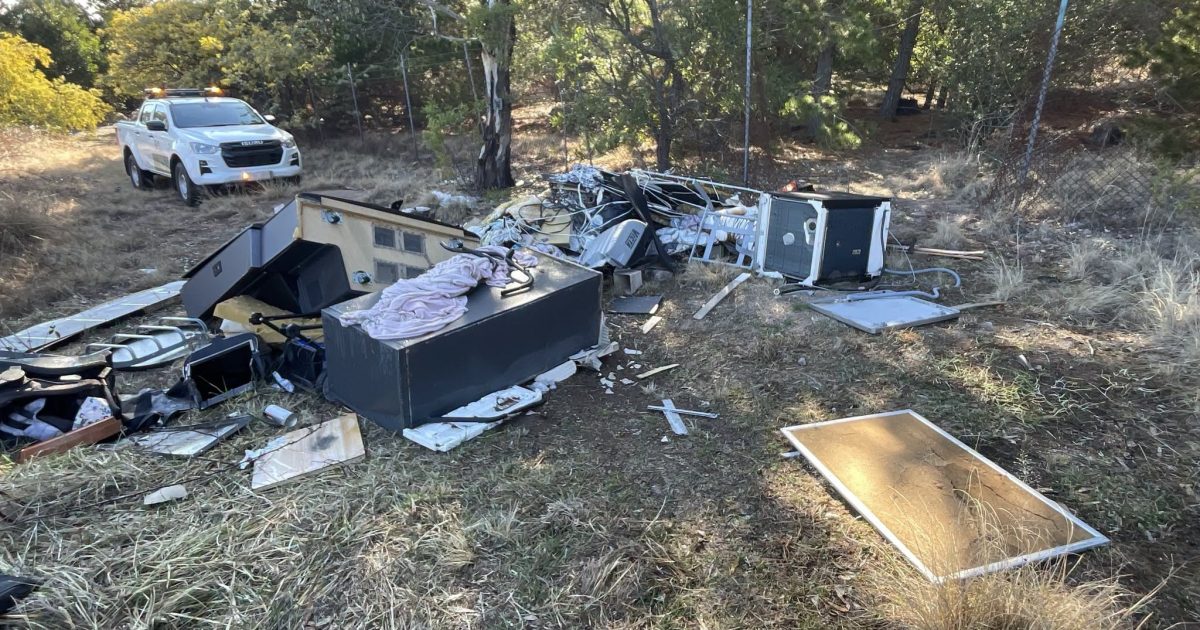
There have already been more than 2750 reports of illegal dumping to Fix My Street this year. Photo: ACT Government City Services.
Abandoned mattresses, wooden pallets and rotting rubbish – these are just some of the materials being dumped on Canberra’s roadsides and outside homes.
The Fix My Street reporting system has been overhauled in recent years to funnel information to the correct teams, reduce repeat requests for the same job, improve location options so jobs are easier to find, and enhance communication with the person who made the report.
Deputy head Yu-Lan Chan is proud of the improvements so far.
“The operational crews around here have better information now to group things. So there might be a number of tree issues that are reported. Now that operational tree team can go … ‘There’s a couple of [jobs] on the north side, we can group them, we can see this one needs a chipper and this one needs something else’,” she explained.
“They can actually plan all of that and plan it so they just go to one area and do all those jobs in one. Previously, that needed a lot of manual collation.”
Access Canberra is receiving upwards of 45,000 reports across 119 categories.
It’s up to its teams to address these issues, but they’re not sitting around waiting for reports to come in.
Fix My Street requests need to be fitted around their regular duties, including maintaining verges, fixing streetlights, litter picking, cleaning public toilets and mowing and trimming trees (among much, much more).
Place Management director Tessa Roberts said jobs are triaged based on the information provided.
“We will assess it for public safety as the first thing … and then we prioritise it based on what impact it will have on the public,” she explained.
“So if it’s something broken in a public toilet, we know that the public need those facilities, so we’ll go out and do that pretty instantly.
“But if it’s a dumped mattress or whatever that’s in a parkland that isn’t causing a public safety concern, then that would take a bit longer.”
One issue that can get Canberrans’ blood boiling (along with long grass and potholes) is illegal dumping.
There were 2480 Fix My Street requests regarding illegal dumping in 2025 (a 35 per cent increase on 2024), and 1349 of those were considered medium or large dumps.
Already in 2026, there have been 2757 requests.
Members of the public aren’t expected to examine an illegal dump to see if it contains hazardous items, but an eyesore isn’t a reason for teams to go out straight away.
First, the size of the pile will call for different resources.
“We’ve got utes and smaller vehicles … [they] can only pick up a certain amount,” Ms Roberts said.
“Quite often we won’t know what’s in the dump until we’re there doing it.”
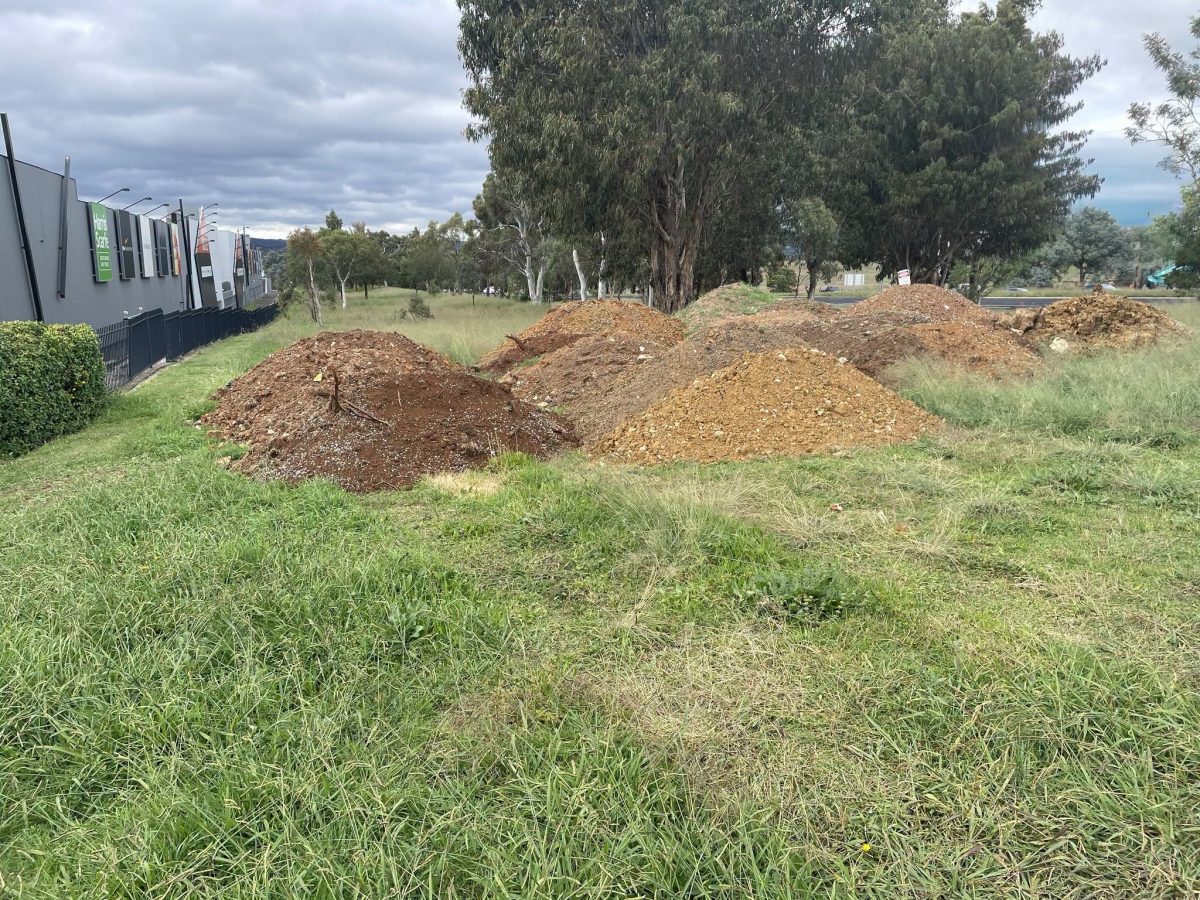
Illegal dumping diverts resources away from scheduled work of Access Canberra teams. Photo: ACT Government City Services.
Acting City Presentation executive branch manager Sue Marriage said it wasn’t difficult to pick up an abandoned chair or bag of rubbish, but medium and large loads take much more effort.
“They can often take two people and a truck nearly the whole day to be able to clear all of these illegal dumps and take them to the tip,” she said.
“So those crews that should be out there trimming trees, doing the things that actually beautify the city, we’re instead doing activities like picking up people’s rubbish.”
Illegal dumping’s an especially tough problem for Canberra – and every city – because of the huge diversion of resources.
The government still has to pay the fees to dispose of such material at the tip.
And there’s another reason why dumped rubbish may be left for weeks on end.
“We limit the response to illegal dumping where we can so as not to incentivise it,” Transport, Territory and Municipal Services deputy director-general Bruce Fitzgerald said.
“If people see responsiveness to mattresses dumped by the side of the road, that becomes the default answer as to how you dispose of a mattress, and that would be a significant cost, a diversion of resources that we simply can’t afford.
“So there’s always that balance for us.”

Does your home need a freshen up? Get a new coat of paint with Canberra’s best house painters.
Covert operations are used at hotspots to issue fines, and the ACT has a free bulky waste program (for up to 2 cubic metres of material), but it only had a 10 per cent take-up rate in 2025.
“It’s a great service, but unfortunately, it just hasn’t cut through like we’d like it to,” Mr Fitzgerald said.
“It’s not necessarily that people don’t know that the service is available; it’s often the fact that they’ll go out there, it’s a sunny Saturday morning, and they just want to get rid of something then and there.
“Because we use a bookable service, it might be four to five months before the service actually comes to your door, and so people take the easy way out, which is to dump it.”
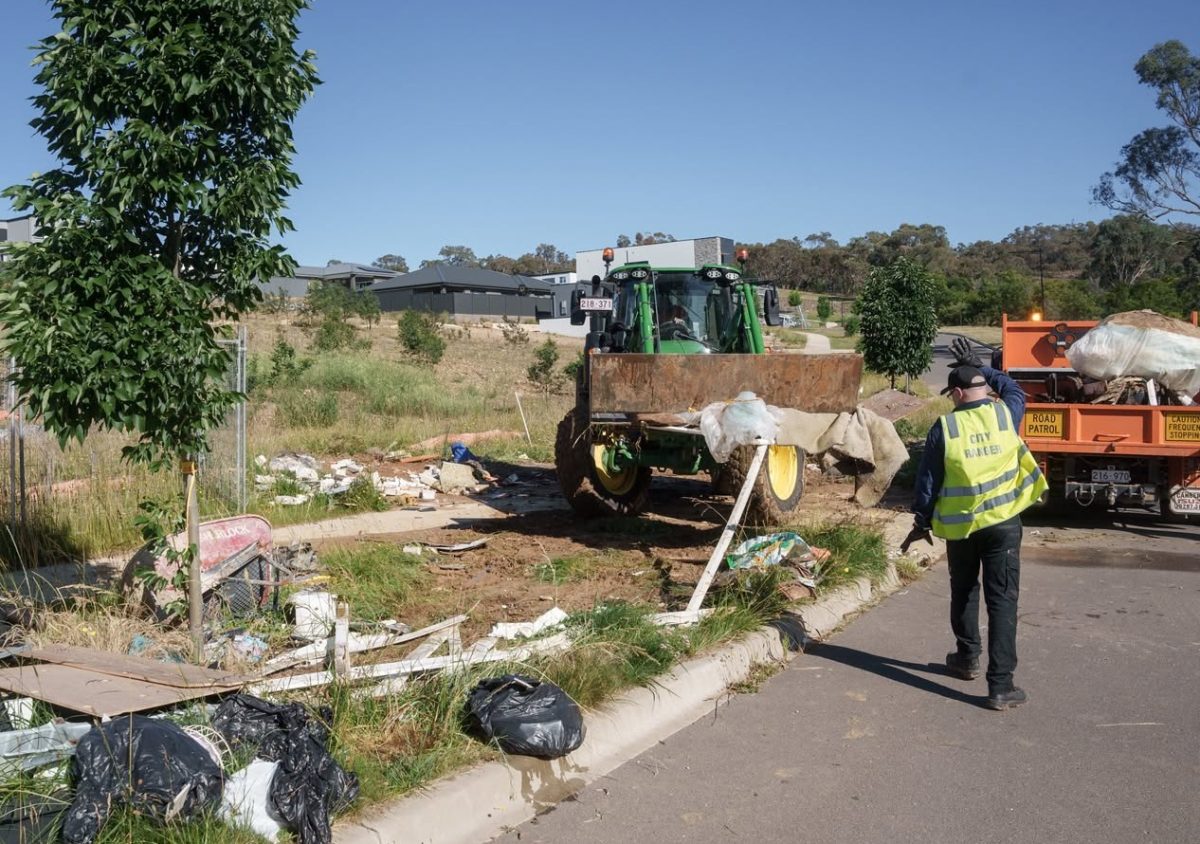
Illegal dumping continues to be a problem across Canberra. Photo: ACT Government City Services.
Access Canberra continues to work on ways to improve its systems, streamline processes and ensure jobs can be responded to quickly.
The backlog of Fix My Street requests has reduced from 38,000 open jobs to 18,000 for 2024-25, and the average time to close a job has reduced to 15 days.
One way Canberrans can find out whether an issue is actually part of upcoming works is to check online.
The City Services website now lists the upcoming program for each region.
Despite the work, Canberrans are encouraged to keep letting the teams know what needs to be done.
“There is often a misunderstanding as to what’s been reported and what is causing a risk of harm to the community,” Mr Fitzgerald said.
“If we don’t get reports … there’s no general way for us to pick that up, so we still encourage people to report as they’ve seen issues.”