
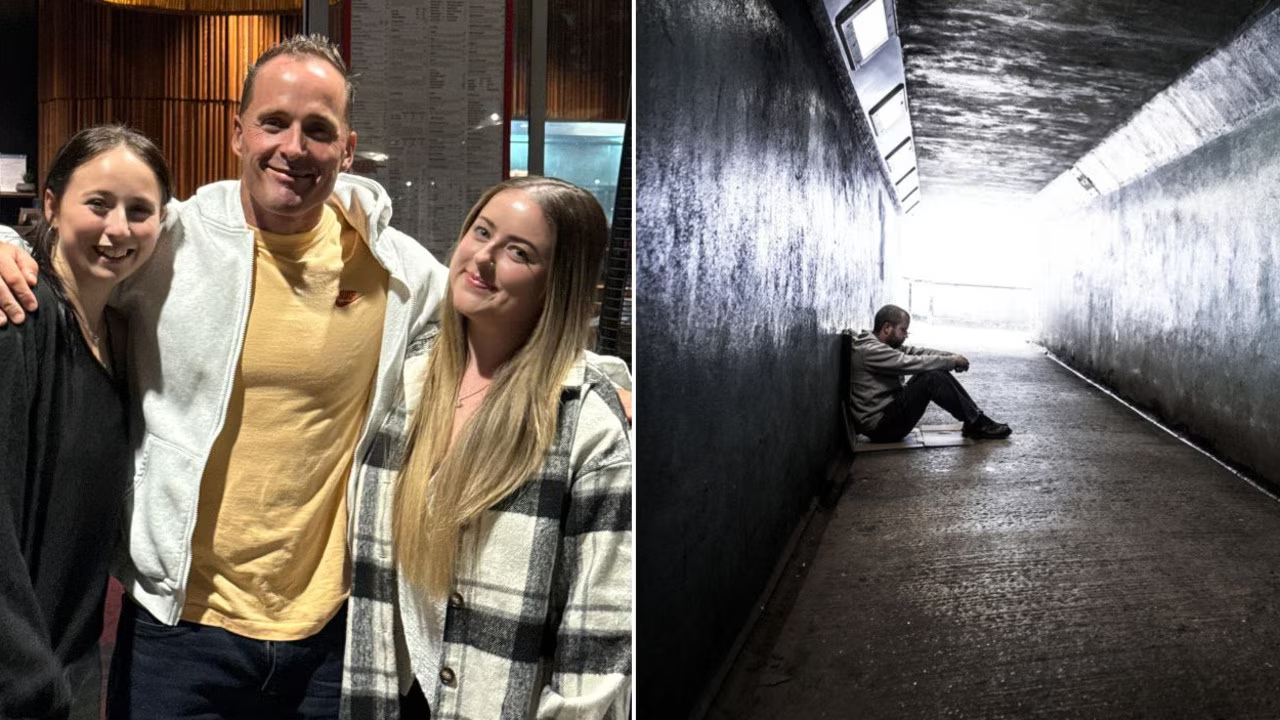
For more than 20 years, Casey’s life was defined by a cycle of addiction, incarceration and life on the streets.
But today, the 48-year-old lives in his own place in Sydney, and works at a foster house and shelter, supporting 60 men who are battling the very same challenges he once faced.
With national figures revealing more than 122,000 Australians are currently experiencing homelessness, Casey wants this Homelessness Week to serve as a reminder that ending up on the streets is never a choice.
Instead, he says it is almost always the result of deeply unfortunate circumstances and systemic issues.
Growing up in a violent household with a father who was an addict, Casey says a series of systemic issues, childhood trauma and abuse ultimately led to him being homeless.
“I didn’t have the best start at life and I started using drugs at 20 years old,” he told news.com.au.
Trapped in a cycle of substance abuse and housing instability, it took more than two decades for him to finally reach a turning point.
“At 42 years old I finally had enough. I didn’t like the person I’d become,” he admitted.
“Out of desperation I went to a rehab.”
Now, five and a half years clean, Casey’s life is unrecognisable.
After working jobs as a forklift driver and volunteering, he is now financially responsible, has travelled the world, and is even gearing up to hike to Mount Everest Base Camp.
But for Casey, his greatest achievement is reconnecting with his family. He now shares a “beautiful relationship” with both of his daughters.
“I’ve got my daughters back in my life, I’ve got my own place and I go to regular recovery meetings,” he said.
“I’ve been there when they needed me since I’ve been clean.”
‘Nobody makes a decision to become homeless’
As Homelessness Week wraps up across the country, Casey’s story highlights the complex issues that can cause homelessness.
“Nobody makes a decision to become homeless,” he said.
“There’s so many people who are homeless, some of them have had really hard lives, maybe they’ve made a mistake or things haven’t gone their way.
“Sometimes it can be family breakdowns, mental health or upbringing.”
It’s exactly this complex web of challenges that charities like The Salvation Army are seeing play out across the country on an unprecedented scale.
Over the past year alone, almost 289,000 people sought support from the organisation’s homelessness services.
The charity’s head of homelessness Dr Jed Donoghue told news.com.au that what might surprise people the most is that the crisis is no longer just confined to those sleeping rough.
With the cost-of-living biting, working people, families, and older women are now being pushed to the brink too.
In fact, contrary to common perceptions, rough sleeping accounts for only around six per cent of homelessness in Australia.
The most common form is actually overcrowded housing, which impacts around 40 per cent of people experiencing a crisis.
“Homelessness is about much more than sleeping rough. People are living in cars, couch surfing or staying in overcrowded homes because they have nowhere else to go,” Dr Donoghue said.
Bridging the gap
To bridge the gap and stop vulnerable Australians from falling through the cracks, the charity is calling on governments and communities to take urgent action.
The Salvos say society needs to shift its approach, urgently calling for an increase in the supply of social and affordable housing, early intervention programs, and a “Housing First” approach that prioritises permanent accommodation.
Crucially, the charity says greater investment is needed in wraparound support services to help people sustain long-term housing and overcome the systemic issues that led them there in the first place.
For Casey, giving back and supporting those still struggling is a vital part of his own ongoing recovery.
By introducing the men in his shelter to recovery meetings if they are open to it, he hopes to guide them toward the same second chance he was given.
“I listen to the stories of others, show them that I understand and I walk with them through their challenges and changes they might need to make,” Casey said.
“One thing I learned is that for me to heal and get well, I need help but I also needed the willingness to change.”
For more information on how you can help, or if you need support, visit The Salvation Army Australia website or call 13 SALVOS.