
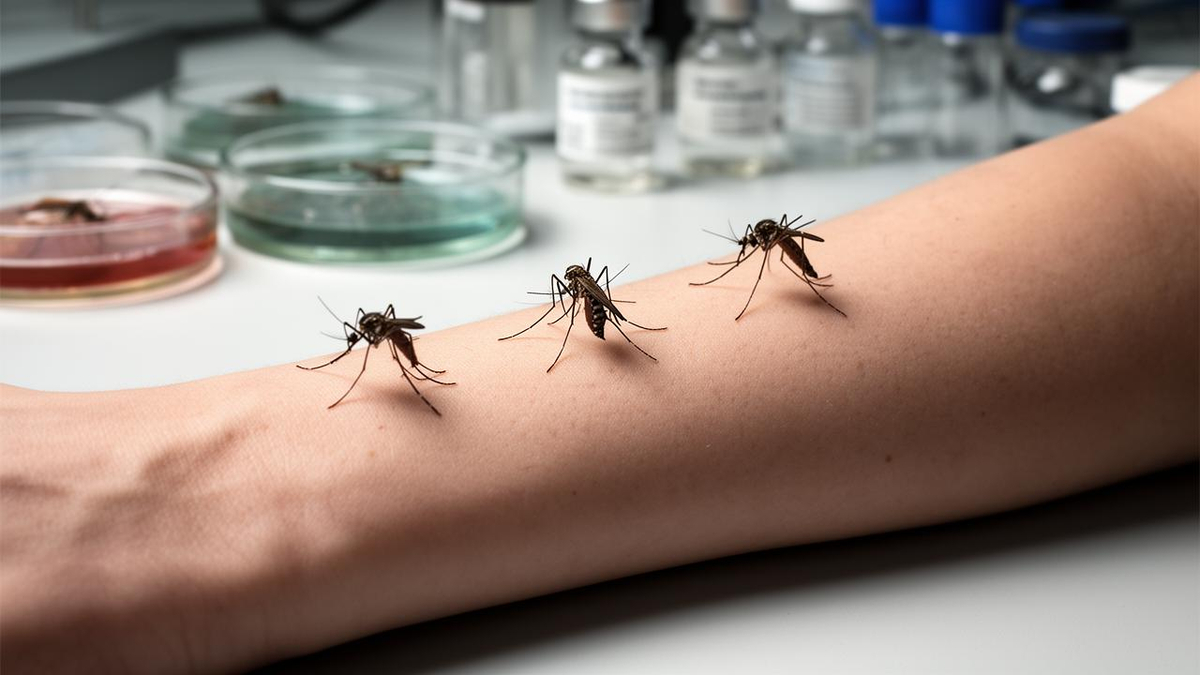
For those who seem to suffer disproportionately from mosquito bites during summer outdoor activities, a scientific explanation for the so-called “mosquito magnet” phenomenon has partially emerged. New research indicates that no single person is universally attractive to all mosquitoes, as different species are drawn to distinct body odors and skin microbiomes.
A research team from Florida International University (FIU) published the results of a mosquito attraction experiment involving 119 adults in the international scientific journal iScience on the 9th (local time). The team precisely measured how strongly three major disease-carrying mosquito species—Aedes aegypti, Aedes albopictus, and Culex quinquefasciatus—were drawn to each individual.
The experiment confirmed that certain people are indeed significantly more prone to bites from specific mosquito species. However, not a single participant qualified as a “universal mosquito magnet” exhibiting high attractiveness to all three species. Some participants strongly attracted Aedes aegypti but were relatively less appealing to Aedes albopictus or Culex quinquefasciatus, while others showed the opposite pattern. The research team interpreted this to mean that “each mosquito species evaluates humans using different criteria and prefers different groups of people.”
The correlation analysis of preferences across species also yielded intriguing results. Aedes aegypti and Aedes albopictus showed a somewhat similar tendency to be attracted to the same individuals, but the correlation strength was weak. In contrast, almost no correlation in individual attractiveness was found between Aedes aegypti and Culex quinquefasciatus, or between Aedes albopictus and Culex quinquefasciatus. This suggests that mosquitoes may have evolved to use different chemical cues when locating hosts.
The key variables identified in this study were human body odor and skin microbiota. Mosquitoes locate their blood-meal targets by integrating multiple sensory inputs, including carbon dioxide (CO₂), body odor, visual cues, humidity, and heat. Human body odor, in particular, consists of a complex blend of over 1,000 volatile organic compounds (VOCs), many of which remain uncharacterized.
The microbial communities living on human skin break down sweat and sebum components to produce unique volatile compounds, which is why each person has a distinct body odor. When the research team analyzed the skin microbiomes of the 119 participants, they identified a staggering 246 bacterial taxa, yet only a single bacterial species was common to all participants. The composition of bacterial taxa also differed markedly between individuals with high versus low attractiveness to each mosquito species.
Specific links to body odor components were also revealed. Attractiveness to Aedes aegypti and Culex quinquefasciatus was associated with individuals who had lower levels of certain odor compounds, such as cyclic alcohols and monoterpenes. Conversely, Aedes albopictus tended to be more attracted to people with abundant ketone-based odor compounds. This indicates that the sensitivity of chemical receptors varies across mosquito species.
Gender-based differences were only significantly observed in Aedes aegypti. The average attraction rate for this species was 91.5% for males and 87.4% for females, a 4.1 percentage point difference in favor of males. No statistically significant gender differences were found for Aedes albopictus or Culex quinquefasciatus.
The mosquito species used in the experiment hold significant public health importance, as all are capable of transmitting deadly infectious diseases. Aedes aegypti and Aedes albopictus spread flaviviruses that cause dengue fever, Zika virus, and yellow fever. Culex quinquefasciatus is known as the primary vector for West Nile virus. The research team believes these findings will serve as crucial foundational data for formulating infectious disease prevention strategies, extending beyond the simple question of “who gets bitten more.”
The team emphasized that if future research can more precisely identify which specific odor compounds attract or repel particular mosquito species, it could lead to groundbreaking advances in developing species-specific repellents and strategies to combat mosquito-borne diseases. The study has been praised for moving beyond conventional wisdom that attempts to explain mosquito bites through single factors like blood type or body temperature, instead providing scientific evidence that body odor, skin microbiota, and the sensory characteristics of mosquito species interact in a complex manner.