
The two teams will take each other on in Tokyo over the weekend, pitting a nation that intended to cultivate local talent against one that favored competition.
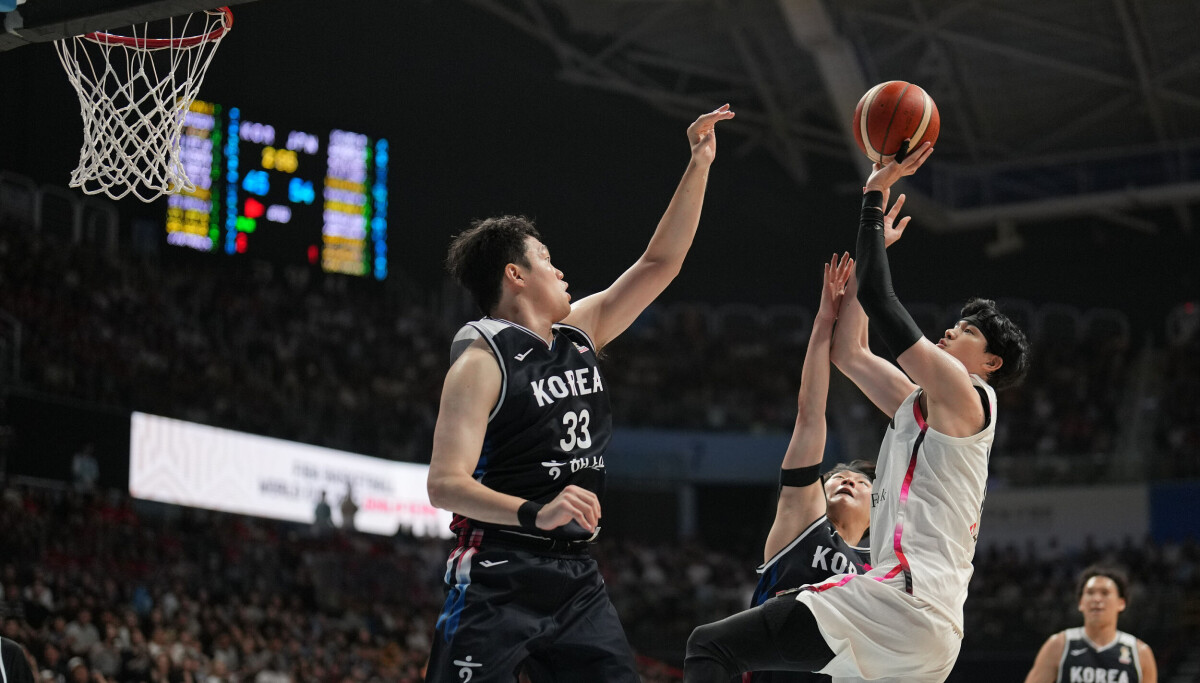
Japan’s Yuta Watanabe, right, shoots over Korea’s Lee Seoung-hyun during the FIBA World Cup 2027 Asian first round qualifier Group B basketball match between Korea and Japan in Goyang on July 6.
AP/YONHAP
Korea plays Japan twice in Tokyo this weekend, and Japan has named the strongest squad it has assembled since the 2024 Paris Olympics.
Forward Rui Hachimura, who signed a two-year, $28 million contract with the Los Angeles Clippers last month, returns to the Japanese national team for the first time since those Games. Guard Yuki Kawamura and forward Yuta Watanabe are also on the 14-man roster the Japan Basketball Association named on Aug. 3.
Kawamura spent last season with the Chicago Bulls and signed a nonguaranteed training camp deal with the Clippers on Sunday, which will put the two Japan teammates in the same camp in Los Angeles. Watanabe ended his NBA career with the Memphis Grizzlies and now plays for the Chiba Jets.
Both games are at Ariake Arena in Tokyo. The first falls on Saturday, which is Liberation Day in Korea, marking the end of Japan’s 1910-45 colonial rule, and the second on Sunday.
Korea and Japan have also been drawn together in Group A of the men’s basketball tournament at next month’s Aichi-Nagoya Asian Games, along with Saudi Arabia and Indonesia.
The upcoming weekend gives Korea an early look at an opponent it will meet again in Nagoya, where the group stage starts on Sept. 10.
The two countries split their meetings this year. Japan won 78-72 in Okinawa on March 1 in the second window of Asian qualifying for the 2027 FIBA World Cup. Korea took the return game 81-79 in Goyang, Gyeonggi, on July 6 and reached the second round of qualifying for the first time in seven years.
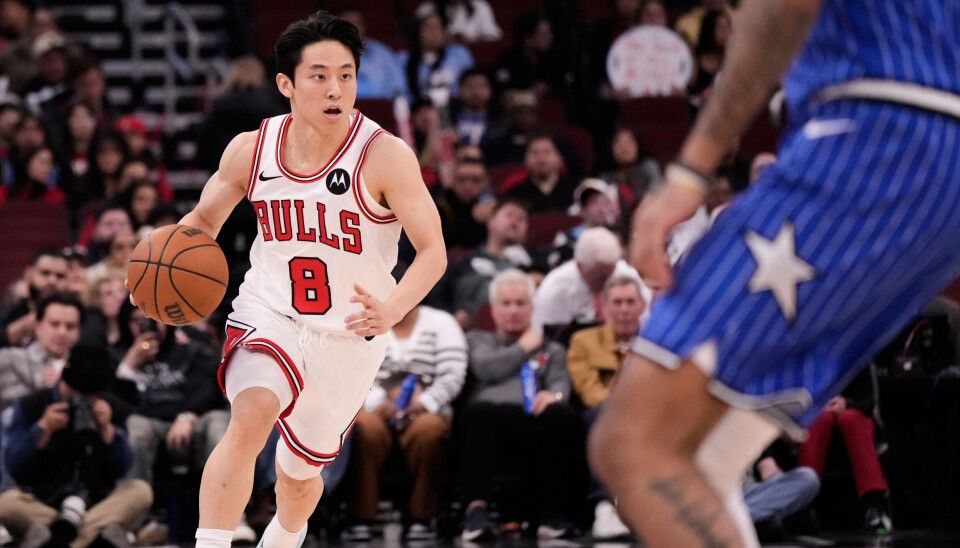
Chicago Bulls guard Yuki Kawamura drives against the Orlando Magic during the second half of an NBA basketball game in Chicago on April 10.
AP/YONHAP
Korea ranks 57th on the FIBA world list published on July 13, 35 places below Japan in 22nd. Australia, in seventh, is the only team in FIBA’s Asian zone ranked above Japan.
The gap in the rankings traces back to the league Japan built. The B.League began in 2016, nearly two decades after Korea’s KBL started in 1997, and was rated the weaker competition at the time. It closed the distance by rebuilding its finances first. Unlike Korean clubs, which have leaned on backing by corporate parents, B.League clubs tied themselves to 40 to 50 small and midsize businesses in their home regions and built a revenue base of their own. That money paid for foreign players with NBA experience. The standard of play rose, and so did attendance.
The rules pushed in the same direction. From the league’s first season, B1 clubs could put as many as two foreign players on court at once, depending on the combination they declared for each quarter. Under the restructuring that starts in the coming season, clubs may register three and put all three on court together, alongside a naturalized player or one signed through the league’s Asian quota. Japanese players had to fight for playing time against that competition.
Japan also built a pyramid. The B1, B2 and B3 divisions ran with promotion and relegation across roughly 55 clubs, which gave prospects somewhere to play, much as the three-tier J.League system did for Japanese football.
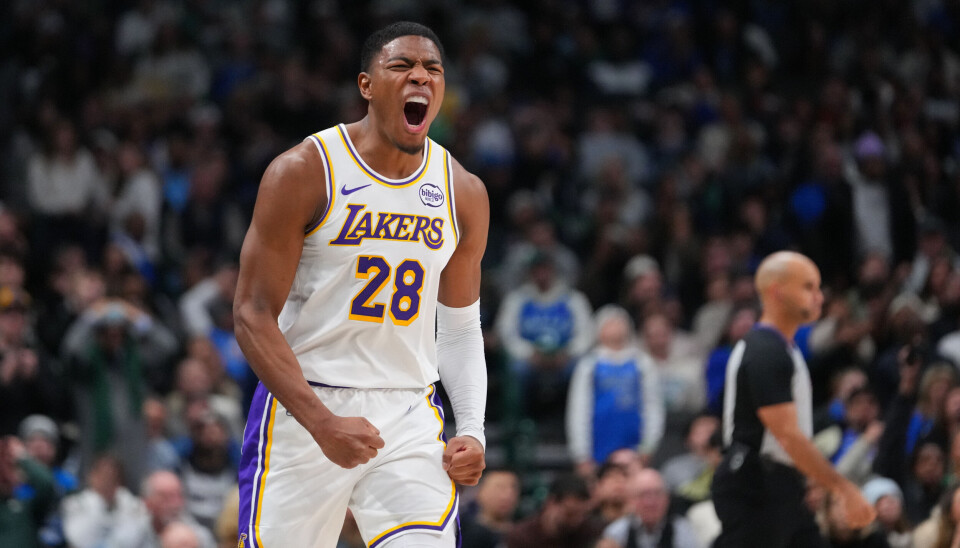
Los Angeles Lakers forward Rui Hachimura reacts after scoring against the Dallas Mavericks during the second half of an NBA basketball game in Dallas on Jan. 24.
AP/YONHAP
Korean basketball went the other way. In the name of protecting domestic players, the KBL capped the number of foreign players a club could sign and, for years, how tall they could be. The height limit was scrapped before the 2019-20 season.
Ahn Jun-ho, who coached Korea’s national team until his contract expired last year, said the difference is structural rather than a matter of talent.
“The B.League has a system in place that keeps producing stars and prospects,” Ahn said. “The players who survive that fierce competition go on to test themselves on the world stage, including in the NBA, and then become the backbone of the national team. It is a structure in which both grow together.”
Japan is changing the structure again from the coming season. The top tier becomes B.League Premier, a 26-club competition across two divisions with no promotion or relegation based solely on results. Entry and expansion are tied instead to club finances, arenas and other licensing standards. The plan behind it is a competition second in size only to the NBA, which has 30 teams.
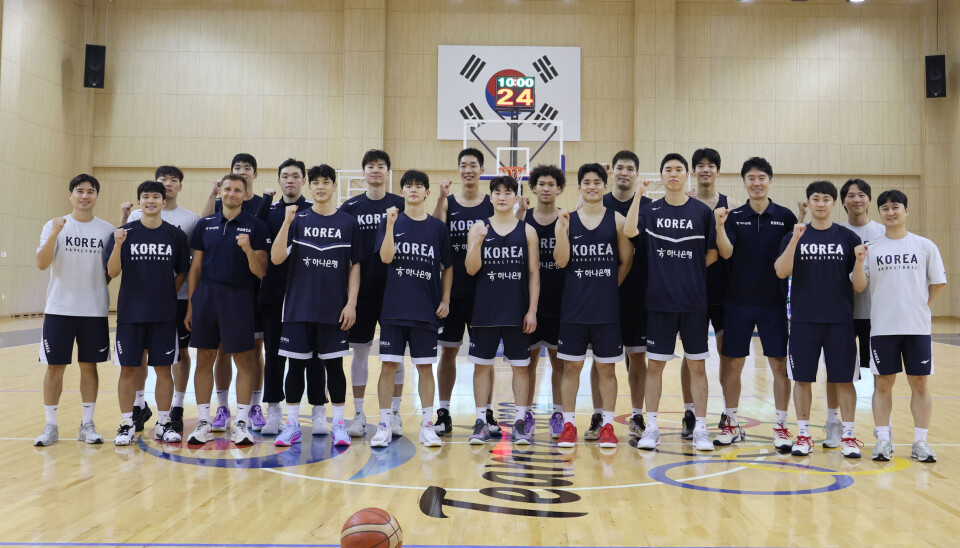
Korea’s men’s basketball players and head coach Nikolajs Mazurs pose at the Jincheon National Training Center in Jincheon County, North Chungcheong, on Aug. 3, during training for next month’s Aichi-Nagoya Asian Games.
YONHAP
Korea has not had a player in the NBA since center Ha Seung-jin, whom the Portland Trail Blazers took 46th overall in the 2004 draft. He played two seasons in Portland and remains the only Korean to have appeared in the league.
Forward Choi Jun-yong, the 2022 KBL most valuable player, announced on July 29 that he would move to the United States to chase a place in the NBA G League. He is going without an institutional pathway behind him, though his club, Busan KCC Egis, agreed to hold his contract open while he tries.
Korea’s best player will not be in Tokyo either. Forward Lee Hyun-jung led Nagasaki Velca to its first B.League title last season and was named the playoff’s most valuable player, then played in the Summer League for the San Antonio Spurs. He left for the United States on Thursday for minicamps with the New Orleans Pelicans and the Boston Celtics, each of which has one two-way contract slot open, and the Korea Basketball Association approved the trip. He rejoins the national team in Lebanon on Aug. 20, a week before Korea’s next World Cup qualifier.
BY PIH JU-YOUNG [cho.yongjun1@joongang.co.kr]
This article was originally written in Korean and translated by a bilingual reporter with the help of generative AI tools. It was then edited by a native English-speaking editor. All AI-assisted translations are reviewed and refined by our newsroom.