
Cricket Australia are set to make a key change to the Sheffield Shield summer, in a bid to improve conditions for batters.
Collapses were a staple of the 2025/26 Ashes series, with Tests in Perth and Melbourne over inside two days in a disaster for both cricket fans and CA’s bottom line.
Things weren’t much easier in domestic cricket, with just one batter – NSW’s Jack Edwards – making more than 250 runs with an average of over 50, and 30 per cent of games finishing inside three days.

Also of concern is the dominance of seam bowlers, with only Todd Murphy, Corey Rocchiccioli and Mitchell Swepson representing spin-bowling in the season’s top 27 wicket-takers.
Watch every ball of Australia vs. Bangladesh Test Series live and ad-break free during play with Fox Cricket on Kayo | New to Kayo? Join now and get your first month for just $1.
The Shield final was similarly fast bowler-led, with neither champions South Australia nor Victoria passing 261 in either innings at the normally sedate Junction Oval in Melbourne and spin accounting for just 27 of the match’s 300 overs.
Amid concerns over the future of Australia’s Test batting order and spin-bowling stocks, CA will act ahead of the 2026/27 Shield season, according to SEN’s Tom Morris.
Among the changes is an increase of 15 minutes to the middle session of every day’s play, which will now run for two hours and 15 minutes.
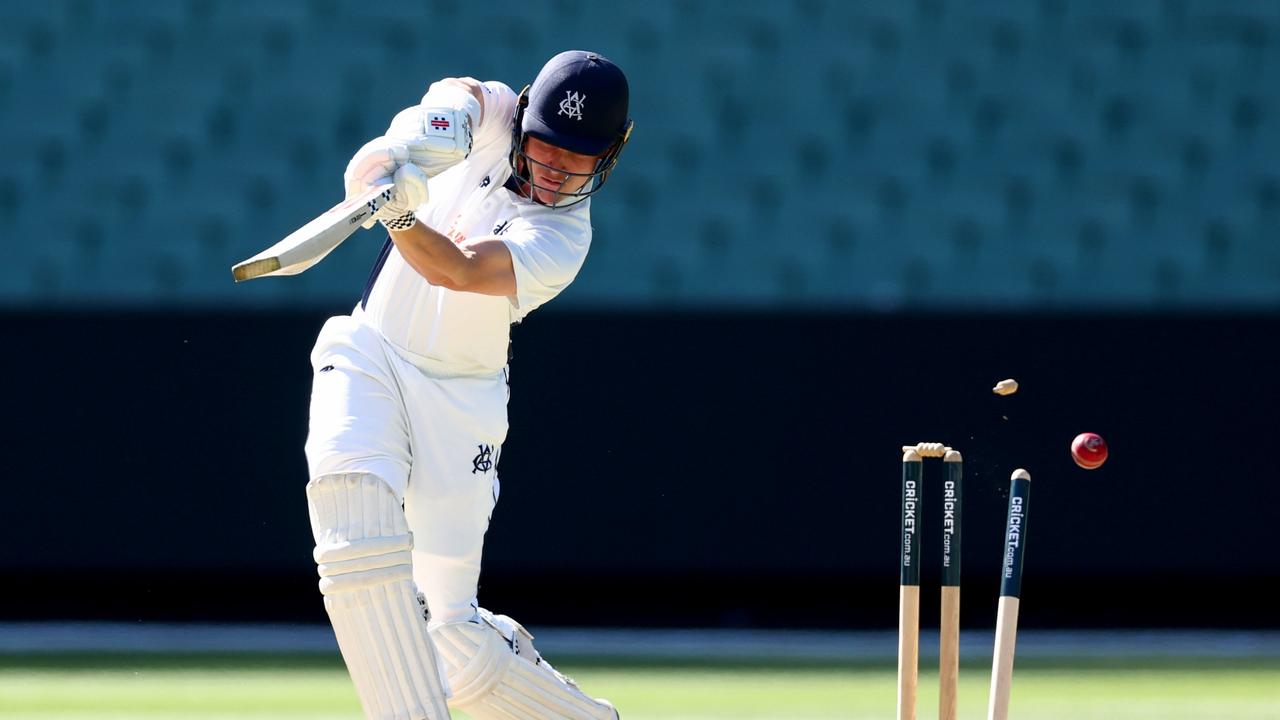
Harry Dixon of Victoria is bowled by Queensland’s Hayden Kerr at the MCG. (Photo by Josh Chadwick/Getty Images)Source: Getty Images
The final session will be brought down to one hour and 45 minutes, with the first session’s two-hour length remaining the same.
A playing conditions working group led by CA chief of cricket James Allsopp and head of cricket operations Peter Roach concluded that the middle session is the best time of the day to bat.
The change also hopes to encourage captains to bowl spin earlier in the day.
The proposal has been ratified by CA, with the change to be implemented for the coming Shield season.
Allsopp also revealed curators would be encouraged to create more batter-friendly surfaces – particularly in regard to how they mow the pitch.
“If the curator is debating whether to shave the grass coverage to six centimetres or seven centimetres, we want them to shave it to six,” he told Morris.
Curators will also ideally be creating surfaces to mimic their venue’s Test conditions, particularly in regard to pace and bounce.