
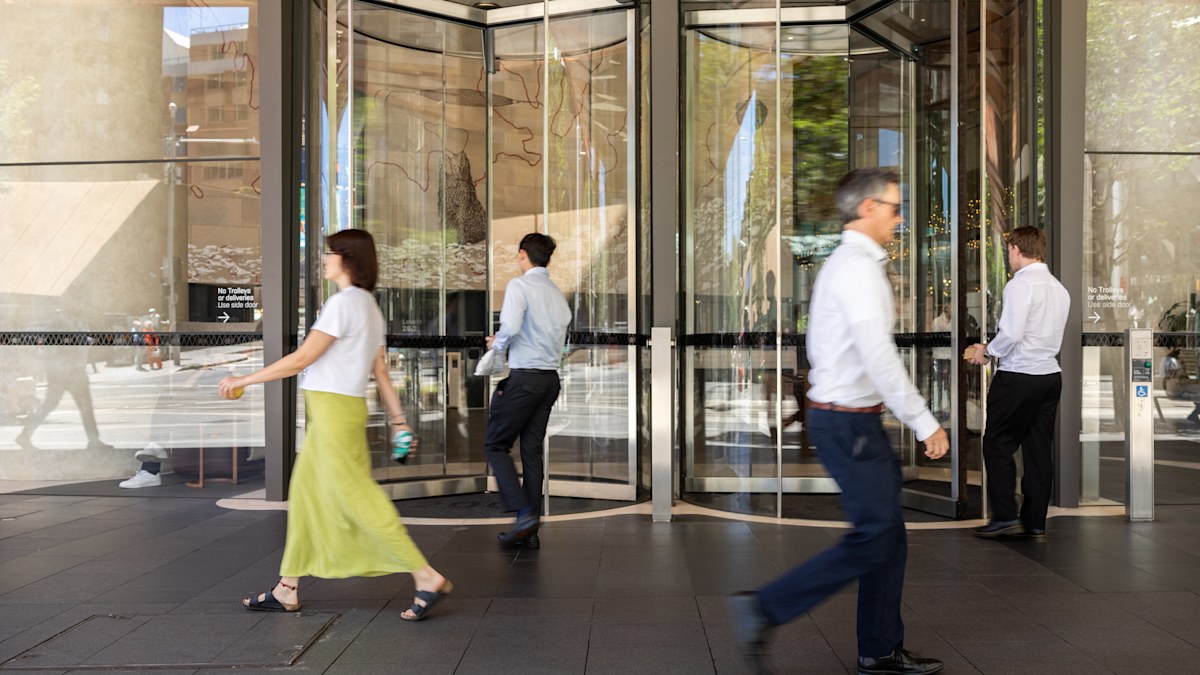
Australian full-time workers are facing a deepening cost-of-living squeeze, with wage growth slumping to its lowest level in four years.
Data from the Australian Bureau of Statistics (ABS) shows average weekly ordinary time earnings for full-time adults rose 1.6 per cent to $2083.70 in the six months to May.
Australian full-time workers are facing a deepening cost-of-living squeeze, with wage growth slumping to its lowest level in four years. AFR/Louie Douvis
Annual wage growth to May was 3.7 per cent, marking the lowest annual increase since November 2022.
ABS head of labour statistics Sean Crick said public sector workers fared noticeably better than those in the private market.
“Public sector average weekly earnings rose by 2.3 per cent while the private sector rose by 1.4 per cent,” Crick said.
Transport, postal, and warehousing workers recorded the nation’s strongest six-month wage growth at 4.3 per cent, followed by wholesale trade at 3.2 per cent.
Across Australia, Queensland led all states and territories with a 2.5 per cent increase.
In a rare bright spot, the gender pay gap in average weekly ordinary full-time earnings fell to a record low of 11.3 per cent, down from 11.5 per cent in November 2025.
On paper, 3.7 per cent annual wage growth almost matches 3.8 per cent inflation – but on the ground, families are falling behind.
Household essentials remain stubbornly expensive after years of price hikes.
And with private sector wage growth slowing to 1.4 per cent over six months, paychecks simply aren’t keeping up.
The softening figures confirm the Reserve Bank of Australia’s (RBA) series of rate hikes is cooling the labour market – offering cold comfort to those with mortgages.
Earlier this week, RBA Governor Michele Bullock confirmed the board voted unanimously to hold the cash rate at 4.35 per cent.
However, updated central bank forecasts show inflation is not expected to hit the mid-point of its 2 to 3 per cent target range until June 2028.
RBA modelling indicates borrowing costs will likely remain elevated around 4.4 to 4.5 per cent well into 2027 and 2028, effectively killing off hopes of an imminent rate cut.
But despite the slowing conditions, Bullock warned that further rate rises haven’t been ruled out.
“We’ve already acted three times, and we will go again if we need to,” Bullock said.
“High inflation hurts all Australians, especially the most vulnerable, and that is why bringing inflation down is our priority.”