
Incredible images have revealed that a sprawling 400,000-hectare fire is burning across Australia’s outback.
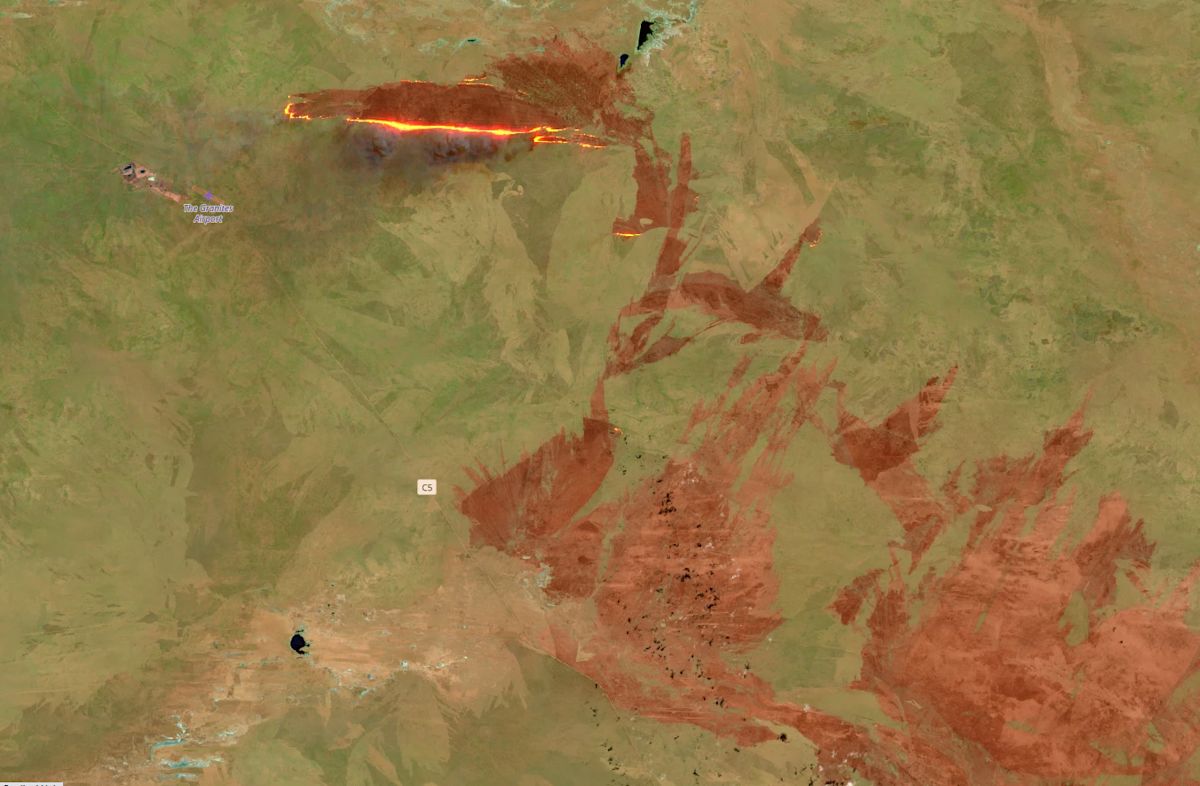
Dr Rohan Fisher, the director of Charles Darwin University’s Landscape Knowledge Visualisation Lab, noticed the blaze’s unique snake-like shape in pictures taken by the Sentinel2 satellite as it passed over the Tanimi Desert.
“It really stands out. It’s probably the biggest blaze in Australia this year,” he told Yahoo News.
Because of the remoteness of this part of the Northern Territory, it’s common for no one to notice large fires except for small nearby communities and Dr Fisher.

This graph highlights the spike in fires that occurs around October.
(Charles Darwin University)
Looking from above, it appears the flames are following the same path as fires in 2023 and 2025.
The grassy fuel loads they burned have sprouted back due to heavy rains.
Outback fires much larger than those on east coast
In 2023, around 43 million hectares of the Northern Territory burned, and fires in 2011 scorched over 55 million hectares, an area roughly the size of France.
Comparatively, the Black Summer bushfires, which shocked the world in 2019 and 2020, burned no more than 10 million hectares in southern and eastern Australia.
Dr Fisher said the scale of the fires highlights the need for ongoing funding to promote the complex mosaic burns, which Indigenous populations have used for thousands of years to prevent larger fires from erupting.
Do you have an outback story? Contact newsroomau@yahoonews.com

This satellite image highlights details of the fire front and its proximity to The Granites mine.
(Sentinel2)
“You can get fires moving for 700 or 800km across those landscapes,” he said.
“If you can break up the fuel, through the use of fire at the right time of year, then it’s really effective for stopping that massive fire spread.”
Those efforts rapidly declined after European settlement forced Indigenous peoples from their traditional lands.
Work that’s balancing new fire threat
October is traditionally one of the worst months for fires in Australia because the desert is hot and dry.
While climate change is creating more extreme weather patterns that favour fires, including periods of heavy rain followed by drought, Dr Fisher believes that cool burns by groups like the Indigenous Desert Alliance are helping balance out the severity of the problem.
“There is less fire now in Australia than there was overall,” he said.
“And that is largely due to the efforts across the northern tropical savannahs by Indigenous-led fire management groups.”
You can also follow us on Facebook, Instagram, TikTok, X and YouTube.