
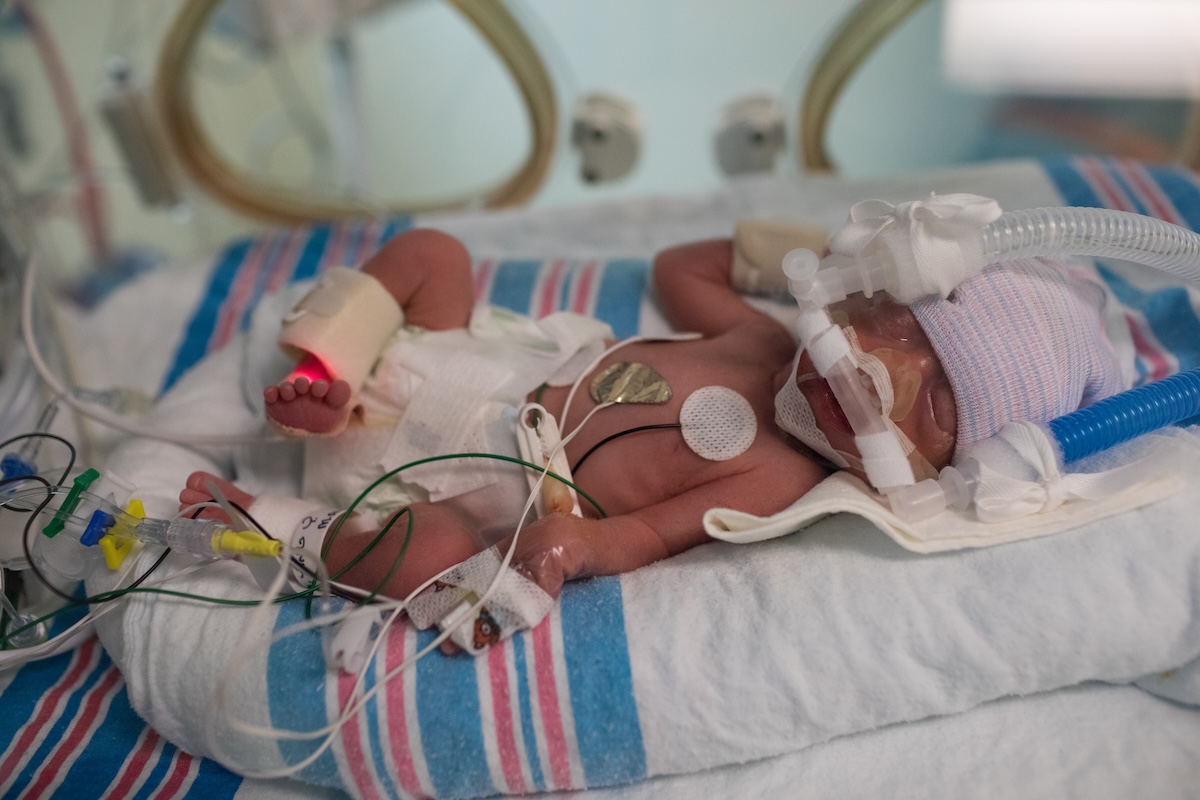
Corticosteroid eyedrops could reduce the need for invasive treatment for retinopathy of prematurity (ROP), according to the world’s first randomised clinical trial investigating the approach.
Published in JAMA Pediatrics on 3 August 2026, the trial found dexamethasone eye drops nearly halved the relative risk of extremely premature infants progressing to treatment-requiring ROP, although the study did not achieve statistical significance.
Researchers from the University of Gothenburg and Sahlgrenska University Hospital, Sweden said findings point to a potentially safe, inexpensive and non-invasive treatment option for one of the leading causes of childhood blindness worldwide.
ROP affects the developing blood vessels of the retina in babies born very prematurely. In severe cases, abnormal vessel growth can lead to retinal detachment and permanent vision loss. About 35,000 children globally become blind from the condition each year.
Current treatment typically involves laser photocoagulation or anti-vascular endothelial growth factor (anti-VEGF) injections into the eye once the disease reaches a threshold requiring intervention. While effective, both procedures are invasive and are generally reserved for more advanced disease, the researchers said.
The multicentre, double-blind, placebo-controlled DROPROP trial enrolled 100 infants born before 30 weeks’ gestation at six university hospitals and eight county hospitals across Sweden between 2022 and 2025.
The babies had severe ROP that had not yet progressed to the stage requiring treatment. They were randomly assigned to receive either dexamethasone eye drops or placebo.
 Lead investigator Professor Ann Hellström from the Department of Ophthalmology, Sahlgrenska University Hospital, Sweden. Image: Elin Lindström.
Among infants treated with dexamethasone, 20% progressed to treatment-requiring ROP compared with 38% in the placebo group, representing a 47% relative reduction in risk.
Researchers said the difference was not statistically significant, but the magnitude of the effect was clinically meaningful.
“Topical dexamethasone numerically reduced the risk of progression from prethreshold ROP to treatment-requiring type 1 ROP, although the observed 47% relative risk reduction did not reach statistical significance,” they wrote.
“However, based on the clinically meaningful effect size, our findings suggest that topical dexamethasone may likely be useful as a non-invasive adjunct to reduce progression to invasive ROP treatment in preterm infants. Larger, adequately powered randomised controlled trials are recommended before routine clinical implementation can be considered to statistically confirm our findings.”
Lead investigator Professor Ann Hellström, from the University of Gothenburg and chief physician at Sahlgrenska University Hospital, said: “The results are very promising because the treatment is simple, inexpensive and non-invasive. In a significant proportion of children, we were able to reduce the need for laser and ocular injections in very fragile premature babies.”
Safety was a key focus of the study. Researchers monitored participants for hormonal and metabolic complications associated with corticosteroid use but found no clinically significant differences between the treatment and placebo groups. No clear evidence of serious adverse effects was identified.
The investigators are planning long-term follow-up of the children to assess visual development and identify any delayed treatment effects.
If confirmed in future trials, the approach could have particular significance in low-resource settings where access to paediatric retinal specialists and advanced ophthalmic treatments is limited.
“There is a great global need for simpler treatments for ROP, especially in parts of the world where access to specialist care is limited. If eye drops can prevent severe ROP, it could save the sight of many children around the world,” Prof Hellström said.