
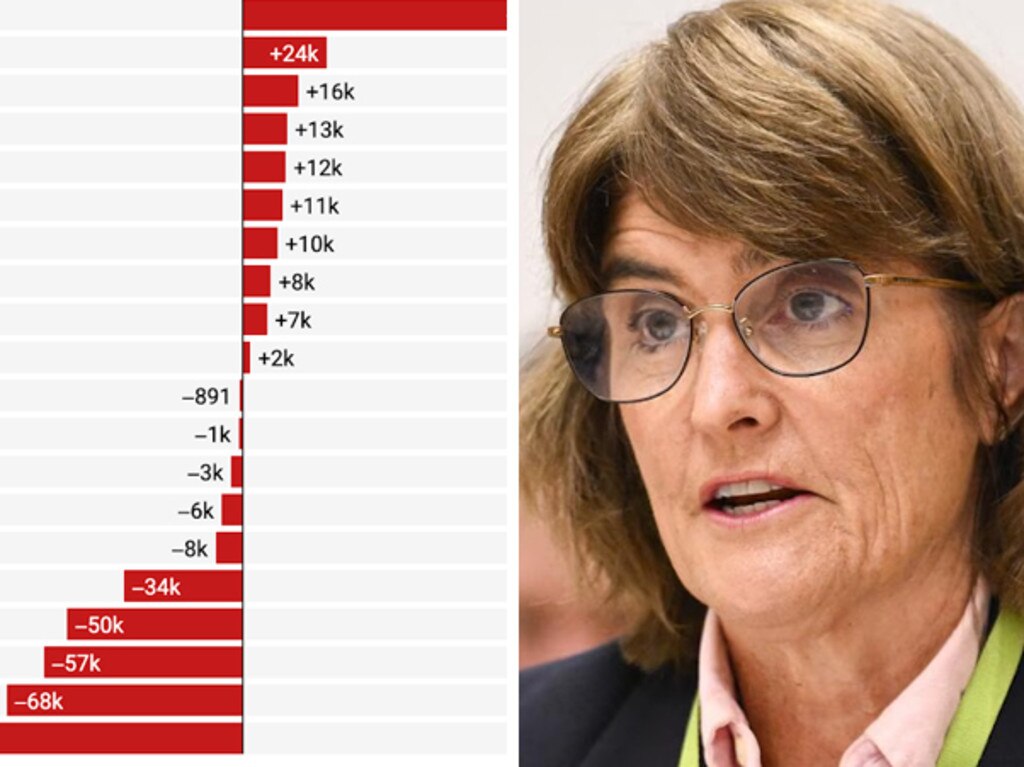
Australia’s Reserve Bank has been served further grounds to halt its relentless rate hiking crusade after newly published figures showed unemployment has continued to rise.
The data from the Australian Bureau of Statistics released Thursday showed the unemployment rate inched up to 4.5 per cent in July, growing from 4.4 per cent in June.
The rise, while minor, was a further signal of slowing economic activity, coming off the back of recent falls in household spending, slowing GDP growth and sluggish business investment.
It also indicated a wider shift in labour market conditions: unemployment has been steadily rising over the past four years and is now well above the 3.4 per cent rate recorded in July 2022.
There are now 691,500 unemployed people in Australia and Aussies are working fewer hours than they did at the start of the year.

RBA Governor Michele Bullock kept rates on hold last week. Picture: Nikki Short
Mortgage experts said the rise in unemployment would not rule out any further rate hikes but did strengthen the case for the Reserve Bank to tread carefully and adopt a wait and see approach.
Ray White chief economist Nerida Conisbee said home prices were already falling and the RBA would not be able to take a hawkish approach to rate hikes.
“The rise in unemployment marginally strengthens the case for the RBA to hold, particularly given broader signs of weakness in the economy,” she said.
“Falling house prices, rising rents, very low consumer and business confidence, and a more challenging outlook for unemployment will all be part of the RBA’s calculus, even as it remains concerned about persistent inflation.”
MORE: Renter slams $100 rent hike on mould-riddled apartment
The housing market has been slowing. Picture: Sarah Wilson
Canstar insights manager Sally Tindall said rising unemployment showed earlier rate hikes were working through the economy.
“Heat is continuing to trickle out of the jobs market. This shift, which is now shaping up into a trend, provides the Reserve Bank with further evidence the current cash rate setting is restrictive and is helping keep a lid on rising inflation.”
Finder.com.au home loans expert Richard Whitten said all eyes will now turn to the next round of inflation figures set to publish next week.
Inflation to date has been well above the RBA target band of 2-3 per cent, but it has begun to fall.
“Comments from senior RBA figures like RBA assistant governor and chief economist Sarah Hunter in recent months have suggested that unemployment may need to rise in order to bring inflation down.
MORE: ‘Worst time’ to be a first-home buyer in 56yrs
Auction activity has also been falling. Picture: Annette Dew
“Unemployment would likely need to be a bit higher for the RBA to take rate rises off the table.”
Ms Tindall clarified the case for a rate cut this year remained low.
“While the cash rate setting is packing a punch in the broader economy, borrowers should forget about rate cuts until inflation is firmly locked inside the RBA’s target band, something that’s unlikely to happen until at least next year.”
She pointed to recent comments by RBA governor Michele Bullock, who said: “I wouldn’t like people to think that because we’re seeing a slowing and a rise in the unemployment rate, that means that we have to reverse course.”
University of Melbourne head of macroeconomics Matthew Greenwood-Nimmo said softening conditions were making a stronger case for a pause in interest rates.
“The labour market appears to be gradually softening and the housing market is weakening,” he told a Finder.com.au panel prior to the unemployment rate release.
Canstar’s Sally Tindall said we were still far away from a rate cut.
AMP chief economist Shane Oliver told the same panel that recent conditions would give the RBA grounds to sit tight – for now.
“Slightly weaker than expected labour and housing market conditions should allow the RBA to remain in ‘wait and see’ mode,” he said.
An eventual reduction in rates may not come soon enough for many of the county’s struggling mortgage holders.
New polling by Finder.com.au released exclusively to News Corp showed millions of Australian homeowners were barely keeping their heads above water.
Finder’s 2026 Home Loan Report found more than one in four mortgage holders (27 per cent) believed they’re either just scraping by or already on the brink of default.
Finder estimated this amounted to 891,000 borrowers struggling to keep up with their home loan repayments.
About 38 per cent of survey respondents said they could afford their mortgage but had little financial breathing room. The remaining third of those surveyed said they could comfortably afford their repayments.
“Thousands of Australians are living with the constant stress of knowing one unexpected expense could throw their finances into chaos,” Mr Whitten said.
“That’s not a sustainable way to live, but it’s become the reality for households who’ve endured years of higher repayments and relentless cost-of-living pressure.
Mr Whitten said for many households, the mortgage leaves little room for anything else.
“It’s incredibly difficult to get ahead when you’re spending most of your income just keeping a roof over your head.
“Without a financial buffer, even minor setbacks can have major consequences.”