
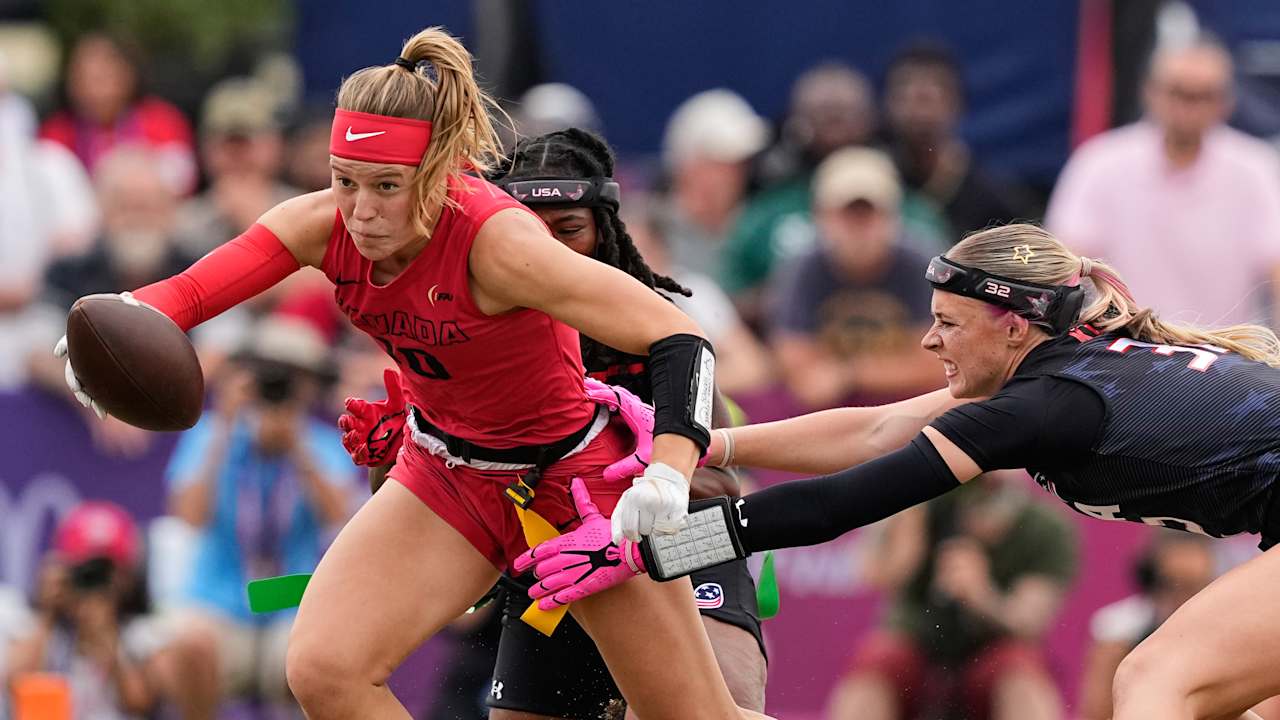
The collegiate landscape was limited to early adopters at the NAIA and NJCAA four years ago. Women’s flag football is now part of the NCAA’s Emerging Sports for Women program with more than 250 women’s flag football programs, including 100+ varsity programs set to roll out this coming academic year, generating momentum toward full championship status. Young women are earning college scholarships, being full-on recruited at programs like Nebraska, an NCAA Division I powerhouse.
It goes on:
Flag football wasn’t an Olympic sport. Now it’s gearing up for the 2028 Summer Games in Los Angeles.
Corporate sponsorships were few and far between. Today companies are lining up to support flag athletes, media properties, events and organizations.
Nobody was talking about professional flag football. Next year we’re kicking off a new pro league with so much juice that it’s drawn investment from the biggest names in sports and entertainment.
This is massive progress. It came together inch by inch, the entire football community fighting for a movement bigger than any one stakeholder, starting with young people raising their hands to take the field in their own hometowns.
Those same players, men and women, boys and girls, can now dream with their eyes closed. If flag football is their sport of choice, they have pathways to opportunity at every level.
The best of the best now enter an international ecosystem where the skill level is significantly higher, quarterback play is outstanding, athletes are more explosive, team organization has improved and play calling is increasingly sophisticated.
There’s no limit to how far a player’s talents can take them.
That said, in football we never stop moving the ball downfield.
What inch will you fight for?
The game clock is running. LA28 is less than two years away.
More importantly, right now there are children — including girls who for too long have been on the sideline — whose opportunities in flag football will come to an early end because their states’ high school athletics associations, or their specific school districts, don’t offer it.
So I’m asking directly: What inch will you fight for?
Parents: The sport needs coaches and officials. Get involved. Your involvement could be the tipping point for a local program.
Coaches: There are tons of resources available to you, many free or low-cost. Dedicate yourself to learning flag football’s best practices. High performance depends on quality coaching.
School districts: If flag is available in your state, listen closely to your student-athletes and their parents. They’re asking for access, opportunity and permission to think big. They’ll represent your schools and communities well. Stand up a program for them.
Athletic directors: Scheduling, field or personnel challenges are all surmountable. You’ve encountered much harder issues with far less upside. Talk with counterparts who have made it work at their schools.
States and their athletics associations: The NFL, its clubs and partners are committed to expanding flag football to high schools in all 50 states. Get in touch. Let’s talk about launching a pilot program.
Colleges: Keep investing in your flag programs. It’s one of the globe’s fastest-growing sports for a reason. Give the best players in the world a reason to choose your school.
International federations: You’re entering the development process at different points. Share what you’re learning with each other, from governance and board structure to coaching, officiating, facilities and athlete development. Follow the example of the U.S. and Australia. Compete on the field; collaborate off it.
The movement is real. Düsseldorf showed how far we’ve come in four short years. This is a true global sport, with mature national programs and a competitive environment in which any country can win any game, any time, on any day.
You might know the famous locker-room speech from Any Given Sunday. “On this team, we fight for that inch.” The NFL isn’t letting up. We’re exploring how initiatives such as Way To Play can further the sport and fuel every single person — every player, school, league, and federation — on the field with us.
The work ahead will cement flag football’s long-term sustainability.
Let’s go out and get it.