
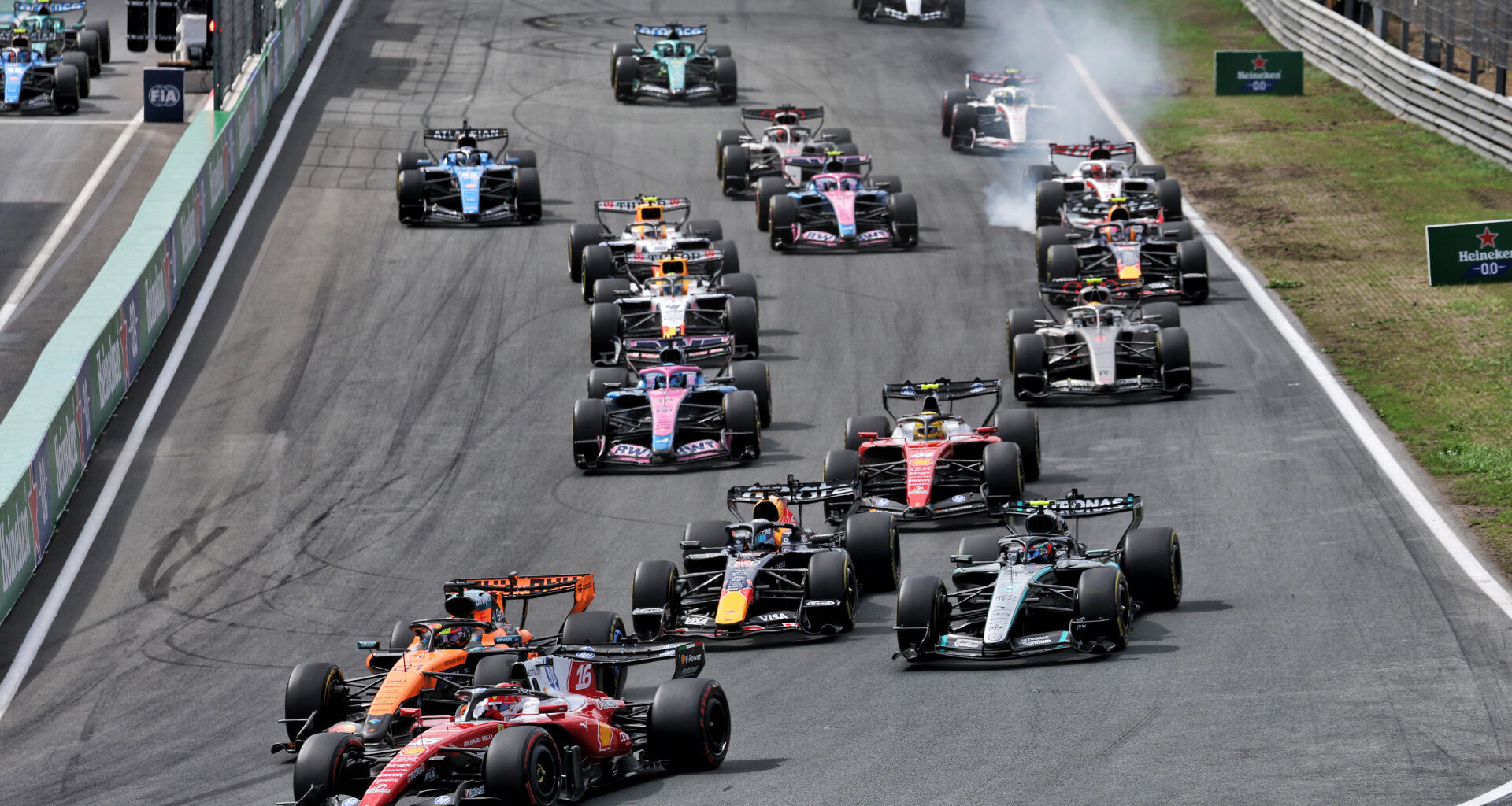
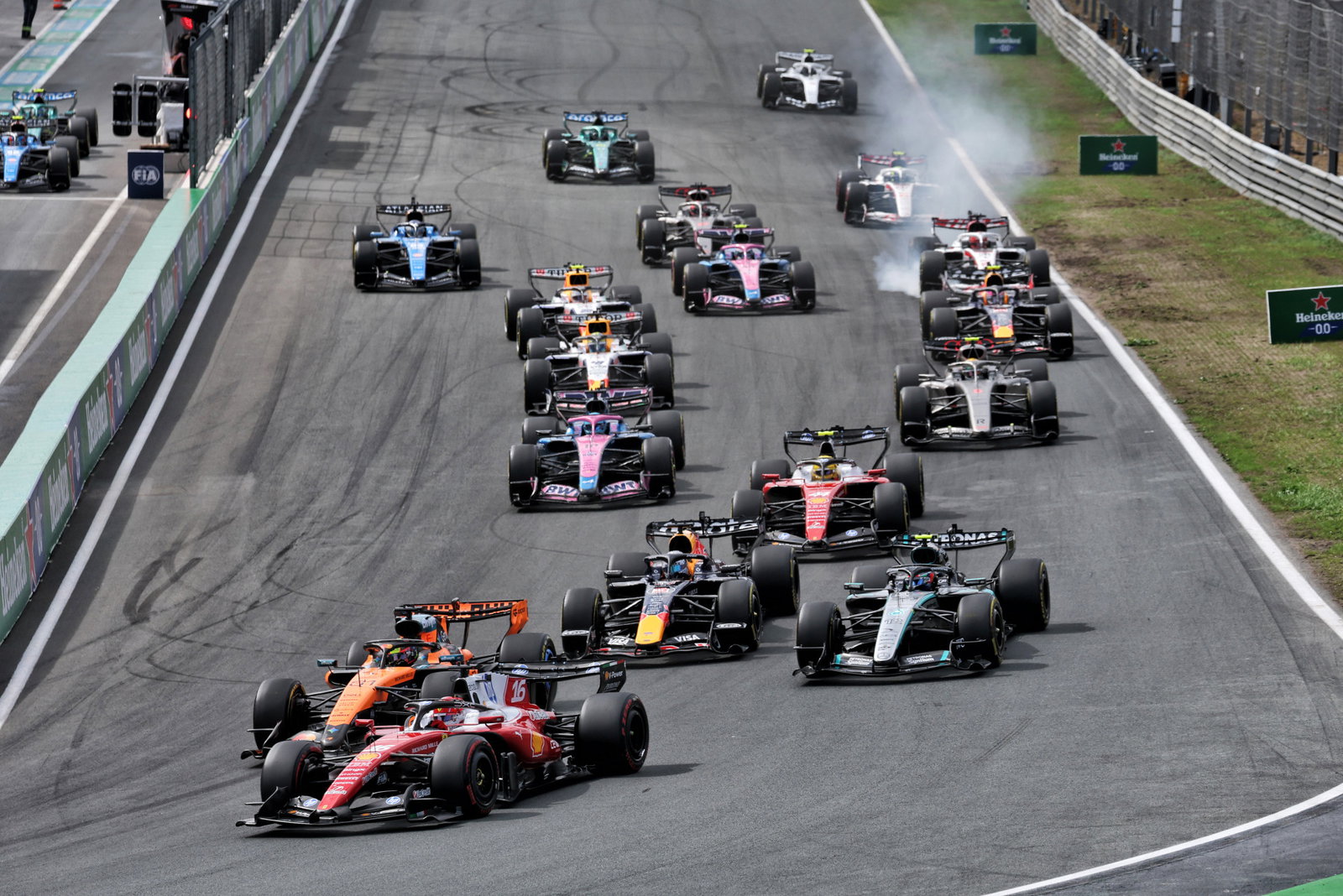
 Drive to Survie will return to Netflix next year for a ninth season. Image: XPB Images
The streaming giant confirmed the long-running documentary series will return for another instalment after Season 8 was released earlier this year.
First launched in 2019, Drive to Survive has provided behind-the-scenes access to Formula 1 across each season and has become one of the championship’s most recognisable pieces of mainstream media.
Season 9 will centre on the current campaign, which has already produced a host of major storylines as Kimi Antonelli has emerged as the youngest championship leader in F1 history and the competitive order has shifted through the development battle between Mercedes, Ferrari and McLaren.
Box to Box Films will again produce the series, with executive producers James Gay-Rees and Paul Martin promising even greater access for the next season.
“We’re so excited to be making Season 9 of this iconic show,” Gay-Rees and Martin said.
Formula 1: Drive To Survive returns to Netflix for Season 9 in 2027 🎥#F1 pic.twitter.com/T0lXph2U3K
— Formula 1 (@F1) August 24, 2026
“This year we’re going to go deeper than ever before into the hidden spaces of this fantastic sport.”
The renewal extends a run that has now produced 78 episodes across eight seasons, with the latest instalment consisting of eight episodes rather than the 10 used in several previous years.
Formula 1 revealed earlier this year the scale of the operation behind Season 8, with more than 160 people involved across production, editing, post-production and delivery.
Crews attended all 24 grands prix during the 2025 season and completed 83 shoots across the year, gathering almost 1500 hours of footage.
As many as six primary cameras are used at race weekends alongside additional equipment around the paddock, while up to 20 radio microphones can be deployed to capture conversations away from the television broadcast.
More than 35 drivers, team principals and other Formula 1 figures were interviewed for Season 8, while 25 editors, nine edit producers and five assistant editors were involved in turning the footage into the finished series.
The editing process alone accounted for more than 1200 days of work, beginning during the European summer before final delivery to Netflix ahead of the following season.
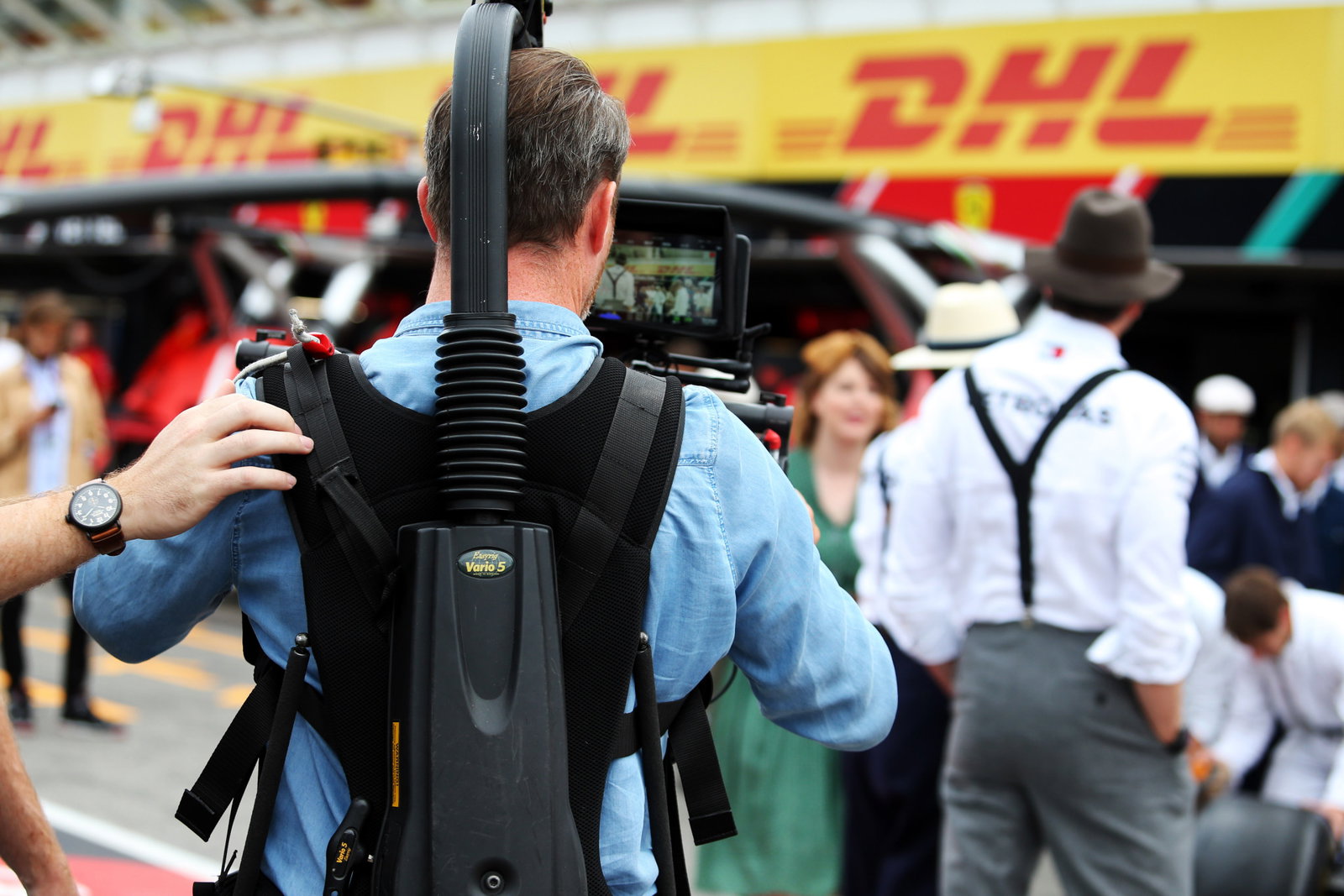
Netflix crews filming Drive to Survive. Image: XPB Images
Drive to Survive is now available in more than 190 countries and translated into more than 50 languages.
Its latest season also continued to attract a sizeable global audience after being released on February 27.
An analysis by data and analytics company Domo using Netflix’s published weekly Top 10 figures showed Season 8 accumulated 16.1 million viewing hours during its opening week, placing ninth globally.
That increased to 18.5 million hours in its second week as the series climbed to fifth in Netflix’s worldwide rankings.
The pattern mirrored several previous seasons, with Season 7 rising from 19.2 million viewing hours in its opening week to 22.9 million in week two, while Season 6 climbed from 21.8 million to 28.1 million.
Season 4 peaked at 29 million hours during its second week, while Season 5 was an exception to the trend after opening sixth in Netflix’s rankings before slipping to seventh.
Domo’s analysis also found Season 8 averaged around 2.3 million viewing hours per episode at its peak despite its reduced eight-episode format, compared with approximately 2.8 to 2.9 million for the strongest-performing previous seasons.
Drive to Survive has also been credited with helping Formula 1 reach new audiences since its debut, particularly in the United States and among younger viewers.
Gay-Rees reflected on that impact in 2023, describing the series’ influence on F1’s audience as one of the production’s greatest achievements.
“We’ve all had the statistics about the changing, younger demographic, and it’s tough out there for anybody, for any big organisation, to hold its ground given the amount of choices that are out there for the consumer,” he said.
“Bringing such a big new audience to a sport – which obviously was deserved, it just needed somebody to open it up – is massively satisfying.
“The fact that it wasn’t a fluke, the fact that it’s grown [with every season]… It’s a real honour and we love it. It’s a very difficult show to make, but we love the process, we love the world. Long may it continue!”
No release date has yet been confirmed for Season 9, with filming continuing as the 2026 Formula 1 season progresses.