
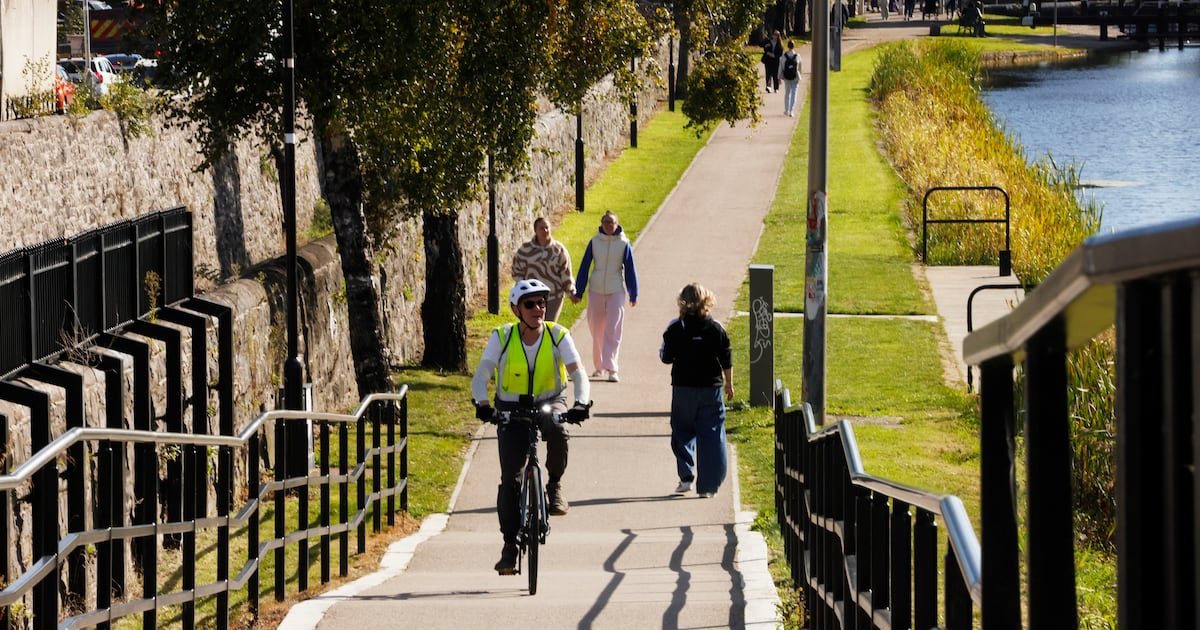
Those who cycle to work or school are estimated to save €3,480 while pedestrians could save €620 annually, according to a new report from the National Transport Authority (NTA).
The report, which was published on Wednesday, looks at the benefits of the Active Travel Investment Programme, such as “how choosing walking or cycling over driving puts more money back into people’s pockets and the wider economy”.
The Benefits of Active Travel Investment Report, which was commissioned from Turley Planning Ireland and supported by Arup, highlights how almost all investment in active travel infrastructure supports domestic economic development and job creation.
Between 2021 and 2030, the NTA’s Active Travel Investment Programme will have invested almost €3 million in the delivery of active travel infrastructure such as new pedestrian crossings, junction upgrades and pedestrian and cycling bridges.
According to the NTA’s website, active travel involves “travelling with a purpose, using your own energy via sustainable means”. It includes walking, wheeling and cycling or the use of self-powered, non-motorised scooters as part of your journey.
According to the report, one of the main benefits of the NTA’s Active Travel Investment Programme is the large number of jobs supported.
The programme has supported and is expected to support 17,690 full-time equivalent (FTE) jobs over the 10-year period, with an overall of 26,640 when induced effects, such as construction workers spending wages locally which leads to business growth and employment, are also considered, it said.
On average, this amounts to more than 2,650 FTE jobs per year from 2021 to 2030.
“The Benefits of Active Travel Investment Report shows the positive financial impact of the significant increase in Government funding for walking and cycling since the start of this decade,” said Minister for Transport Darragh O’Brien.
“Active travel investment supports local economies and that is just one of the reasons, along with various social, health and climate benefits, why we will continue to invest in walking and cycling at a high level out to 2030.”
Anne Shaw, chief executive of the NTA, said it is working closely with the Department of Transport regarding continuing funding.
“We are constantly exploring ways in which we can continue to support and grow our active travel networks nationwide, improving our public realms and creating more liveable communities for everyone.”