
Staff writers
Updated August 26, 2026 — 11:56am,first published August 26, 2026 — 5:24am
Save
You have reached your maximum number of saved items.
Remove items from your saved list to add more.
AAA
The Australian sharemarket wiped out its morning gains after shock inflation figures put another interest rate hike on the table, while investors digested a flurry of local corporate results.
The S&P/ASX 200 was down 15.5 points, or 0.2 per cent, at 9149.10 at 1.20pm AEST, having risen as much as 0.6 per cent in early trade to extend its gains over the past two sessions.
The market dipped into the red as trader bets rose that the Reserve Bank will eye another interest rate rise next month after data showed inflation failed to slow as quickly as the central bank hoped.
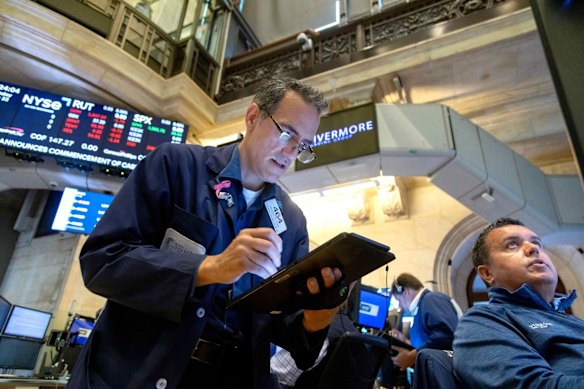 UBS’ trading desk said earlier this week that the slide in momentum stocks may be nearing its end, creating an opportunity for investors.Bloomberg
The Australian Bureau of Statistics said this morning monthly inflation eased to 3.5 per cent in July after coming in at 3.8 per cent in June. Of more concern to the RBA was a 0.5 per cent lift in underlying inflation, which had been forecast to ease but instead remained steady at 3.6 per cent.
The data had an immediate impact on the currency market, with the Australian dollar lifting on the greater chance of a rate hike next month. The Australian dollar was up 0.2 per cent at US71.80¢.
The surprise reading prompted economists like Deutsche Bank’s Phil O’Donaghoe to change their RBA calls. Having previously predicted rates to stay on hold, “we now expect one more hike by 25 basis points by the RBA at its upcoming meeting on 29 September,” O’Donaghoe said in a note to clients. “Risks are skewed to a delayed hike until November, but the evidence is clear to us. Further policy tightening is needed, and the earlier, the better.”
Related Article
Shrugging off the rate concerns were consumer staples, with Woolworths jumping 3.8 per cent after saying its winter sales have been boosted by its wildly popular Ooshies collectables campaign. In the first eight weeks of the new financial year, food sales at its Australian supermarkets jumped 7.6 per cent, with the Disney plastic figurines expected to have generated up to 2 percentage points of that growth.
Food sales rose 4.6 per cent in the year to June 30, helping the nation’s biggest grocer grow its net profit by 18.1 per cent to $1.14 billion and raise its final payout to shareholders to 52¢ a year, up from 45¢ a year ago. Coles, which on Tuesday said its sales had taken a hit from its rival’s Ooshies campaign, added 2 per cent.
The mining heavyweights also bolstered the ASX in early afternoon trade, with BHP – the nation’s biggest stock – up 0.5 per cent and its iron ore and copper rival Rio rising 0.8 per cent.
Nine Entertainment, the publisher of this masthead, rallied 8.2 per cent after the media company saw its full-year net profit from its continuing businesses rise 7 per cent to $142.4 million and revenue lift 3 per cent to $2.19 billion despite a tough advertising market. In a major step for the company, Nine has shifted its focus away from traditional broadcasting, writing down the value of its TV business by more than half to $360 million and emphasising growth at its subscription streaming and publishing businesses and outdoor ad firm QMS.
Lovisa gained 14 per cent after saying it lifted its net profit by 10.7 per cent to $95.6 million in the past financial year. The fashion jewellery seller has opened 160 new stores, taking its global network to 1,136 stores, but closed 43 underperforming locations.
Related Article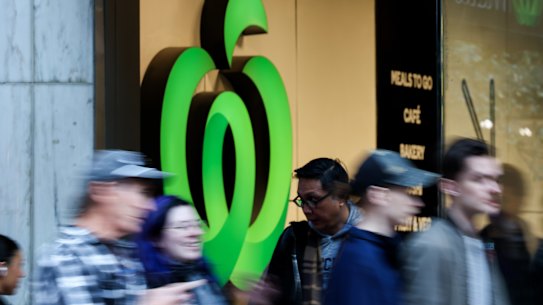
On the downside, energy stocks weighed on the market, with Woodside down 4 per cent and Santos down 1.9 per cent after Brent crude fell 2.7 per cent to $US86.23 by early afternoon. The drop came even though tensions between the US and Iran seemed to ratchet higher after the Trump administration announced new sanctions to further hurt Iran’s economy. Brent’s price zigzagged between $US72 and $US102 last month as hopes rose and fell that the two nations could reach a deal that would allow oil tankers to freely exit the Persian Gulf again.
WiseTech Global and the spectre of rising borrowing costs sent the debt-heavy tech sector down. WiseTech shares plunged 9.4 per cent after saying its full-year net profit fell 11 per cent to $US178.7 million ($250 million), even as its revenues jumped 79 per cent to hit a record $US1.3 billion, as forecast by the company. Software maker Xero, the second-biggest tech stock, dropped 5.3 per cent and Technology One shed 2 per cent. IT data centre operator NEXTDC, however, rose 1.5 per cent.
Travel agent Flight Centre slumped 6.9 per cent after revealing the conflict in the Middle East knocked $60 million out of its leisure profits in the fourth quarter. A spate of cancellations and a disruption of travel as the US-Israel war with Iran kicked on, “offset corporate’s full-year profit uplift”, the company said. Underlying profit before tax fell to $278 million for the year to June, down 4 per cent from the $289 million the year before, it said.
Domino’s Pizza plummeted 12.3 per cent after the struggling fast food chain reported a net loss of $134.2 million for the past financial year, weighed down by writedowns for its business in Taiwan and France and underperforming stores. Sales fell 11.2 per cent to $2.05 billion in the year. The pizza chain plans to close up to 60 stores across Europe, Australia, New Zealand and Asia as it seeks to return to profitability.
On Wall Street overnight, The S&P 500 rose 0.3 per cent and edged closer to its all-time high set earlier this month. The Dow Jones Industrial Average added 0.3 per cent and the Nasdaq composite climbed 0.7 per cent.
The retreat in oil prices offered some relief after persistent inflation and elevated yields weighed on risk appetite. Three key events may shape trading this week — Nvidia’s results on Wednesday for clues on whether the AI rally can regain momentum, the release of the US PCE gauge and Federal Reserve Chair Kevin Warsh’s Jackson Hole speech on Friday for signals on the path of interest rates.
“Although the mountain of event risk is casting a slight shadow over the markets, the easing of geopolitical risks and subsequently lower oil price has been enough to offset the trepidation,” wrote Kyle Rodda, a senior analyst at Capital.com.
Related Article
A delegation from Pakistan left Iran after talks with Iran’s president and other senior officials on reopening the Strait of Hormuz and reviving negotiations to end the Iran-US conflict, the Pakistani military said. Pakistan Interior Minister Mohsin Naqvi said a meeting with Iranian President Masoud Pezeshkian had been “very positive and productive.”
Tuesday’s drop in oil prices tempered the worries about high inflation that helped drive Treasury yields in the bond market higher through the summer. Yields had gotten so high that the US Treasury Department announced a surprise move last week to increase its repurchases of longer-term Treasury notes and bonds.
High yields make borrowing more expensive for everyone and can slow the economy’s growth while undercutting prices for stocks, cryptocurrencies and other investments.
The yield on the 10-year Treasury fell to 4.64 per cent from 4.70 per cent late Monday and from 4.74 per cent at the end of last week. That’s a significant move for the bond market, though the 10-year yield remains firmly above its 3.97 per cent level from before the war with Iran sent oil prices and worries about inflation much higher.
Canada announced it is targeting more than 700 US-made products as the trade war with America escalates. The list extends well beyond industrial goods, hitting everyday purchases such as seafood, cheese, clothing, cosmetics and toilet paper, with some facing duties as high as 50 per cent.
The tariffs on American steel, dairy products, appliances, farm equipment, pulp and paper and electronics take effect September 8 at rates of 15 per cent, 25 per cent and 50 per cent, with Canada matching the corresponding US tariff rate on each product. Canadian officials said the goal is not to raise revenue but to protect Canadian companies and reduce US imports.
On Wall Street, Nvidia and other winners of the boom in artificial-intelligence technology helped lead the way. Nvidia rose 2.2 per cent, a day after its drop of 2.9 per cent was the heaviest weight on the S&P 500.
AI stocks have veered up and down through the summer on worries that their prices shot too high and that the AI boom may not be sustainable if it doesn’t produce enough profits for companies. Nvidia will report its latest quarterly results on Wednesday, which could help steer the next move for AI-related stocks.
The gains for chip stocks helped offset a 30.7 per cent drop for Dick’s Sporting Goods, which reported weaker results for the latest quarter than analysts expected. Executive chairman Ed Stack said the retailer cut prices on some of its footwear and apparel to remain competitive, while launches for some footwear during the quarter ended up being weaker than it expected.
with AP and Bloomberg
The Market Recap newsletter is a wrap of the day’s trading. Get it each weekday afternoon.
Save
You have reached your maximum number of saved items.
Remove items from your saved list to add more.
From our partners