
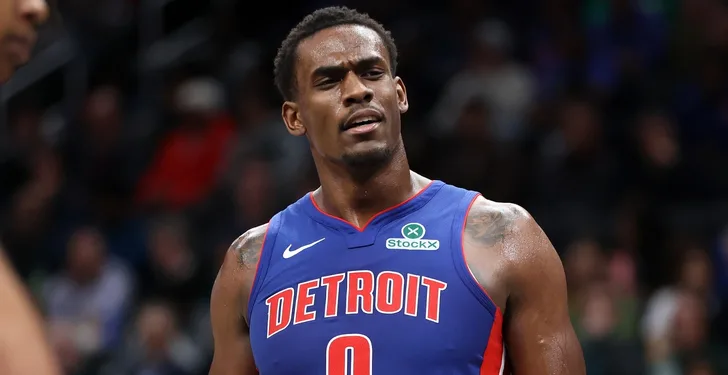
Over the last two NBA offseasons restricted free agency has been a major topic of discussion. The 2025 offseason saw Josh Giddey, Jonathan Kuminga, Quentin Grimes and Cam Thomas languish on the market until September. Thomas signed his qualifying offer on September 4. Giddey signed a new deal on September 24. Kuminga and Grimes both signed on September 30 as training camps opened, with Grimes also signing his qualifying offer.
Of that above group, only Josh Giddey signed longer than a two-year deal. Thomas and Grimes signed the qualifying offer, which is a one-year deal, while Kuminga signed what ended up being a one-year deal, as his second-year team option was declined.
This offseason, we’ve seen the pattern repeat to some extent. Peyton Watson just signed a four-year deal as part of a sign-and-trade. Jalen Duren and Bennedict Mathurin are both still on the market as the end of August approaches.
There’s been enough grumbling about the topic of restricted free agency that the NBA recently posted the following from their official communications account:
That’s fairly strong language from the league. It’s also fairly out of place for the NBA to even address a topic like this.
But here’s the thing: Is the league correct? Is it common for a handful of restricted free agents to hit the end of the summer without new deals?
To answer that question, we dove into the data. We looked at the last 10 first-round draft classes to come up on their restricted free agency years. Why the last 10 and why just the first round?
10 is a nice round number. It gives us 300 players, which is a pretty good sample size for the question we’re looking to answer.
Also, using the last 10 first-round classes gives us a chance to look at what things were like under the 2017 CBA (six classes from 2013 through 2018) and under the current CBA (four classes from 2019 through 2022)
The reason we’re looking at the first round only is because that’s where the “problem” is. Second-round picks operate under different rules, including the advent of the Second Round Pick Exception in the current CBA. The players who have been called out as stuck in restricted free agency are former first-round picks, including the seven players over the last two years.
So, what do the numbers tell us? Before we get to an answer, let’s look at some of the data! Here are some facts and figures about the 300 players drafted in the first round between 2013 and 2022:
92 players, or 31%, extended their rookie scale contracts before hitting restricted free agency
60 players, or 20%, signed a new contract (either with their current team or via a sign-and-trade) after being issued a qualifying offer to make them a restricted free agent
85 players, or 28%, never even made it to the end of their rookie scale contract before being waived or having a rookie scale team option declined
61 players, or 20%, finished their rookie scale contract but did not receive a qualifying offer, or their qualifying offer was withdrawn, making them unrestricted free agents
Two players, or 1%, remain pending restricted free agents (Jalen Duren and Bennedict Mathurin)
Here are some key takeaways from these data groupings:
Nearly half of all players drafted in the first-round between 2013 and 2022 never became restricted free agents. That’s a whole lot of misses in the draft process.
Nearly a third of the league extends before their rookie scale deal ends. That’s a solid number.
Exactly a fifth of the first-round picks played out their rookie scale deals and hit restricted free agency. That’s interesting from both a team and player standpoint.
It’s that last group we’re going to focus on first. What ends up happening to that group? It’s actually pretty fascinating. First, and this important to keep mind: Not a single player who reached restricted free agency went unsigned as a restricted free agent. That means that some players have had to wait for a while for a deal, but none of them got left out in the cold.
Now, to answer the primary question we posed: How long have the restricted free agents had to wait to sign their deals?
First, a little context:
For these 60 players, we made a quick-and-easy cutoff of deals being signed in July as “normal” timeline signings. Anything from August and Everything After (bet you weren’t expecting a Counting Crows reference here, were you?) counts as a “late” signing.
In the COVID-impacted seasons, the NBA furnished everyone with a mapping table that took the date a player actually signed and matched it with a corresponding date in the league’s normal calendar. We’ve adjusted for all of those dates accordingly, no matter how much we hoped to never look at those mapping tables again! (Note: We aren’t going to call this out again. The mapping tables clearly left a scar.)
Ok, you’re probably wondering if we’re ever going to answer the question about the NBA being correct about a couple of free agents every year signing “late”. Well, here we go!
Of our 60-restricted-free-agent sample, 45 players signed in July.
15 players, or an average of 1.5 players per year, signed in August or September.
In the prior CBA (2017-2022), six players were “late” signings. That’s an average of one per season.
In the current CBA (2023-2026): nine players have been (or will be for Duren and Mathurin) “late” signings. That’s almost two per season.
So…is the NBA correct or what? Well…ummm…sort of?
Sure, it’s common for a couple of restricted free agents to remain unsigned late into the offseason. But those who are saying this is a “new problem” are also correct. These are small numbers we’re dealing with, but the number of restricted free agents signing late has doubled under the current CBA. Even more potentially worrisome: seven of those nine players have stagnated in restricted free agency in the last two offseasons. That’s perhaps a sign of the full weight of the second aprons kicking in.
But let’s go a little deeper, shall we?
Is sitting unsigned deep into restricted free agency really hurting restricted free agents? Of that group of 60 total restricted free agents, seven have ultimately signed their qualifying offer. Of that group of seven, five were “late” signings. That tells us that those players gave it at least a couple of months before settling for their qualifying offers.
In case you were curious (And if you made it this far, let’s face it, you probably are!), the two players who signed their qualifying offer before September were Denzel Valentine in 2020 and Miles Bridges in 2023.
It was fairly shocking at the time that the Bulls even gave Valentine a qualifying offer that offseason and he signed it as about as quickly as he was able to.
As for Bridges, he was coming off what amounted to a year-long suspension. There was still a question if he’d have any kind of long-term offer coming. So, he fairly quickly signed his qualifying offer in July of 2023.
The five players who waited things out only to end up signing their qualifying offers were:
Nerlens Noel – Dallas Mavericks – signed August 25, 2017
Alex Len – Phoenix Suns – signed September 23, 2017
Rodney Hood – Cleveland Cavaliers – signed September 9, 2018
Cam Thomas – Brooklyn Nets – signed September 4, 2025
Quentin Grimes – Philadelphia 76ers – signed September 30, 2025
Of the group of seven players who signed the qualifying offer, only Noel and Bridges ended up re-signing with the same team after playing on the qualifying offer. Valentine, Len and Grimes signed elsewhere as unrestricted free agents. Hood ended up being traded, while Thomas was waived.
What about the other 10 players who were “late” signings, but didn’t sign the qualifying offer? Here are the deals they ended up landing, even though they signed in August or September:
Mason Plumlee – Denver Nuggets – four years, $41 million – signed September 20, 2017
Lauri Markkanen – Utah Jazz (via sign-and-trade) – four years, $67.5 million – signed August 6, 2021
Collin Sexton – Utah Jazz (via sign-and-trade) – four years, $70.9 million – signed September 3, 2022
P.J. Washington – Charlotte Hornets – three years, $46.5 million – signed August 29, 2023
Isaac Okoro – Cleveland Cavaliers – three years, $33 million – signed September 17, 2024
Josh Giddey – Chicago Bulls – four years, $100 million – signed September 24, 2025
Jonathan Kuminga – Golden State Warriors – two years, $46.8 million – signed September 30, 2025
Peyton Watson – Cleveland Cavaliers (via sign-and-trade) – four years, $88 million – signed August 20, 2026
Jalen Duren – Detroit Pistons – TBD
Bennedict Mathurin – LA Clippers – TBD
Maybe it’s just a coincidence, and it probably is, but the Cleveland Cavaliers being involved in four of these 10 situations is interesting. Twice the Cavs worked a late sign-and-trade to move players out (Markkanen and Sexton) and once to bring a player in (Watson).
How did the eight players fare who signed “late”? All signed contracts for more than $10 million AAV. But only Giddey, Kuminga and Watson topped $20 million AAV. And that took Kuminga agreeing to a second-year team option and waiving his implied no-trade clause and Watson getting signed-and-traded. Giddey was the only player who got $25 million AAV and he got it from the team he was previously with.
Some of the major takeaways here are the following:
The NBA is largely correct that it’s not uncommon to see a “couple” of restricted free agents signing late in the process.
Those who are upset with how things go for restricted free agents are also correct that seven players sitting unsigned into late-August and September over the last two years is increasingly worrisome.
Of that group of seven, none were bit players. All had established themselves as rotation-level players, at a minimum. Jalen Duren is coming off an All-NBA season, and we’ve never seen a player in that situation remain unsigned this long. No matter what side you favor, that’s certainly an odd situation.
Another issue that has come up as of late is that restricted free agency is a hammer that teams wield over players. Let’s take a look at that now!
As a reminder, 60 players over our ten-year sample signed new contracts as restricted free agents. Here’s the breakdown:
37 players re-signed with their former team on a new deal that wasn’t via the qualifying offer
Seven players signed the qualifying offer
Seven players signed offer sheets with other teams
Nine players changed teams via sign-and-trade transactions
Of the seven players who signed offer sheets, four players had their offer sheet matched by their incumbent teams:
Otto Porter Jr. in 2017 – Washington Wizards matched Brooklyn Nets offer sheet
Zach LaVine in 2018 – Chicago Bulls matched Sacramento Kings offer sheet
Deandre Ayton in 2022 – Phoenix Suns matched Indiana Pacers offer sheet
Matisse Thybulle in 2023 – Portland Trail Blazers matched Dallas Mavericks offer sheet
Three players changed teams via unmatched offer sheets:
Tim Hardaway Jr in 2017 – New York Knicks offer sheet unmatched by Atlanta Hawks
Kyle Anderson in 2018 – Memphis Grizzlies offer sheet unmatched by San Antonio Spurs
Tyus Jones in 2019 – Memphis Grizzlies offer sheet unmatched by Minnesota Timberwolves
The seven players to change teams via sign-and-trade transactions were:
D’Angelo Russell in 2019 – Brooklyn Nets to Golden State Warriors
Terry Rozier III in 2019 – Boston Celtics to Charlotte Hornets
Delon Wright in 2019 – Memphis Grizzlies to Dallas Mavericks
Lonzo Ball in 2021 – New Orleans Pelicans to Chicago Bulls
Lauri Markkanen in 2021 – Cleveland Cavaliers to Utah Jazz
Collin Sexton in 2022 – Cleveland Cavaliers to Utah Jazz
Grant Williams in 2023 – Boston Celtics to Dallas Mavericks
Walker Kessler in 2026 – Utah Jazz to Los Angeles Lakers
Peyton Watson in 2026 – Denver Nuggets to Cleveland Cavaliers
Here are some more takeaways from restricted free agency:
Only seven offer sheets in 10 years is a pretty small number, especially with only three going unmatched. The offer sheet process simply isn’t one that a lot of teams want to bother with.
Only one former first-round pick was signed to an offer sheet under the current CBA. Despite pressures of the aprons, hard caps and tax bills, teams simply aren’t pressing the issue here. The main reason? In order to have a chance of landing the player, you have to be certain the other won’t match. Otherwise, it simply isn’t worth it to tie up cap space or exceptions while waiting out the matching process.
The two players who signed offer sheets this summer were Spencer Jones (the Denver Nuggets match the offer from the Oklahoma City Thunder) and Moussa Cisse (the Dallas Mavericks matched the offer sheet from the New York Knicks). In both cases, Jones and Cisse were former two-way players and neither got bank-breaking offer sheets. Jones signed for $11.75 million over two years, while Cisse signed a non-guaranteed two-year minimum contract. Both were worthy efforts by the Thunder and Knicks, but neither were difficult decisions to match for the Nuggets and Mavs.
Seven players changing teams via sign-and-trade is also a pretty small number. Teams simply haven’t been all that motivated to help another team get better. In the case of Markkanen, Sexton and Watson, it was late in the offseason for those players.
Only three restricted free agents have changed teams via sign-and-trade under the current CBA. That’s notable because of the challenges with hard caps that are incurred by being a part of a sign-and-trade.
What about the 37 players that re-signed with their former teams? We aren’t going to list out that full group here, as it’s quite long. But those players on averaged signed for 3.6 years and $66 million. That’s an AAV of $18.3 million.
Of that group of 37, Kristaps Porzingis, Brandon Ingram and Tyrese Maxey signed five-year, max deals as restricted free agents. Maxey was a prearranged thing to help the Sixers preserve cap space for the 2024 offseason, but Porzingis and Ingram were straight signings, despite both having battled injuries.
More importantly, as it pertains to teams holding too much power over players, only five players signed for less than $10 million AAV. Those players were:
Dante Exum – $9.1 million AAV – signed in 2018
Dario Saric – $9 million AAV – signed in 2020
Jakob Poeltl – $8.75 million AAV – signed in 2020
Juancho Hernangomez – $7 million AAV – signed in 2020
Isaiah Jackson – $7 million AAV – signed in 2025
As always, there’s some context around these. Dante Exum was coming off an injury-plagued season in which he had only played 14 games. Dario Saric, Jakob Poeltl and Juancho Hernangomez signed while the league was still in the middle of figuring out COVID. Coming off the bubble, some players took what money they could while they could. Isaiah Jackson signed when coming off a torn Achilles’ tendon.
The major takeaway here: Restricted free agency isn’t necessarily preventing players from getting paid. But it is preventing players from changing teams. Which is kind of the idea!
Overall, restricted free agency can be tough on players. It seems to be getting tougher on players. But there have been adjustments. In our four-year sample size under the current CBA, only 24 players out of 120 have reached restricted free agency. That means that extensions are happening at a greater rate than ever. That’s in addition to teams cutting loose players they aren’t going to extend or re-sign.
Free agency, be it unrestricted or restricted, simply isn’t the way business is done in the league for the time being. The NBA is an extend now, trade later league at the moment. We’ll have more on that in an upcoming follow-up piece on rookie scale extensions and the impact they’ve had on the league.