
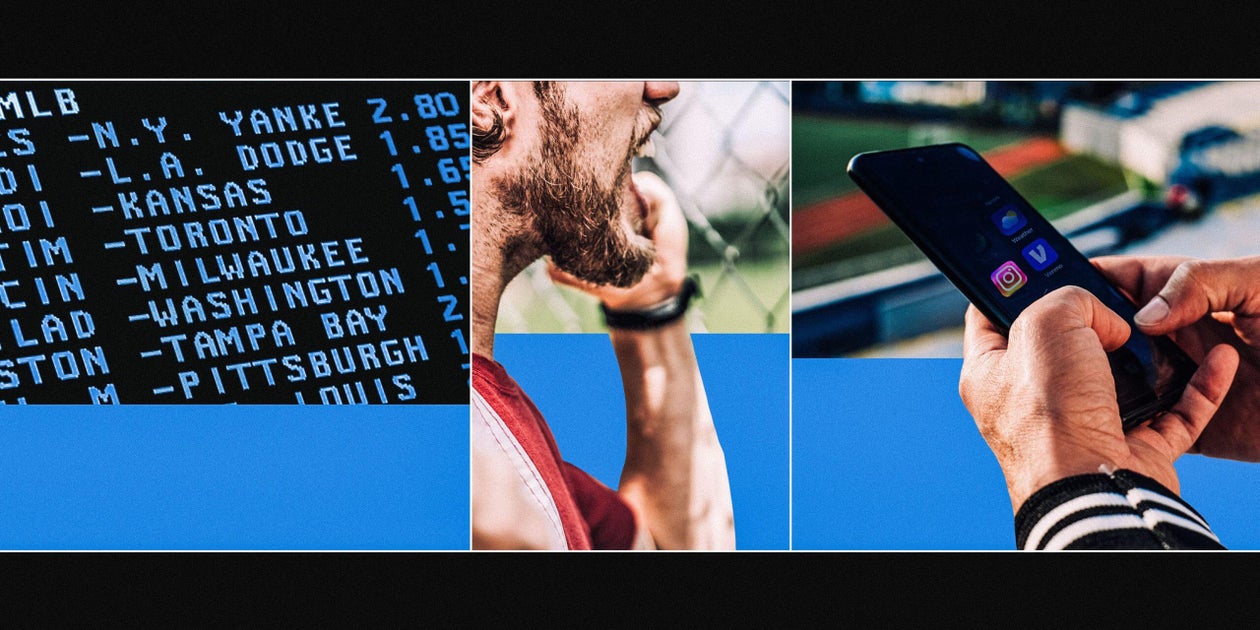
It has become as much a part of the professional athlete lifestyle as signing autographs or lifting weights: A pitcher coughs up a lead, returns to his locker, checks his social media accounts, and spots a direct message from a user less than pleased with the results.
With the proliferation of legal gambling and the convenient access social media platforms can provide, athletes are hearing more than ever from those who tie their checking accounts to their performance.
This spring, we asked 100 major leaguers across 23 teams for their response to a simple, but very modern, question. The players were granted anonymity to speak candidly on a variety of topics.
“Is anyone going to answer no to this?” posed a National League pitcher. “Even if you’re not on social media, people find you.”
An AL hitter predicted 95 percent would say yes.
He wasn’t too far off.
Of the 100 players who answered, 81 revealed they had been confronted or contacted by a disgruntled fan over the outcome of an outing.
It’s developed into an almost universal experience for players as prop bets and parlays have become part of the fabric of any broadcast or ballpark experience. MLB has partnerships with an array of gambling outfits, including DraftKings, FanDuel and BetMGM. Teams have their own arrangements, too. And now prediction markets have entered the picture, with Polymarket partnering with the league and Kalshi striking agreements with a growing number of teams, including five more this week.
It’s common now for broadcasters to weave betting lines or parlay suggestions into their narration. It’s impossible to survey the scene at a ballpark and not spot an ad offering a tempting bonus if you enroll and make your first bet. The players who have no direct say in these corporate alliances are the ones who ultimately determine each bettor’s fate — and they are the ones receiving the backlash.
Many of those who replied “no” said that was only because they removed the direct line of communication to the bettors. Some avoid social media. Some ignore their DMs.
Others have taken the initiative to prevent such interactions. An NL hitter said he triggered an Instagram setting that prohibits people from messaging him unless he starts the conversation. An NL pitcher has certain betting-related words filtered from his messages.
That’s not foolproof, though.
“If your social media is private,” said an NL pitcher, “they’ll find your family members.”
“You get used to it,” said an AL pitcher, “but when they start talking about your family, that’s taking it too far.”
“It’s one of the reasons I got off social media,” another AL pitcher said. “Some of it goes way over the line.”
One catcher quipped he doesn’t play enough to warrant any betting action or blame. The majority of players surveyed, however, have experienced these sorts of encounters.
Some say they can’t decipher whether the antagonist is upset about the final score, the player’s performance or, simply, their bank account. One NL position player said he hasn’t been confronted about a gambling loss, but rather, “They tell me I suck.” An AL pitcher said he refuses to pay close enough attention to determine the root of each gripe.
For many, though, this is a new way of life.
“You should see my Venmo requests,” said an NL reliever.
“It literally happens every game,” said an AL pitcher.
“I’ve had people approach me,” said an NL pitcher. “I nod my head and move on.”
“It’s always about costing them X amount of money, expletive, expletive, expletive,” said an NL outfielder.
“On social media,” said an AL pitcher, “everybody feels like they can say whatever the f— they want.”
“I’ve been Venmo requested,” said an AL pitcher. “I’ve also gotten a bunch of threats. It sucks. It’s been all over the map.”
OK, but what, exactly, do the messages entail?
“No one’s really taking the time to message you and say, ‘Hey, great game,’” said an NL hitter. “If they win a bet, it’s not because you did it. It’s because they knew.”
“I’ve gotten DMs, like, ‘You owe me $50’ or ‘You can’t get one more strikeout?’” said an NL pitcher. “And some choice words.”
“People always reach out in DMs to let you know you screwed up,” said an NL pitcher. “It’s like, ‘Come on, I know I gave up a homer.’”
The Venmo requests are easy to ignore.
“From a random person, like, ‘Dude, you owe me $10,’” said an NL hitter. “You just blow it off.”
At least, usually.
An AL East pitcher said he once received a Venmo request for $3,000 after a game, accompanied by a message: “You cost me my parlay. Let’s do the right thing.” The pitcher said he replied that his worst day is “still better than your best day.” The bettor repeated the ritual after another outing, with another $3,000 request and a message that read: “You did so poorly today, you don’t deserve to get paid.” The pitcher said he fulfilled the request and sent back: “I make way more than three grand in a day.”
An AL pitcher said he’ll send back 50 cents and/or a funny barb. “And they’re like, ‘You’re actually pretty cool. Sorry, man.’”
Sometimes, however, it crosses a line.
“It only gets weird when you see your home address on there,” said an AL pitcher.
An NL outfielder said he receives threats “all the time. Like, ‘I hope you die.’ ‘I hope your family dies.’ ‘You ruined my parlay.’ All the time. Ever since betting became legal, it’s become ridiculous.”
One NL pitcher said he received a surly DM after his first spring training game this year. “Like, really? The guy’s like, ‘You couldn’t strike out two batters?’ What is he doing betting on me in a spring training game in February? Just goes to show people are betting on everything.”
An AL pitcher said he receives five to 10 DMs after each outing. “It’s, like, six, seven, eight scoreless (innings) and people are mad because you don’t strike out over 6 1/2 guys.”
“I would have a good outing,” said an AL pitcher, “and guys would kind of m—–f— me for having a good outing because they have the over on a game. Or I would have a bad outing and they would say the same thing, that they had the under or whatever it may be. It’s pretty much every game.”
Everyone has a different approach to dealing with it: ignoring, laughing or shrugging it off, or engaging with the oft-anonymous person.
“They can say whatever they want,” said an NL outfielder. “It’s up to you if you let it affect you.”
Someone messaged an AL pitcher that he cost them $500, so the pitcher replied: “Well, you should have done something else with (the money).”
“It’s concerning when you see it at first,” said an NL hitter, “but then it’s like, ‘All right. They’re trying to use it as a scare tactic.’”
It leads to a bit of wishful thinking.
“A person gambling on me, I wish there was gambling on them,” said an NL pitcher. “‘Hey, how many times (are) you going to honk at somebody today if they cut you off?’”
Once in a while, cooler heads prevail.
“Something that stands out,” said an NL pitcher, “is when someone is very clearly emotional from losing and will say, ‘F— you. I hate you. I can’t pay my rent because of you.’ There will be times people do that and then a day or a few hours later, they’re like, ‘Hey, man. Sorry.’ It’s such an emotional, volatile situation.”
And on the rare occasion, there can be a positive interaction.
“My rookie year,” said an NL infielder, “I had a really good September, and I had a bunch of people DM me that I helped them win their fantasy baseball championships. But this was before sports betting became huge, so I think there probably weren’t as many bad scenarios.”