
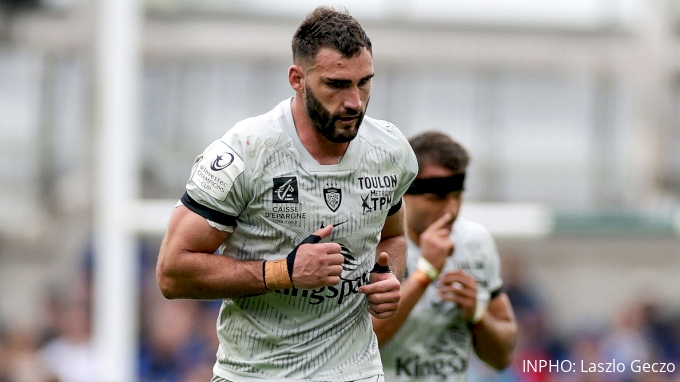
RC Toulon enters 2026-27 Top 14 season trying to prove that last year’s ninth-place finish was a setback rather than its new level. Toulon went 12-1-13, missed the Top 14 playoffs and conceded 820 points, finishing with a minus-106 point differential despite scoring 96 tries.
There were performances that suggested something much better was possible. Toulon beat La Rochelle 39-14 at Stade Mayol and demolished Clermont 41-13 away, evidence of a team capable of producing elite-level afternoons. The problem was sustaining them.
That matters at a club where expectations have been shaped by four French championships and three European Cups. Toulon has responded with a significant offseason investment, adding Gaël Fickou, Huw Jones, Rabah Slimani and Judicaël Cancoriet. There is enough talent to return to the Top 14 playoffs. Whether there is enough consistency to challenge for the Brennus Shield is the much bigger question.
What Toulon’s 2025-26 Season Told Us
Toulon’s ninth-place finish was difficult to reconcile with some of its best performances.
The Red and Black finished with 59 points from 12 victories, one draw and 13 defeats. They scored 714 points and 96 tries, attacking numbers that demonstrated their ability to hurt opponents.
The other side of the ledger was much more damaging: 820 points and 103 tries conceded.
That defensive record helps explain the enormous swings in Toulon’s season.
A 41-13 victory at Clermont showed what Toulon could do when its power and attack came together. Yet Clermont later won 34-14 at Mayol. Toulon crushed La Rochelle 39-14 at home, but also suffered home defeats of 51-27 against Toulouse and 46-27 against Stade Français.
Those results make inconsistency more than a convenient explanation for ninth place. It was the defining feature of the season.
Toulon had entered the campaign with considerably greater expectations. Instead of reaching the Top 14 knockouts, it finished outside the top six and qualified for the Challenge Cup.
The encouraging part for 2026-27 is that Toulon’s best performances did not resemble those of an ordinary ninth-place side. The concern is that there were not nearly enough of them.
Toulon Transfers And Offseason Changes
Toulon has not responded passively.
Fickou arrives from Racing 92 on a two-year deal and gives Pierre Mignoni an experienced new centerpiece in midfield. Jones joins from Glasgow Warriors, creating the possibility of a completely remodeled center partnership.
The changes extend into the forwards.
Slimani arrives from Leinster and adds another experienced option to a front-row group featuring Jean-Baptiste Gros, Beka Gigashvili, Kyle Sinckler and Dany Priso. Cancoriet joins from La Rochelle and can contribute at flanker and lock, adding physicality and another lineout option.
Apete Narogo, a wing/fullback arriving from Fiji Sevens, adds another possibility in the back three. Toulon also has young players pushing upward, including flanker Jules Coulon and center Mathis Smaïli.
There have been important departures.
Paolo Garbisi has moved to Perpignan after spending two seasons as Toulon’s starting fly-half. Jovan Sreckovic also left for Perpignan, while Brian Alainu’uese moved to Bayonne and Ma’a Nonu departed.
Garbisi’s exit creates perhaps the most consequential issue of the offseason. Toulon has added significant talent around the field while losing an established player at the position responsible for organizing much of it.
There is continuity on the coaching staff. Mignoni remains in charge after extending through 2029, giving him the opportunity to develop this reconstructed squad rather than begin another reset.
Toulon Projected Starting XV And Bench
This is a projection and not an officially announced RC Toulon lineup.
Starting XVJean-Baptiste Gros, loosehead propTeddy Baubigny, hookerRabah Slimani, tighthead propMatthias Halagahu, lockDavid Ribbans, lockCharles Ollivon, flanker (captain)Zach Mercer, flankerPaul Abadie, No. 8Baptiste Serin, scrum-halfAntoine Frisch, fly-halfSetariki Tuicuvu, wingHuw Jones, centerGaël Fickou, centerGabin Villière, wingMelvyn Jaminet, fullbackProjected Bench OptionsKyle SincklerBeka GigashviliSwan RebbadjJudicaël CancorietJules CoulonClovis Le BailThomas AlbornozMathis Smaïli
The most difficult call comes at fly-half, where Garbisi’s departure leaves Frisch and Albornoz among Toulon’s options.
There also should be significant competition throughout the forwards. Sinckler and Gigashvili give Toulon alternatives in the front row, while Cancoriet adds another option around the back five of the pack.
Availability could influence Mignoni’s early choices. Lewis Ludlam underwent shoulder surgery, while Marius Domon was recovering from an ACL injury.
Toulon Players To Watch In 2026-27Gaël Fickou
Fickou is the headline addition and one of the players most capable of changing Toulon’s attack immediately. His creativity and ability to break the line give Toulon another way to generate opportunities beyond simply overpowering opponents through its forwards.
Charles Ollivon
The captain remains central to Toulon’s identity. Ollivon provides carrying power and lineout ability, but his importance goes beyond individual contributions. A team trying to become more consistent will lean heavily on its leader.
Baptiste Serin
Serin could be one of the most important players in the entire Toulon project.
His quick service, box kicking and running threat connect the forwards with the backs. With uncertainty at fly-half following Garbisi’s departure, Serin’s ability to manage matches becomes even more valuable.
Melvyn Jaminet
Jaminet gives Toulon a fullback capable of influencing matches with his kicking game. His boot offers territory and a goal-kicking option, both of which become increasingly important when matches tighten.
Gabin Villière
Villière gives Toulon an established attacking threat on the wing. If the combination of forward carriers and the new Fickou-Jones midfield creates space, Villière is one of the players positioned to benefit.
Coulon is another player worth following. The academy flanker already has considerable first-team experience and gives Mignoni another tackling and breakdown option in a deep forward group.
How RC Toulon Plays
Toulon’s most obvious path forward begins with its pack.
Ollivon and Mercer provide powerful ball-carrying options, while Ribbans and Rebbadj give Toulon established lineout targets. Cancoriet adds another physical presence capable of contributing around the breakdown.
The scrum has not always provided the desired consistency, which makes Slimani’s arrival particularly relevant. Toulon has assembled enough front-row depth to expect the set piece to become a meaningful weapon.
But Mignoni’s team is not designed simply to grind opponents down.
Toulon wants to play with tempo after establishing its forward platform. The combination of Fickou and Jones potentially gives the attack considerably more creativity through midfield, with Villière and the other outside backs providing the finishing threats.
Offloading and broken-field opportunities are part of that attacking approach rather than an exclusive reliance on territory.
Toulon still has the tools to play territorially when required. Serin’s box kicking can move opponents backward, while Jaminet provides considerable kicking range from fullback and can convert opportunities from the tee.
That versatility is important for knockout rugby. So is the ability to win ugly.
That is where Toulon remains unproven.
A team that conceded 820 points last season cannot treat defense as a secondary issue. Discipline also must improve if Toulon wants to turn high-scoring volatility into the control required in close playoff matches.
The tactical ingredients exist. The challenge is putting them together for long enough to survive the Top 14’s biggest matches.
Why Stade Mayol Still Matters
Stade Mayol remains inseparable from RC Toulon’s identity.
The roughly 17,500-seat stadium places Toulon’s passionate support close to the action, and crowds regularly approach capacity. The “Pilou-Pilou” chant before matches has become one of the defining rituals of the club’s home experience, accompanied by red-and-black flags and a crowd capable of creating an intense environment.
That culture helps explain why expectations around Toulon are different from simply measuring whether the club improved its league position.
This is a club that has won four French championships, most recently in 2014, and three consecutive European Cups from 2013-15. Those achievements remain part of the standard surrounding the modern team even as Toulon tries to build a new identity.
Mayol also remains an important competitive advantage.
The 39-14 victory against La Rochelle showed how formidable Toulon can be there. But defeats at home against Toulouse, Stade Français and Clermont also demonstrated why reputation alone does not make a fortress.
For Toulon to climb back toward the top of French rugby, Mayol needs to become a place where its consistency matches the intensity of its supporters.
Toulon’s Biggest Strength
The forward pack.
Toulon has built considerable depth around players such as Gros, Slimani, Sinckler, Gigashvili, Ribbans, Ollivon, Mercer, Cancoriet and Coulon.
There is carrying power, lineout ability, international experience and enough front-row depth to create genuine competition.
That gives Toulon something every potential championship team needs: a foundation capable of holding up when attacking rugby becomes difficult.
The Biggest Question Facing ToulonCan Toulon establish enough stability at halfback?
Serin provides experience and quality at scrum-half. The uncertainty sits immediately outside him.
Garbisi’s departure leaves a significant responsibility at No. 10, with Frisch and Albornoz among the options available to Mignoni.
That position becomes even more important because of what Toulon has constructed elsewhere.
There is little value in assembling a powerful pack and a Fickou-Jones midfield if Toulon cannot consistently connect the two. Whoever emerges at fly-half must provide enough control and distribution to turn the roster’s individual quality into a functioning championship-level attack.
Is Toulon Ready To Challenge For The Brennus Shield?
Toulon should be better.
That is the first reasonable expectation for 2026-27.
The roster has been strengthened significantly, particularly through the additions of Fickou, Jones, Slimani and Cancoriet. Toulon possesses an imposing collection of forwards, experienced leaders, attacking threats and a home environment capable of making life extremely difficult for opponents.
Returning to the Top 14 playoffs therefore represents a realistic objective.
The ceiling is higher. If the midfield additions click, Toulon solves its fly-half question and the defense makes a substantial improvement, a semifinal or Final appearance is within the possibilities for this squad.
A finish somewhere from fifth through eighth is a more measured expectation, with another eighth- or ninth-place season representing the floor if the inconsistency continues. The Challenge Cup also provides Toulon with a European knockout objective after missing Champions Cup qualification.
But winning the Brennus Shield requires another standard entirely.
Toulon’s best performances last season showed that it can look like one of France’s strongest teams. Its ninth-place finish showed how far it remains from producing that level consistently.
The offseason has given Mignoni more talent. It has given Toulon more depth. It has created a midfield with the potential to change the attack and reinforced a pack that should be the team’s foundation.
So, is Toulon capable of winning the Top 14?
Yes.
Is Toulon ready to be considered one of the teams most likely to win it?
Not yet.
The Red and Black must first turn flashes of championship quality into the week-to-week consistency of a championship team.
How To Watch FloRugby
FloRugby is available through a FloSports subscription. Subscribers can watch live rugby matches, full-match replays, highlights, original programming and exclusive coverage across multiple competitions. Stream on your computer at FloRugby.com or through the FloSports app on supported mobile devices and connected TVs.
Can You Watch Replays On FloRugby?
Yes. FloRugby subscribers can watch full-match replays after live events conclude, along with match highlights, interviews and other on-demand content. Replays allow fans to catch up on matches they missed or revisit key moments throughout the season.
Can You Watch FloRugby On TV?
Yes. FloRugby is available on many popular streaming platforms through the FloSports app, including Roku, Apple TV, Amazon Fire TV and Android TV. You also can cast from a compatible mobile device to supported televisions using Chromecast or AirPlay.
Can You Watch FloRugby On Mobile?
Yes. The FloSports app is available for iOS and Android devices, allowing subscribers to stream live matches, watch replays and follow rugby coverage from virtually anywhere with an internet connection.
What Rugby Competitions Are On FloRugby?
FloRugby streams a wide range of rugby competitions throughout the year, including major domestic leagues, international matches, European club competitions and select age-grade and collegiate events. Available competitions vary by region and broadcast rights, so check the FloRugby schedule for the latest listings.
Where Can I Find Rugby News, Schedules And Results?
FloRugby provides year-round rugby coverage, including breaking news, match previews, lineups, rankings, transfer news, schedules, results and standings.
Join The Rugby Conversation On FloRugby Social